Always sleepy even after a full night? When to see a doctor
Why you're still exhausted despite sleeping enough, how the Epworth Scale helps identify sleep disorders, and when excessive daytime sleepiness needs medical attention.
Visana Studios
6 min read
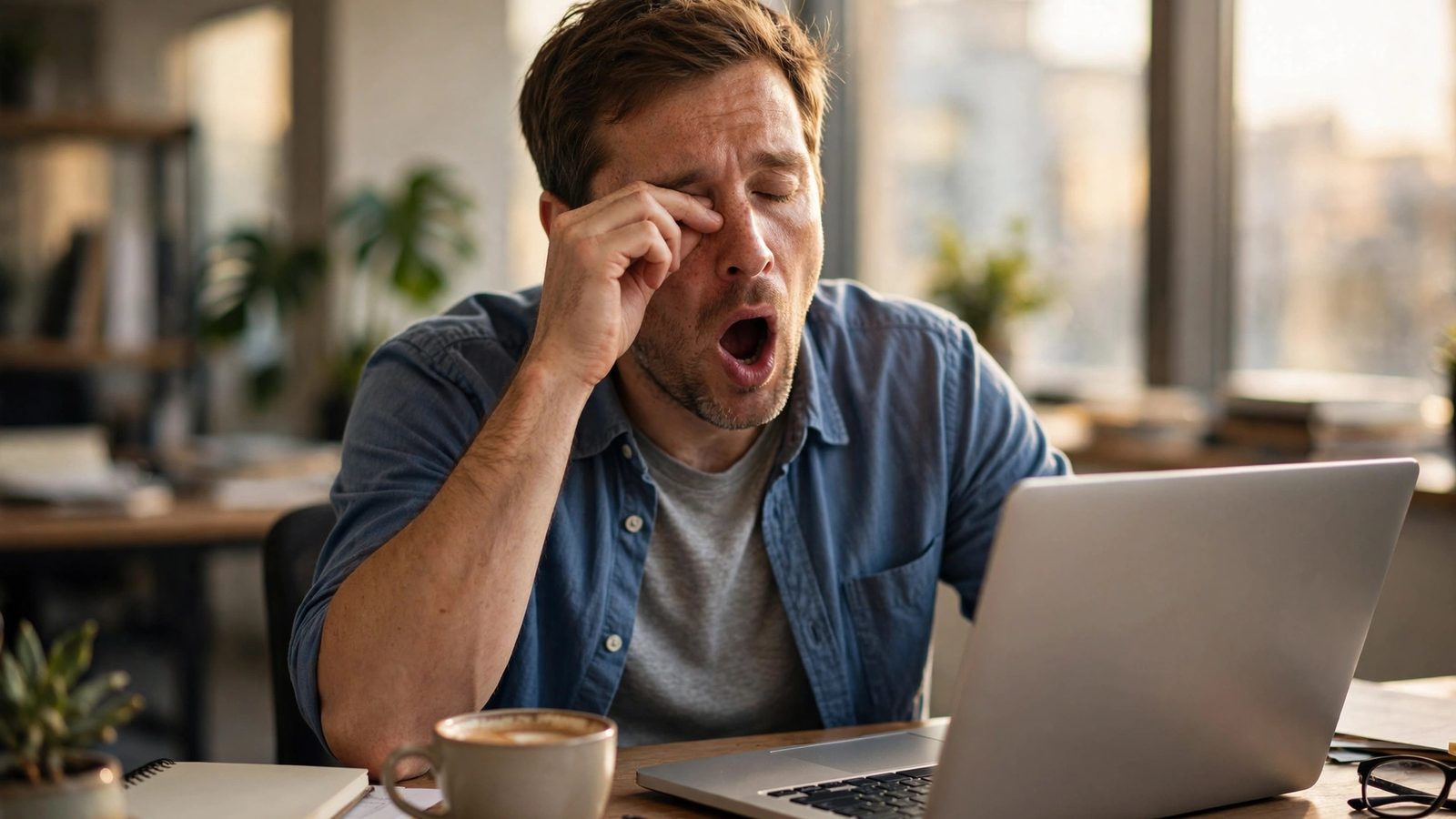
You slept eight hours. Or nine. You went to bed at a reasonable time, woke without an alarm, and by mid-morning you are staring at nothing, fighting to keep your eyes open. That is not laziness or boredom. Many people experience excessive daytime sleepiness that persists despite adequate nighttime sleep, a gap between how long you sleep and how awake you feel when you are trying to function.
Excessive daytime sleepiness, or EDS, has concrete causes. Some respond to simple changes; others signal sleep disorders that need professional diagnosis and treatment. The Epworth Sleepiness Scale offers a starting point for figuring out which one you are dealing with.
The Epworth Sleepiness Scale and what it measures
In 1991, Murray Johns, a sleep researcher at Epworth Hospital in Melbourne, Australia, developed a simple eight-question assessment tool to measure daytime sleepiness. The Epworth Sleepiness Scale presents eight everyday situations, from sitting quietly to watching television, and asks how likely you are to doze off in each one, scored from 0 to 3. Your total ranges from 0 to 24.
A score of 0-9 falls within the normal range. A score of 10 or higher suggests it is time to talk to a doctor. Scores between 11 and 15 may indicate mild to moderate sleep apnea, while scores of 16 or higher can signal severe sleep apnea or narcolepsy. The scale does not diagnose a condition, but it gives you and your doctor a standardized starting point for the conversation.
Because the Epworth measures sleepiness in the moment, it has a limitation: you have to take it when you are actually sleepy. Someone running on caffeine or a stretch of good sleep might score in the normal range even though the underlying problem is still there. This is why a doctor will often ask follow-up questions about your sleep patterns over weeks and months, not just how you feel on a particular day.
The most common causes you can address immediately
Insufficient sleep is the leading cause of excessive daytime sleepiness and also the most straightforward to fix. A pattern of short nights from work demands, social pressure, or the drift of a creeping bedtime leaves anyone exhausted. Most adults need seven to nine hours, though genetics and circadian rhythm mean some genuinely need more or less. Sleeping six hours a night and wondering why you feel tired all day? That is your answer.
Broken sleep and fragmented nights matter as much as total sleep time. Four uninterrupted nights of eight hours beat eight fragmented half-hours adding up to four hours. If you are waking multiple times per night, that fragmentation is working against you regardless of what the clock adds up to.
Once you have ruled out simple insufficient sleep, the next-most-common culprits are medications and lifestyle factors. Antidepressants, antihistamines, blood pressure medications, and anticonvulsants can all cause daytime sleepiness as a side effect. If you started a new medication and then noticed a shift in your daytime alertness, mention it to the doctor who prescribed it. A change in dose or timing, or a switch to a different medication, might help without losing the benefit you need from the drug.
Mood disorders, particularly depression and bipolar disorder, commonly produce excessive daytime sleepiness alongside other symptoms. Thyroid disorder (especially hypothyroidism) and iron deficiency anemia both disrupt energy and alertness. A basic blood test can identify these, which is why a primary care doctor is a good starting point when sleepiness is new or worsening.
When daytime sleepiness points to a sleep disorder
Sleep apnea is the most prevalent sleep disorder, and excessive daytime sleepiness is its signature symptom. During an apneic episode, the airway narrows or collapses, briefly stopping breathing. You wake just enough to restart breathing, often without conscious awareness. Obstructive sleep apnea attacks the mechanics directly, usually with snoring, gasping, or choking sounds at night. The result: a night that logs eight hours but feels like two. An overnight sleep study called polysomnography confirms the diagnosis.
Narcolepsy is rare, affecting roughly 20 to 67 per 100,000 people, though underdiagnosis means the true number may be higher. It disrupts the brain's control of the sleep-wake cycle. People with narcolepsy experience overwhelming daytime sleepiness that often comes in episodes of irresistible sleep, sometimes lasting just a few seconds and sometimes longer. Some also have cataplexy, a sudden loss of muscle tone triggered by laughter, anger, or other strong emotion. Sleep paralysis and vivid, intense dreams are common, especially at the edges of sleep. Narcolepsy comes in two forms. Type 1 is associated with low levels of hypocretin, a brain chemical that regulates wakefulness, while type 2 presents with similar symptoms but normal hypocretin levels.
Idiopathic hypersomnia is even rarer than narcolepsy, affecting roughly 1 in 10,000 to 1 in 100,000 people. People with idiopathic hypersomnia often struggle with extreme sleep inertia, making it unusually hard to wake up and stay awake. They may sleep nine hours or more per night and still feel unrested. The condition is poorly understood, and no clear cause has been identified, though researchers have found some abnormalities in brain chemistry. It emerges most often during adolescence or early adulthood.
Diagnosis of all three involves sleep history, Epworth scores, and lab testing. A multiple sleep latency test, used for narcolepsy and idiopathic hypersomnia, measures how quickly you fall asleep during naps. Polysomnography for sleep apnea captures breathing, heart rate, oxygen saturation, and brain waves across the night.
Drowsy driving and the stakes
Excessive daytime sleepiness is not merely a quality-of-life problem. It is a safety emergency. Drowsy driving is a serious crash risk. A person struggling to stay awake at the wheel is slow to react, may doze off for seconds without knowing, and is far more likely to crash.
Nodding off behind the wheel, fighting to keep your eyes open during long drives, or experiencing near-miss moments are clear signals to see a doctor. Until you do, avoid driving when you know sleepiness is at its worst.
When to make the appointment
Talk to a doctor about excessive daytime sleepiness if you notice constant fatigue despite eight or more hours of nighttime sleep, recent onset or worsening of the symptom, new changes in mood or appetite alongside sleepiness, or interference with work, school, or driving safety.
Start with your primary care doctor. They can check for simple causes like anemia or thyroid disorder, review your medications to see if any might be contributing, and ask about your sleep habits. Based on that conversation, they can refer you to a sleep specialist if testing is needed.
Most causes of excessive daytime sleepiness have treatments. Sleep apnea responds to CPAP therapy or other interventions that open the airway. Narcolepsy and idiopathic hypersomnia have medications that raise daytime alertness. Depression or thyroid disorder, when treated, often resolve the sleepiness. Some medications can be switched for options with fewer side effects. Insufficient sleep is the only category without a medical fix, and the remedy is the hard one: getting more sleep actually works.
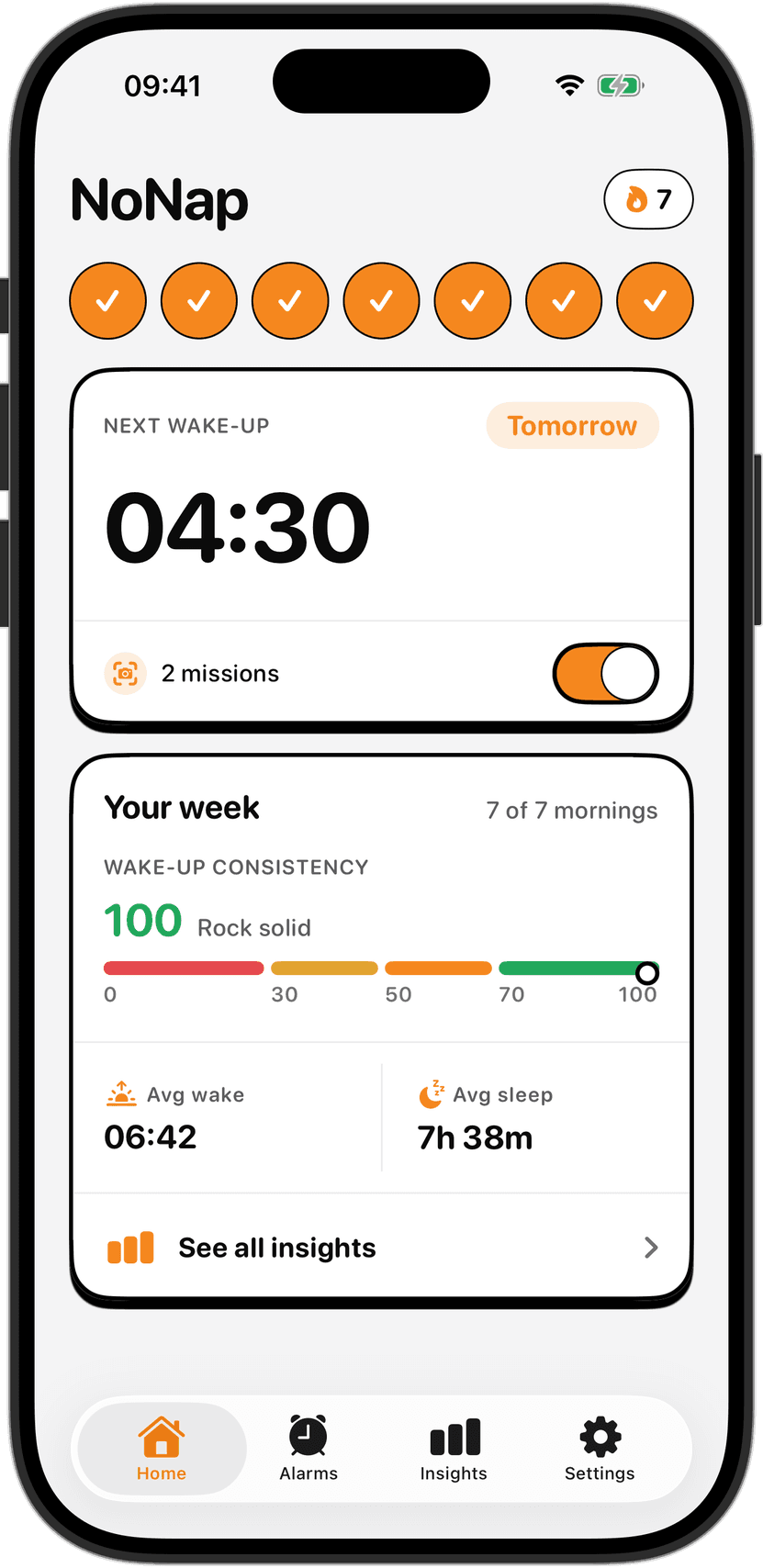
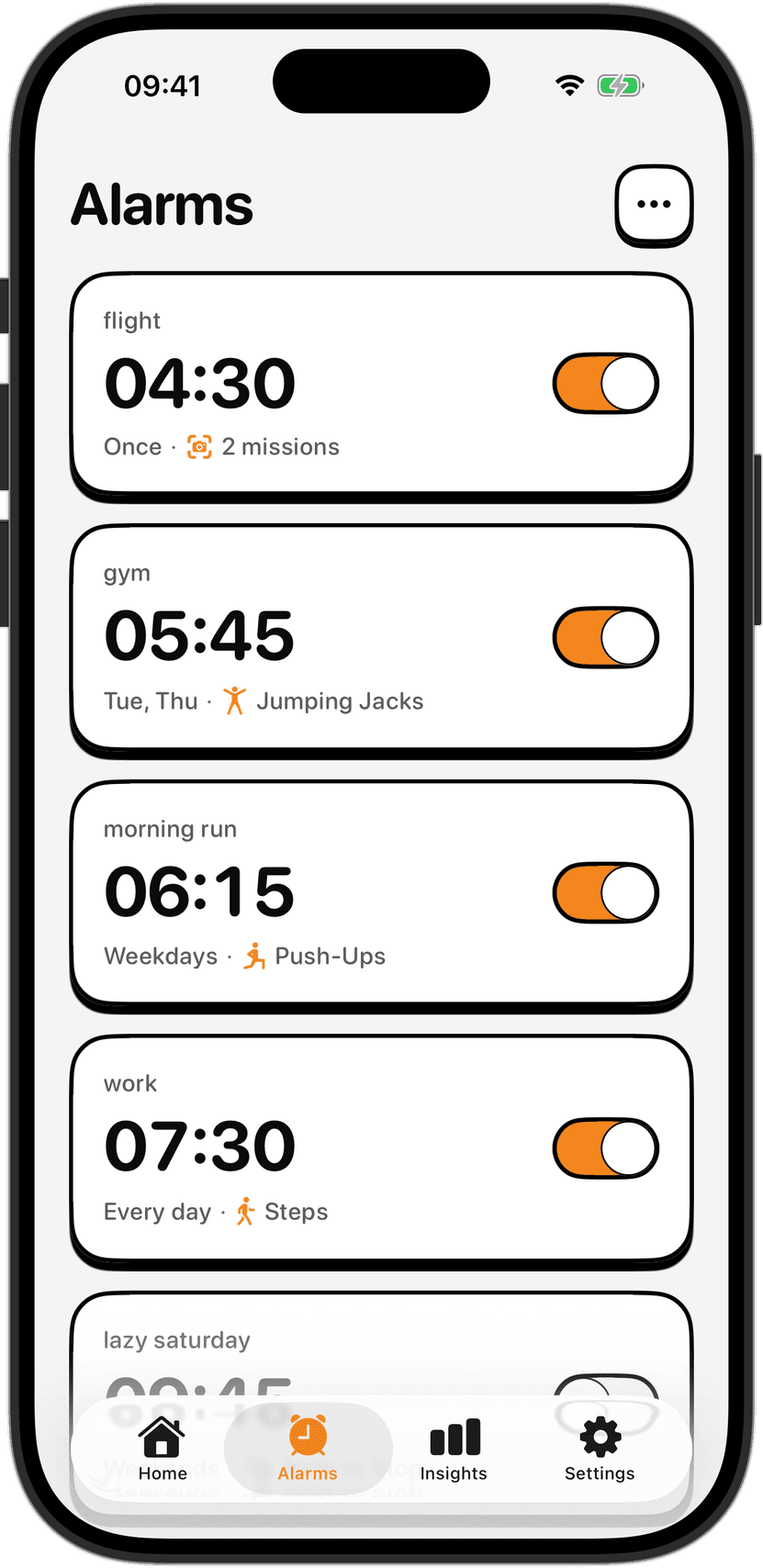
A concrete step that helps with diagnosis is keeping a stable wake time. Drifting wake times add variability that by itself makes you feel sleepier during the day. A consistent wake time even on weekends establishes how alert you truly are once the routine settles, making it easier to spot whether the sleepiness is transient sleep inertia or something that needs medical attention. Some people find that a single, non-negotiable alarm with a wake task that requires effort and attention before the day truly starts helps distinguish between the two. The difference matters for what comes next.
Sources
Johns, M. W. (1991). A New Method for Measuring Daytime Sleepiness: The Epworth Sleepiness Scale. Sleep, 14(6), 540-545. https://doi.org/10.1093/sleep/14.6.540
Sleep Foundation. Excessive Daytime Sleepiness, accessed September 2026. https://www.sleepfoundation.org/excessive-daytime-sleepiness
Sleep Foundation. Narcolepsy: Symptoms, Diagnosis, and Treatment, accessed September 2026. https://www.sleepfoundation.org/narcolepsy
National Institutes of Health, National Library of Medicine. Excessive Daytime Sleepiness. MedlinePlus, accessed September 2026. https://medlineplus.gov/ency/article/007088.htm
National Health Service. Narcolepsy, accessed September 2026. https://www.nhs.uk/conditions/narcolepsy/
National Health Service. Obstructive Sleep Apnoea, accessed September 2026. https://www.nhs.uk/conditions/obstructive-sleep-apnoea/