How much sleep do adults actually need?
The 2015 AASM and Sleep Research Society consensus, the National Sleep Foundation's age ranges, genetic short sleepers, and how to find your own number.
Visana Studios
7 min read
In 2015, a panel of sleep researchers read through more than five thousand studies and boiled the question of how much sleep adults need down to a single number: seven. Not eight. Not a vague suggestion to listen to your body. Seven hours, as a floor, below which the evidence for harm gets hard to argue with.
A number from five thousand studies
The American Academy of Sleep Medicine and the Sleep Research Society put together a panel of fifteen sleep specialists and ran them through a modified RAND Appropriateness Method over roughly a year, working through 5,314 scientific articles across nine health categories: general health, cardiovascular health, metabolic health, mental health, immune function, human performance, cancer, pain, and mortality. Their conclusion, published in the journal Sleep in 2015, reads plainly: adults should sleep 7 or more hours per night on a regular basis to promote optimal health. Sleeping under seven hours on a regular basis was linked to weight gain, diabetes, high blood pressure, heart disease, stroke, depression, and a higher risk of death. On the high end, the panel was more cautious. Sleeping more than nine hours a night isn't automatically a problem. It may be appropriate for young adults, people paying off a sleep debt, or people who are sick, but the evidence for what it means in everyone else stays murkier.
It's worth sitting with what that number actually is. The panel wasn't estimating what feels good on a Tuesday morning. They were tracking hours slept against real disease outcomes across large populations, which is a different question from what any one person needs to function well tomorrow. Seven is a line below which risk climbs, not a target to hit exactly.
The National Sleep Foundation's ranges by age
That same year, the National Sleep Foundation published its own update, led by Max Hirshkowitz as part of an 18 member panel representing a dozen sleep and medical organizations, using a similar RAND based process but covering the whole lifespan. Their report, in the journal Sleep Health, split recommendations into three tiers for the first time: recommended, may be appropriate for some individuals, and not recommended. That middle tier mattered. It was an admission that sleep need doesn't snap cleanly to a single number even within an age bracket.
For young adults aged 18-25, the recommended range is 7-9 hours, with six hours and 10-11 hours both marked as possibly appropriate depending on the person. For adults 26-64, the recommended range holds at 7-9 hours, with six or ten hours as the edge cases. Past 65, the recommended range narrows to 7-8 hours, with five to six or nine hours still called appropriate for some rather than automatically flagged. Nobody on that panel expected a 70 year old and a 22 year old to need the same thing, and the ranges say so directly.
Why the range is wide
Two factors do most of the work in spreading that range out: genetics and age. The Division of Sleep Medicine at Harvard Medical School, summarizing decades of research on this, points to genetics as the driver behind both how much sleep a person needs and their preference for waking early or staying up late. An internal clock that runs faster than 24 hours tends to produce a lark, someone who wakes early without much fighting. A clock that runs slower tends to produce an owl. Neither is a discipline issue, and if the pull toward staying up late has you interested in the mechanics of that, chronotype research goes deeper into it.
Health, activity level, and recent sleep debt all shift the number too, usually temporarily. Someone recovering from a cold or a hard training block needs more sleep than their normal baseline for a while. That's expected and it resolves once the underlying cause does.
The rare case of genuine short sleepers
Somewhere in the population are people who are not simply used to running on little sleep. They are built differently. In 2009, a team led by Ying-Hui Fu at UCSF studied a family of natural short sleepers, people who went to bed at a normal hour and woke fully rested around five in the morning, and traced the trait to a mutation in a gene called DEC2. Carriers of the mutation averaged 6.25 hours of sleep a night; family members without it averaged 8.06 hours, with no signs of the impairment that shows up in people who are simply sleep deprived. DEC2 normally helps regulate orexin, a neuropeptide that promotes wakefulness, and the mutated version appears to loosen that regulation just enough to shorten the sleep window without the usual cost.
It took another ten years for Fu's team to confirm a second short sleep gene, a mutation in ADRB1 reported in 2019, and it remains one of only two identified so far. That scarcity is the real lesson here. True genetic short sleepers appear to be rare enough that finding a second gene took a decade of looking. If you function on six hours, the far more likely explanation is that you've adapted to running a deficit, not that you carry a mutation almost nobody has. Persistent daytime sleepiness despite what feels like enough time in bed is worth raising with a doctor rather than filing under "I'm just a short sleeper."
Finding your own number over an unscheduled week
The most direct way to find your actual need doesn't involve a genetic test. Harvard's sleep medicine group describes what they call a sleep vacation: over a stretch of a week or two with a flexible schedule, pick a consistent bedtime, turn off the alarm, and let yourself wake naturally. Write down when you fall asleep and when you wake up. The first few days will likely run long, because you're paying off whatever sleep debt you've been carrying. Ignore those numbers. By the second half of the week, a pattern tends to settle in, usually somewhere in that 7-9 hour band, and that's closer to your real number than any chart.
Not everyone can take a week off with no obligations. A rougher but faster check is to pay attention to how you feel during the day: whether you're alert without effort by mid morning, whether you'd fall asleep if you sat still on a train, whether energy holds up until evening. Those daytime signals, tracked for even a few days, tell you more than staring at a single night's total.
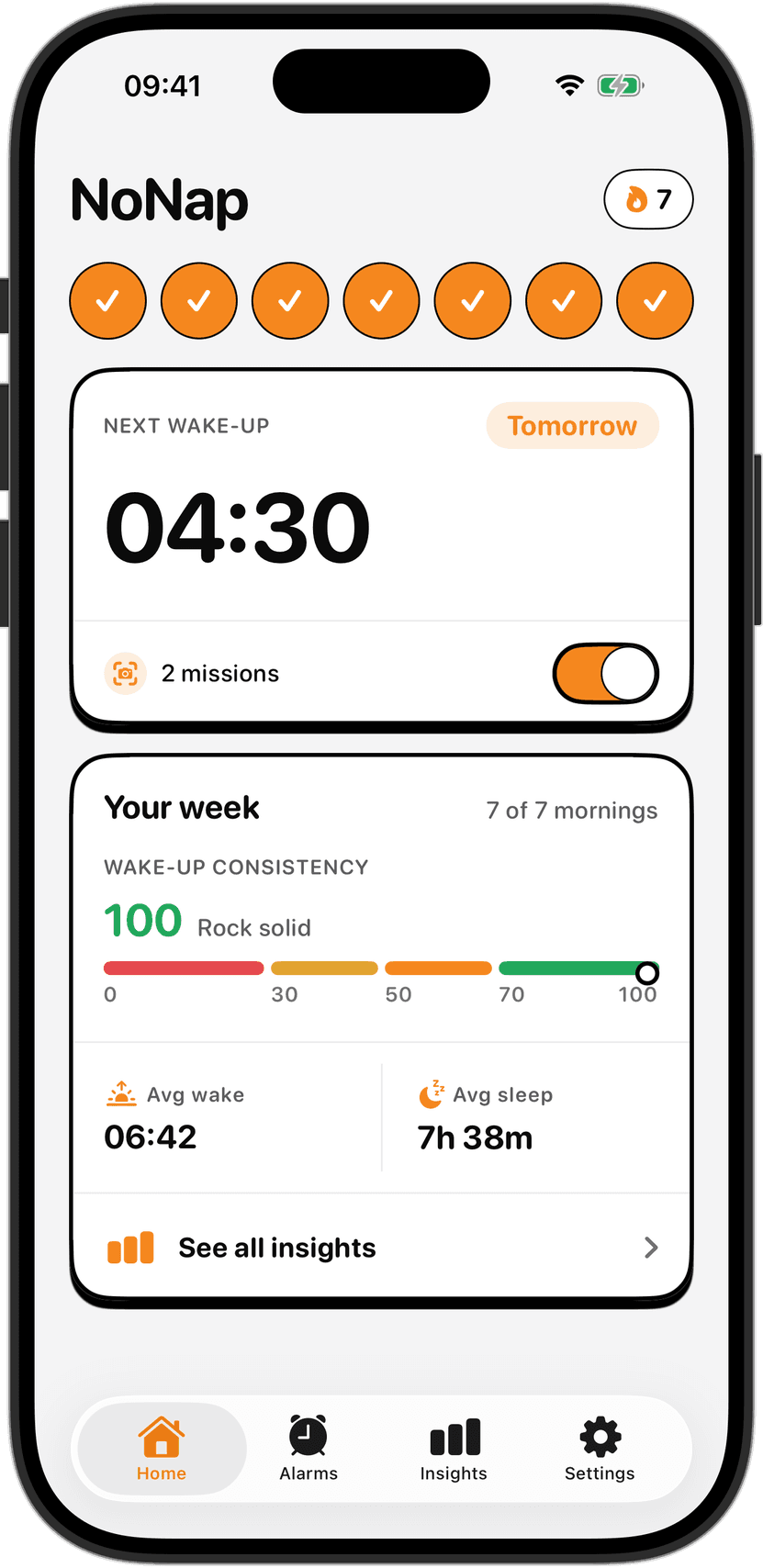
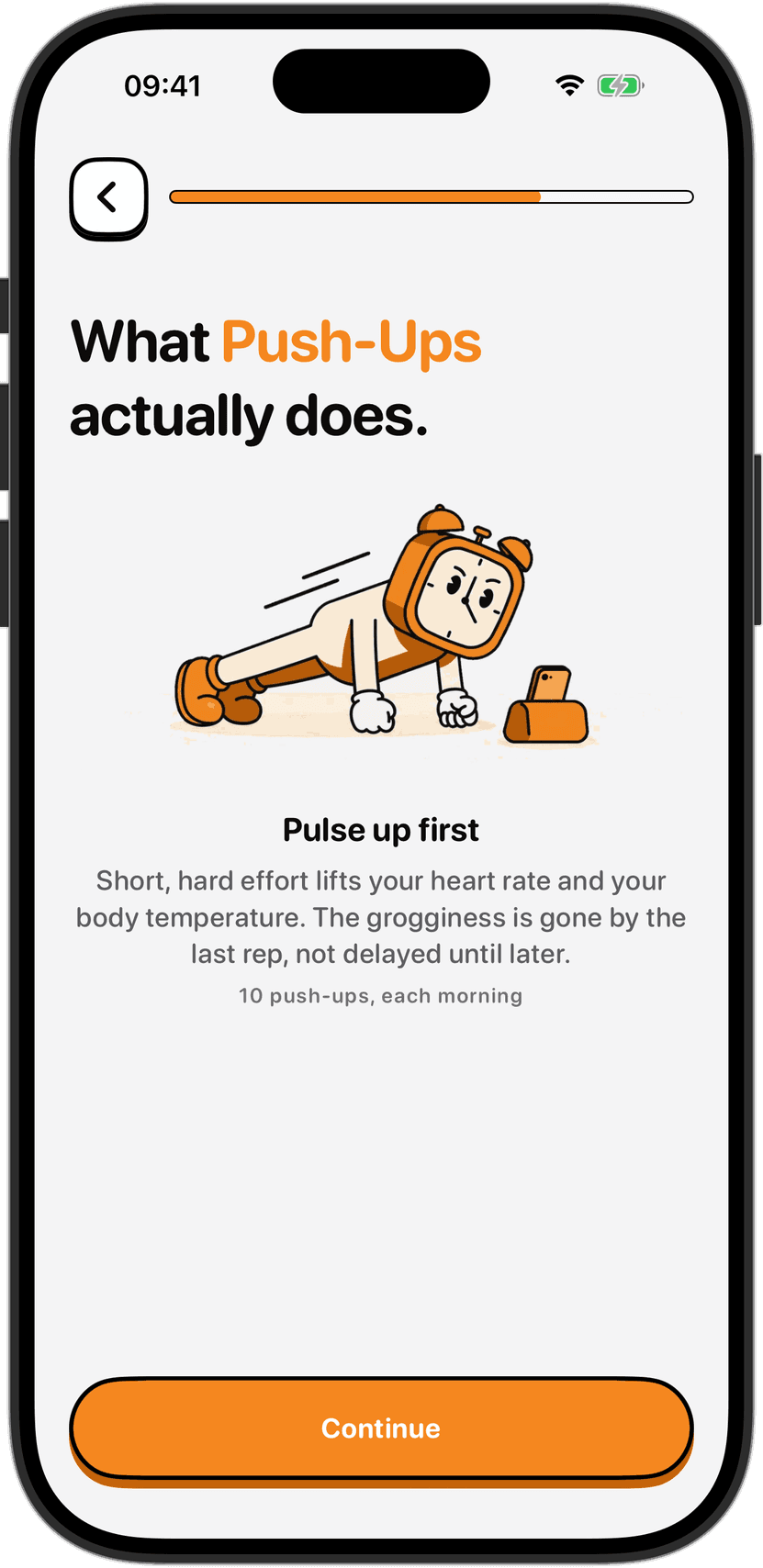
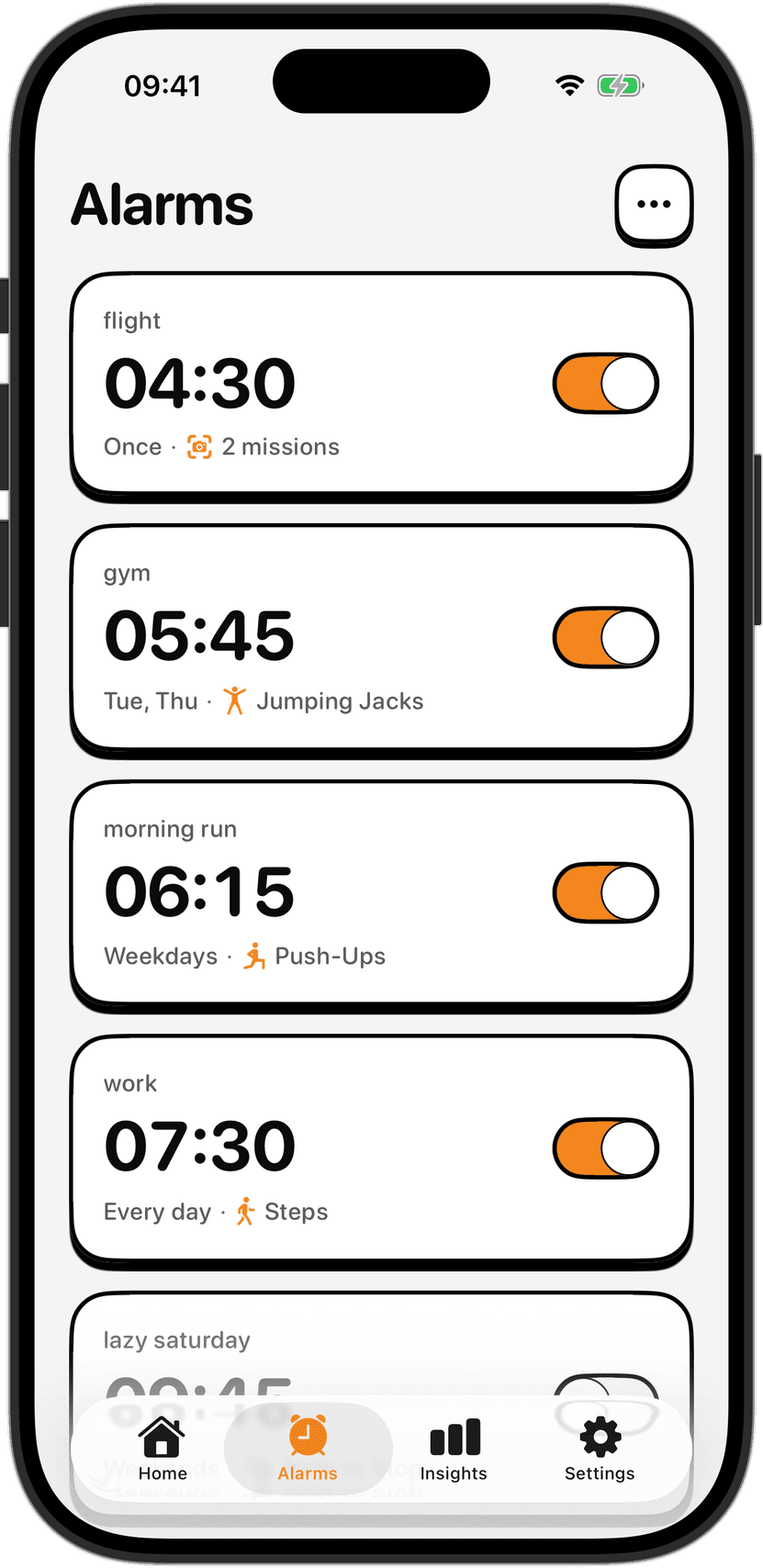
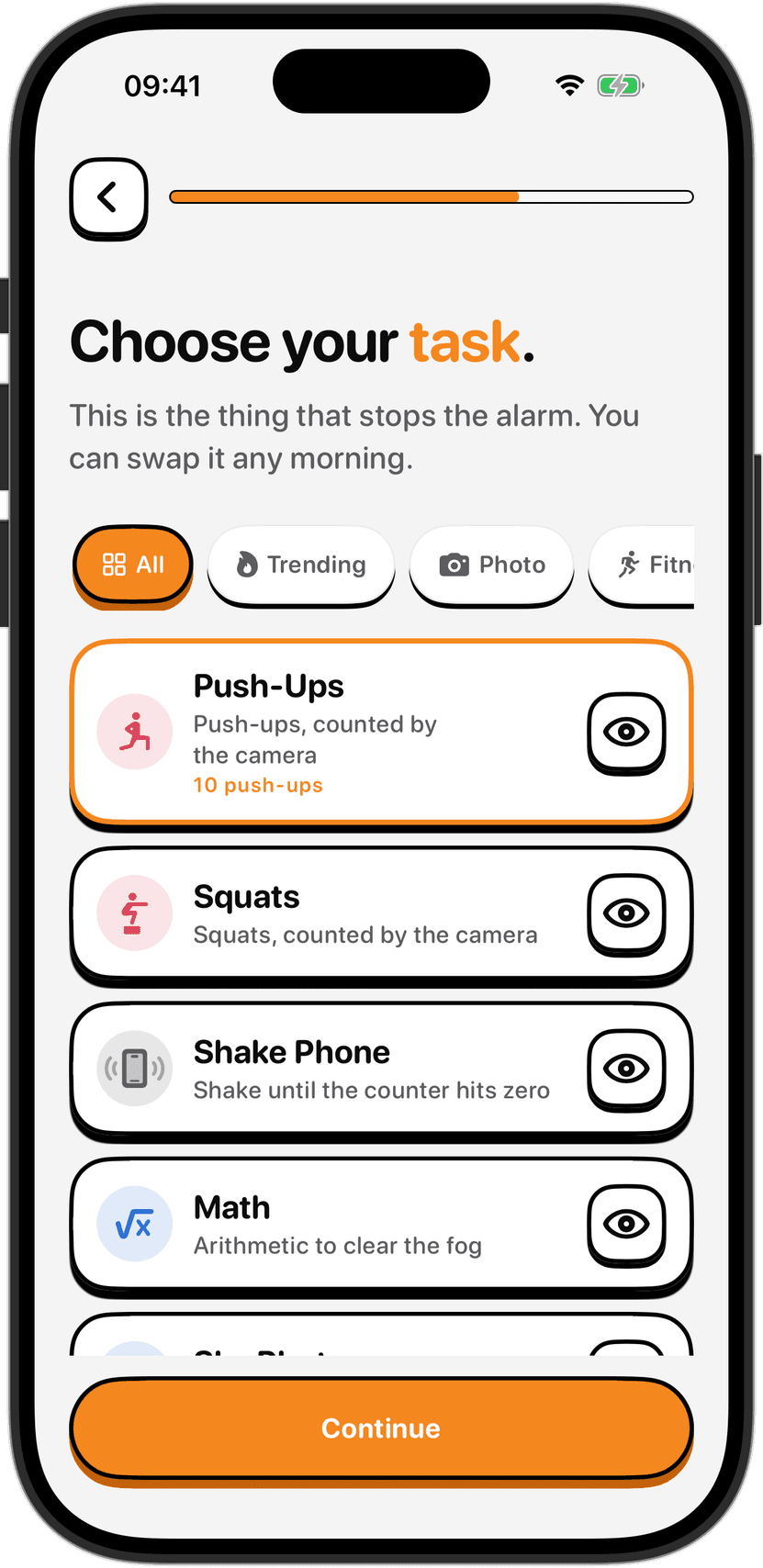
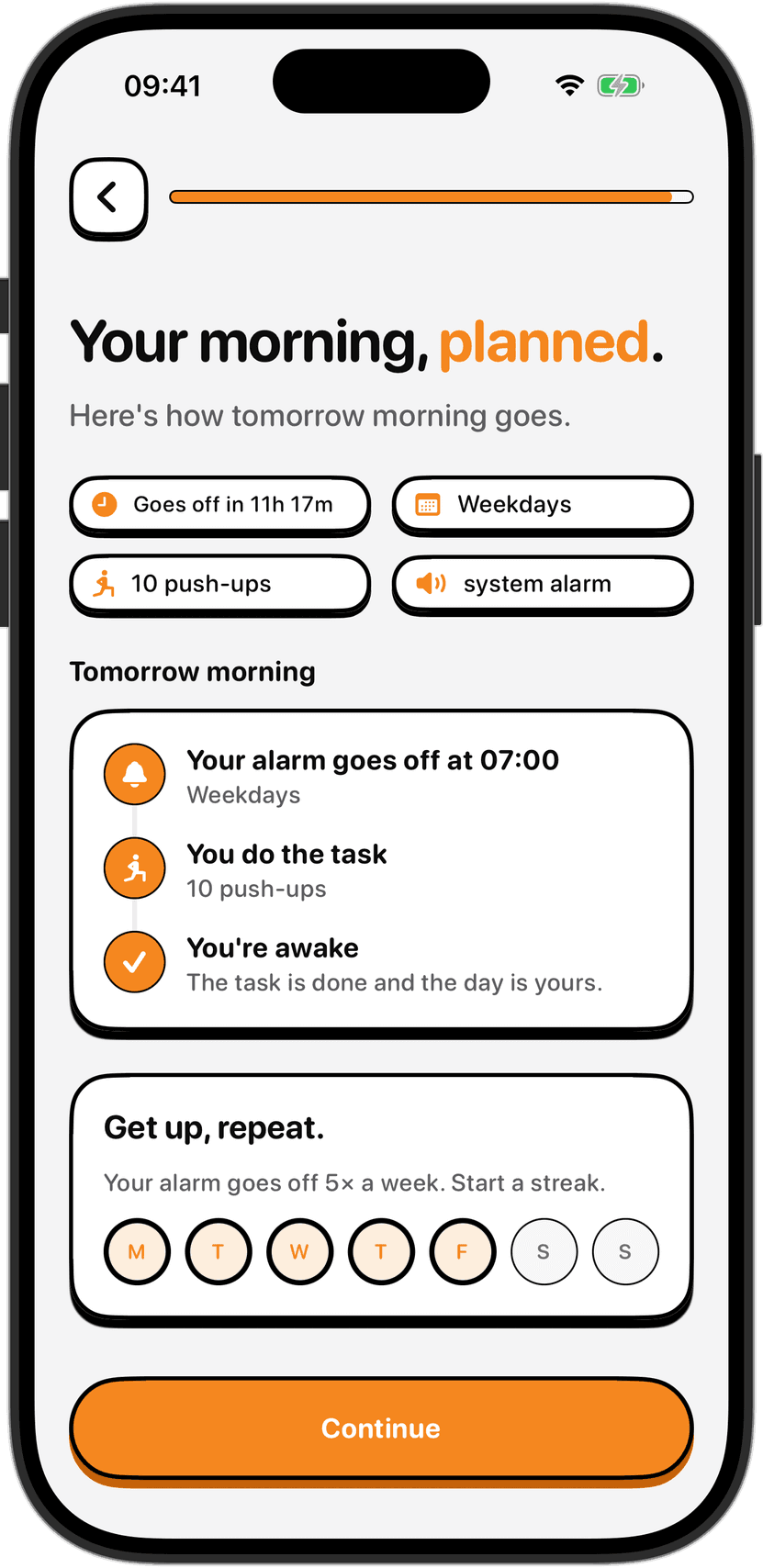
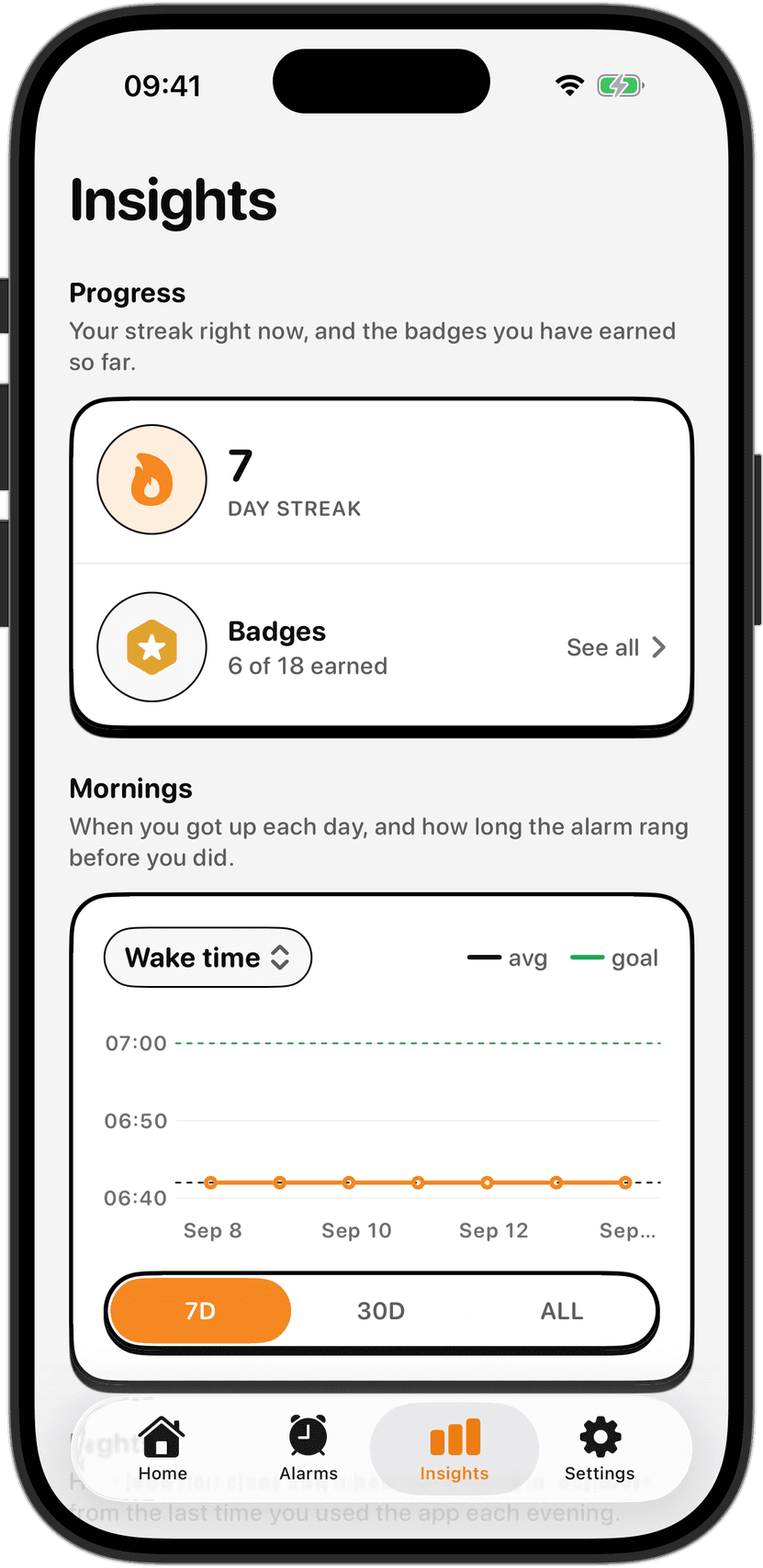
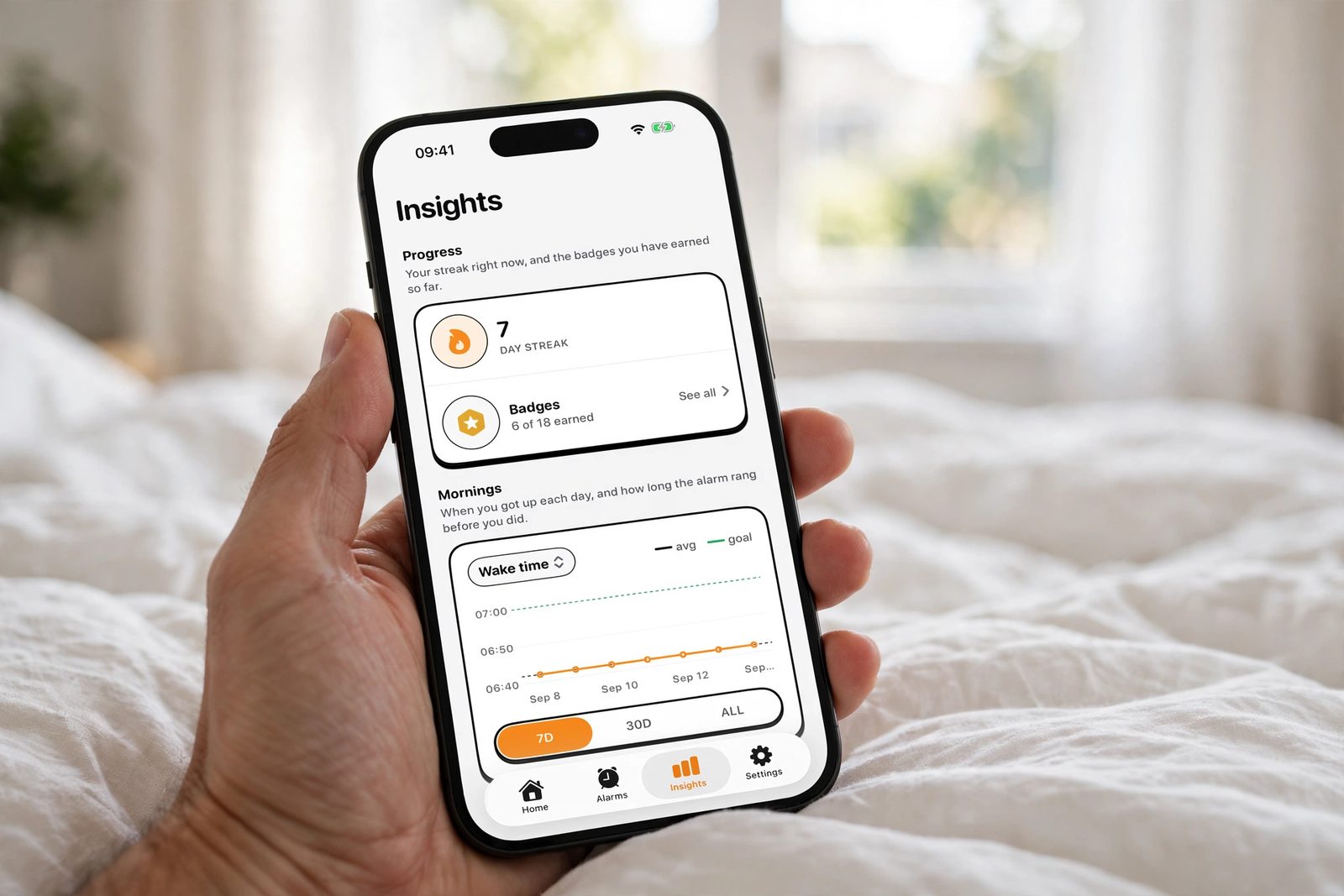
Once you know roughly what you need, the harder part is usually holding the same wake time every day, including weekends, which is the same fixed point that cognitive behavioral therapy for insomnia builds around. NoNap, the iPhone alarm app we build, doesn't tell you how many hours to sleep. What it does is make sure the wake up side of that schedule actually holds: one alarm, no snooze, built on Apple's system alarm so Silent mode and Focus don't mute it, and a task like a few push ups or a math problem to finish before it stops (math is the safer pick if exercise first thing isn't right for you). The insights screen tracks your wake time night to night, which is a plainer way to see your own pattern than trying to remember a week of numbers.
A number like seven hours is useful precisely because it's blunt. It tells almost everyone where the floor is. Everything past that floor, the extra hour some people need and others don't, comes from paying attention to your own pattern rather than someone else's study, and that part doesn't get faster just because a weekend of catch up sleep feels good.
Sources
Watson NF, Badr MS, Belenky G, et al. Recommended Amount of Sleep for a Healthy Adult: A Joint Consensus Statement of the American Academy of Sleep Medicine and Sleep Research Society. Sleep, 2015;38(6):843-844. doi.org/10.5665/sleep.4716
Hirshkowitz M, Whiton K, Albert SM, et al. National Sleep Foundation's Sleep Time Duration Recommendations: Methodology and Results Summary. Sleep Health, 2015;1(1):40-43.
He Y, Jones CR, Fujiki N, et al. The Transcriptional Repressor DEC2 Regulates Sleep Length in Mammals. Science, 2009;325(5942):866-870.
Shi G, Xing L, Wu D, et al. A Rare Mutation of β1-Adrenergic Receptor Affects Sleep/Wake Behaviors. Neuron, 2019;103(6):1044-1055. doi.org/10.1016/j.neuron.2019.07.026
Division of Sleep Medicine, Harvard Medical School. How Much Sleep Do You Need? Healthy Sleep, last reviewed October 2021, accessed August 2026. sleep.hms.harvard.edu/education-training/public-education/sleep-and-health-education-program/sleep-health-education-92
Image credits
Cover photo by Miriam Alonso on Pexels (pexels.com/photo/sleepy-woman-waking-up-on-bed-in-morning-7622509), used under the Pexels License, which permits commercial use without payment.