Why you feel awake after an alarm but aren't
Sleep-deprived adults often feel alert while their attention slips. What a 2003 study and two 2023 to 2024 studies on waking found, and why it matters.
Visana Studios
5 min read
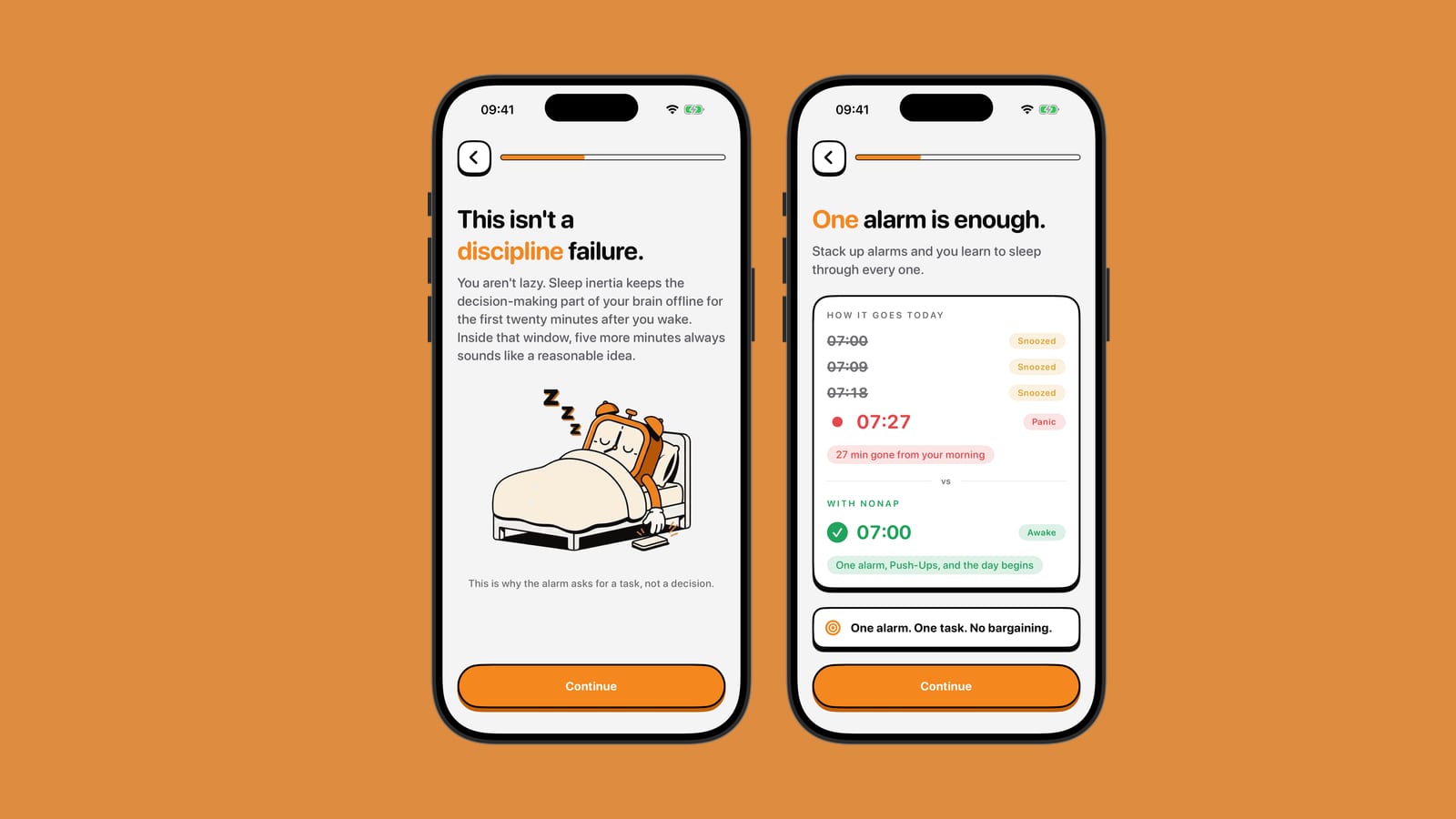
People who have slept badly often report feeling reasonably alert. Their reaction times may tell a different story. The gap between how awake you feel and how well you perform is one of the more useful findings in sleep research, and it matters most in the first minutes after an alarm goes off.
Ratings and performance drift apart
In 2003, Van Dongen, Maislin, Mullington and Dinges published a study in the journal Sleep. They assigned 48 healthy adults, aged 21 to 38, to restricted sleep schedules. Some were allowed 8, 6 or 4 hours in bed a night for 14 days. Others had no time in bed for three nights. Each group also had three baseline days and three recovery days.
Lapses in behavioural alertness rose with the length of time people had been awake. The authors related the lapses to cumulative wakefulness and found the relationship was close to linear once people had been awake for about 15.84 hours. Sleepiness ratings followed a different pattern. They jumped in the first few days and then changed relatively little, even as performance kept sliding.
The authors suggested that people were largely unaware of how much their performance had dropped. That may be why chronic short sleep often looks harmless from the inside. The study is a laboratory one about weeks of restricted sleep, not a single rough morning. It still points to the same practical problem: how awake you feel is an incomplete guide to how awake you are.
The first minutes after waking
Waking up is not the same as a sleep restriction study, but the core problem carries over. In 2023, Hilditch and colleagues published work in Sleep Advances on how people feel and perform after nighttime awakenings. Performance was worse than baseline at each of the four time points they tested after waking, at 2, 12, 22 and 32 minutes. Women reported a larger increase in sleepiness than men. Their cognitive performance, however, was comparable.
The same group reported an at-home study of a light intervention in Sleep Health in 2024. Light improved people's self-rated alertness and energy. It did not improve their psychomotor vigilance, which is a standard reaction-time test. In the control condition, the reaction test was faster and had fewer lapses. People in the light condition felt more switched on than those in the control group, but the measured responses did not follow the feeling.
None of these studies gives a duration for the foggy stretch that applies to everyone. The sleep inertia post covers the fog itself in more detail. What these results add is a reason not to trust the first sense of being awake as proof that you are. The question at 7 am is rarely whether you could go back to sleep. It is whether you can make a safe decision in the next half hour, and that is a question a feeling cannot answer.
What this means for a 7 am alarm
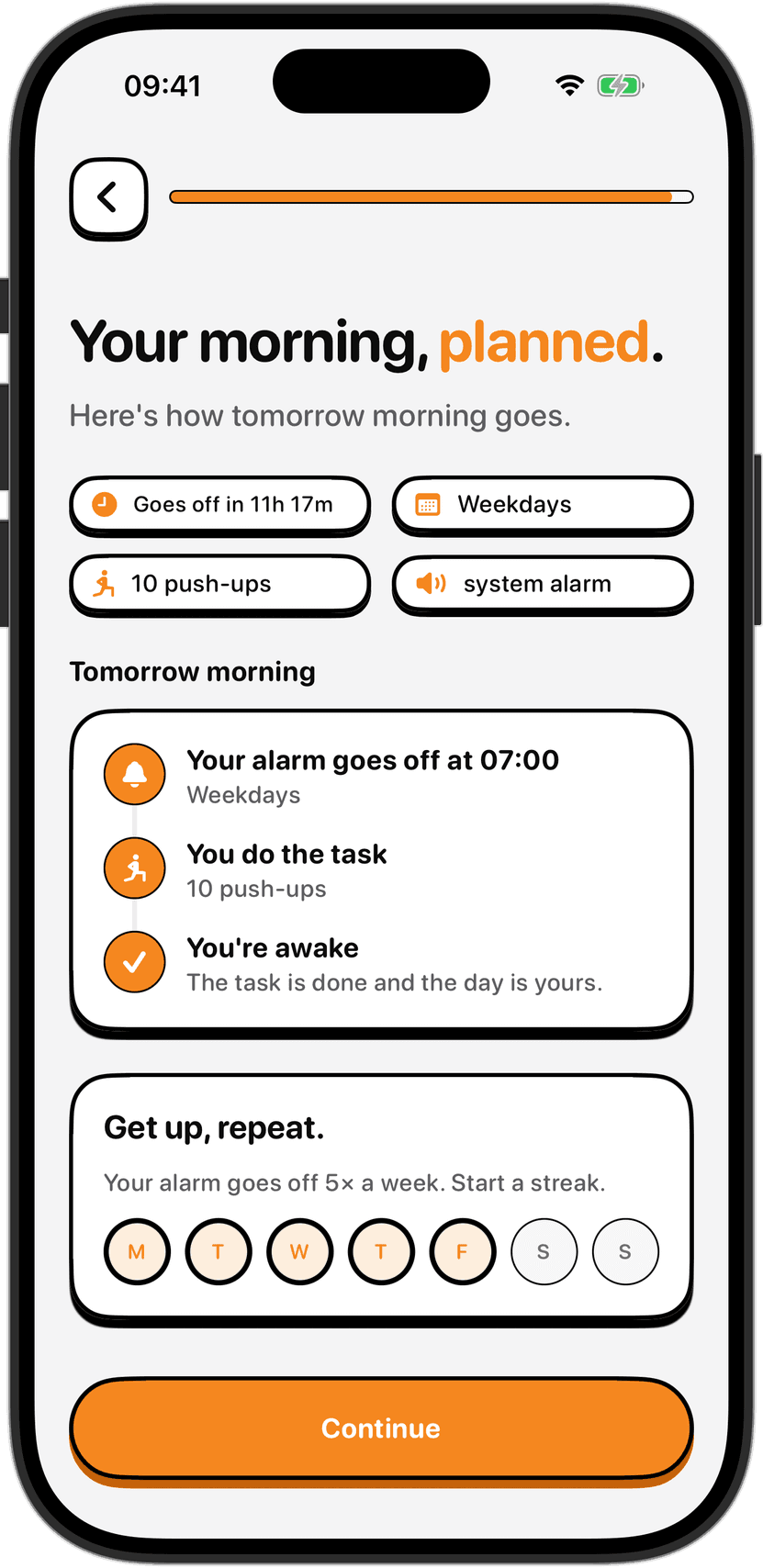
Treat the first few minutes as a period when your own judgement is the least reliable tool you have. That changes what you do with them. Avoid decisions that need a sharp mind, such as driving, crossing a busy road, or taking stairs quickly, until you have had time to settle. Pick your morning plan the night before, when you are thinking clearly, rather than deciding in bed what the day should look like.
It also explains why a snooze feels like a clear decision when it is made by a brain still in the fog. Getting up and doing something concrete is a more dependable plan than trusting how you feel on the first wake.
How NoNap handles this
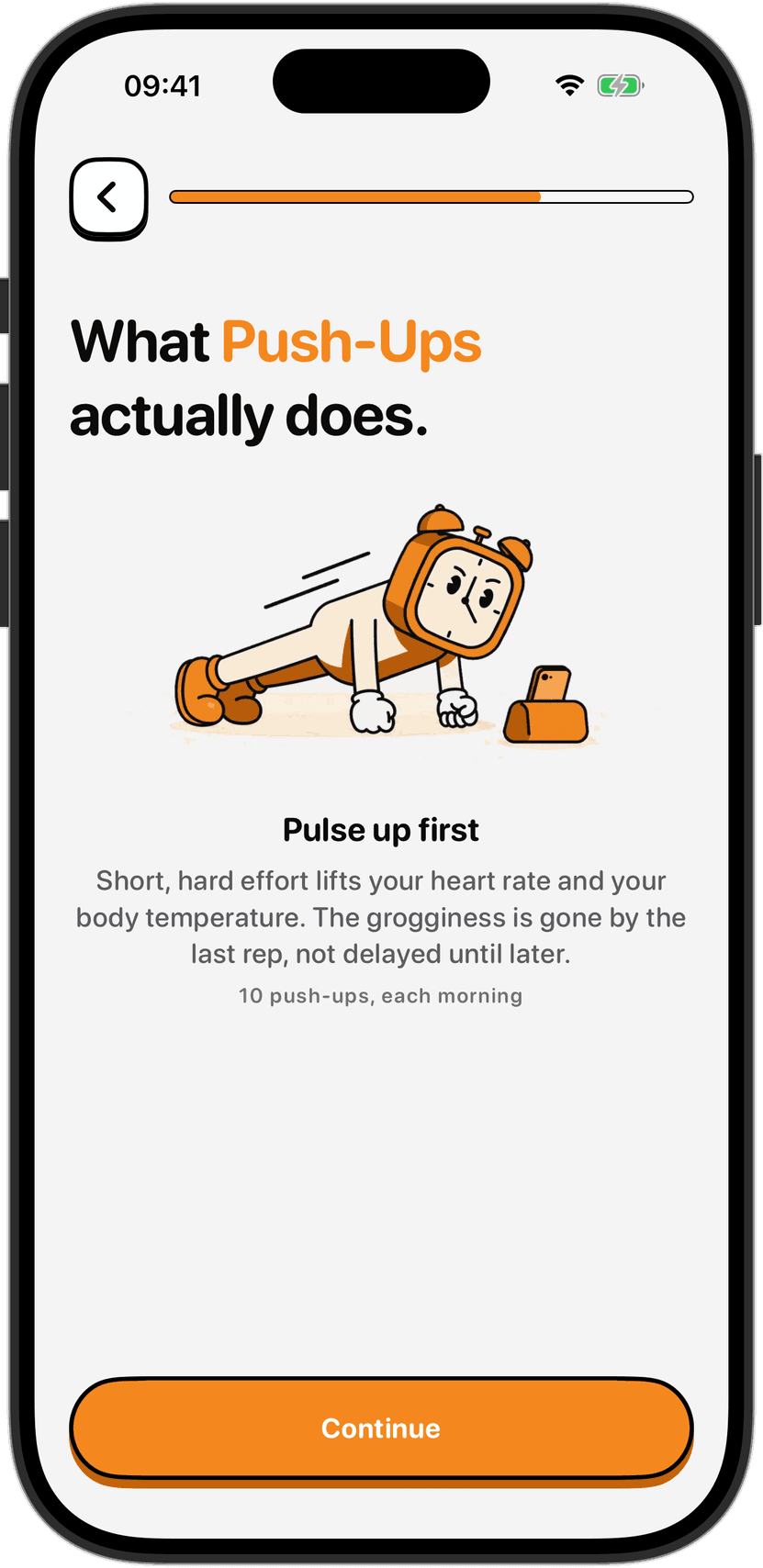
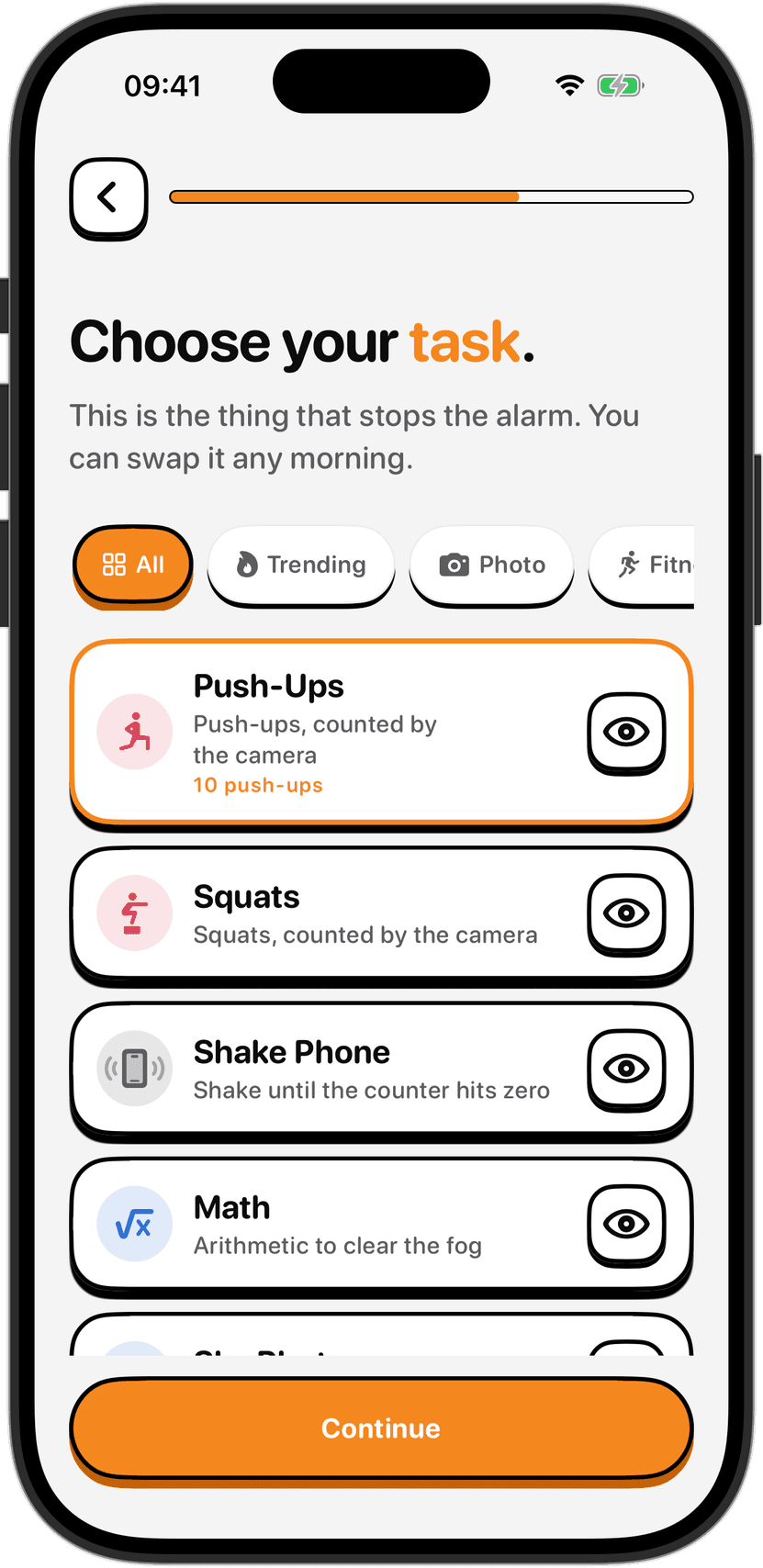
NoNap does not measure alertness, and it does not claim to. The alarm asks you to finish a wake task you chose in advance. Push-Ups, Squats, Dance and 67 are counted by the camera on your device. The Math task asks you to solve a problem on screen. The alarm stops when the task is done, so the morning becomes a finish line rather than a question about how awake you feel.
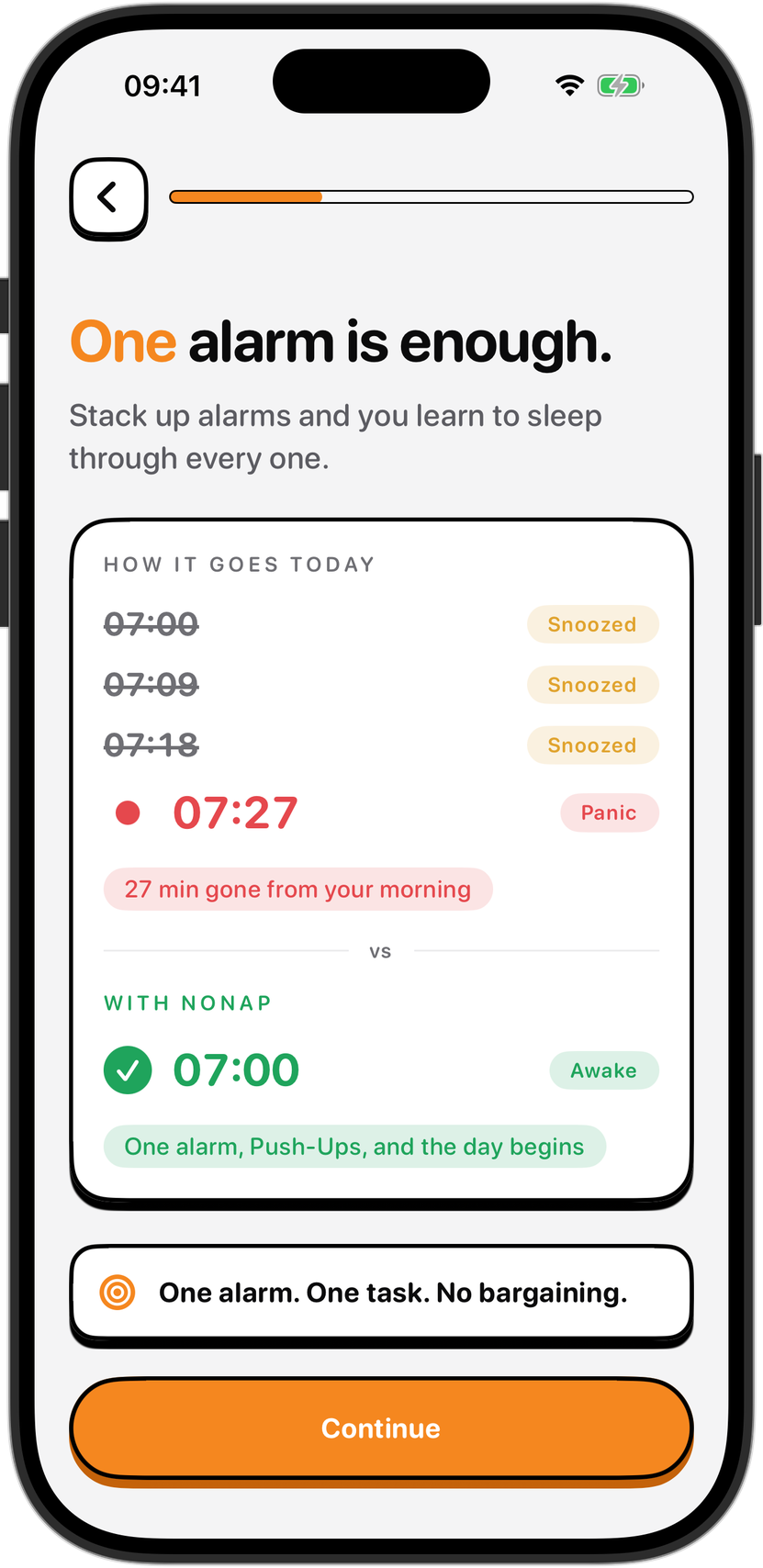
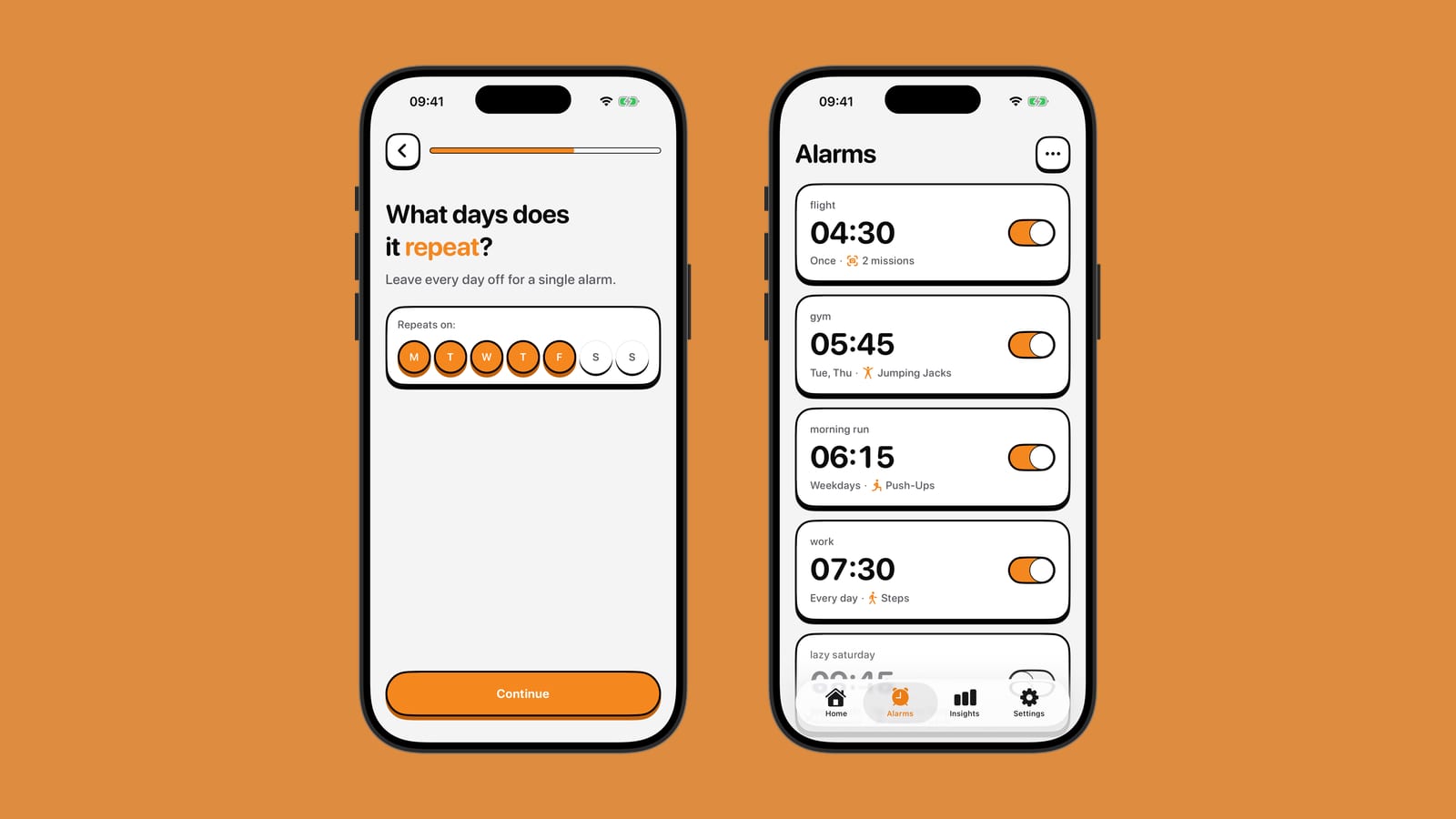
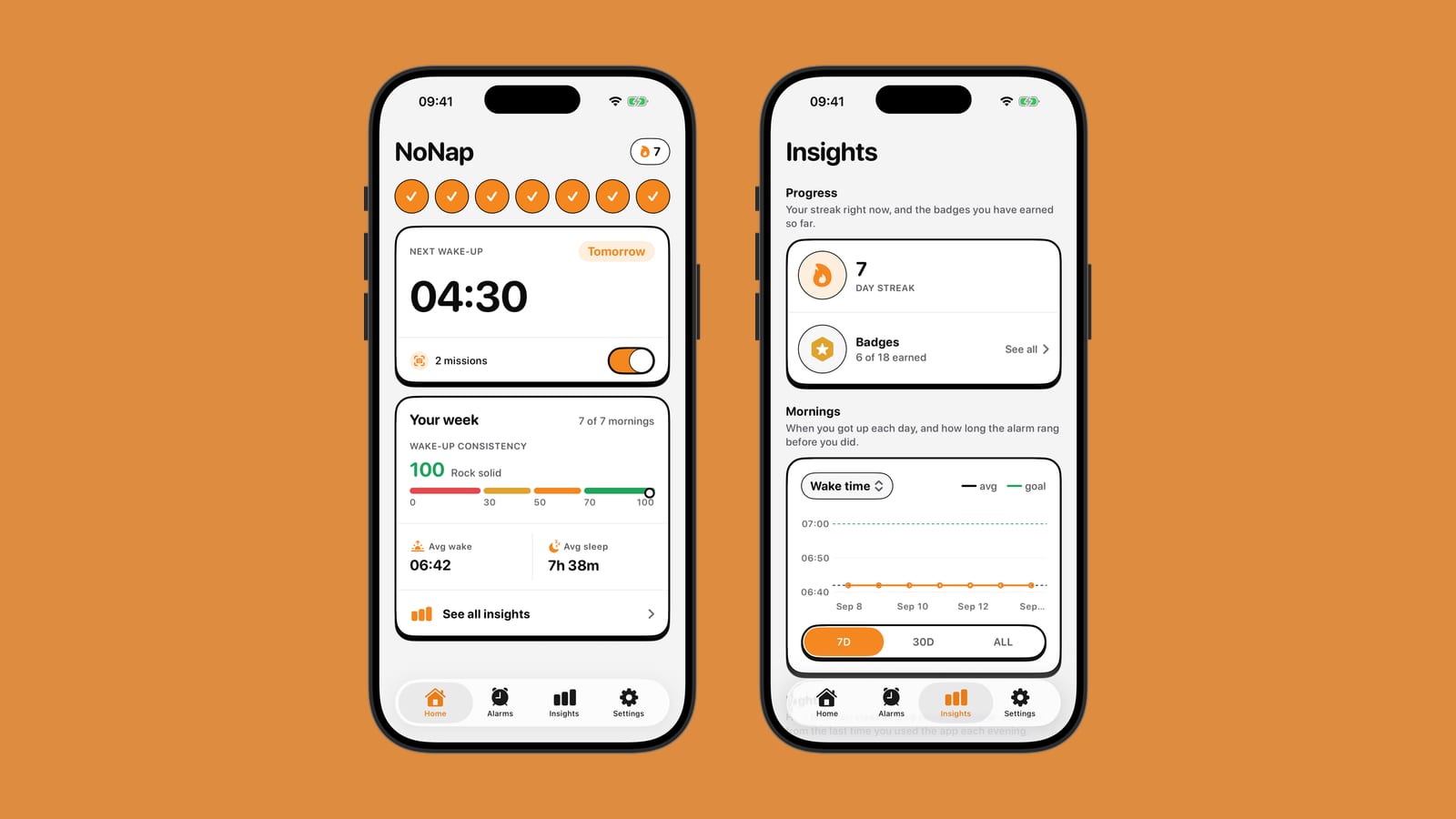
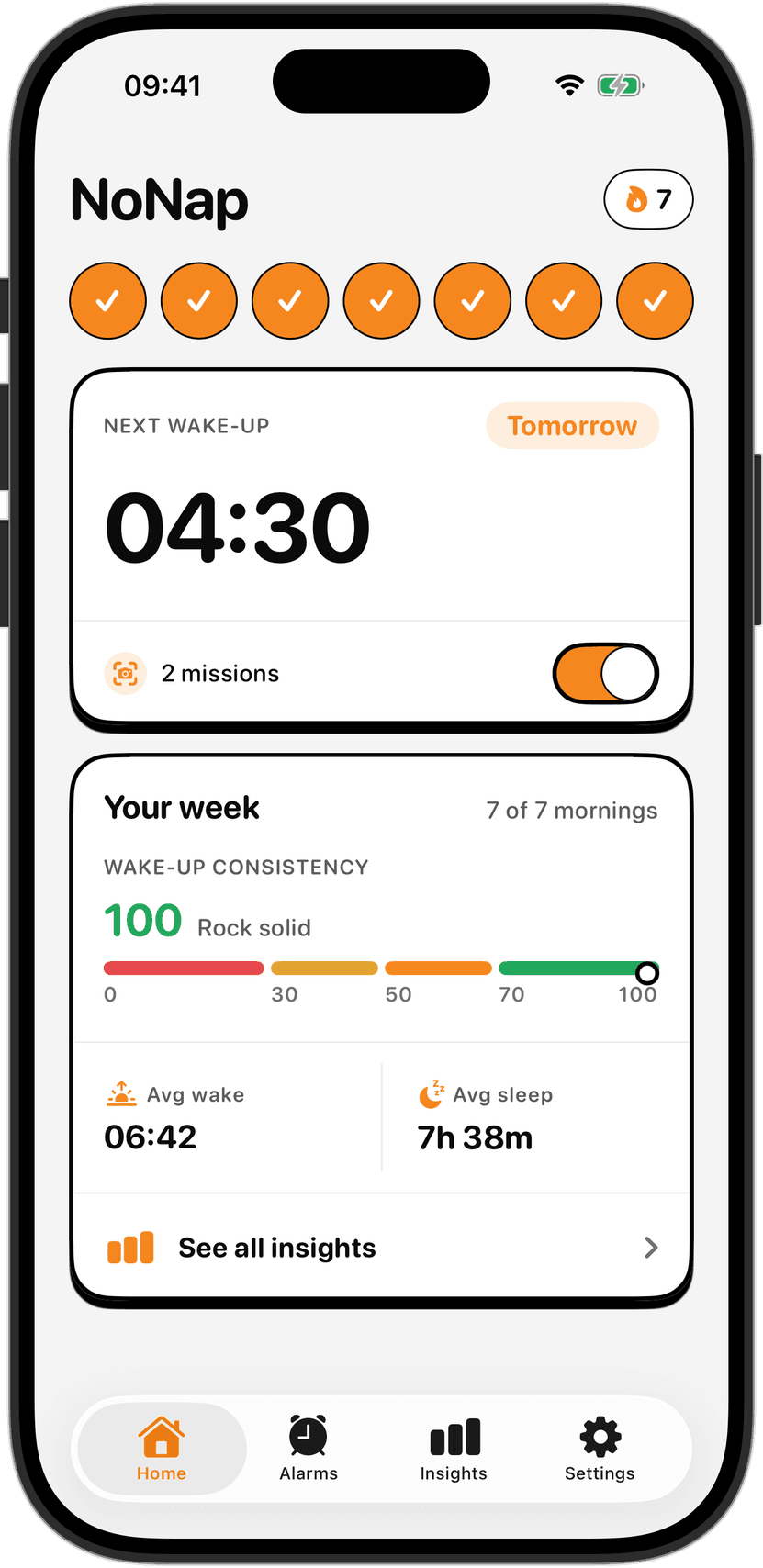
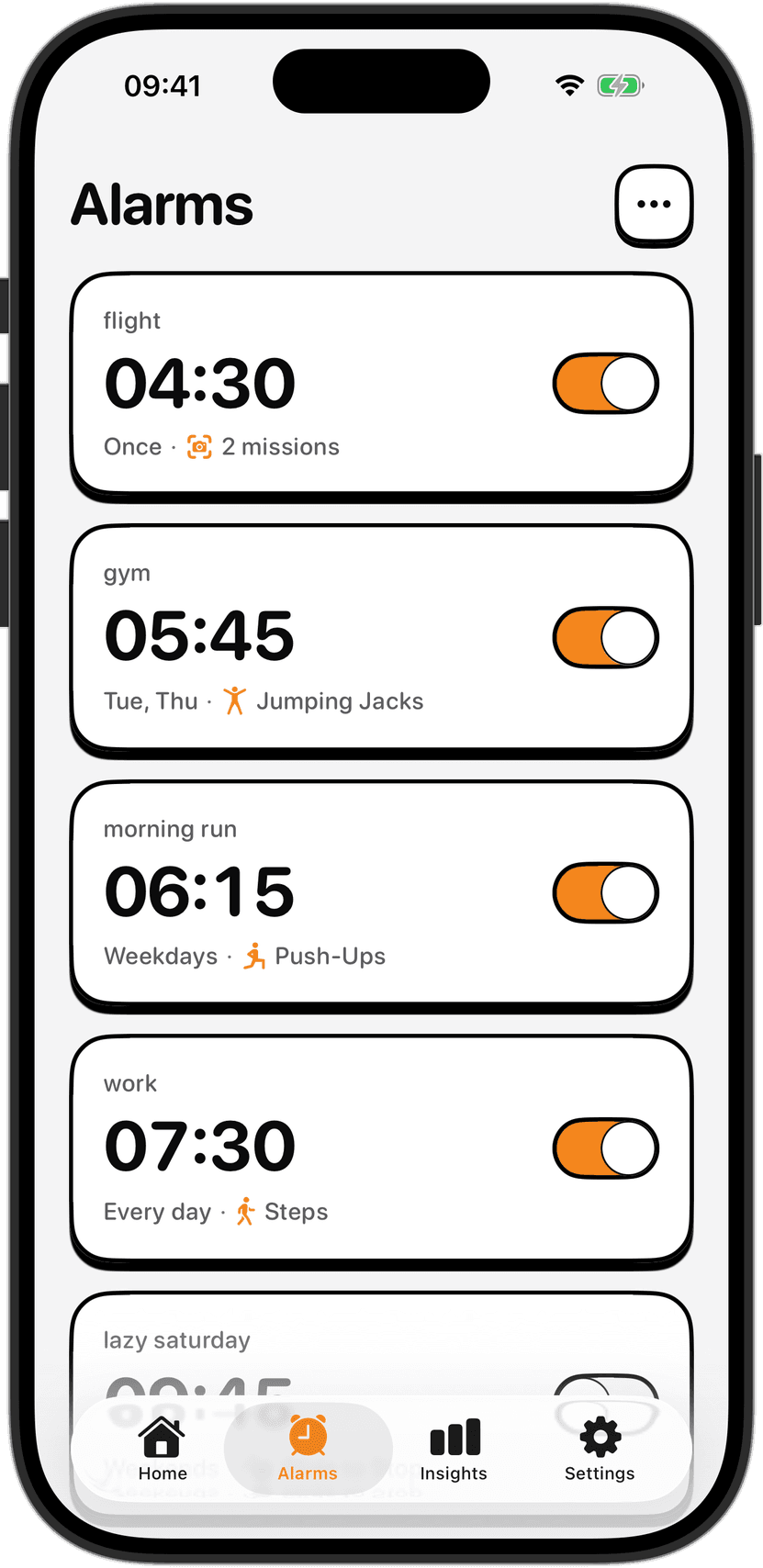
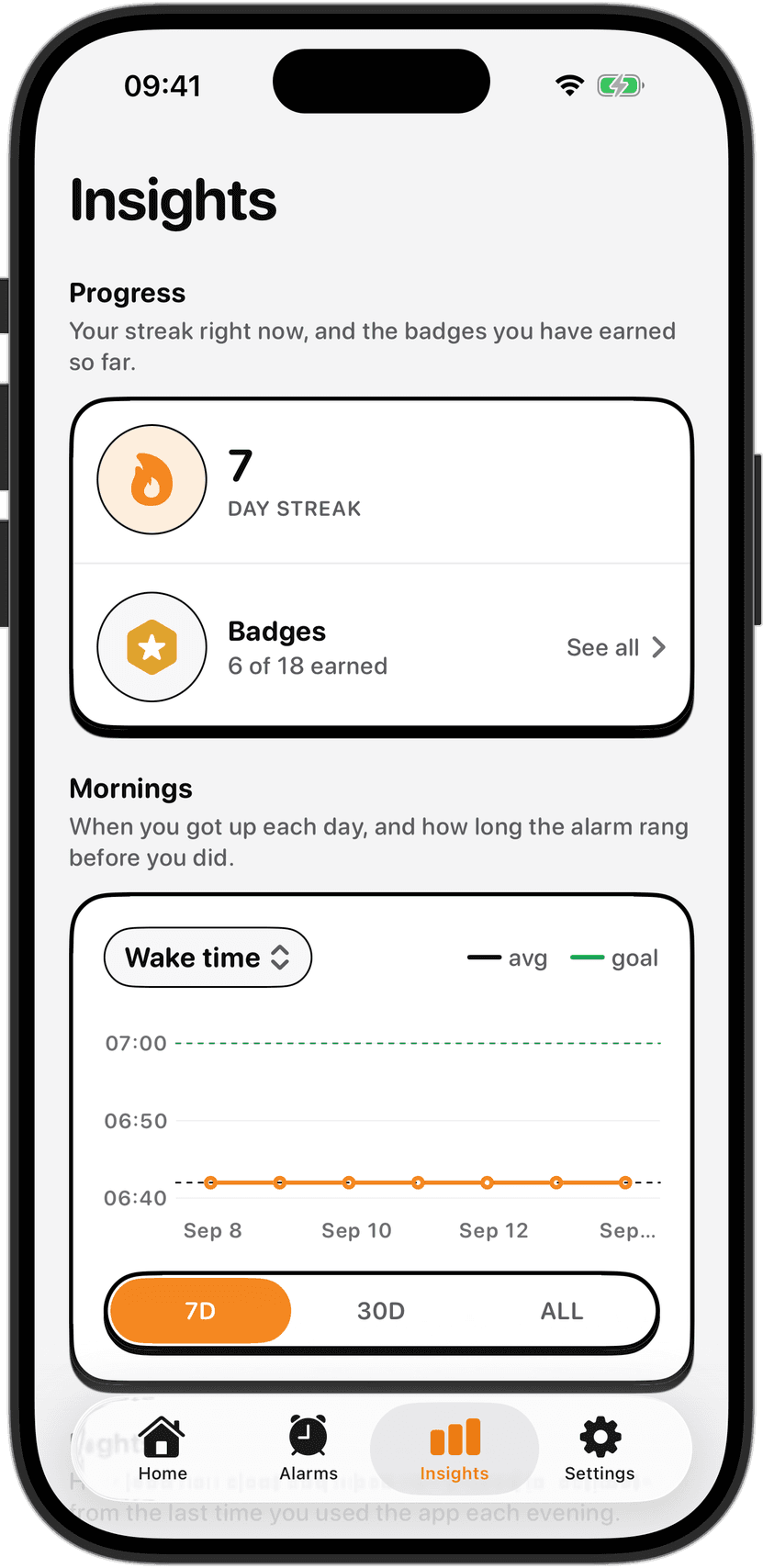
The alarms list and the wake-up charts show the gap between the time you set and the time you actually got up. Over a few weeks that gap is more useful than any single morning's sense of readiness. You can see the pattern in the streaks and insights rather than guessing from memory.
Movement right after waking carries its own risk. Check the space around you before any physical task, and keep clear of stairs, glass, sharp edges and pets. Choose a task you can finish safely on a bad morning, not your best one, and stop immediately if anything hurts. If you have a heart condition, a joint or back problem, dizziness or balance issues, talk to a doctor before starting. NoNap is not medical advice. The FAQ explains how the wake task works and how to change it.
Sources
Van Dongen HP, Maislin G, Mullington JM, Dinges DF. The cumulative cost of additional wakefulness: dose-response effects on neurobehavioral functions and sleep physiology from chronic sleep restriction and total sleep deprivation. Sleep. 2003;26(2):117-126. doi:10.1093/sleep/26.2.117. The participant numbers, restriction schedules, the roughly 15.84-hour threshold, and the note that sleepiness ratings responded mainly in the first days come from this paper's abstract.
Hilditch CJ, Pradhan S, Costedoat G, Bathurst NG, Glaros Z, Gregory KB, Shattuck NL, Flynn-Evans EE. Sex differences in perceptions of sleep inertia following nighttime awakenings. Sleep Advances. 2023;4(1):zpac043. doi:10.1093/sleepadvances/zpac043. The performance-versus-baseline result at 2, 12, 22 and 32 minutes after waking, and the report that women felt sleepier while performing comparably, come from this paper.
Hilditch CJ, Pradhan S, Costedoat G, Bathurst NG, Glaros Z, Gregory KB, Shattuck NL, Flynn-Evans EE. An at-home evaluation of a light intervention to mitigate sleep inertia symptoms. Sleep Health. 2024;10(1S):S121-S129. doi:10.1016/j.sleh.2023.07.015. The finding that light raised self-rated alertness without improving psychomotor vigilance comes from this paper.
Image credits
The cover and inline image are our own NoNap app screenshots, made for this post.