Why do I yawn when I wake up?
Yawns cluster at the start and end of sleep, but the reasons are disputed. What the brain-cooling idea, its critics and sleep inertia research show.
Visana Studios
5 min read
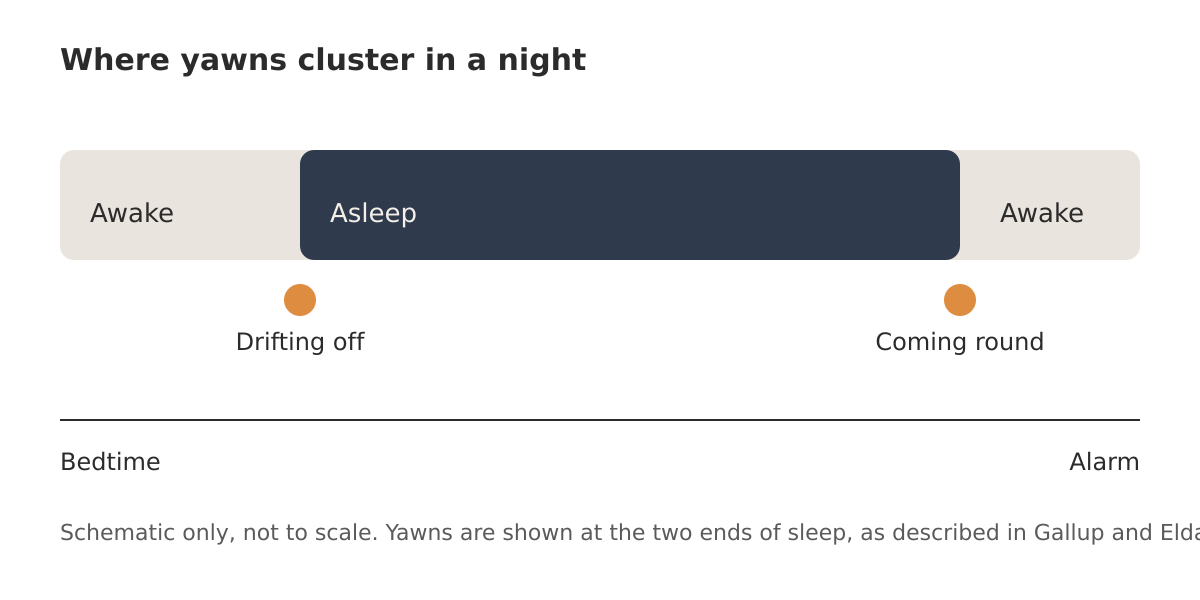
Yawns cluster at the edges of sleep. You yawn as you drift off, and you yawn again as you come round in the morning, sometimes before you have opened your eyes. Why it happens is still an open question, and the explanations on offer do not agree with one another.
When yawns happen, and the brain-cooling idea
A 2013 review in Frontiers in Neuroscience by Andrew Gallup and Omar Eldakar says yawning occurs most often before sleep onset and after waking. It cites a 1987 study by Provine and colleagues for that pattern. The review was written by supporters of the brain-cooling theory, so its summary is their reading of the evidence rather than a neutral survey.
The theory itself says yawns cool the brain. The authors point out that brain temperature is at its peak in the evening and begins rising from its lowest point when you wake. Yawns fall at those moments, and the authors read that as support for the idea.
The best-known experiments came from Gallup and Gordon Gallup Jr. at the University at Albany. They published them in Evolutionary Psychology in 2007, and they studied contagious yawning, the kind that follows watching someone else yawn. In the first experiment, students told to breathe through their nose did not yawn at all. Students who breathed normally or through their mouth yawned about 48 percent of the time. In the second, students held a cold pack to their forehead. Contagious yawning fell to about 9 percent, against 41 percent with a warm or room-temperature pack.
Those are striking numbers, and they come from small groups. Each experiment used a few dozen students, and a result like this needs repeating in larger groups before it carries much weight. The cooling step is also the hardest part to test. The 2013 review cites two human case reports in which oral temperature fell by about 0.4 degrees Celsius after yawning. Two people make a thin basis for a general claim about how yawning works.
The case against the cooling idea
In 2010 Guggisberg and colleagues published a critical review in Neuroscience and Biobehavioral Reviews. They went through the experiments behind the main explanations of yawning, which were respiratory, arousal and thermoregulatory. They found little support for the physiological explanations. What they found growing support for was a communicative role, in which yawns signal drowsiness, boredom or mild stress to the people nearby.
The 2013 review does not hide the weak spot. It says there is "conflicting evidence from studies measuring an arousal response accompanying yawning." It also reports that yawning rises with ambient temperature in budgerigars, rats and humans, first increasing and then falling as the air approaches body temperature. That pattern fits the cooling idea, but it does not prove it.
So the honest position is this. Yawns cluster at the edges of sleep. One theory says they cool the brain, and the evidence for that is still thin. Another says they signal a state to the people around you. Neither has shown convincingly that a yawn makes you more alert.
Does a yawn clear the morning fog?
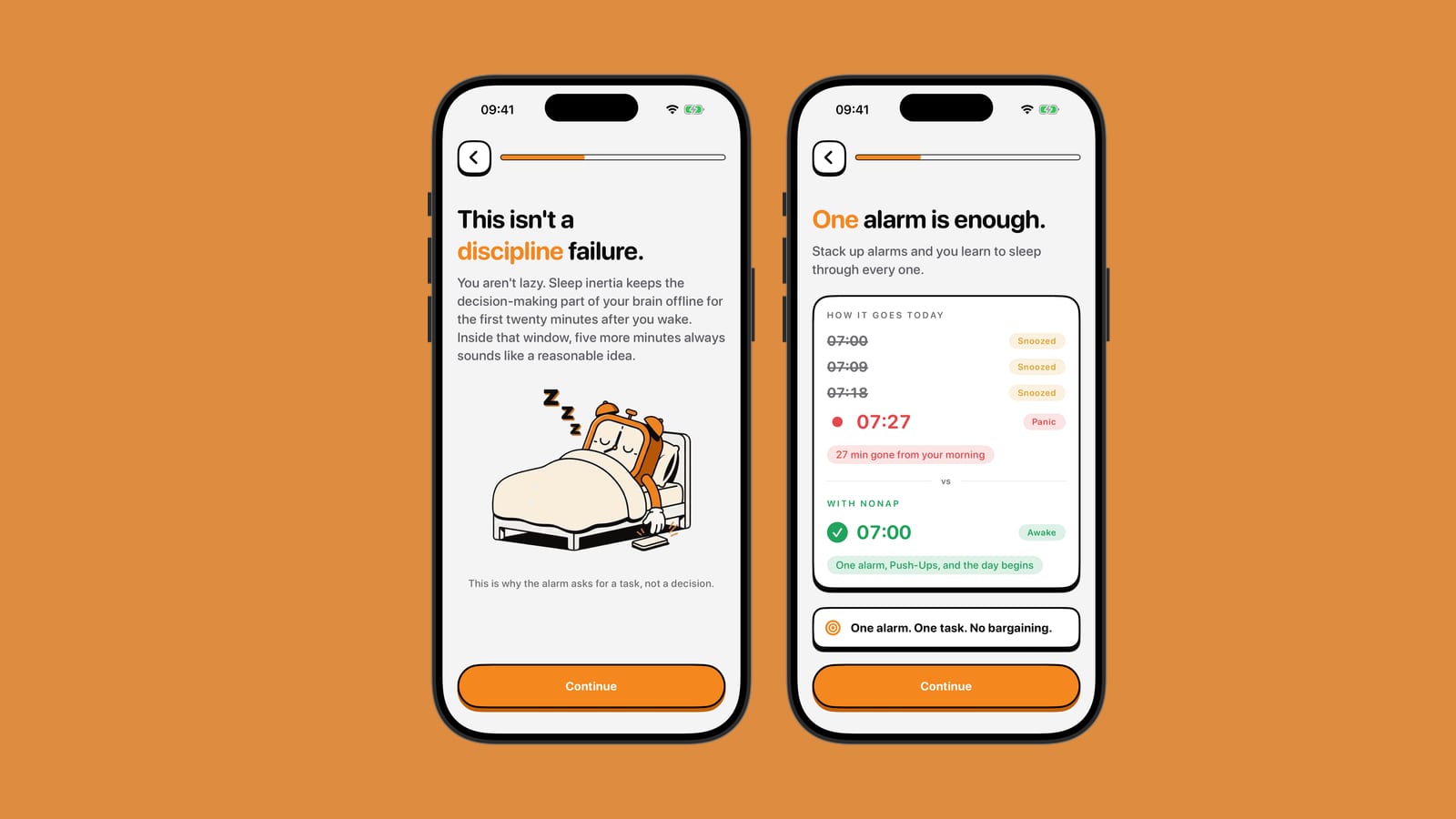
This is the question that matters most for an alarm, and the sleep inertia research is clearer than the yawning research. Sleep inertia is the grogginess right after waking. In a 1999 study in the Journal of Sleep Research, Jewett and colleagues measured alertness and performance straight after people woke. Both dropped, and they took about two to four hours to return to near baseline.
The stage of sleep at waking had no detectable effect. The impairment also appeared whether people got up and carried on with a normal morning, or stayed in bed under dim light during a controlled protocol. So getting up did not spare anyone the impairment in that study.
Jewett and colleagues did not measure yawning, so their work cannot say whether yawns help. No controlled study that the sources here cite has tested whether yawning shortens sleep inertia. A yawn at 7am is best read as a sign that the brain is changing state, not as a shortcut through the grogginess. For the wider picture, see the sleep inertia and the snooze button post.
Occasional yawning in the morning is not a reason to see a doctor. Yawning through the day, sleepiness after a full night, loud snoring or pauses in breathing are different. Those can point to a sleep disorder, and a doctor is the right person to check. The sleep apnea warning signs post lists the patterns to watch for.
Where NoNap fits
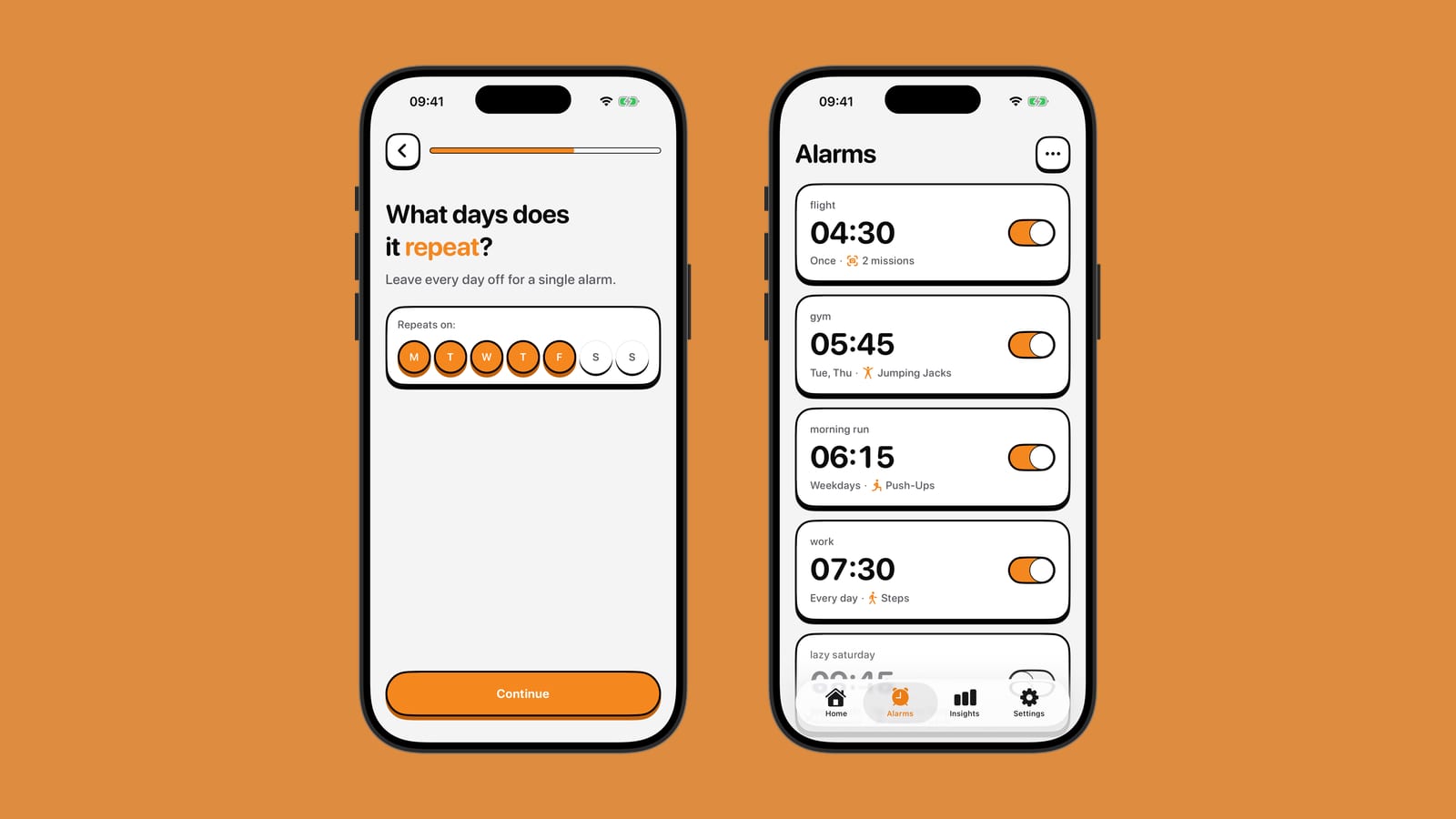
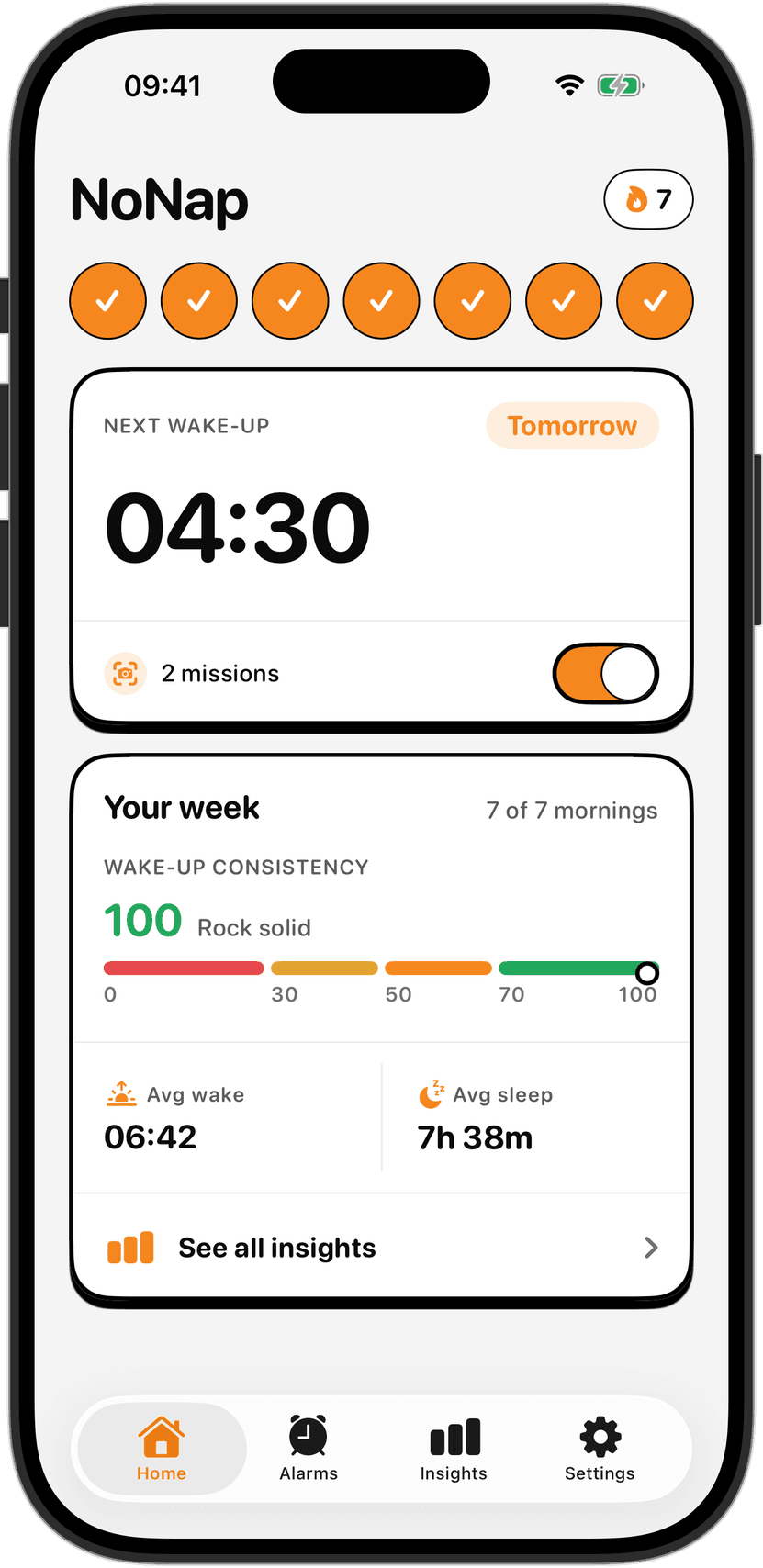
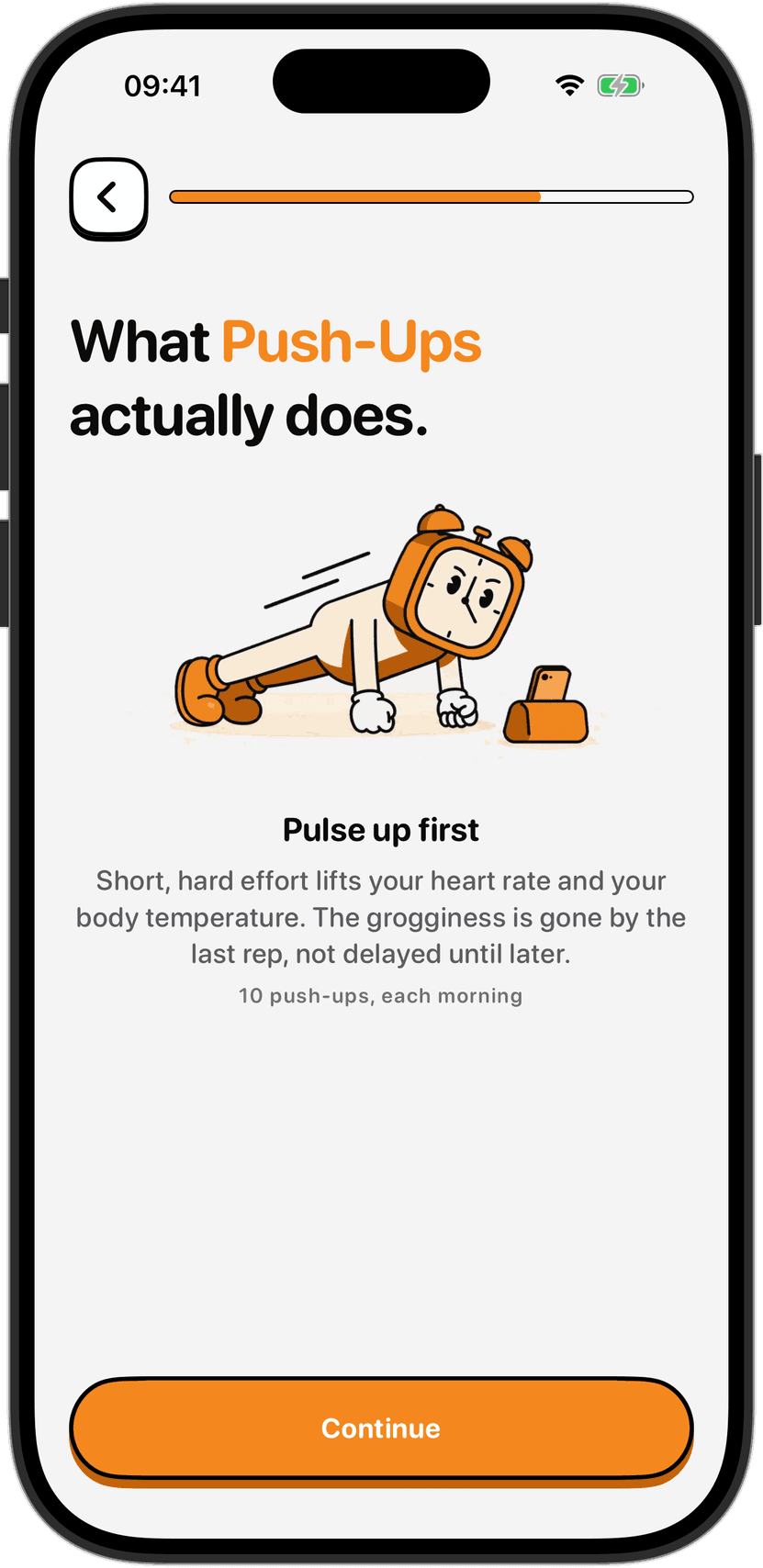
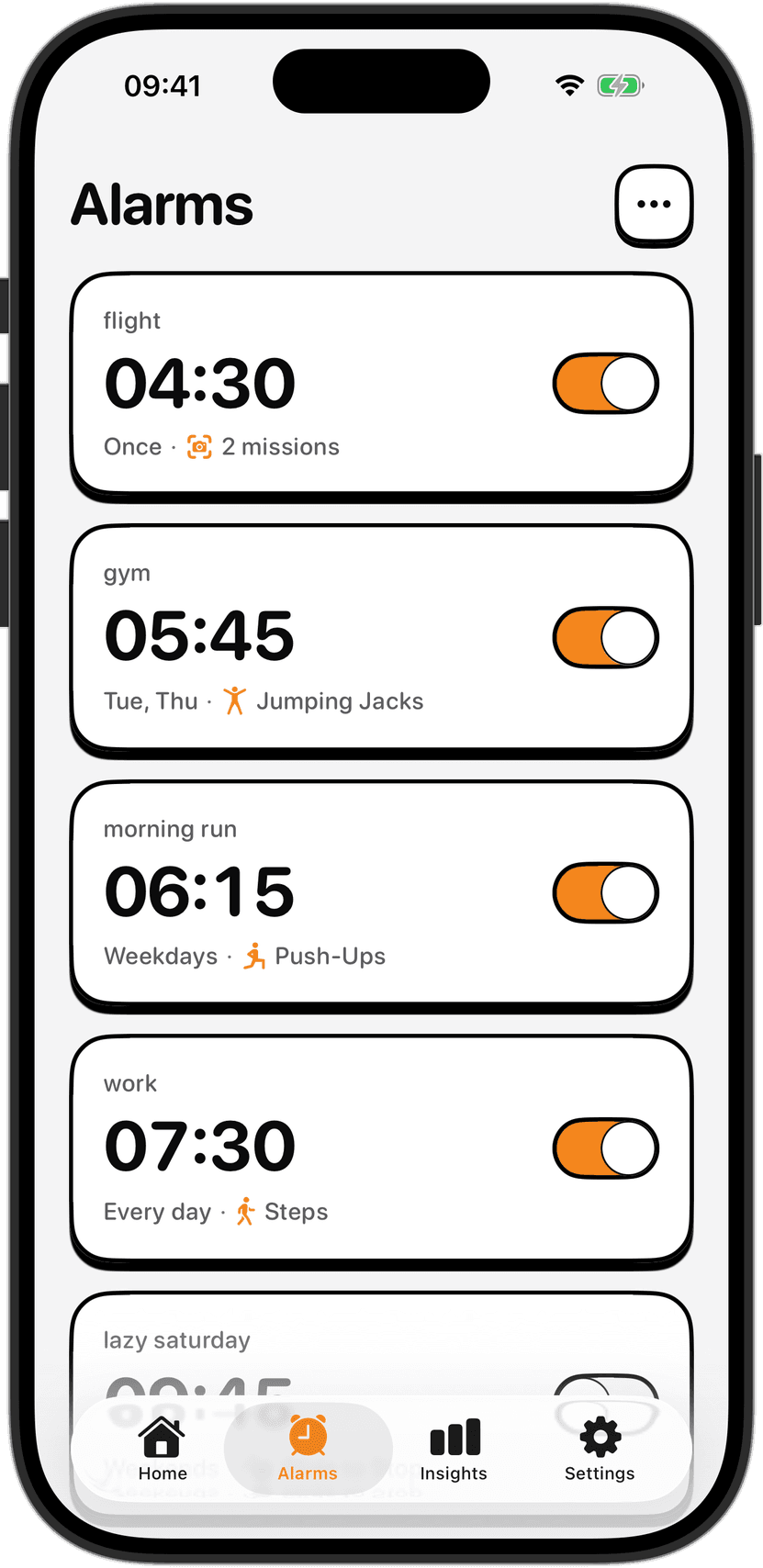
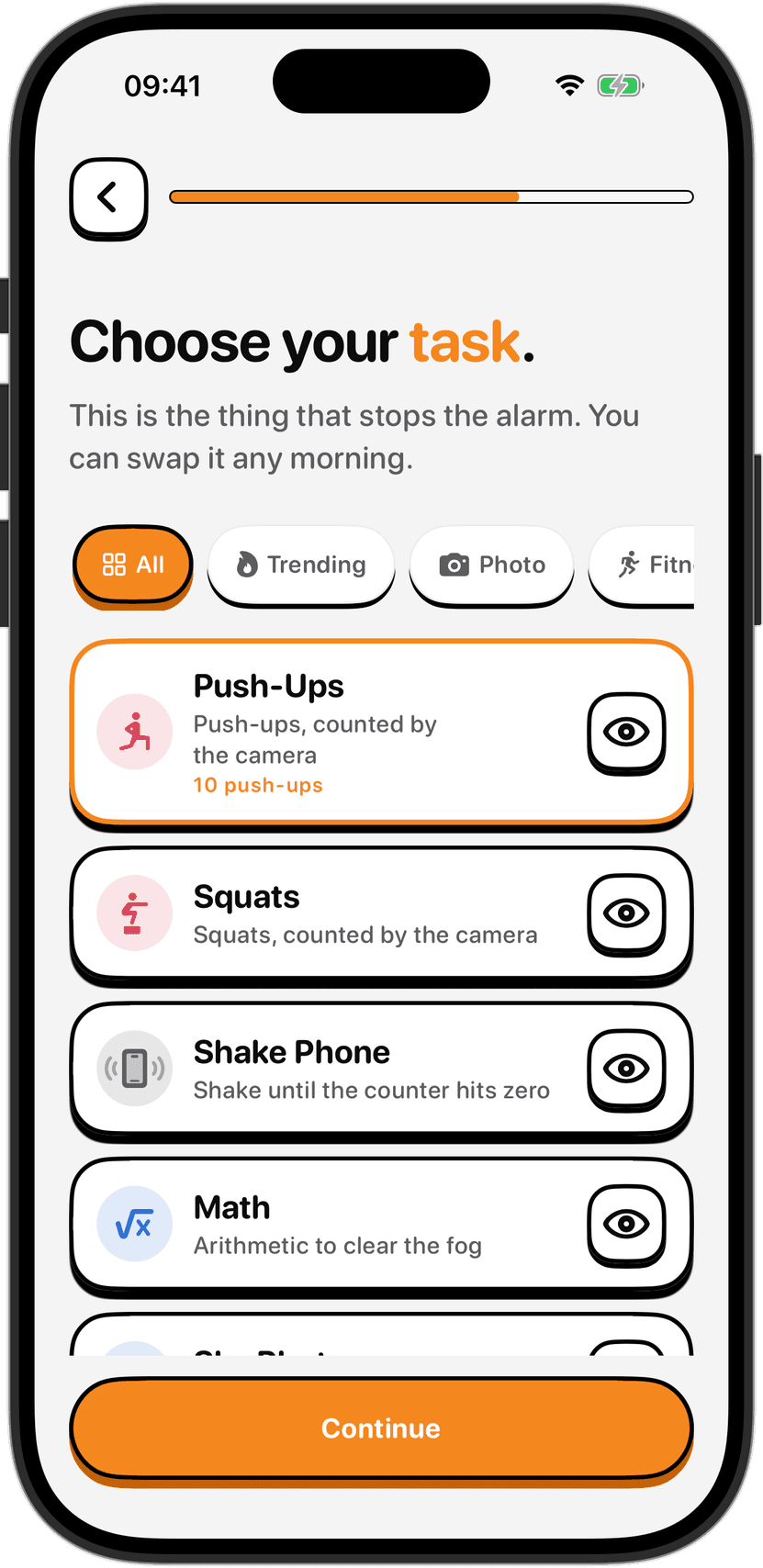
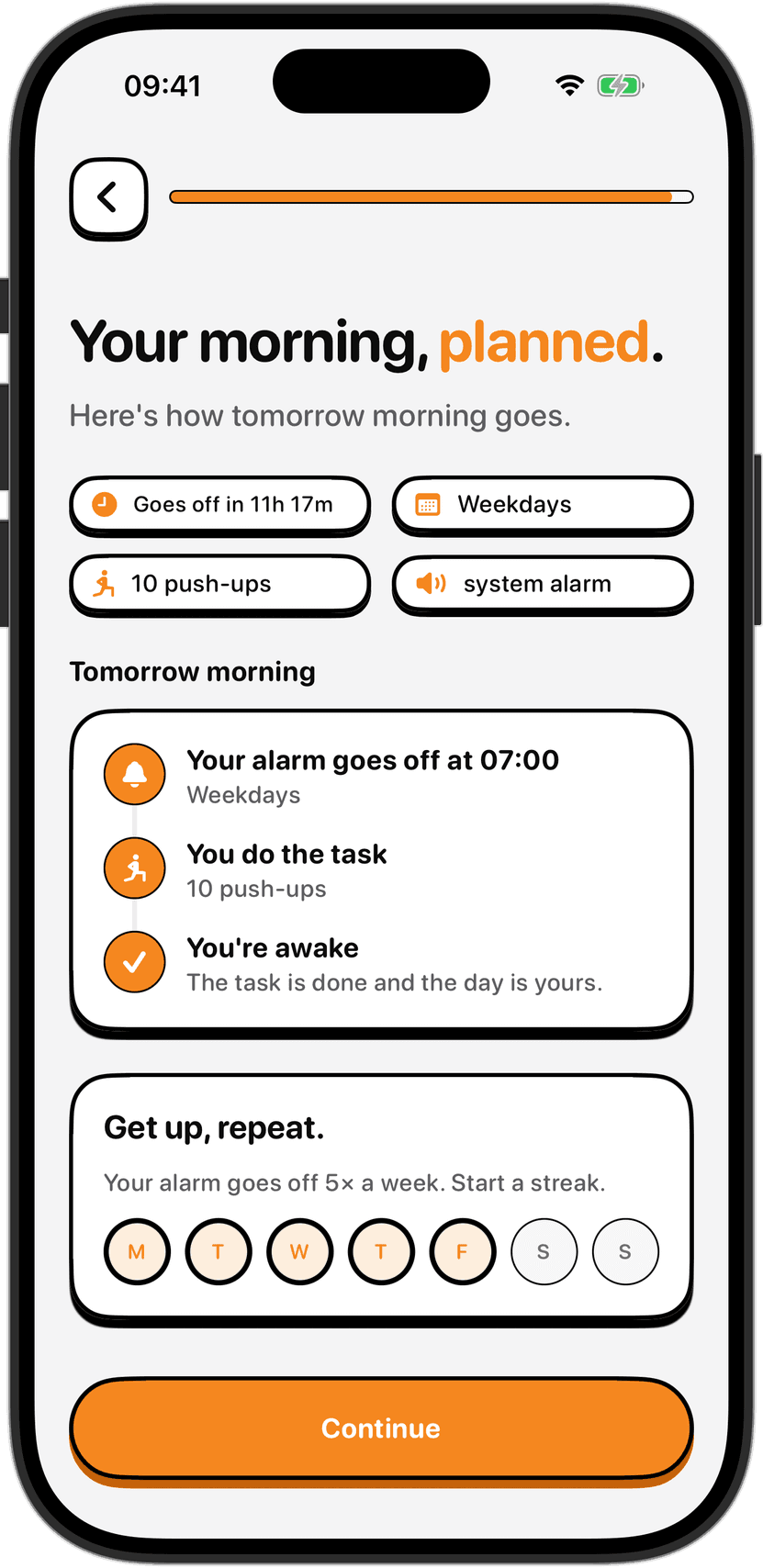
NoNap does not look at how you feel. It does not measure yawns, grogginess or sleep. It asks you to finish a wake task you chose in advance before the alarm stops, such as Push-Ups, Squats or Math. The camera checks the movement tasks on your device, and the Math task involves no movement at all.
If you pick a movement task, clear the space around you before you start. Keep away from stairs, glass and other people, and stop at once if anything hurts. Pick a task you can finish on a bad morning, not the one that sounds most impressive at bedtime.
Sources
Gallup AC, Gallup GG Jr. Yawning as a brain cooling mechanism: nasal breathing and forehead cooling diminish the incidence of contagious yawning. Evolutionary Psychology. 2007;5(1):92-101. https://doi.org/10.1177/147470490700500109. The study design and percentages in this post were read from a reproduction of the paper at https://baillement.com/dossier/cooling-gallup.html, because the publisher page could not be retrieved.
Gallup AC, Eldakar OT. The thermoregulatory theory of yawning: what we know from over 5 years of research. Frontiers in Neuroscience. Published 2013. https://doi.org/10.3389/fnins.2012.00188. Source for the timing of yawns, the brain temperature pattern, the two human case reports, the ambient temperature finding and the quoted line on conflicting arousal evidence.
Guggisberg AG, Mathis J, Schnider A, Hess CW. Why do we yawn? Neuroscience and Biobehavioral Reviews. 2010;34(8):1267-1276. https://doi.org/10.1016/j.neubiorev.2010.03.008. Source for the review of respiratory, arousal and thermoregulatory explanations and the communicative account.
Jewett ME, Wyatt JK, Ritz-De Cecco A, et al. Time course of sleep inertia dissipation in human performance and alertness. Journal of Sleep Research. 1999;8(1):1-8. https://doi.org/10.1111/j.1365-2869.1999.00128.x. Source for the two to four hour recovery, the lack of a sleep-stage effect and the impairment seen with and without getting up.
Image credits
The cover and the timing diagram were made for this post. No external images were used.