Does white noise actually help you sleep?
What the research shows about white noise, pink noise, and masking. The evidence is weaker than you might think.
Visana Studios
6 min read
The claim sounds reasonable enough. A fan hums. Traffic noise outside drops away. Your brain, given one stable sound instead of many unpredictable ones, stops fighting interruptions and lets you sleep. But does it actually work?
What masking is and why people think it helps
Acoustic masking is a real phenomenon. When one sound is loud enough, your ear cannot detect quieter sounds underneath it. A white noise machine produces a loud, steady hiss that, in theory, covers up random noises that would otherwise wake you: traffic, neighbors, a phone.
The brain does respond differently to predictable sound than to random noise. A steady hum is easier to tune out neurologically speaking than a sudden truck horn at 3 a.m. If masking works, it works because your sleep-bound brain stops reacting to novelty.
But predictability is not the same as actually sleeping through. Many people report that a white noise machine helps them fall asleep or sleep more soundly. That feels like proof. Feeling better in the morning is not the same as a study showing sleep improved on an objective measure. The idea is simple and has been around for decades, yet what people feel and what monitors record are often different.
What a 2021 systematic review found about the evidence
A 2021 systematic review by Riedy and colleagues in Sleep Medicine Reviews evaluated all the research on noise as a sleep aid, including white noise machines. The authors rated the evidence for continuous noise as low quality. Few studies compared noise directly to silence or placebo. Fewer still used sleep monitors and objective measures rather than asking people how they felt. Many studies involved small groups or short exposures. The research exists, but it does not yet paint a clear picture.
The reviewers also noted that the response varies widely. Some people sleep better with noise. Others sleep worse. Sensitivity to sound, personal history, and the specific noise profile all seem to matter. A sound that helps one person may irritate another.
Pink noise, slow waves, and small studies
Pink noise has attracted growing attention from sleep researchers. It has more energy in lower frequencies than white noise. But the results are mixed. A 2023 study by Vickrey and Lerner found that overnight exposure to pink noise could actually impair sleep-dependent insight and pattern detection, suggesting a more complex effect than simple masking.
Several recent studies have tested whether carefully timed auditory stimulation can increase slow-wave sleep, the deep stage most restorative for memory and brain health. A 2026 paper by Basner and colleagues in Sleep found that pink noise could mitigate some effects of environmental noise exposure on sleep.
These studies are small and specialized. Many involve people with specific conditions or use equipment most people do not have at home. What they show is that the relationship between sound and sleep is more complex than a simple on-off switch. The timing, frequency content, and phase of a sound all matter, not just whether it is there.
What research shows about white noise and sleep quality
White noise machines in everyday settings produce mixed results. A 2026 randomized controlled trial by Mousavi and colleagues in BMC Geriatrics looked at community-dwelling older adults. White noise improved some measures of sleep quality compared to no intervention, but modestly. Sleep onset latency got better. Total sleep time and daytime alertness measures were less clear.
A 2025 systematic review by Khandelwal and colleagues in Sleep Medicine X examined hospitalized patients. Again, sound machines helped some people and not others. Study quality varied widely, and publication bias may favor positive results.
One consistent pattern: white noise works better when environmental noise is actually a problem. A person in a quiet bedroom may see little benefit. Consistent sound might even become irritating over time. Living near traffic, construction, or with someone whose sleep schedule differs from yours makes masking more practical.
The gap between what you feel and what the data shows
People often swear by white noise machines. Many report falling asleep faster and waking less often. That subjective experience matters for whether you keep using one. Subjective reports of sleep are notoriously inaccurate, though. Studies that ask people how they slept often contradict sleep monitor data. Participants cannot reliably sense when they wake briefly during the night or how fragmented their sleep actually was. A white noise machine might make you feel like you slept better while objective measures show little change.
Feeling rested is itself valuable. If white noise gives you confidence that you will sleep and that confidence actually helps you relax at bedtime, the psychological effect is real, even if the acoustic masking itself does nothing.
How to try it and know if it is working
Noisy environments and shared rooms (with someone who snores or has a different sleep schedule) are where white noise is worth testing. Use it consistently for at least two weeks. Don't rely on how you feel the morning after. Watch for actual shifts in when you fall asleep and how often you wake during the night. Tracking sleep with a device or app gives clearer information than memory or mood. Compare your data before and after adding the sound to see any real change.
Volume matters. Masking requires some minimum sound level to be effective, but louder is not always better. Very loud sound can disrupt sleep in its own right. Research on infant sound machines has raised concerns about exposure levels. Most adult machines are less intense, but starting at lower volume and increasing only as needed is still the safer path.
The acoustic properties matter less than whether the particular sound lets your brain stop treating incoming audio as a threat. Some people sleep better with white noise, others with pink noise, and others with recordings of rain or waves.
A better approach to a noisy bedroom
If noise is genuinely the problem, consider earplugs before a white noise machine. Custom-molded earplugs or high-fidelity earplugs designed for sleep can reduce sound levels by 20-30 decibels without drowning out every audio input. They cost more upfront but wear and work for years and require no power.
If you are trying to wake up reliably and noise in your environment makes that harder, focusing on the noise first is worthwhile. Fixing the root problem often beats masking it. Blackout curtains for light do what masking cannot: they actually change the environment rather than adding another layer to it.
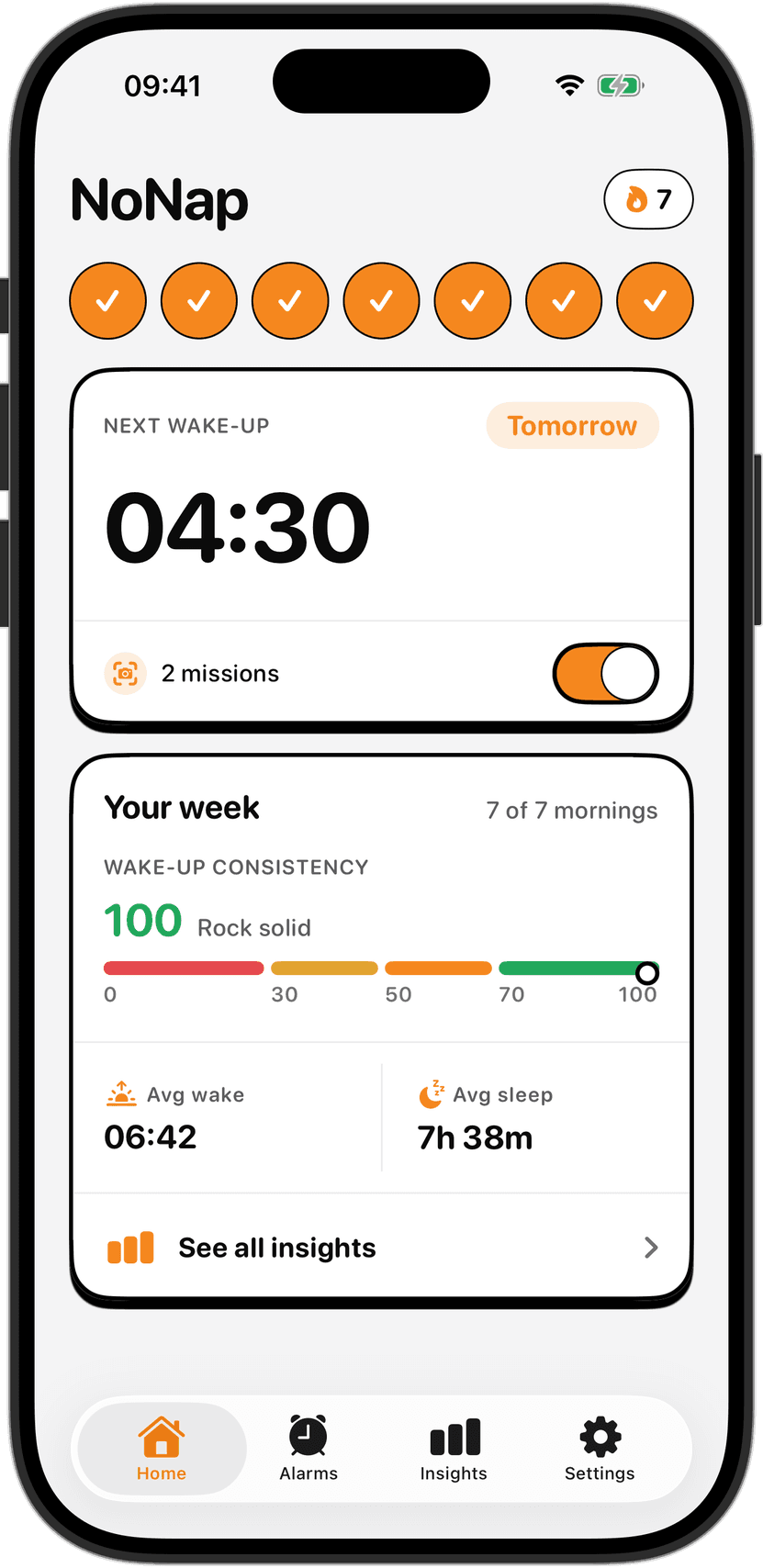
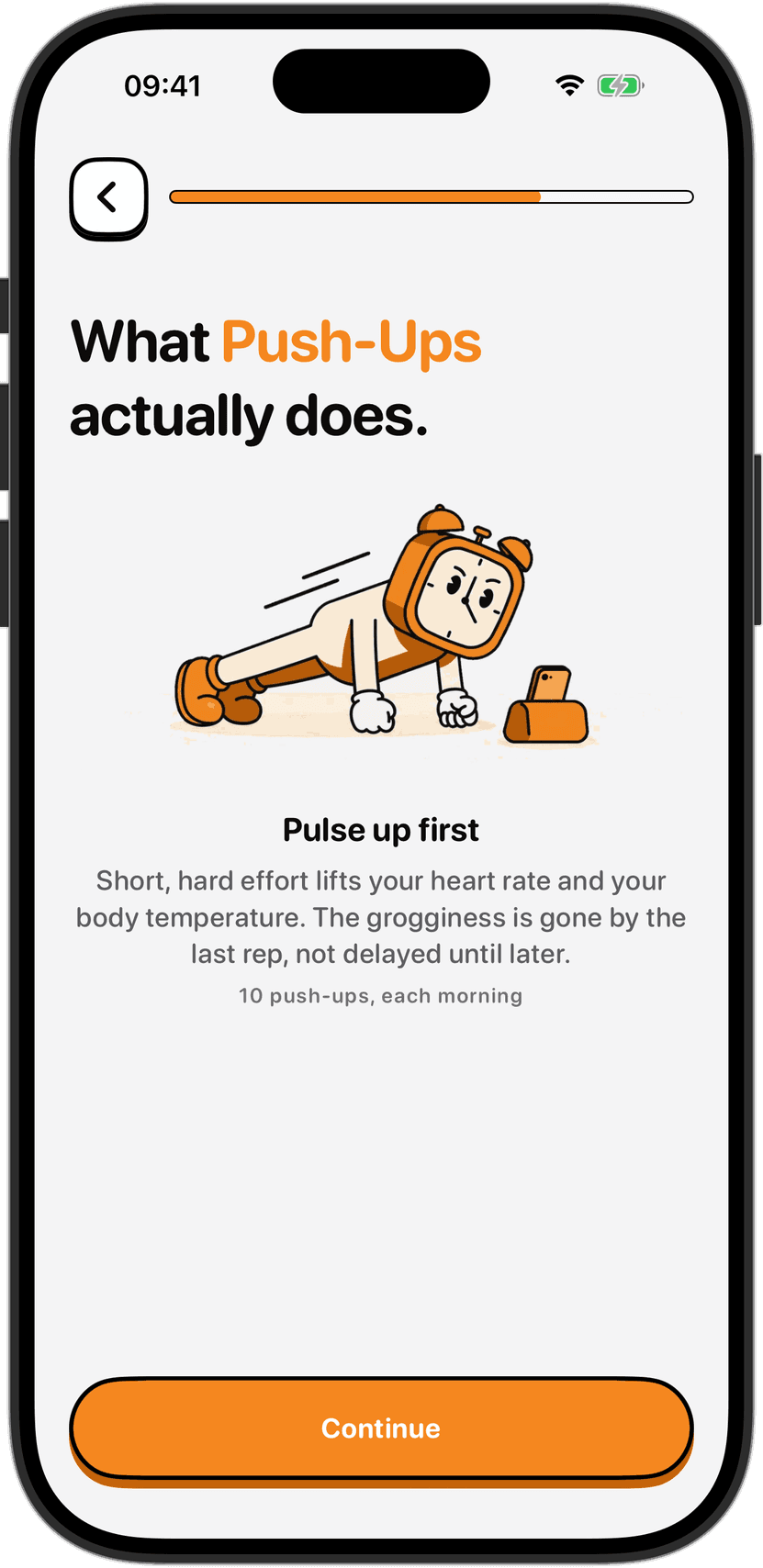
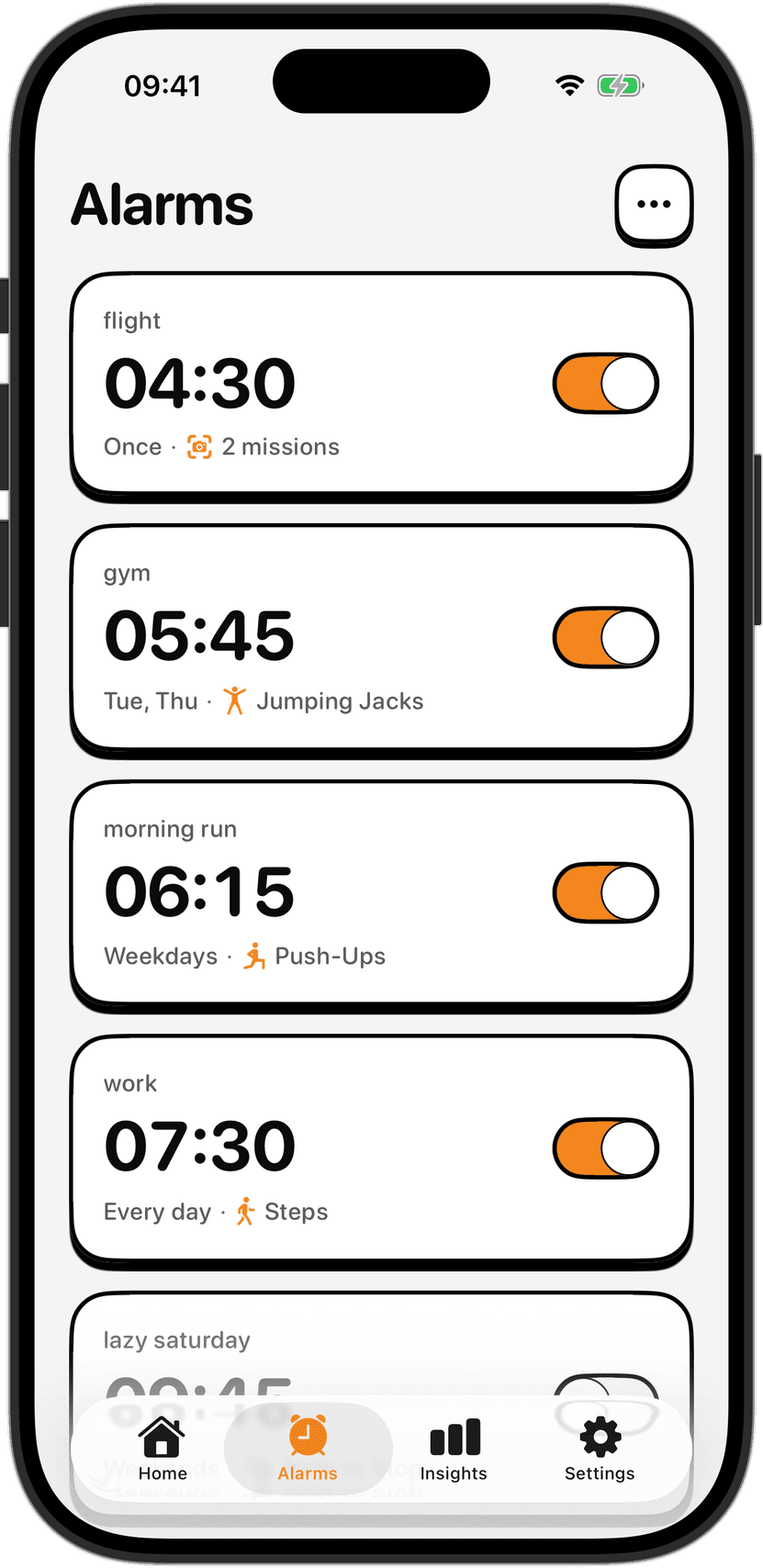
An alarm that cannot be muted by a Do Not Disturb mode and rings loud enough to cut through background noise matters more than a white noise machine that masks the world. NoNap uses the system alarm on iPhone so the ring and silent switch do not silence it, and stopping it means finishing a short wake task instead of a snooze. If noise in your bedroom is waking you at night, a consistent wake time and a real alarm at morning will do more for your sleep than any sound machine can.
Sources
Riedy, S. M., Smith, M. G., Rocha, S., and Basner, M. (2021). Noise as a sleep aid: A systematic review. Sleep Medicine Reviews, 55, 101385. www.sciencedirect.com/science/article/abs/pii/S1087079220301416
Vickrey, B., and Lerner, I. (2023). Overnight exposure to pink noise could jeopardize sleep-dependent insight and pattern detection. Frontiers in Human Neuroscience, 17, 1302836. www.ncbi.nlm.nih.gov/pmc/articles/PMC10722168/
Basner, M., Smith, M. G., Cordoza, M., Kayser, M. S., Carlin, M., Ecker, A. J., et al. (2026). Efficacy of pink noise and earplugs for mitigating the effects of intermittent environmental noise exposure on sleep. Sleep, 49(5), zsag001. academic.oup.com/sleep/article/49/5/zsag001/7815633
Mousavi, S. A. V., Salehian, M., and Mazlom, S. R. (2026). The effect of white noise on sleep quality and fatigue in community-dwelling older adults: a randomized controlled trial. BMC Geriatrics, 26, 883. www.ncbi.nlm.nih.gov/pmc/articles/PMC13321728/
Khandelwal, K., Anyim, A., Shu, S., Gerberi, D., Yousufuddin, M., and Pagali, S. (2025). Impact and efficacy of sound machine on sleep in hospitalized adults: A systematic review. Sleep Medicine X, 10, 100154. www.ncbi.nlm.nih.gov/pmc/articles/PMC12547953/