Night shift sleep: working against your body clock
Why night shifts disrupt sleep, what shift work disorder is, and strategies to anchor your sleep and adjust your circadian rhythm.
Visana Studios
7 min read

At 2 a.m. you are alert, caffeinated, working through tasks. By 10 a.m., lying in bed in a dark room, you cannot sleep. Your body is awake when it wants to work and awake when it needs rest. This is the core problem of night shift work, and it is not a character flaw or a matter of discipline.
Your circadian rhythm is your body's internal 24-hour clock. It controls when you feel sleepy, when you are alert, when your digestive system works efficiently, and when your brain consolidates memory. Light is the strongest signal that controls this clock, and in particular, exposure to bright light in the morning tells your brain it is time to be awake. When you work at night, you work through the hours your circadian rhythm expects you to sleep, and you sleep through the hours it expects you to be awake.
Shift work disorder is a real medical condition
Not everyone who works nights has trouble sleeping. Some people adjust more easily than others. But if after several weeks of a night shift schedule you are still sleeping four or more hours less than usual, struggling to fall or stay asleep, or waking after 7-8 hours of sleep still exhausted, you may have shift work disorder. This is a genuine medical condition: the American Academy of Sleep Medicine defines it as a circadian rhythm disorder, meaning your body's internal timing is genuinely conflicting with your work schedule.
The symptoms are obvious at first. You may feel fatigued and have trouble concentrating. Headaches are common. Mood and irritability worsen, especially after weeks of poor sleep. More concerning, shift work disorder increases your risk of workplace injuries and accidents related to drowsy driving. Over years, working night shifts is associated with higher rates of breast cancer in women, prostate cancer in men, heart disease, high cholesterol, and obesity.
This is not about being less resilient than day-shift workers. Your body chemistry is being pulled in opposite directions from where it wants to go.
Anchor sleep is more valuable than equivalent daytime rest
An anchor sleep is a block of sleep you keep at the same time every single day, usually at night, even on nights you have to work. It sounds counterintuitive. Research shows that maintaining a consistent sleep period helps your body preserve some circadian rhythm alignment rather than being pulled completely off schedule. Even if you can only manage four or five hours of anchor sleep, keeping that time consistent signals to your body when it should prepare for sleep. It is harder than trying to sleep whenever you can grab time, but it appears to give better results than rotating your sleep time around your shifts.
If you work overnight shifts, your anchor sleep would be a block of time in the early morning after your shift ends, say 5 a.m. to 8 a.m., and you would keep that window even on your nights off. Some shift schedules, like the rotating "casino shift" model that ends shifts at 4 a.m., are built around this principle.
Nighttime or very early morning sleep is also neurologically richer than daytime sleep. When you sleep during the day, your sleep tends to be lighter and more fragmented because environmental noise and light are harder to block. A nap during your shift or before reporting for night work, even 20 to 30 minutes, can improve alertness on the job and is worth the effort to arrange. But that nap is not a replacement for a solid anchor block of nighttime or early morning sleep.
Light is your best lever for shifting your rhythm, or your worst enemy
Your circadian rhythm responds powerfully to light. Bright light therapy, where you expose yourself to a specific high-intensity light (usually at least 2,500 lux, similar to what is used for seasonal affective disorder) at a specific time, can help shift your rhythm toward a night-shift schedule. Your doctor can help you time this correctly, usually at the beginning of your shift or in the late afternoon if you work evenings. The light comes as a lightbox, visor, goggles, or desk lamp. A few weeks of consistent use can begin to shift your rhythm.
The flip side matters equally: avoiding sunlight in the morning if you need to sleep during the day is not just a comfort measure, it is a circadian intervention. Wear sunglasses on your commute home after a night shift. Keep your bedroom very dark, with blackout curtains if you can, to prevent your body clock from shifting back toward day mode. Early morning light exposure is the strongest signal your body gets about when to be awake, and if you are trying to sleep at 8 a.m., sunlight streaming in tells your circadian rhythm it is time to be alert.
Melatonin timing and dose matter
Melatonin is the hormone your brain produces when light falls and darkness rises, signaling that it is time to sleep. In shift workers, melatonin production gets out of sync with your bedtime. Melatonin supplements can help, but timing and dose matter. Research suggests a small dose, taken several hours before you plan to sleep, is as effective as higher doses. Talk to your doctor about what makes sense for your schedule. Like any sleep medication, melatonin can help in the short term but should be part of a plan to shift your rhythm, not a permanent replacement for it.
Scheduling and transitions shape how hard the adjustment is
If you work rotating shifts, advocate for a clockwise rotation, where each new shift starts later than the previous one. It is easier for most people to stay up late than to fall asleep early, so a schedule that rotates evening shift to night shift to morning shift is easier to adapt to than the reverse.
When you know a major shift change is coming, start altering your sleep time a few days in advance. Go to bed an hour later each day if you are moving toward night shift, or an hour earlier if you are moving toward morning shifts. This gradual transition gives your circadian rhythm time to adjust rather than asking it to flip overnight.
Consistency on your days off matters too. If you work nights and then flip to a normal day schedule on your days off, you are essentially giving yourself jet lag every week. Your body cannot align to either schedule. If possible, stay on your night shift schedule even on days off, or shift gradually back toward day rhythm a day before returning to work.
When caffeine helps and when it hurts
Moderate caffeine in the first half of your shift keeps you alert. Stop drinking it in the later portions so it does not disrupt your sleep when you get home. Caffeine has a half life of five or more hours in most people. A coffee at 10 p.m. will still be partly active at 3 a.m. when you are trying to sleep.
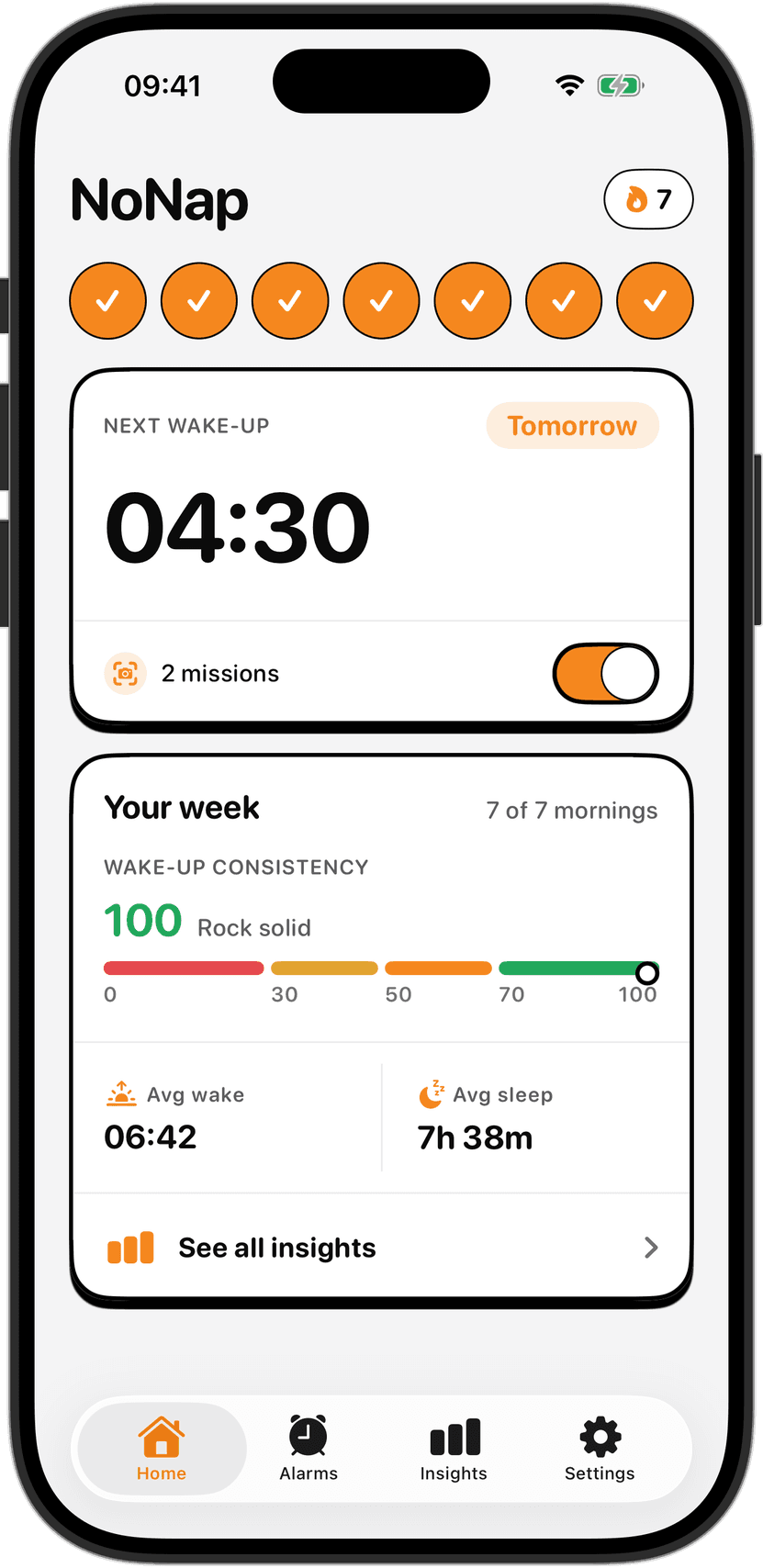
NoNap for daytime sleep
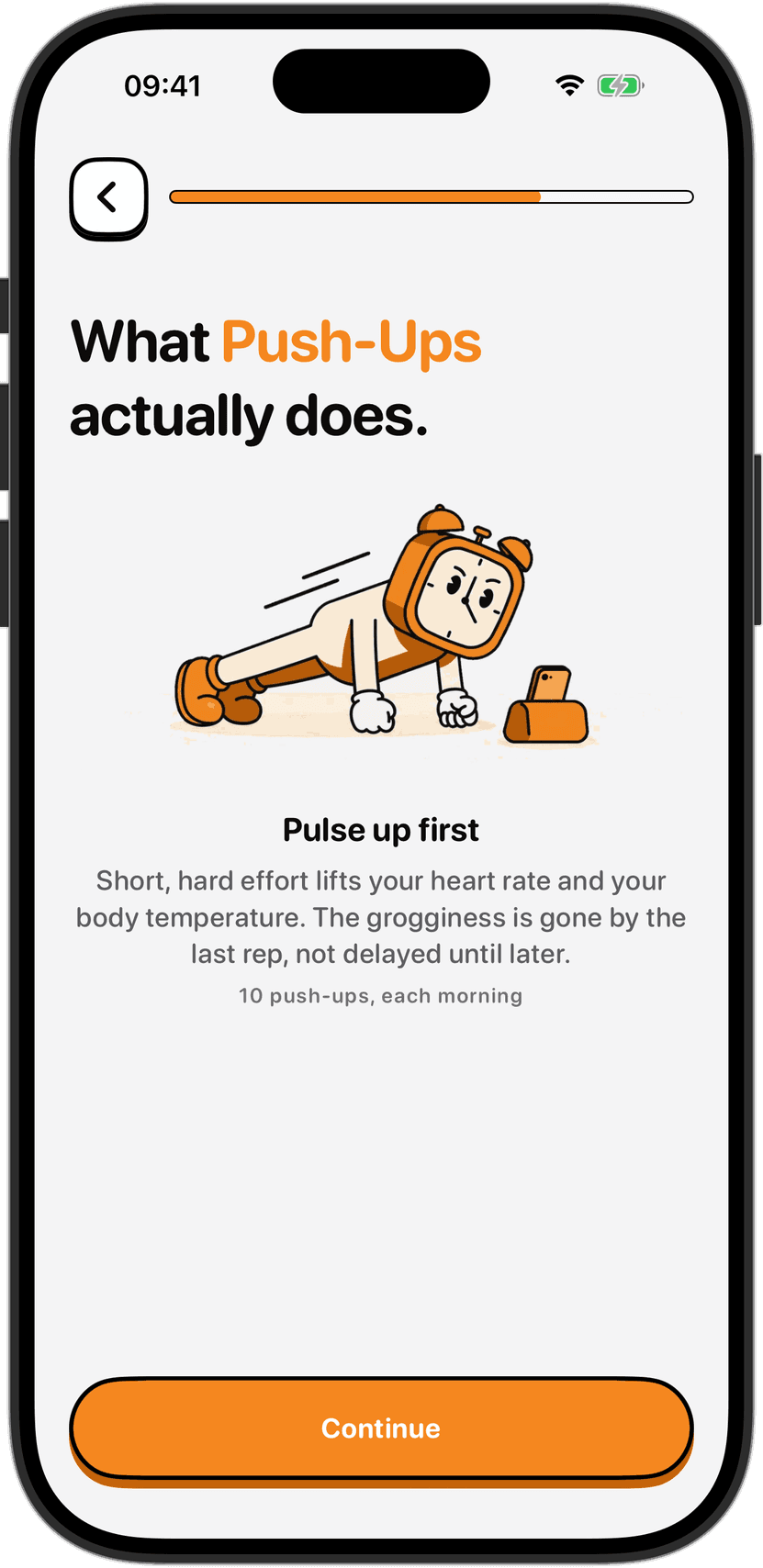
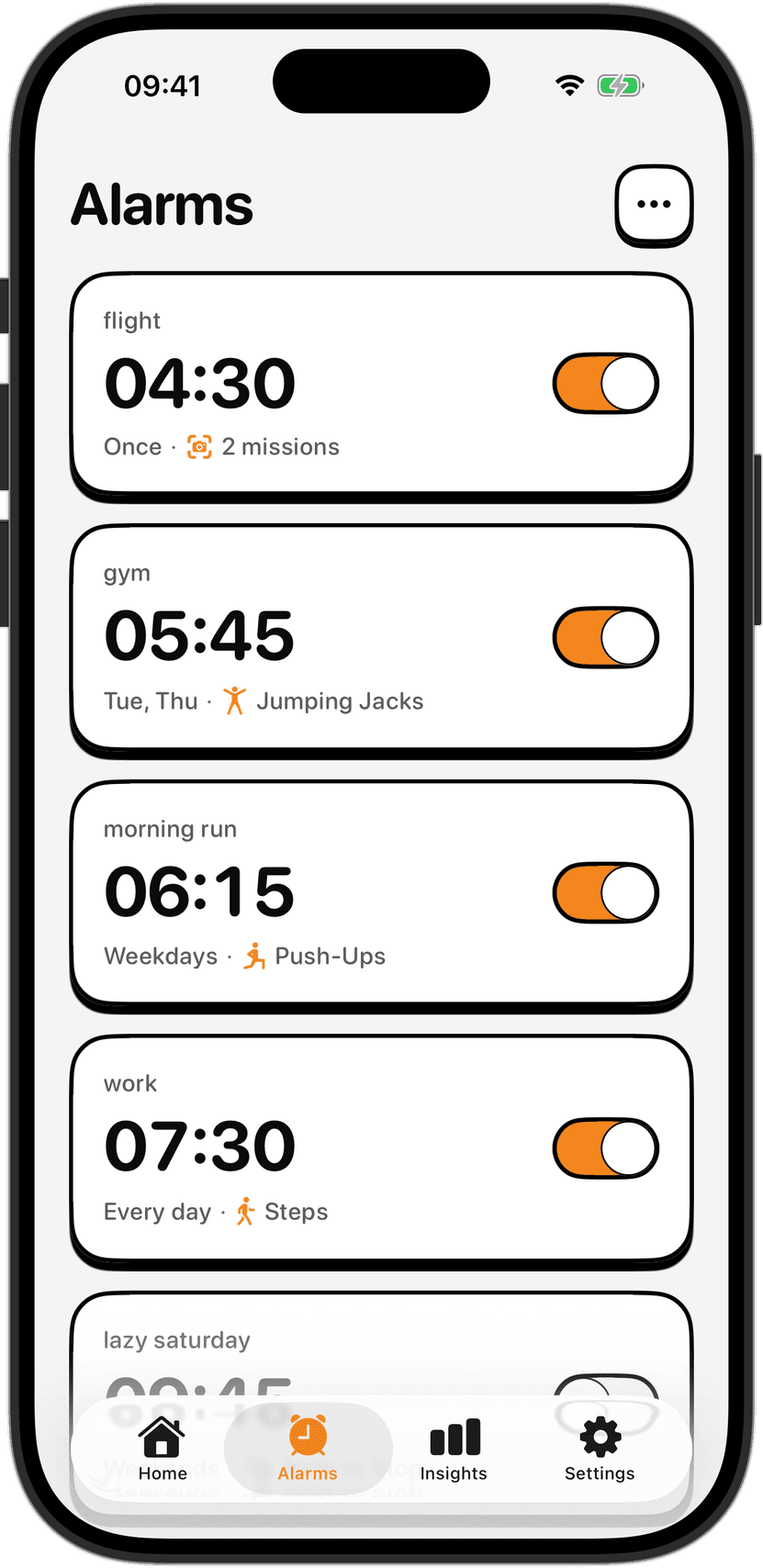
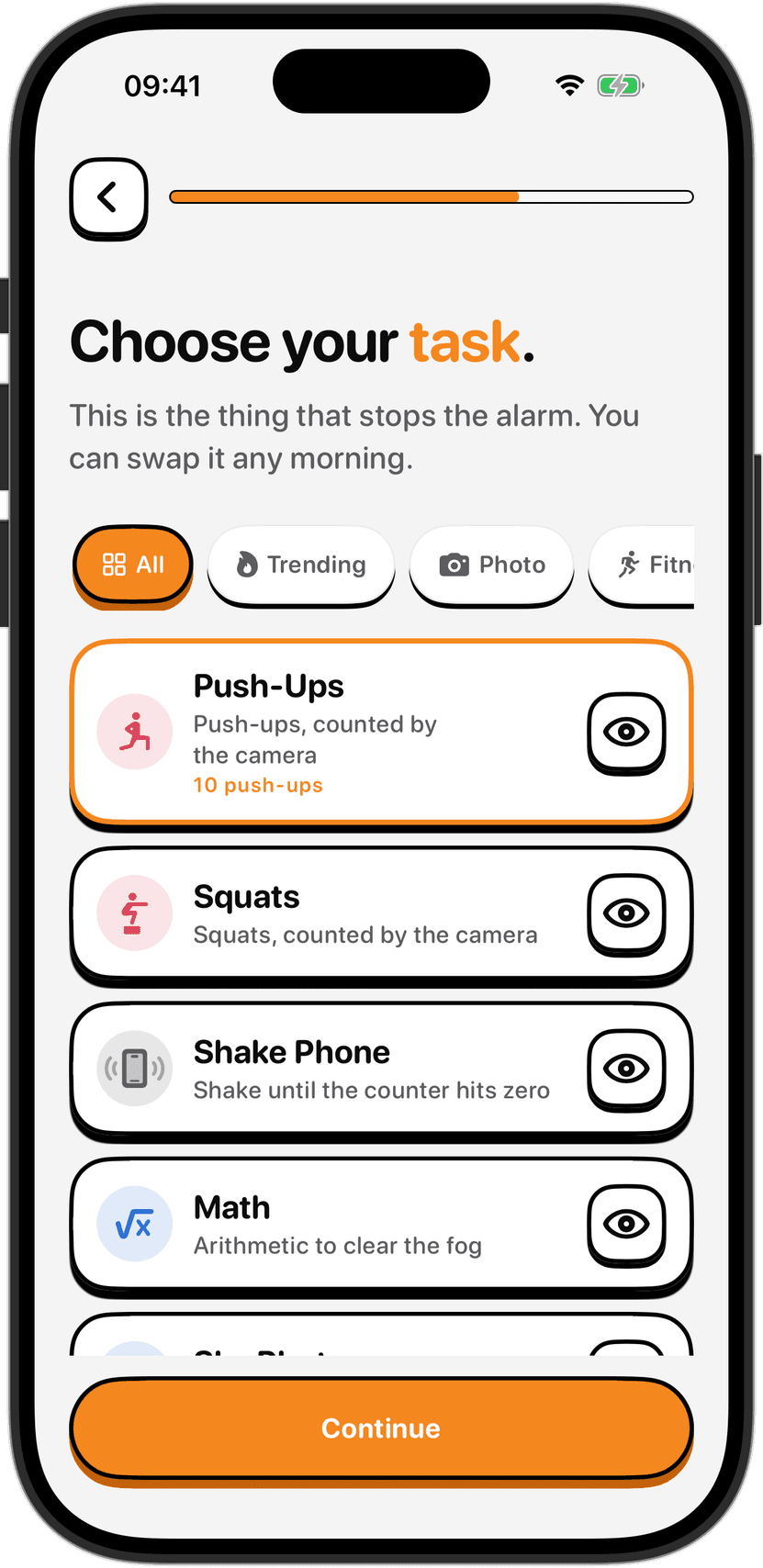
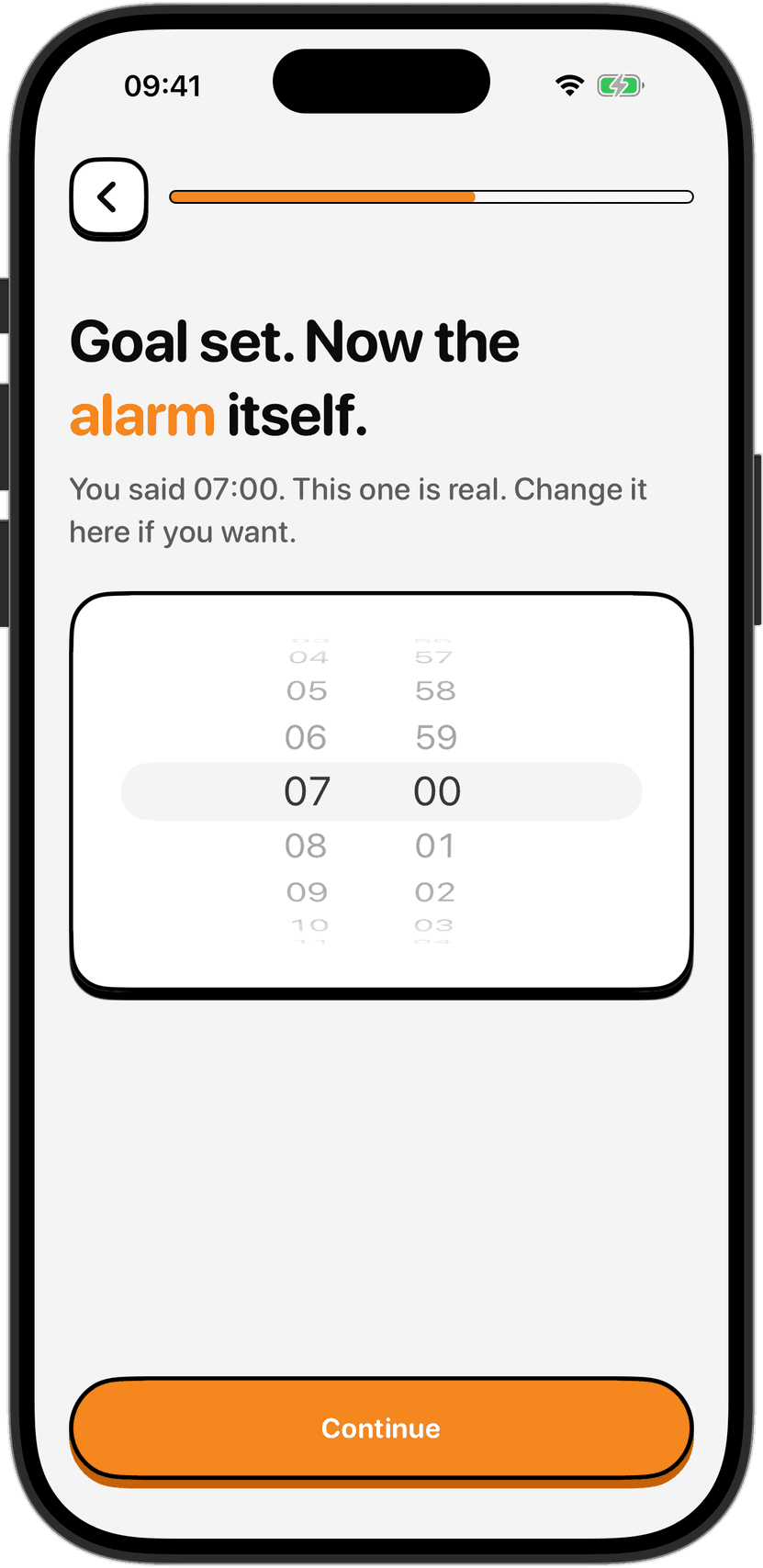
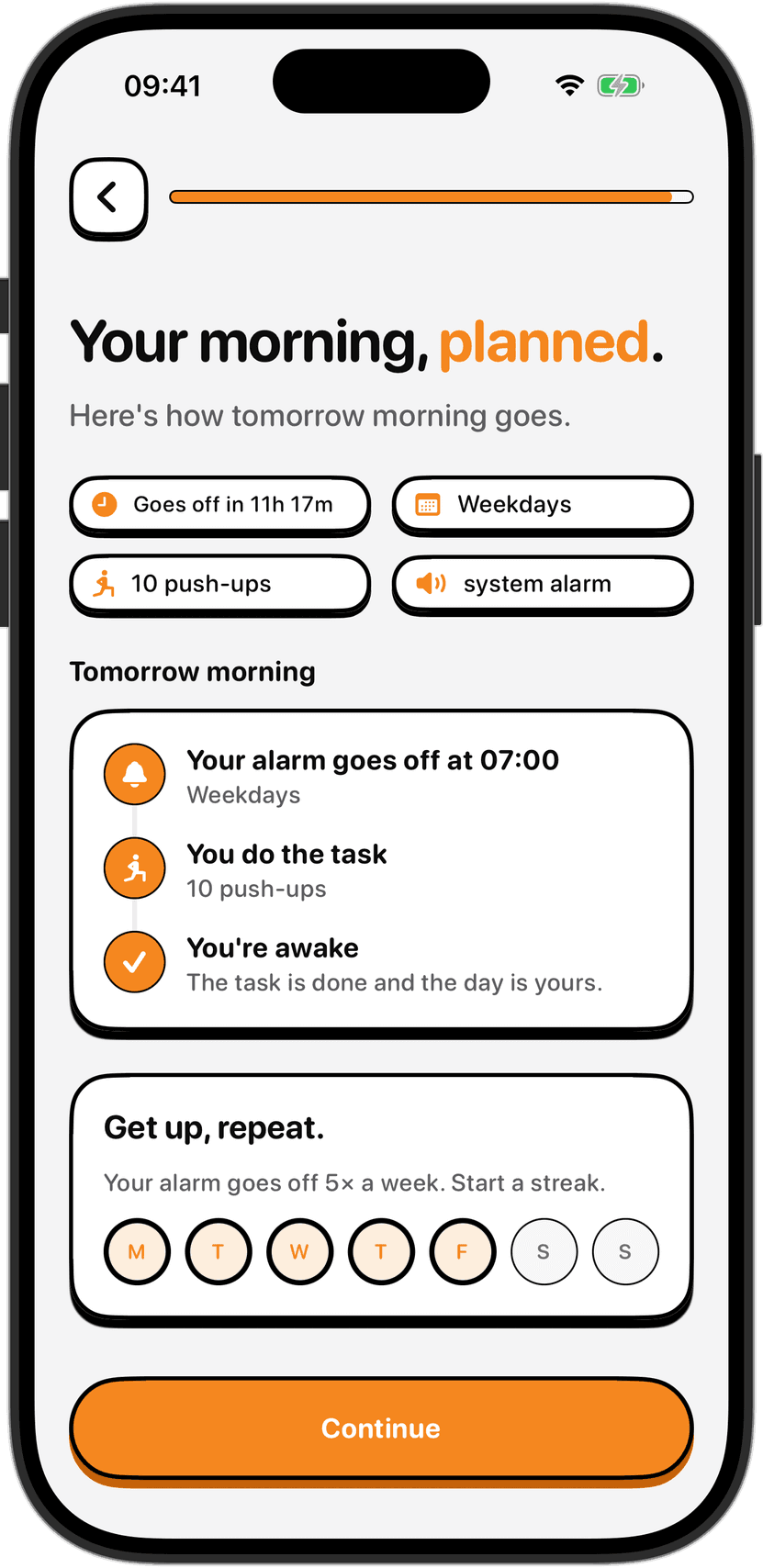
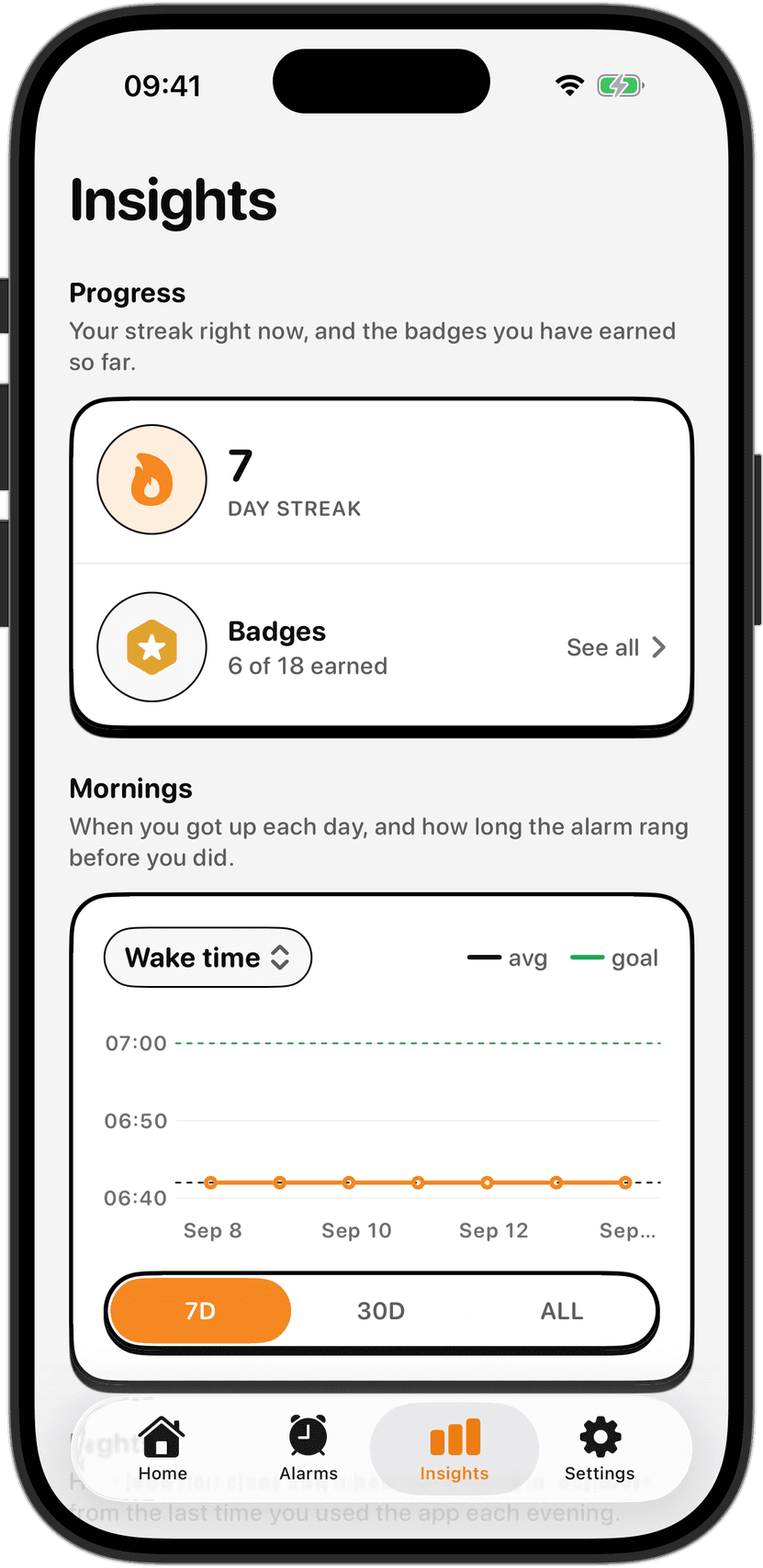
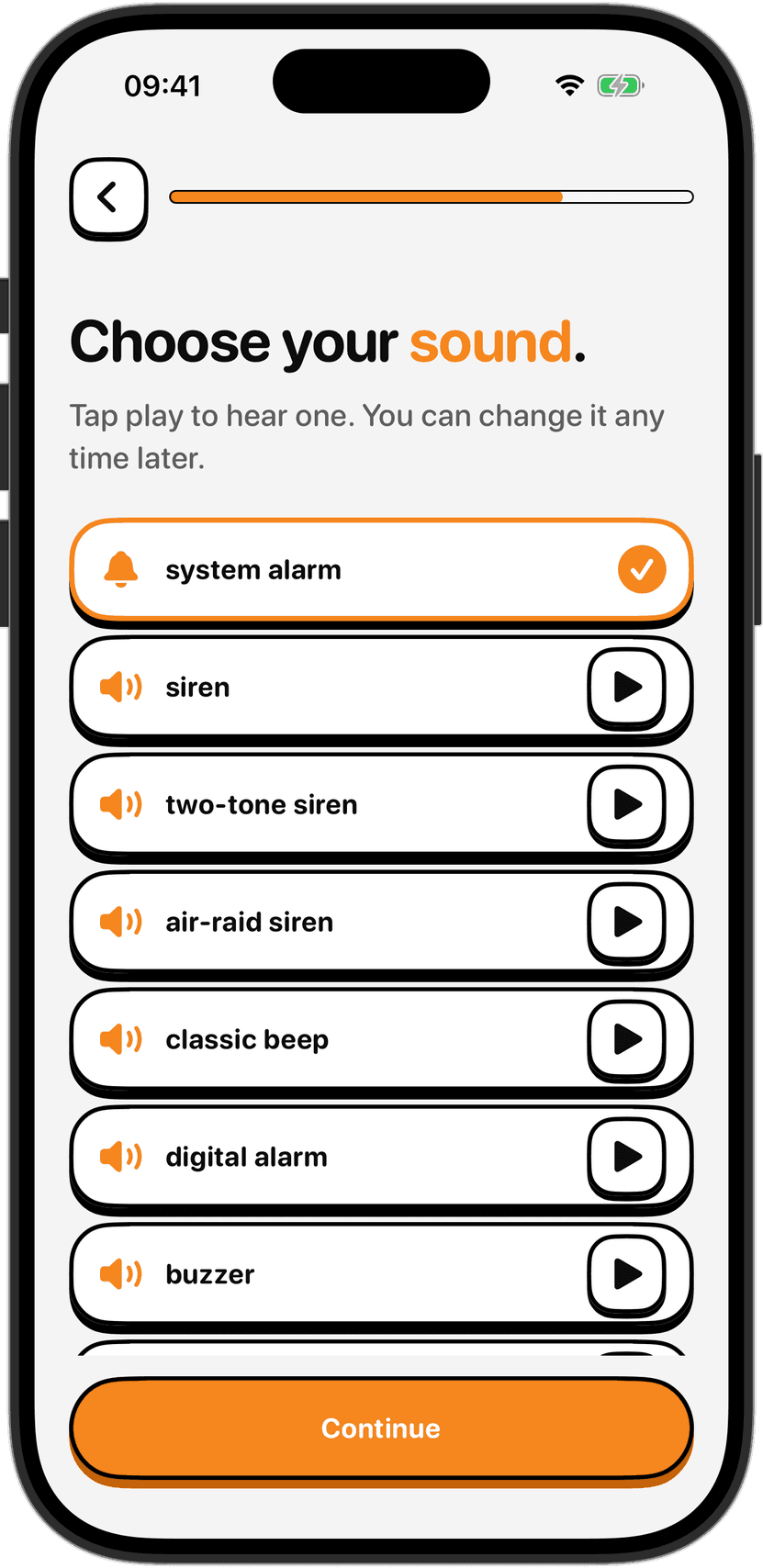
Shift workers face a specific alarm problem: you need to wake up at a specific time during the day, when sleep is lightest and most people are making noise. The consistency of a fixed wake time, even on nights off, helps your circadian rhythm know when to stabilize. If you set multiple alarms hoping one will work, you are essentially training your brain that the first alarm is a suggestion. One alarm set for your actual wake time, with a task to complete before it stops, removes the choice. Push-ups or squats counted by your phone's camera are not a practical choice first thing after daytime sleep (pick math or shake phone if exercise is not safe for you right now), but a task means waking your brain as well as your body. See how NoNap works.
Talk to a doctor if the adjustment does not happen
Shift work disorder is not something you just power through. If after several weeks of consistent effort with light exposure, scheduling adjustments, and sleep hygiene you are still sleeping much less than you need and exhaustion is affecting your work or safety, see a sleep specialist. They can help you explore whether another sleep disorder, like sleep apnea, is making your situation harder, and they can provide guidance on medication options if needed. Some people adjust to night shifts without much difficulty. Others find their body simply cannot align to that schedule no matter what they try. That is not a personal failing, and it is worth taking seriously.
Sources
American Academy of Sleep Medicine. Shift Work. Sleep Education, reviewed May 2021, accessed August 2026. https://sleepeducation.org/sleep-disorders/shift-work/
Axelsson, J., Sallinen, M., Sundelin, T., and Kecklund, G. (2018). Sleep and shift work. In Oxford Scholarship Online. https://doi.org/10.1093/oso/9780198778240.003.0020
Åkerstedt, T., and Wright, K. P. (2009). Sleep Loss and Fatigue in Shift Work and Shift Work Disorder. Sleep Medicine Clinics, 4(supplement). https://doi.org/10.1016/j.jsmc.2009.03.001