How long to nap without waking up groggy
Short naps of 10 to 20 minutes beat longer ones for grogginess, plus what the NASA pilot nap study and the coffee nap research actually found.
Visana Studios
7 min read

Fall asleep on the couch for twenty minutes and you can get up feeling sharper than before you sat down. Fall asleep for ninety and you might, too, once you've made it through a full sleep cycle. Land somewhere in the middle, in the stretch where deep sleep has already started but hasn't run its course, and getting off the couch can feel like wading through wet sand. The difference isn't luck. It comes down to which stage of sleep your brain happens to be in when something wakes you up.
The ten to twenty minute window
Sleep doesn't switch on like a light. It drifts from light stages into deeper ones over the first twenty to thirty minutes, and slow-wave sleep, the deep stage that does most of the physical restoring and is hardest to be pulled out of, generally hasn't shown up yet if a nap ends before the fifteen-minute mark. Wake up ahead of that line and there's little deep sleep to climb out of.
The CDC's National Institute for Occupational Safety and Health recommends a nap under 20 minutes for daytime alertness, timed with an alarm set for somewhere between 15 and 30 minutes, on the grounds that it raises alertness for hours afterward with little grogginess and no real dent in the following night's sleep. Sleep Foundation guidance lands in a similar place: 30 minutes or less, so light sleep does its work without tipping into anything harder to shake off.
Once you slide into deep sleep
Push past thirty minutes and the odds of hitting slow-wave sleep climb fast. Get pulled out of it, and what follows is sleep inertia: slower reaction times, a foggy short-term memory, and a pull back toward the pillow that can outlast good sense for a while. It's the same mechanism behind the rough first few minutes after snoozing an alarm, just triggered by a nap instead of a night's sleep. A 40 to 60 minute nap sits close to the worst possible length: long enough to reach deep sleep, short enough to get yanked out of it before the brain has cycled back to something lighter.
There's a rough workaround. A full sleep cycle runs close to ninety minutes, and a nap that long gives the brain time to work its way back to light sleep before waking, so the grogginess tends to be brief even though total time asleep is much longer. Whether that's realistic depends entirely on having ninety free minutes in the middle of a day, which most people don't.
None of this is quite as settled as the tidy nap charts make it look, either. A 2017 review by Cassie Hilditch, Jillian Dorrian, and Siobhan Banks in Sleep Medicine looked specifically at whether naps of 30 minutes or less reliably avoid slow-wave sleep and sleep inertia, the exact claim behind most short-nap advice. They found the underlying evidence thinner and more mixed than the common guidance suggests, varying with how sleep-deprived someone already is and what time of day the nap falls. Twenty minutes is still a sound default. It just doesn't hold up the same way for everyone, every time.
What NASA found over the Pacific
In the early 1990s, NASA's Ames Research Center ran a study that's still cited in aviation fatigue research today. Mark Rosekind and colleagues followed 21 pilots on transpacific flights, long ones, nine to nearly fourteen hours, crossing time zones on routes where the body's circadian low point fell during part of the flight. Twelve of the pilots were given a planned rest period in their seats during the low-workload cruise phase, up to 40 minutes with one pilot resting while the rest of the crew kept flying. Nine pilots got no planned rest at all.
The pilots given the chance to nap slept for about 26 minutes on average. Tested afterward, their performance improved by 34 percent and their physiological alertness, measured through brain activity, by 54 percent, compared with the crews that flew straight through. The findings were published as NASA Technical Memorandum 108839 in 1994, and the study helped turn planned cockpit rest from something pilots occasionally did quietly on their own into an accepted fatigue countermeasure still used in long-haul aviation.
The coffee nap trick
Caffeine takes roughly 20 to 30 minutes to build up in the bloodstream after you drink it, which lines up almost exactly with the length of a short nap. Drink a cup right before lying down and, in theory, you wake up around the moment the caffeine kicks in, stacking two separate alerting effects instead of spacing them out.
Mitsuo Hayashi and colleagues tested something close to this in 2003, publishing in Clinical Neurophysiology. Ten young, healthy adults compared a 20-minute nap on its own, caffeine (around 200 milligrams, roughly what's in a large cup of coffee) taken right before a 20-minute nap, a nap followed by bright light, a nap followed by face washing, and a rest period with no nap at all. Caffeine taken just before the nap beat the other conditions on measures of sleepiness and performance, with the effect lasting through the hour afterward. It's one small study, so the exact size of the effect shouldn't be taken as gospel, but the underlying logic holds up well: line up the two effects instead of making them compete.
If you're weighing this against your last cup of the day, how late is too late for coffee is worth a look before a coffee nap becomes a late-afternoon habit.
Timing the nap so it doesn't steal from the night
Duration is half of this. When you nap matters almost as much as how long.
Naps taken in the early afternoon, roughly between one and three o'clock, line up with a dip in alertness most people feel regardless of how well they slept the night before. Push a nap later than that, or let it run long, and it starts eating into sleep drive, the pressure to sleep that builds across the day and makes falling asleep at bedtime easier. Sleep Foundation guidance suggests leaving something like eight hours between the end of a nap and bedtime, since a nap too close to lights-out can mean longer to fall asleep and a lighter night overall.
None of this applies evenly to everyone. Shift workers, new parents, and anyone running a genuine sleep debt are often napping because there's no better option that day, not because they're optimizing a schedule, and a nap in the "wrong" window still beats no nap at all. If daytime sleepiness shows up most days despite a full night in bed, that pattern is worth raising with a doctor rather than solving with a longer nap. It can point to something like sleep apnea rather than an ordinary afternoon slump.
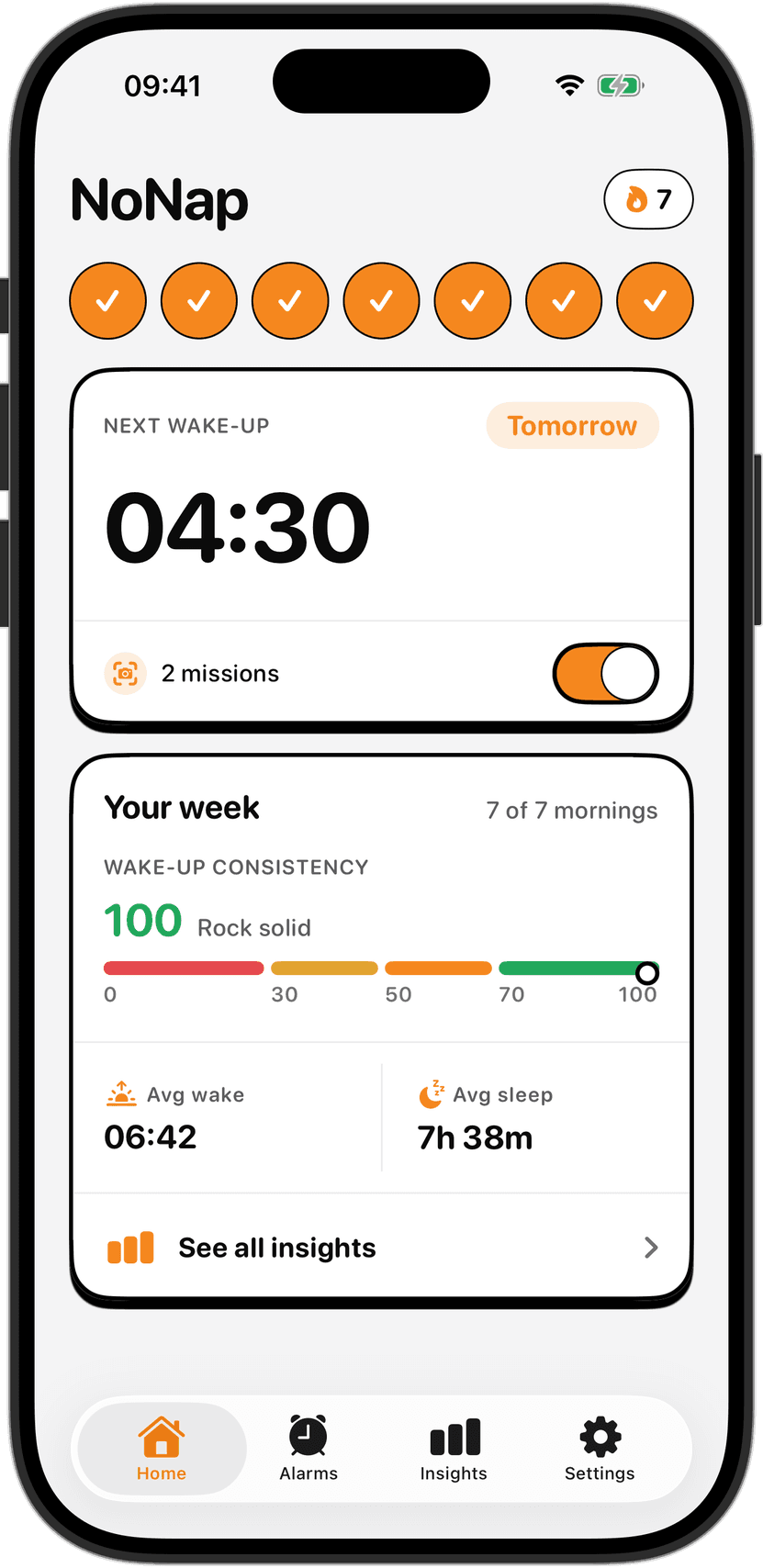
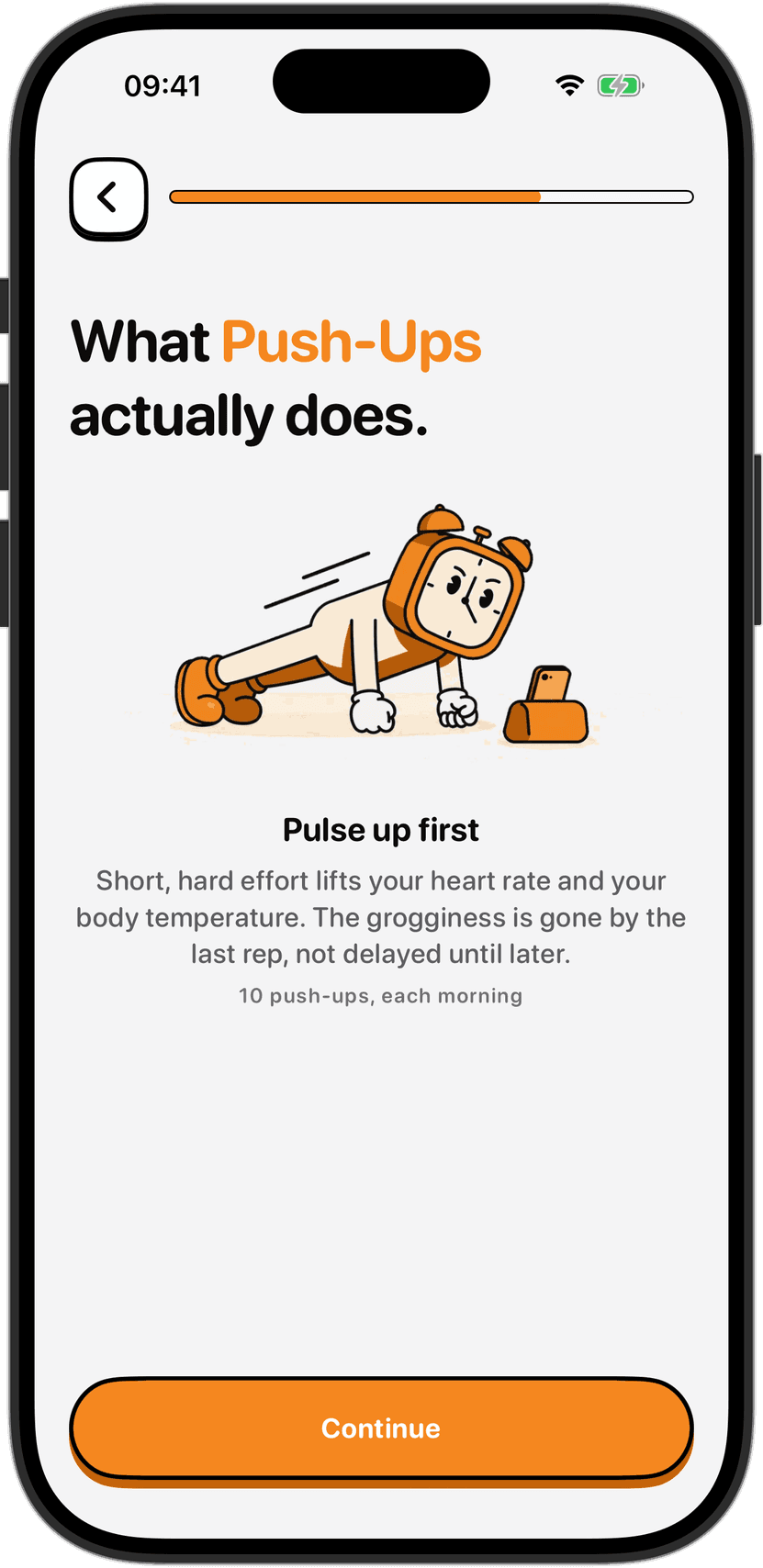
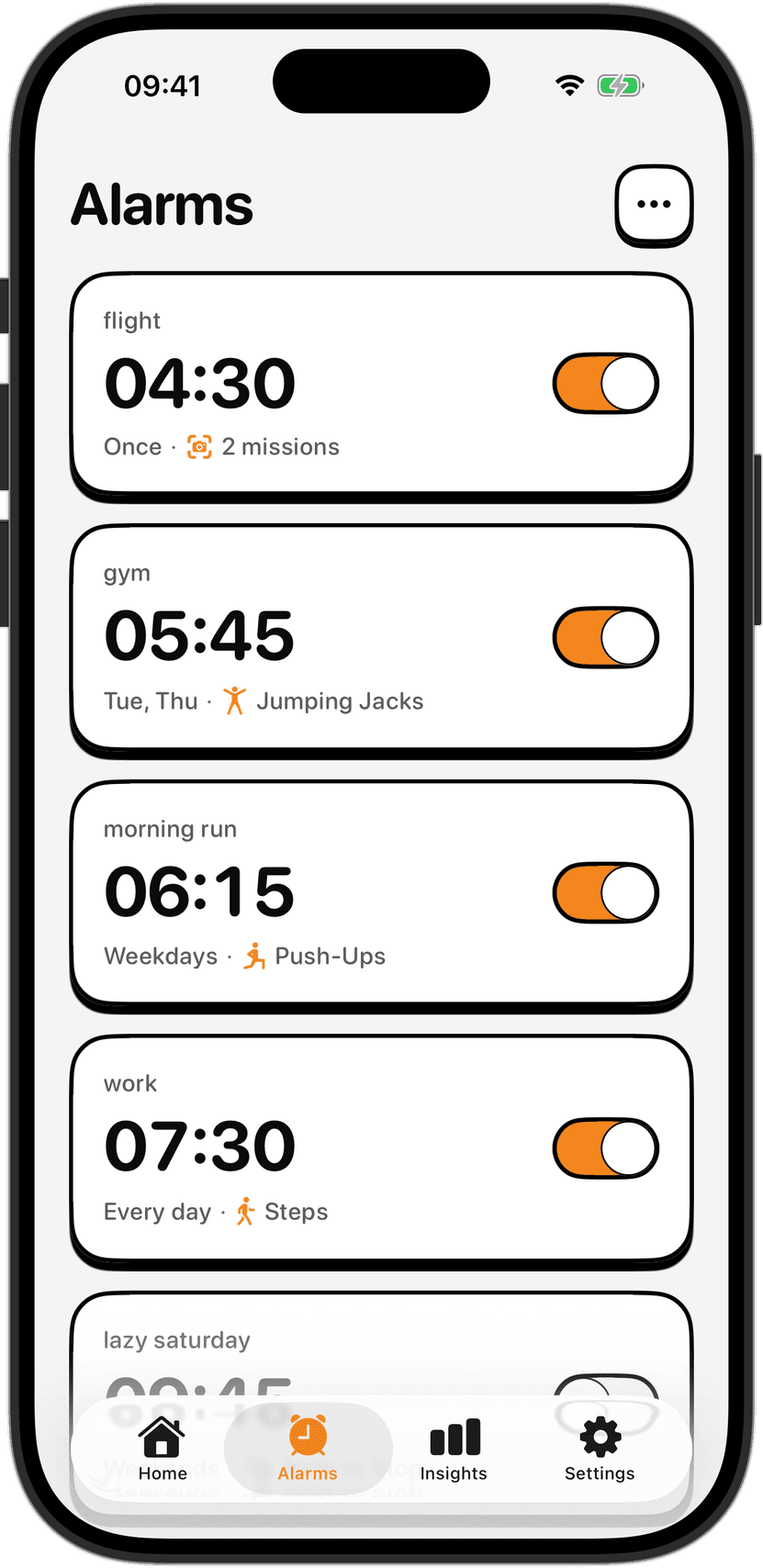
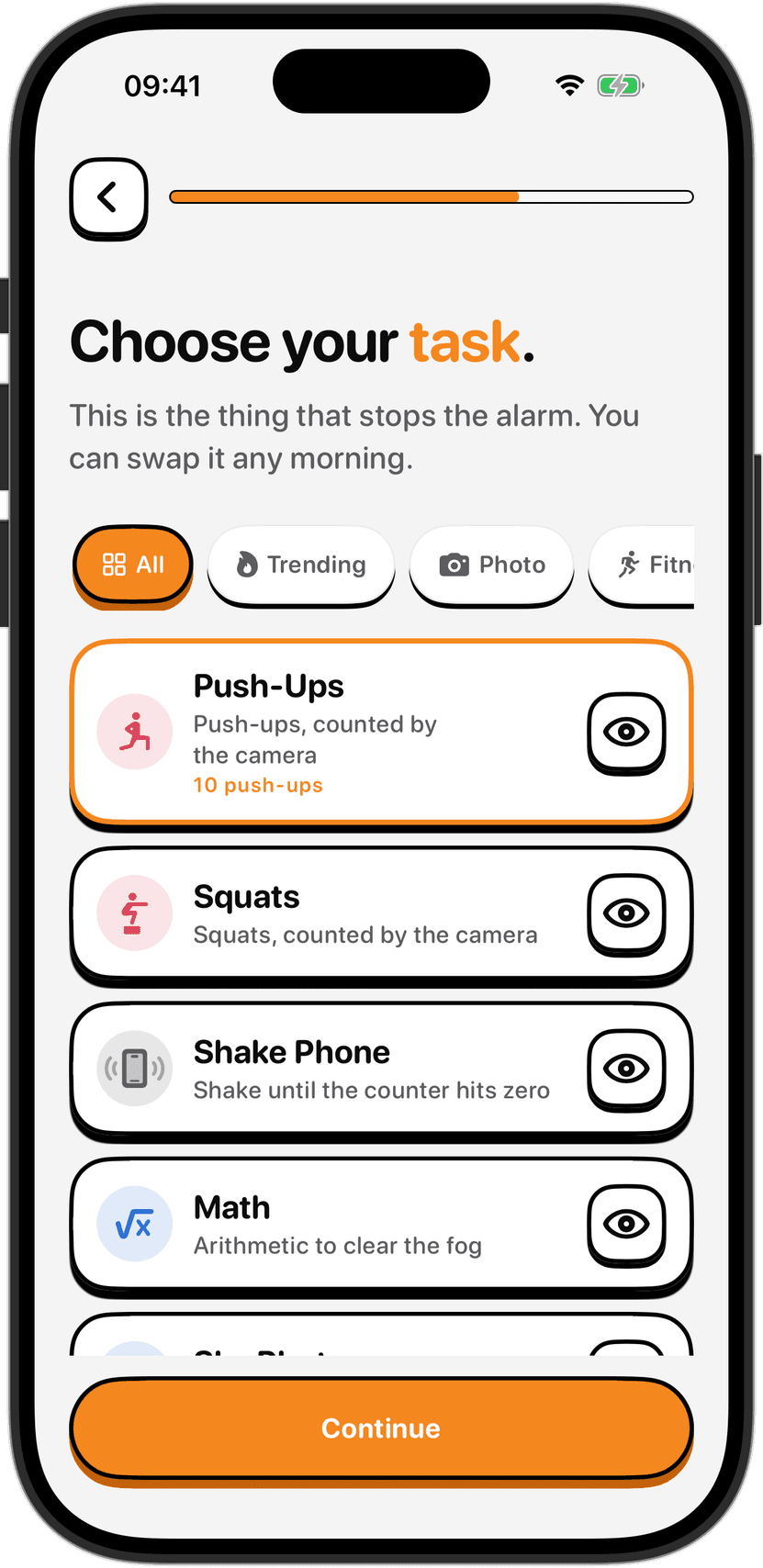
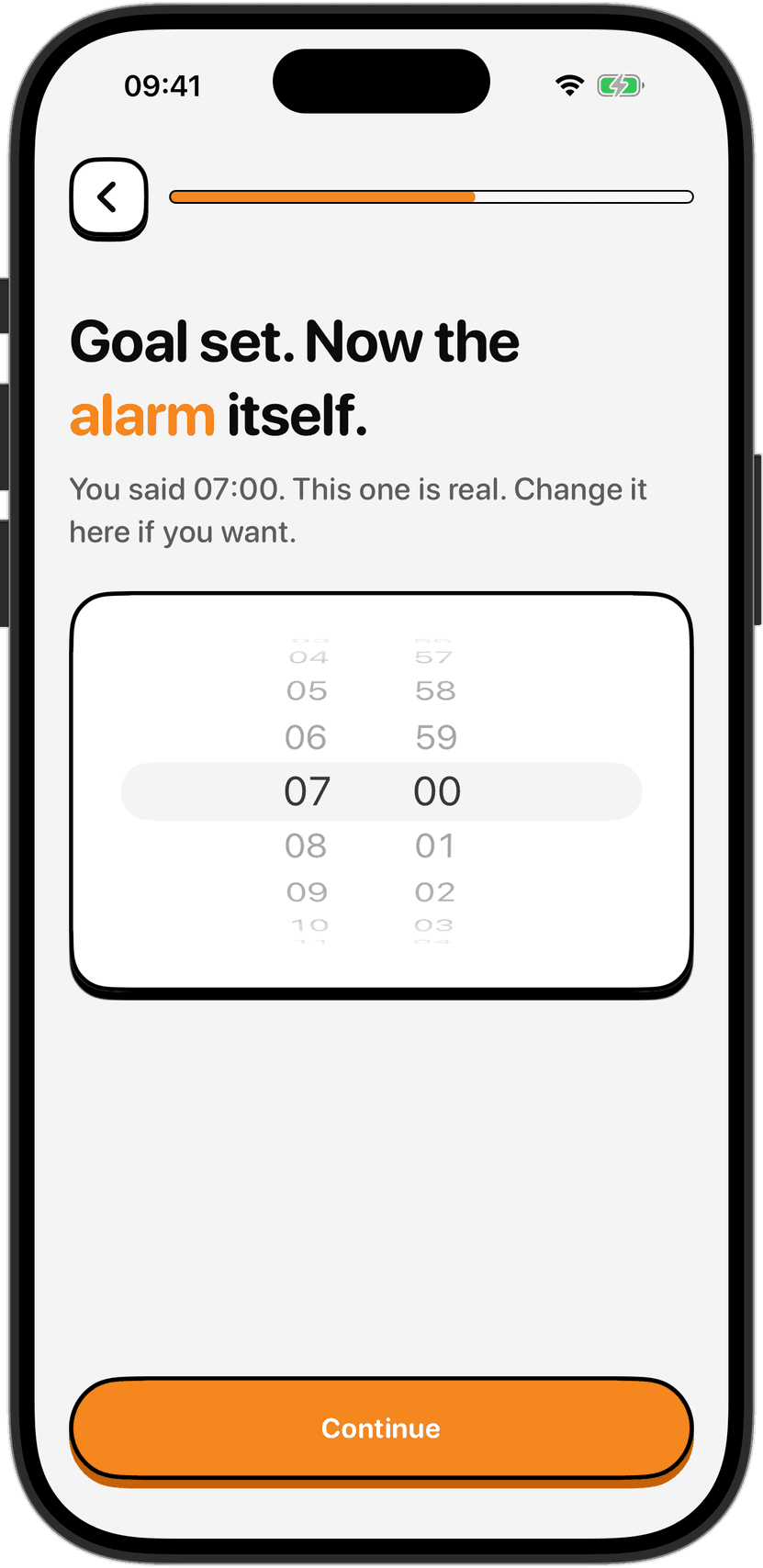
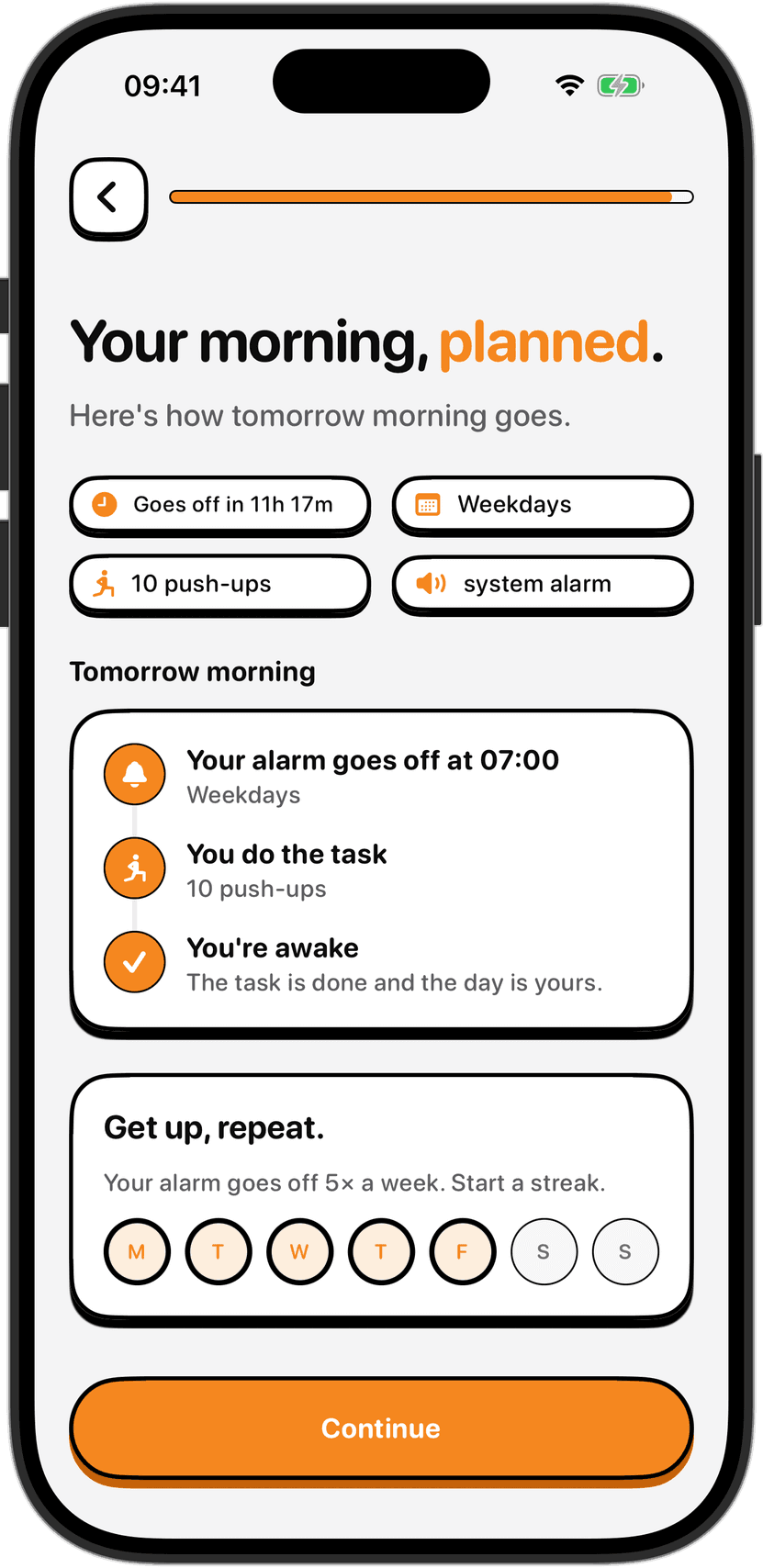
NoNap wasn't built with naps specifically in mind. It's an iPhone app for the one alarm that gets you up in the morning, no snooze button attached. But the same logic applies to a timed nap: an alarm that's easy to silence and doze through defeats the whole point of picking a length in advance. It uses Apple's system alarm, the one behind the Clock app, so the ringer switch and Focus modes don't mute it, and there's no lock-screen swipe to dismiss it. Stopping it means finishing a short task instead, a few push-ups or squats counted by the camera, a math problem, or a shake of the phone. Anyone choosing a physical task for that first groggy minute should pick something safe to do half-asleep, in a clear patch of floor, and switch to a gentler option like Math or Shake Phone if anything about it feels off.
Sources
Rosekind, M. R., Graeber, R. C., Dinges, D. F., Connell, L. J., Rountree, M. S., Spinweber, C. L., and Gillen, K. A. (1994). Crew Factors in Flight Operations IX: Effects of Planned Cockpit Rest on Crew Performance and Alertness in Long-Haul Operations. NASA Technical Memorandum 108839. rosap.ntl.bts.gov/view/dot/12822
Hayashi, M., Masuda, A., and Hori, T. (2003). The alerting effects of caffeine, bright light and face washing after a short daytime nap. Clinical Neurophysiology, 114(12), 2268-2278. pubmed.ncbi.nlm.nih.gov/14652086/
Hilditch, C. J., Dorrian, J., and Banks, S. (2017). A review of short naps and sleep inertia: do naps of 30 min or less really avoid sleep inertia and slow-wave sleep? Sleep Medicine, 32, 176-190. doi.org/10.1016/j.sleep.2016.12.016
Centers for Disease Control and Prevention, National Institute for Occupational Safety and Health. Module 7: Napping, an Important Fatigue Countermeasure. NIOSH Training for Nurses on Shift Work and Long Work Hours, accessed August 2026. cdc.gov/niosh/work-hour-training-for-nurses/longhours/mod7/05.html and cdc.gov/niosh/work-hour-training-for-nurses/longhours/mod7/03.html
Sleep Foundation. Does Napping Impact Your Sleep at Night? Accessed August 2026. sleepfoundation.org/how-sleep-works/does-napping-impact-sleep-at-night
Sleep Foundation. Do Power Naps Work? Accessed August 2026. sleepfoundation.org/sleep-hygiene/power-nap
Image credits
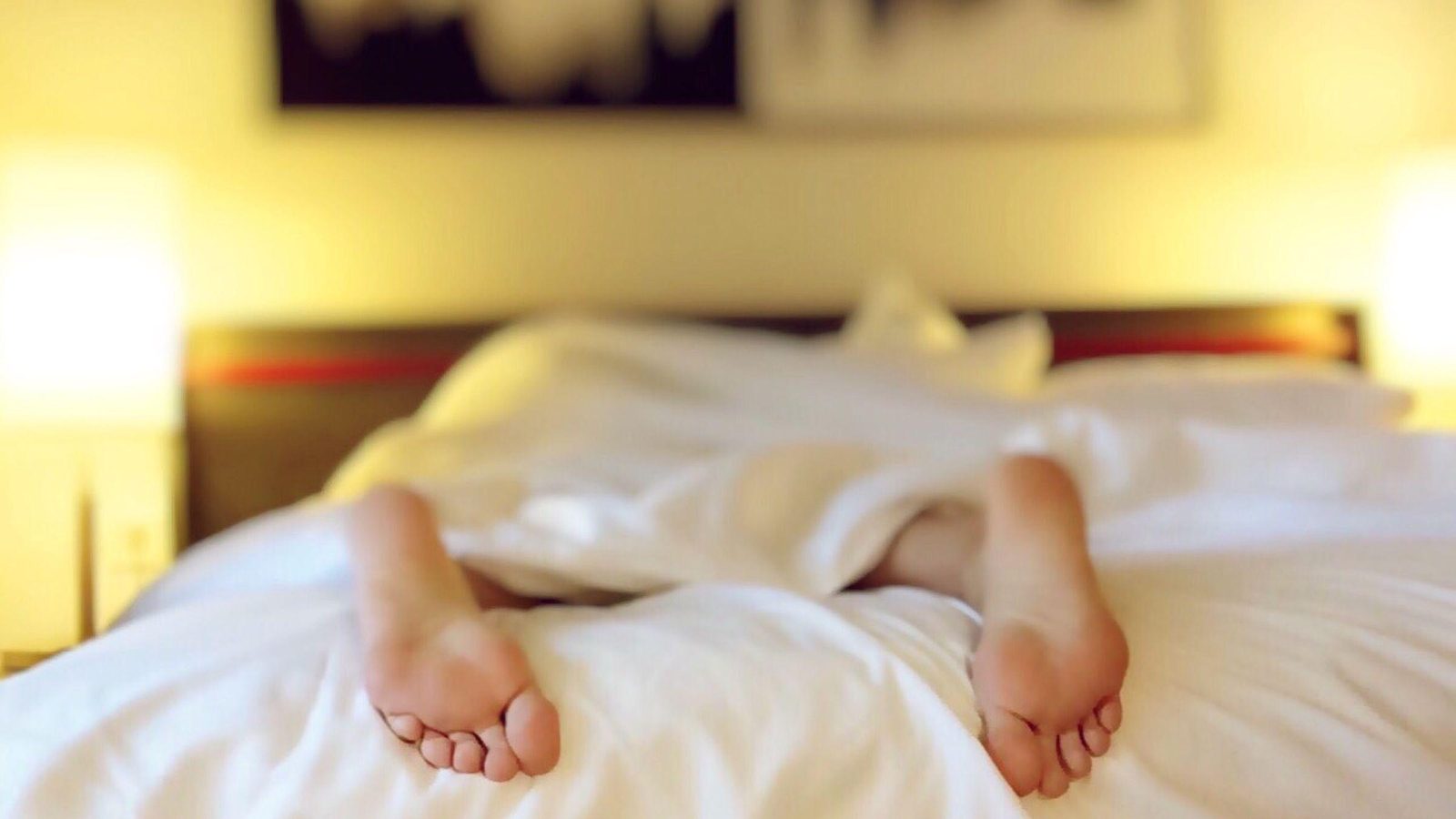
Cover photo by Polina Zimmerman on Pexels (pexels.com/photo/woman-lying-on-couch-3958566/), used under the Pexels License, which permits commercial use without payment.