How late is too late for coffee?
What sleep lab research shows about caffeine timing, why metabolism varies between people, and why the 90 minute delayed coffee rule has thin evidence.
Visana Studios
8 min read
A 3 p.m. coffee rarely feels like a decision about tonight.
No jitters at dinner. No trouble falling asleep, or none you notice. Just a tired 3 a.m. wake up, three nights running, that nobody ever blames on the cup from that afternoon. Caffeine's half life runs several hours, not minutes, so half of what you drank at 3 p.m. can still be circulating at 8 or 9 that night, quietly doing the one thing caffeine actually does inside a brain that is trying to sleep.
What caffeine is actually doing while you don't feel it
Caffeine doesn't add energy to the brain. It blocks the reception of adenosine, a chemical that piles up through the day as a byproduct of ordinary cell activity and builds what sleep scientists call sleep pressure, the drive to fall asleep that gets stronger the longer you have been awake. Caffeine is shaped closely enough to adenosine that it fits into the same receptors on brain cells without switching them on. Adenosine keeps accumulating in the background the whole time. The brain just loses the ability to feel it, for a while.
That "for a while" runs longer than most people assume. A 2024 StatPearls entry on caffeine, hosted on the NIH's NCBI Bookshelf, puts caffeine's half life, the time needed to clear half of what you drank, at roughly five hours in a healthy adult. An older but detailed 2001 report from the Institute of Medicine gives a wider range, 1.5 to 9.5 hours, depending on who is drinking it. The Sleep Foundation, in a 2025 update, cites a similar spread of 2 to 12 hours. A 3 p.m. espresso at the fast end of that range is largely gone by 8 p.m. At the slow end, a quarter of it is still on board past midnight.
A lab that measured sleep after a 6 p.m. dose, not just a bedtime one
The clearest direct test of how far caffeine's reach extends came from Christopher Drake and colleagues at the Henry Ford Sleep Disorders and Research Center, published in the Journal of Clinical Sleep Medicine in 2013. Twelve healthy sleepers took a 400 milligram dose of caffeine, about what is in two to three cups of coffee, at bedtime, three hours before bed, or six hours before bed, on separate nights, against a placebo night as a control. Sleep was tracked by diary and by an in home monitor that measured it objectively.
Every timing disrupted sleep compared with placebo. Caffeine taken a full six hours before lights out still cut objectively measured total sleep time by about 41 minutes and left people awake longer during the night. Here is the part that should worry anyone confident their afternoon coffee doesn't touch their sleep: the participants mostly had no idea it had happened. Their own sleep diaries picked up the disruption at bedtime and at three hours out, but not at six, even though the monitor did.
A larger, more recent trial points the same direction. A 2025 randomized crossover study in the journal Sleep, led by Carissa Gardiner and colleagues, gave 23 healthy men caffeine at different doses and intervals before bed. A 400 milligram dose taken four hours before bedtime cut total sleep time by roughly 50 minutes and delayed falling asleep by 14 minutes. Caffeine taken a full 12 hours out still left a mark, cutting into deep sleep. Only 22 percent of participants could correctly guess both the dose and the timing of what they had been given, even while their sleep monitors were recording clear damage.
Twelve people and 23 people are small studies, worth saying plainly. But two separate labs, more than a decade apart, landed on the same uncomfortable finding. Caffeine taken several hours before bed hurts sleep in ways you are unlikely to notice yourself.
The same cup, two different nights
Caffeine is broken down mainly by one liver enzyme, CYP1A2, and the gene coding for it comes in versions that run faster or slower. A 2024 study in Molecular Biology Reports, led by Hasan Kazan and colleagues, describes the two ends of that spread: people with the fast acting variant clear caffeine quickly, while people with the slow variant carry elevated caffeine levels for much longer and, by some measures, get less of a performance lift from the same cup.
Genetics is not the only thing pulling that dial. Smoking speeds the enzyme up, cutting caffeine's half life by as much as half. Pregnancy slows it down sharply, and in the final trimester can stretch that half life to around 15 hours, according to StatPearls. Certain medications, including some hormonal contraceptives, slow it too.
Put plainly, how late is too late depends on who is asking, and not in a way you can guess from how alert you feel. Feeling fine at 9 p.m. after a 4 p.m. coffee tells you almost nothing on its own, since both the Drake and Gardiner studies found people generally cannot feel caffeine's effect on their own sleep, even when a monitor is recording it.
An afternoon cup that's borrowing, not spending
There is a second way caffeine can mislead you, and it has nothing to do with bedtime. Because caffeine works by blocking the felt sense of adenosine rather than clearing adenosine itself, a 3 p.m. coffee that rescues a rough Tuesday afternoon is not paying down the sleep debt from a short Monday night. It is covering for it.
The debt is still there once the caffeine clears, sitting underneath the alertness it was masking. Run that on a loop for a few days, tired mornings met with coffee, an afternoon slump met with more coffee, each cup a little later than it should be, and you get a stretch where every single day feels manageable and every single night is quietly a little short. Sleep debt does not average out over a weekend the way people hope it will, which is part of why the pattern is easy to miss until it has been running for weeks.
The fix is not cutting caffeine to zero. It is noticing which cup is there to wake you up, and which one is there to cover for a bedtime that needs to move earlier instead.
Does waiting 90 minutes after waking actually change anything
One piece of advice that has spread fast says to hold off on that first cup for 60 to 90 minutes after waking. The reasoning goes that cortisol rises naturally in the first hour you are awake, and drinking caffeine into that rise either blunts it or just adds to it, building tolerance faster and setting up the afternoon crash you were trying to avoid. Stanford neuroscientist and podcaster Andrew Huberman is the person most associated with popularizing the idea, and it has spread widely from there through fitness and wellness media.
It is a tidy story. It also is not backed by a trial that actually tested it. Oura's research team, reviewing the claim in an August 2024 article, put it plainly: no studies currently pin down an ideal caffeine timing window after waking, because biology and daily routines vary too much between people to land on one number that works for everyone. Nobody has run the experiment, coffee at 7 a.m. against coffee at 8:30, and measured whether one group actually crashes less by 3 p.m.
Until someone does, file the 90 minute rule as a plausible guess rather than settled science. If it happens to suit your morning anyway, there is no harm in trying it. If it does not fit, spend the attention on the part that has actually been measured with a sleep monitor: what time your last cup lands, not your first.
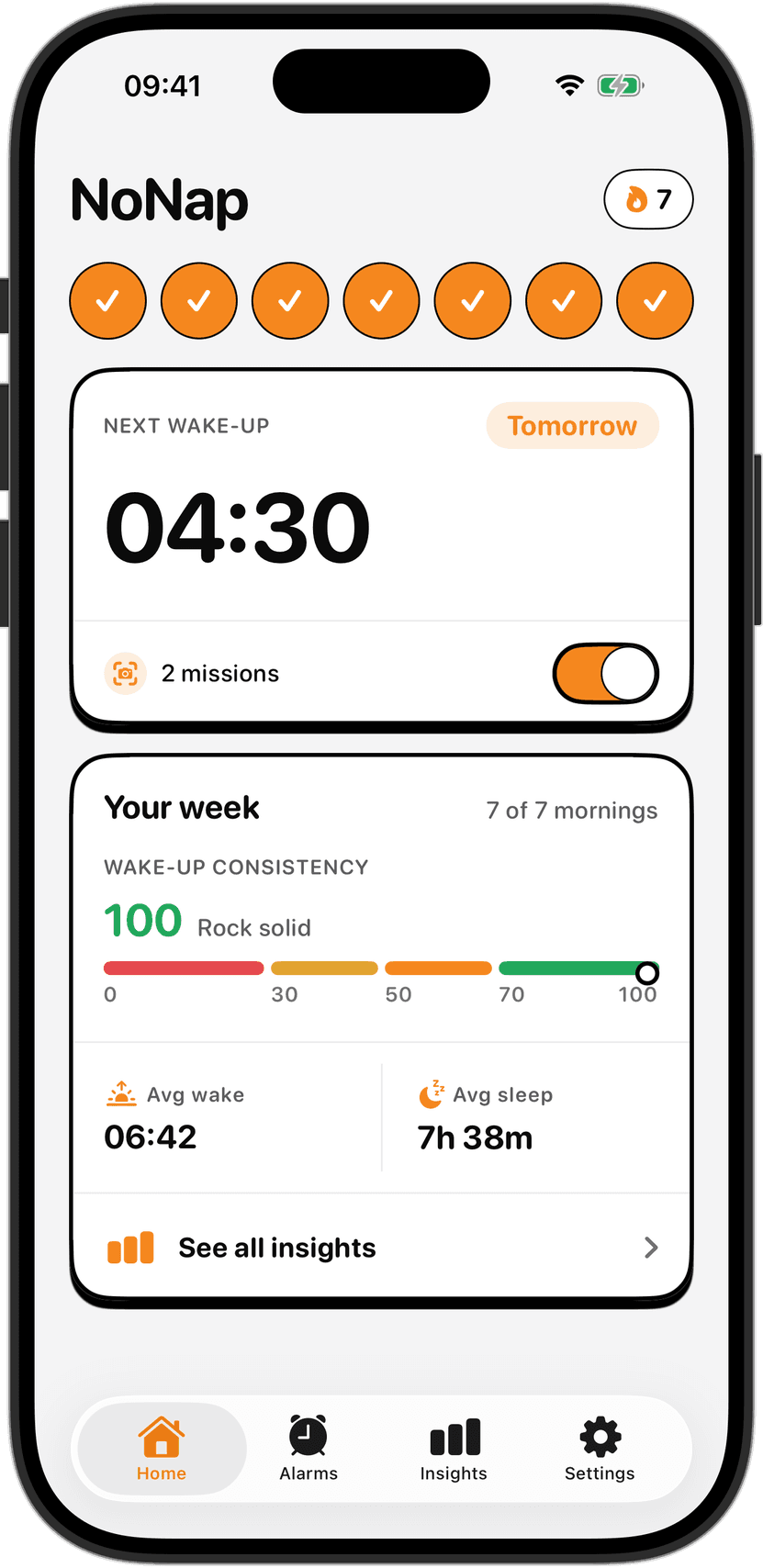
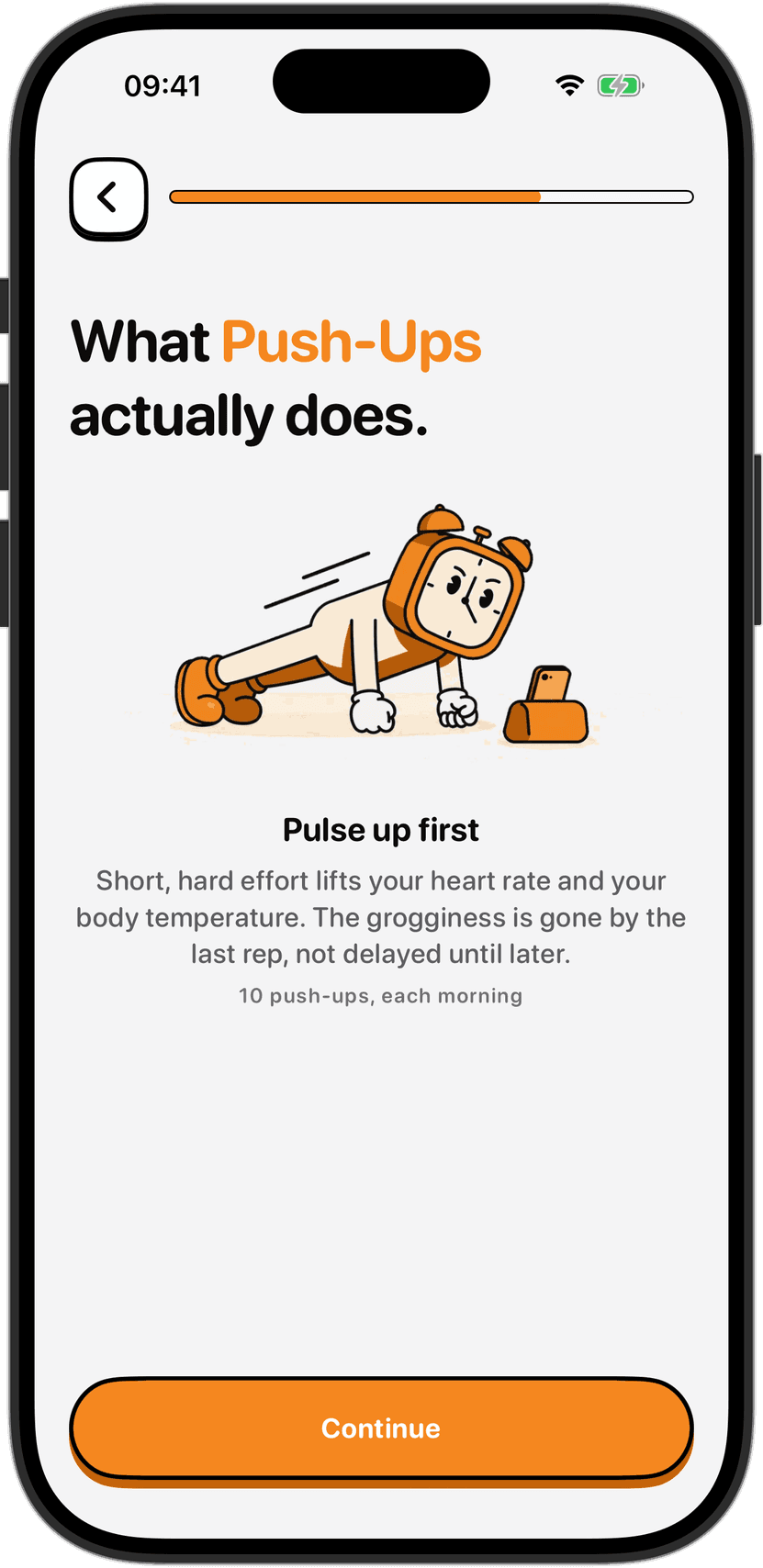
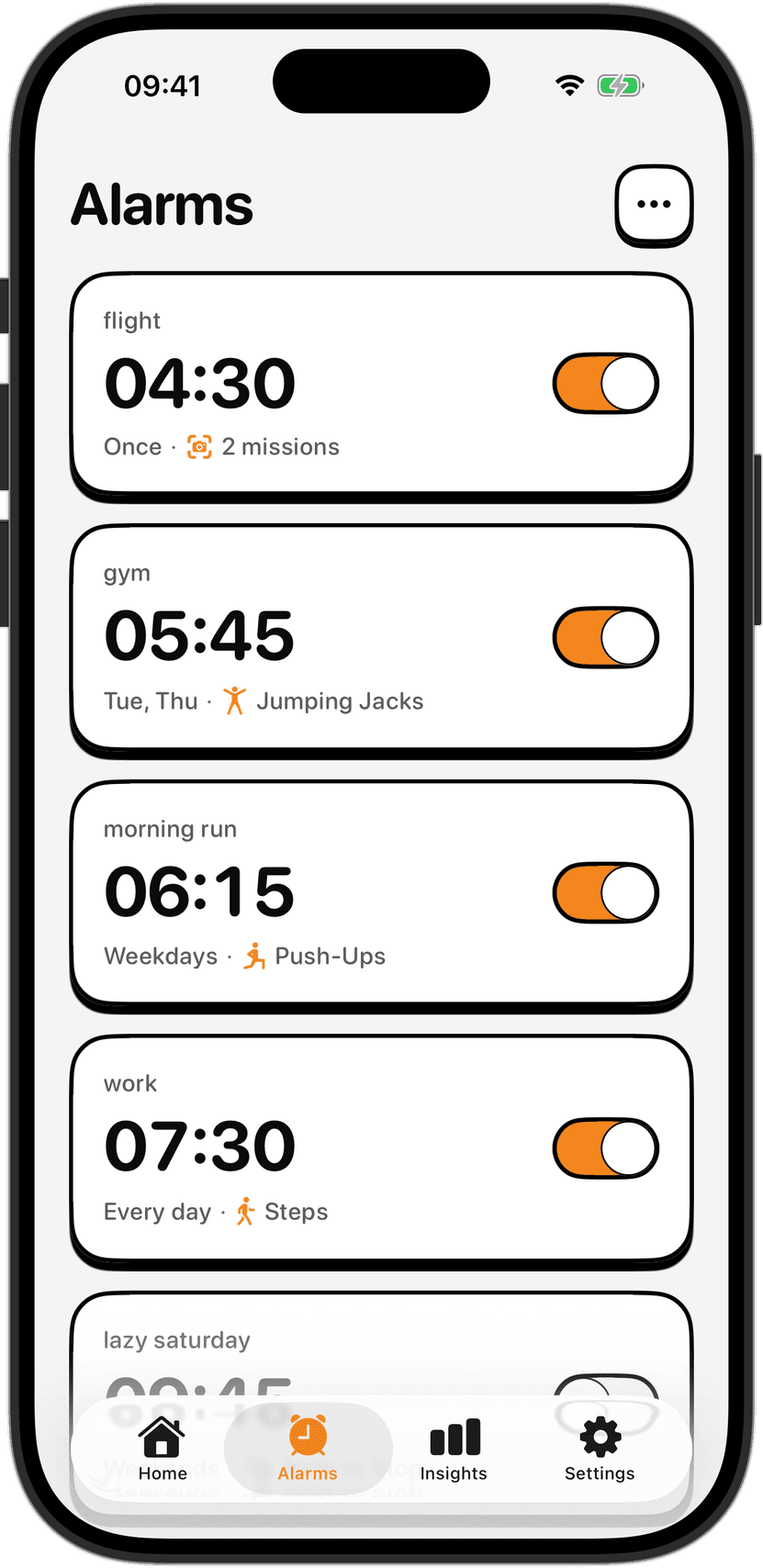
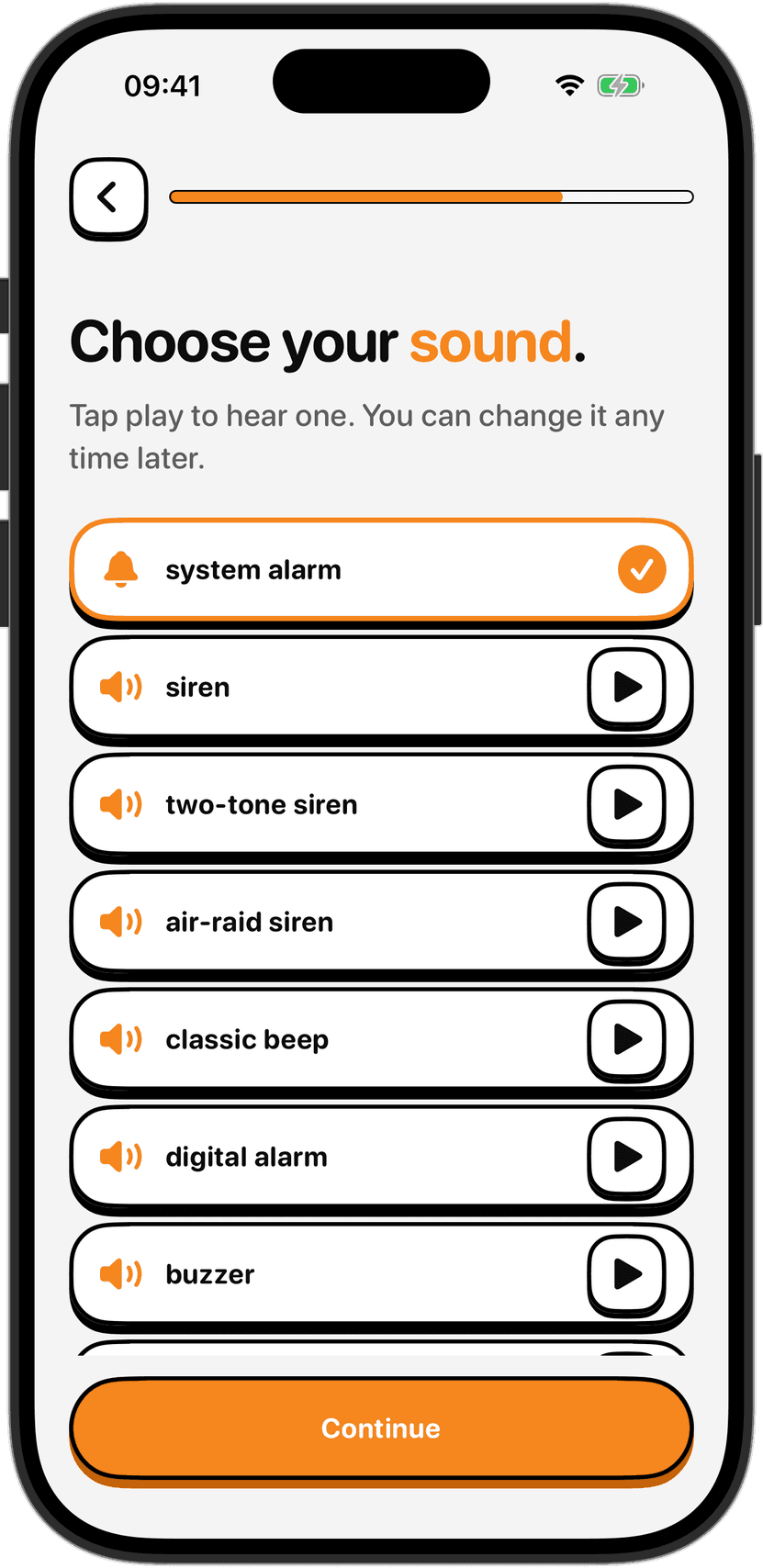
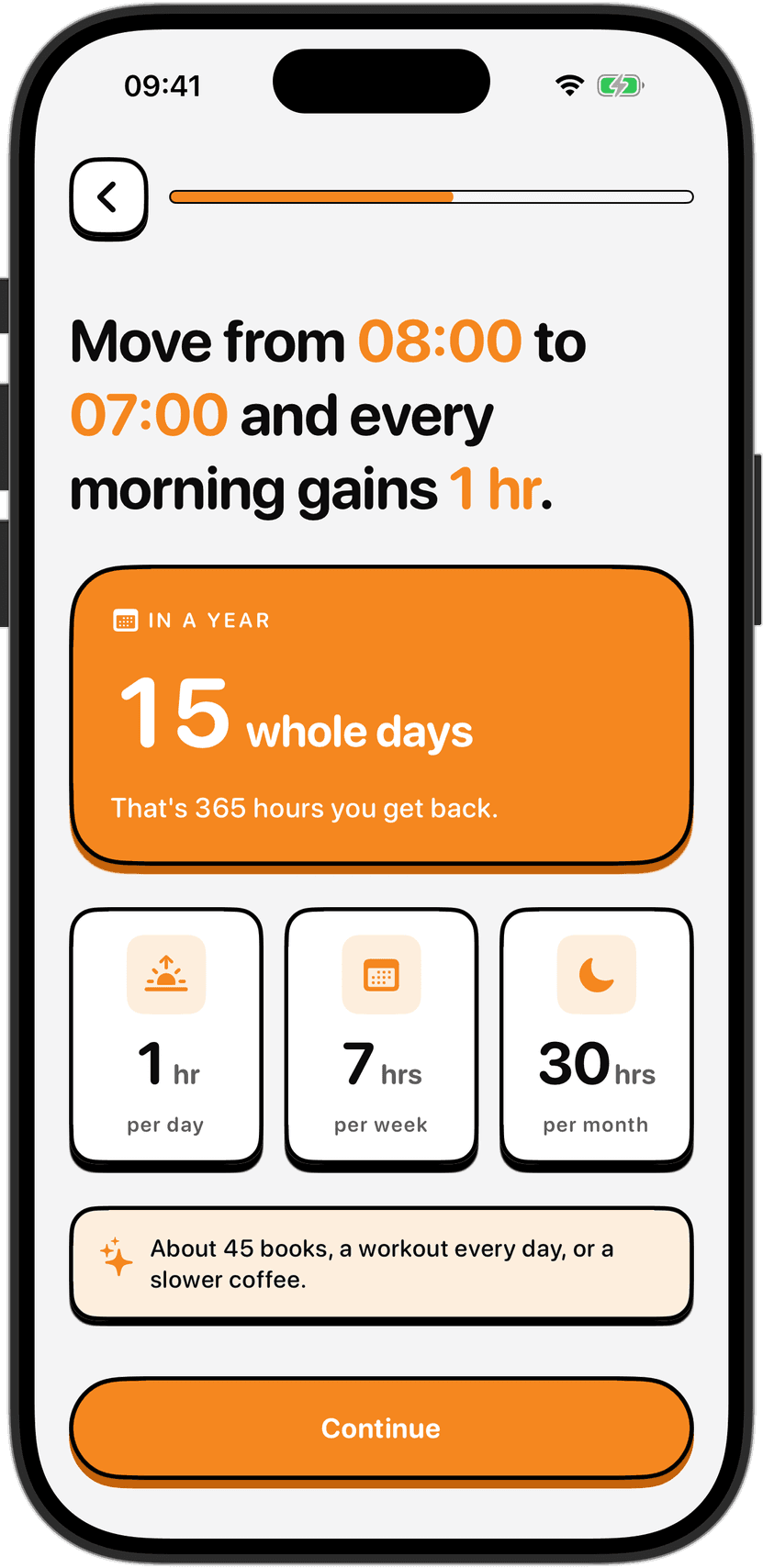
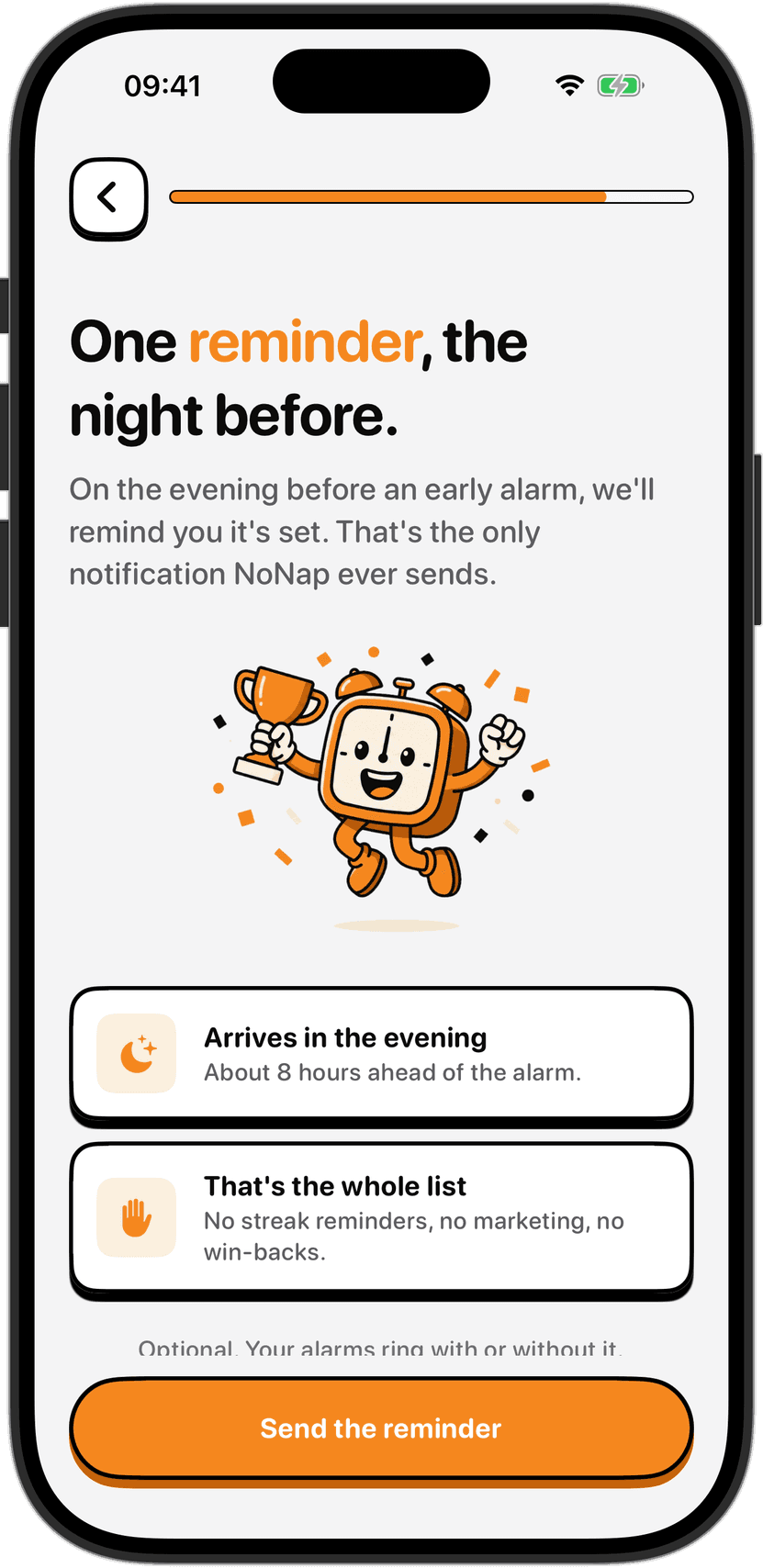
None of this works as a fix if the wake time behind it keeps sliding around, since a cutoff only earns its keep once you can tell, morning to morning, whether it is helping, and that is easier with a wake time that stays put even when bedtime wanders. NoNap is built around one alarm with no snooze button, using Apple's system alarm on iPhone, so the ring and silent switch do not mute it and Focus modes do not either. Stopping it means finishing a short wake task: push ups or squats counted by the camera, shaking the phone, a math problem, a photo, or getting out of bed itself. Skip the push ups or squats and pick a different task if you have an injury or a condition that makes exercise first thing risky. A night before reminder nudges you to start winding down, which is as good a moment as any to notice the second coffee crept from 1 p.m. to 4. See how it works.
A cutoff that actually holds does not need a chart. Pick a bedtime, count back six hours, and treat that as the last cup for a couple of weeks before deciding whether it changed anything.
Sources
Drake, C., Roehrs, T., Shambroom, J., and Roth, T. (2013). Caffeine Effects on Sleep Taken 0, 3, or 6 Hours before Going to Bed. Journal of Clinical Sleep Medicine, 9(11), 1195-1200. jcsm.aasm.org/doi/10.5664/jcsm.3170
Gardiner, C., Weakley, J., Burke, L. M., et al. (2025). Dose and timing effects of caffeine on subsequent sleep: a randomized clinical crossover trial. Sleep, 48(4), zsae230. academic.oup.com/sleep/article/48/4/zsae230/7815486
Evans, J., Richards, J. R., and Battisti, A. S. (2024). Caffeine. StatPearls, updated May 29, 2024. StatPearls Publishing, hosted on NCBI Bookshelf. ncbi.nlm.nih.gov/books/NBK519490/
Kazan, H. H., Bulgay, C., Zorba, E., et al. (2024). Exploring the relationship between caffeine metabolism related CYP1A2 rs762551 polymorphism and team sport athlete status and training adaptations. Molecular Biology Reports, 51(1), 841. pmc.ncbi.nlm.nih.gov/articles/PMC11266271/
Institute of Medicine (US) Committee on Military Nutrition Research. (2001). Caffeine for the Sustainment of Mental Task Performance: Formulations for Military Operations. National Academies Press. ncbi.nlm.nih.gov/books/NBK223808/
Sleep Foundation. Caffeine and Sleep, updated July 16, 2025, accessed August 2026. sleepfoundation.org/nutrition/caffeine-and-sleep
Lomas, E. (2024). Should You Delay Morning Caffeine? Oura, accessed August 2026. ouraring.com/blog/should-you-delay-morning-caffeine
Image credits
Cover photo by Sixteen Miles Out on Unsplash (unsplash.com/photos/cup-of-coffee-beside-rectangular-desk-clock-displays-808-NSXObEm1b-4), used under the Unsplash License, which permits commercial use without payment.