How your living room lights push bedtime later
Why evening light suppresses melatonin, what light levels matter, whether blue light glasses help, and how to dim down.
Visana Studios
6 min read
You finish dinner and settle into the couch. The overhead light is on. The lamp beside you. Your phone glowing from the coffee table. What happens next in your body is invisible, but it is already underway: the light flooding into your eyes is suppressing melatonin, the hormone that signals to your brain that night is coming. That signal will arrive later than it should, and bedtime will drift later with it.
Why light shuts down melatonin production
Melatonin is not really a sleep hormone, though it is often described that way. It signals darkness. The hormone rises as the sun sets, even before you feel tired, preparing the body for sleep by lowering core temperature, slowing digestion and reshaping the brain's response to stimuli. When light falls on your retina in the evening, specialized cells there send a message to your brain's circadian clock, and melatonin production stalls.
The effect is strong. A 2011 study by Gooley and colleagues at Harvard published in the Journal of Clinical Endocrinology and Metabolism brought 116 healthy volunteers into a sleep lab and tracked their melatonin levels under different lighting conditions. The volunteers sat in ordinary room light, less than 200 lux, for two hours before bed. That light suppressed melatonin onset by roughly two hours, delaying when their bodies sensed that night had begun. Their pre-sleep melatonin levels dropped by 71 percent. Some effects held up during sleep itself: room light suppressed melatonin by more than half in about 85 percent of the sleep periods measured.
200 lux is not bright. It is typical living room lighting. Not a spotlight, not the overhead during a dinner party. Just normal electric light in a normal room.
Daytime and evening light work opposite ways
The same light exposure that wrecks evening melatonin production is exactly what you want in the morning. Bright light in the early hours strengthens circadian rhythm, sharpens alertness and anchors your body clock to a predictable schedule. The strength of that effect depends on timing and intensity.
A 2022 consensus statement published in PLOS Biology by Brown and colleagues, drawing on expert review of the circadian literature, offered recommendations for optimal indoor light at different times of day. The advice: aim for high illuminance and short wavelengths (brighter, bluer light) during the daytime and for work, especially in the morning. Switch to dim, warm light in the evening.
The wavelength part matters because blue light has a stronger effect on circadian rhythm than other colors. It is not that blue light is uniquely harmful in the evening. Red light and green light and all the rest suppress melatonin too, but blue light does it more efficiently. The circadian system evolved under sunlight, which is rich in blue during the day and nearly absent after sunset, so our eyes' circadian-sensitive cells are tuned to respond to blue.
Do blue light glasses actually work
That is why blue light filtering glasses are sold everywhere. The premise is simple: block blue light in the evening, keep melatonin rising on time. The question is whether it actually works.
A 2023 systematic review by Singh and colleagues published in the Cochrane Database of Systematic Reviews examined the evidence from randomized trials. Blue light filtering glasses reduced blue light exposure to the eye, as expected. But the review found insufficient evidence that they improved sleep in healthy adults. Some studies showed benefits for people with insomnia or those using screens late at night, but the overall effect was small and inconsistent. The reviewers concluded that well-designed trials are still needed, and that the evidence does not support recommending blue light glasses for sleep improvement in the general population.
This does not mean they do nothing. The problem is that blue light is only part of the problem. Light of any color at high illuminance suppresses melatonin. Turn on a yellow lamp and it will delay melatonin onset. Turn on a red lamp at full brightness and it will do the same, just less efficiently than a blue lamp. Filtering blue while leaving the rest bright and white does not address the core issue, which is how much total light reaches your eyes.
What actually moves the dial
Dimming works. The strategy is simple: in the hour or two before bed, switch off overhead lights and use only a single, dim source. A bedside lamp, shaded and far enough away that it is not bright in your eyes. A reading light on a low setting. The goal is not to sit in complete darkness, which feels unnatural, but to get illuminance down to 10 lux or lower. That is roughly where the Gooley study found melatonin was no longer suppressed.
Another option is to go lower tech. Open the windows and sit by daylight an hour before sunset. That light is still bright, but it is warm, and the reddening of daylight as the sun drops shifts the spectrum away from blue. If you watch the colors change as evening sets in, your circadian system is already beginning to respond.
For the screens in your hand, dimming helps too. Most phones and computers now have a feature that warms the display and reduces overall brightness. Using these in the hour before bed is better than using them at full brightness, though the effect is weaker than what you get from turning off the overhead light. If you find yourself checking email or social media during the hour you meant to wind down, the device itself, no matter how carefully tuned, will keep melatonin lower than it should be.
The practical priority is the room, not the light spectrum. Make the room dim, and the wavelength becomes secondary. Use a single, warm, dim source if you want to read or move around, and let your eyes adjust to the low light. An hour of dim light is not a trick. It is just what happened in the human evening for most of history.
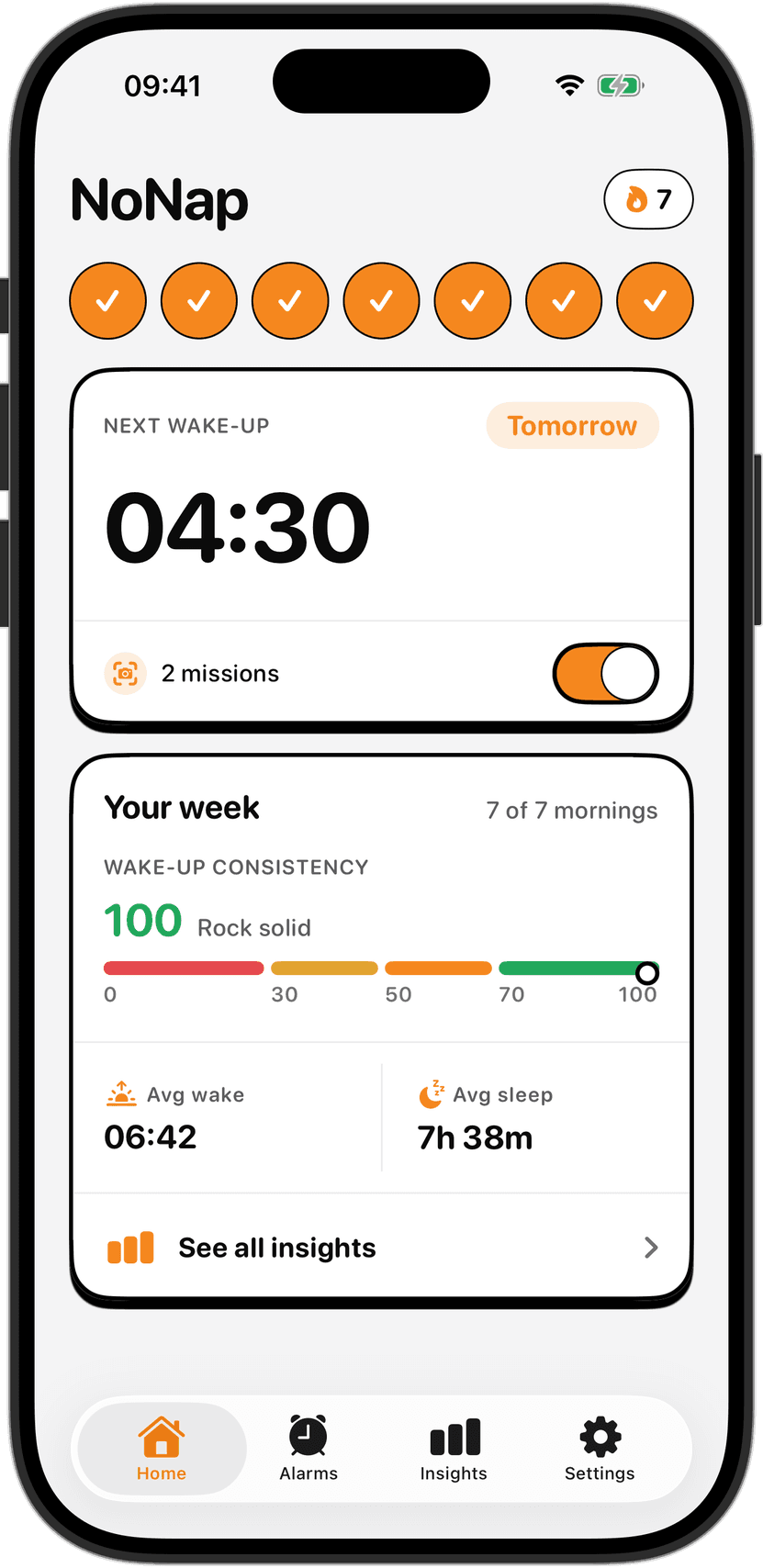
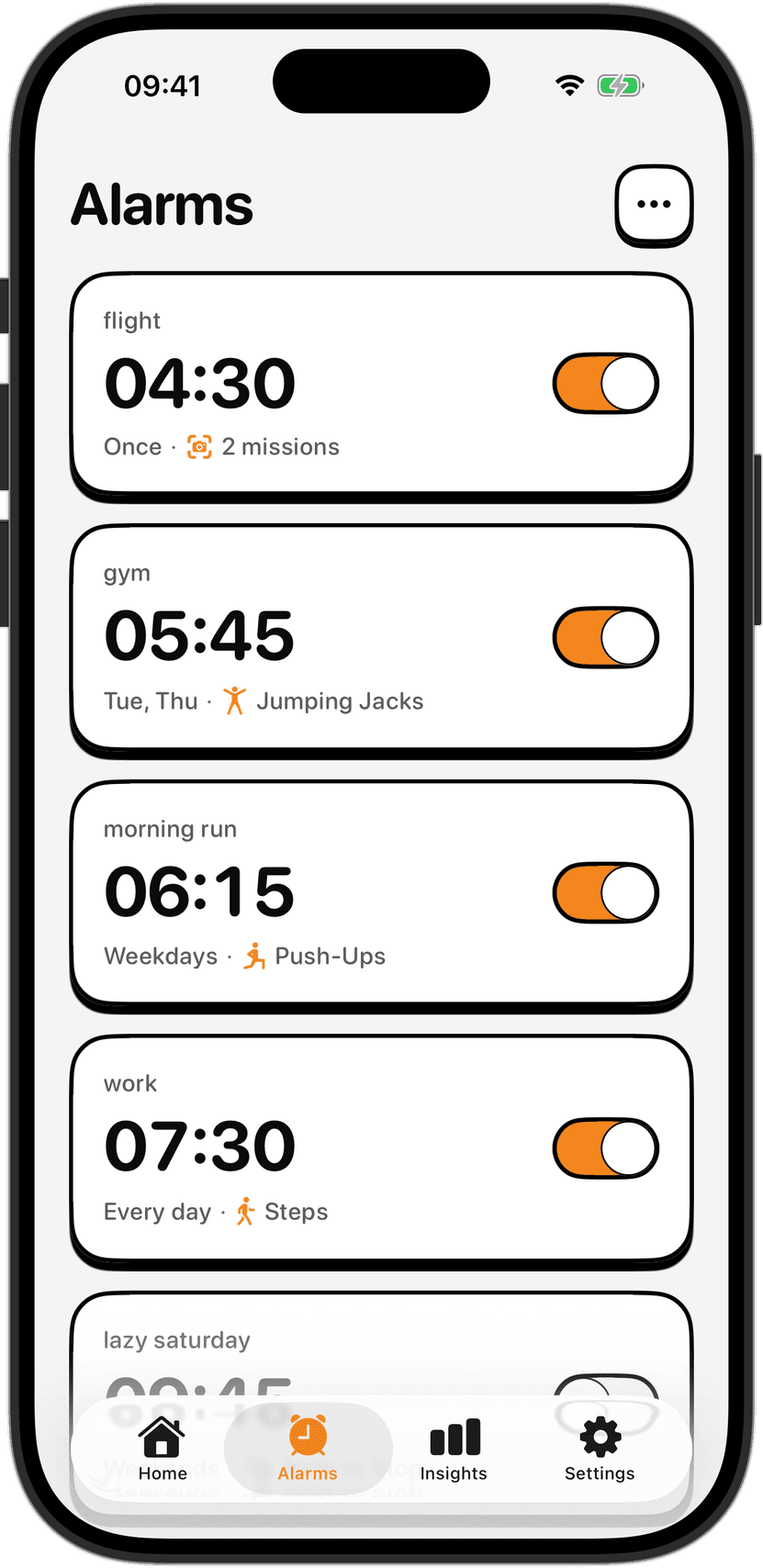
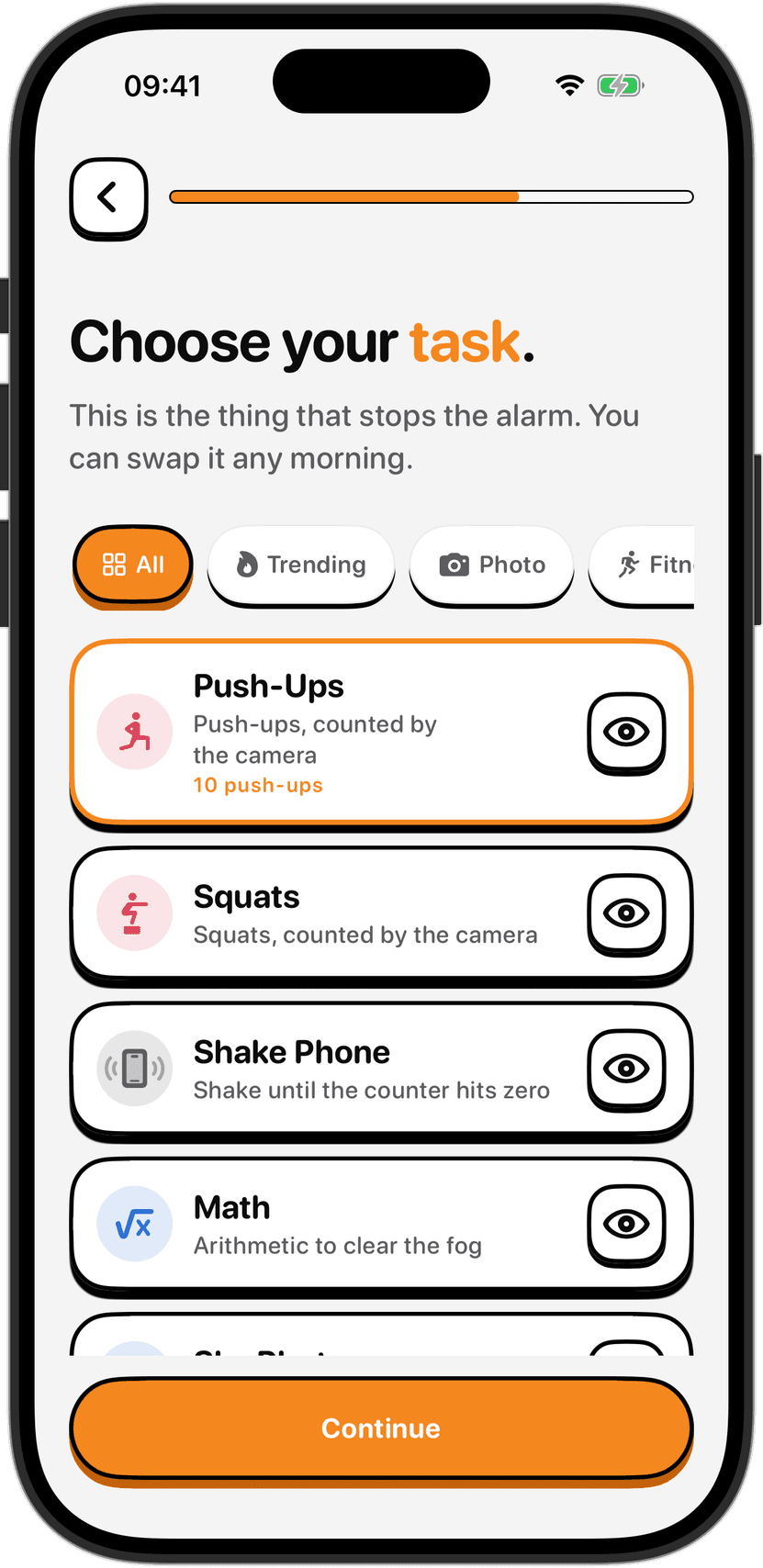
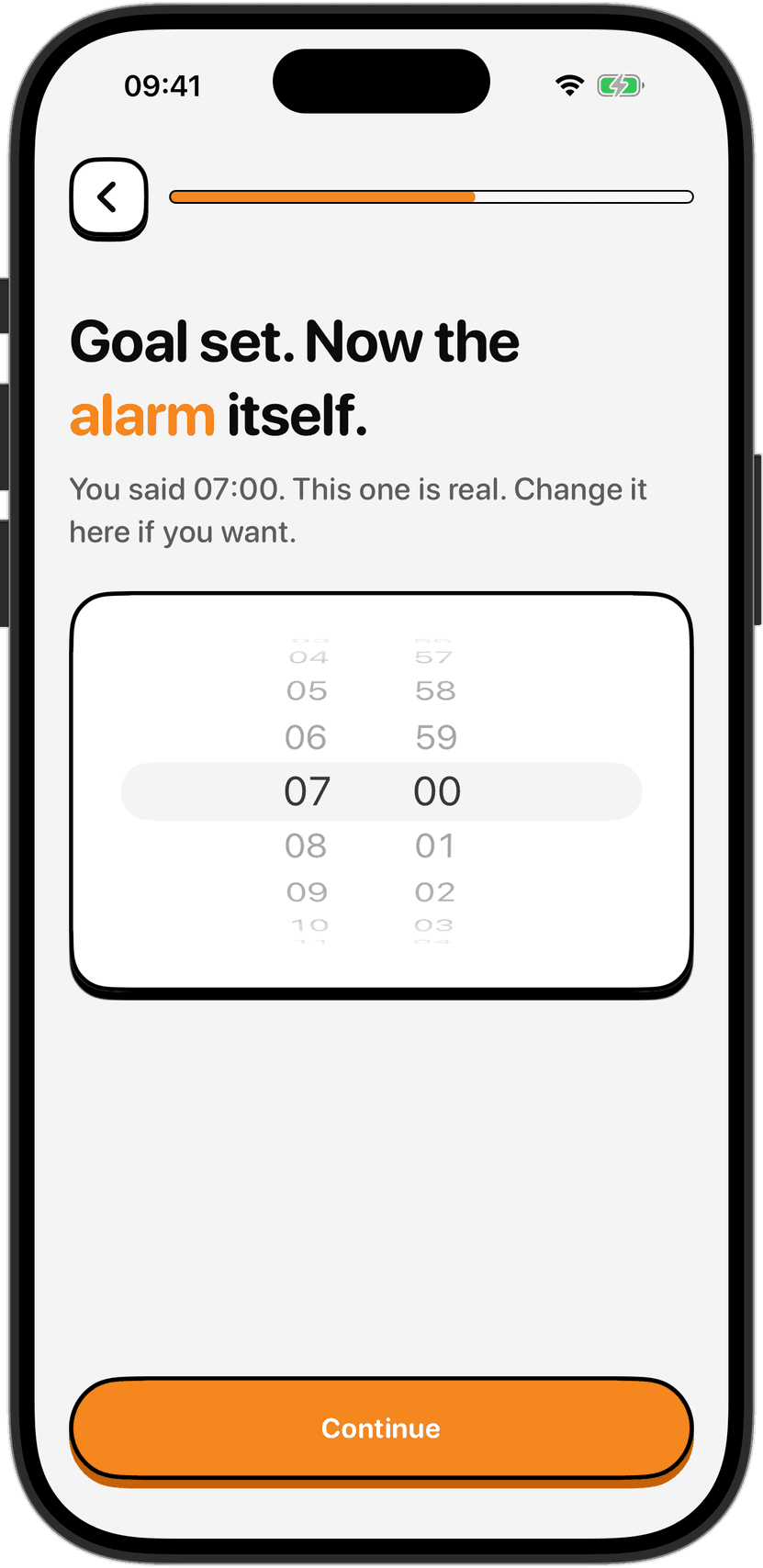
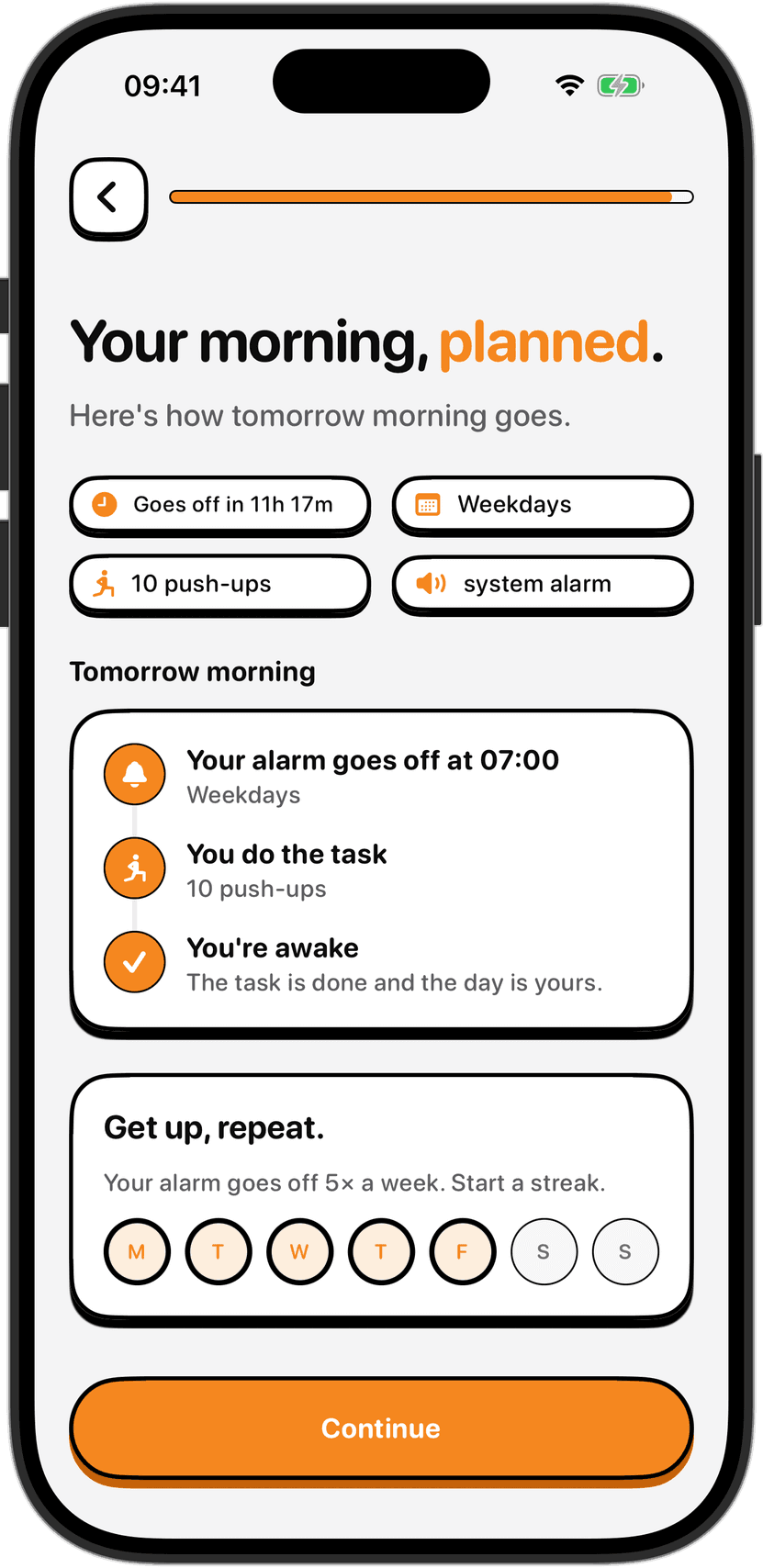
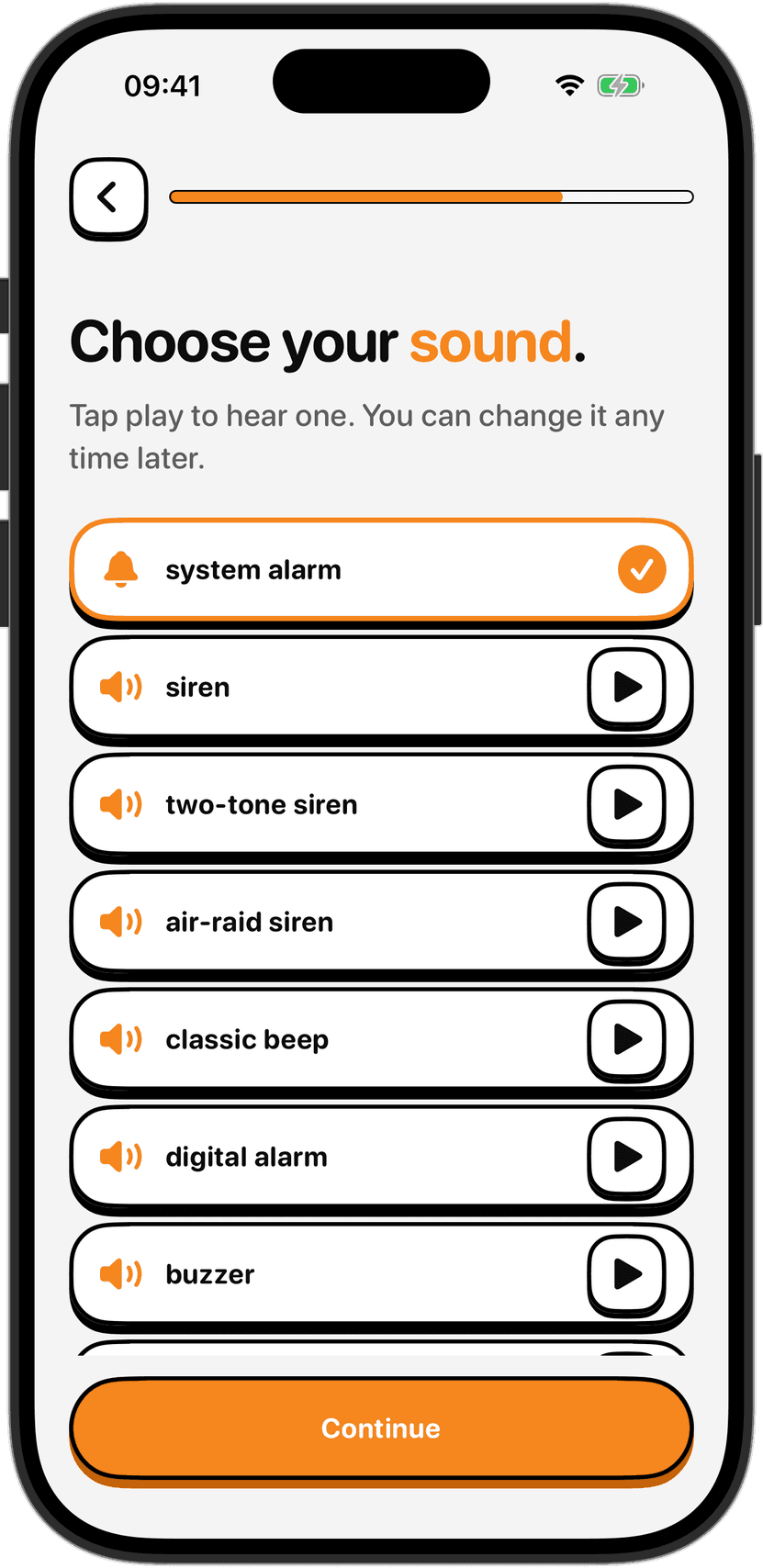
One thing that reinforces the habit is knowing when to stop winding down and actually go to bed. Morning light is the strongest signal your body clock gets, and a consistent wake time is what lets evening light work as a signal. If you wake up at a different time each morning, your circadian clock drifts around, and the melatonin rhythm drifts with it. A fixed wake time, even on weekends, anchors the clock. NoNap is built around one alarm at the time you genuinely need to wake. No snooze button, no negotiating. The task you choose to stop the alarm, whether push-ups or squats counted by the camera, shaking the phone, a math problem, or getting out of bed, can be changed any morning, and skipping push-ups or squats for a gentler option like math or shake phone is fine if you have an injury or condition that makes early exercise risky. That consistency is what makes an evening dimming routine land cleanly: you know when you need to sleep, and you know when to start winding down.
Sources
Gooley, J. J., Chamberlain, K., Smith, K. A., Khalsa, S. B. S., Rajaratnam, S. M. W., Van Reen, E., Zeitzer, J. M., Czeisler, C. A., and Lockley, S. W. (2011). Exposure to Room Light before Bedtime Suppresses Melatonin Onset and Shortens Melatonin Duration in Humans. Journal of Clinical Endocrinology and Metabolism, 96(3), E463-E472, doi:10.1210/jc.2010-2098
Brown, T. M., Brainard, G. C., Cajochen, C., Czeisler, C. A., Hanifin, J. P., Lockley, S. W., Lucas, R. J., Münch, M., O'Hagan, J. B., Peirson, S. N., Price, L. L. A., Roenneberg, T., Schlangen, L. J. M., Skene, D. J., Spitschan, M., Vetter, C., Zee, P. C., and Wright, K. P., Jr. (2022). Recommendations for daytime, evening, and nighttime indoor light exposure to best support physiology, sleep, and wakefulness in healthy adults. PLOS Biology, 20(3), e3001571, doi:10.1371/journal.pbio.3001571
Singh, S., Singh, S., and Spitschan, M. (2023). Blue-light filtering spectacle lenses for visual performance, sleep, and macular health in adults. Cochrane Database of Systematic Reviews, 8, CD013244, doi:10.1002/14651858.CD013244.pub2
Image credits
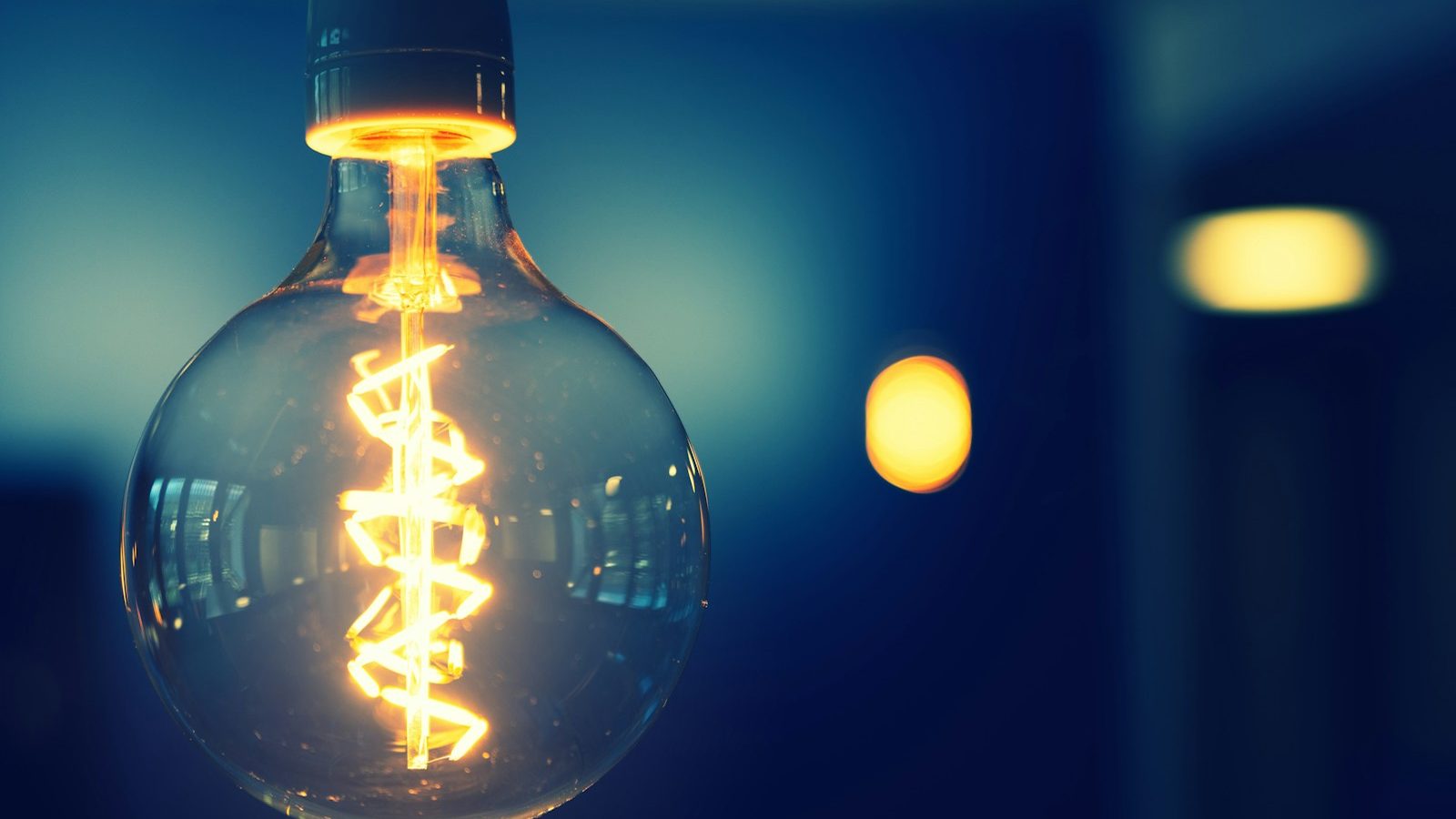
Cover photo of a glowing warm light bulb by Johannes Plenio, from Unsplash (unsplash.com/photos/voQ97kezCx0), used under the Unsplash License, which permits commercial and non-commercial use without permission or attribution.