Social jetlag: why Monday mornings hit harder
Why sleeping in two or three hours on weekends drags your body clock later, what a landmark 2006 study found, and how a steady wake time helps.
Visana Studios
7 min read
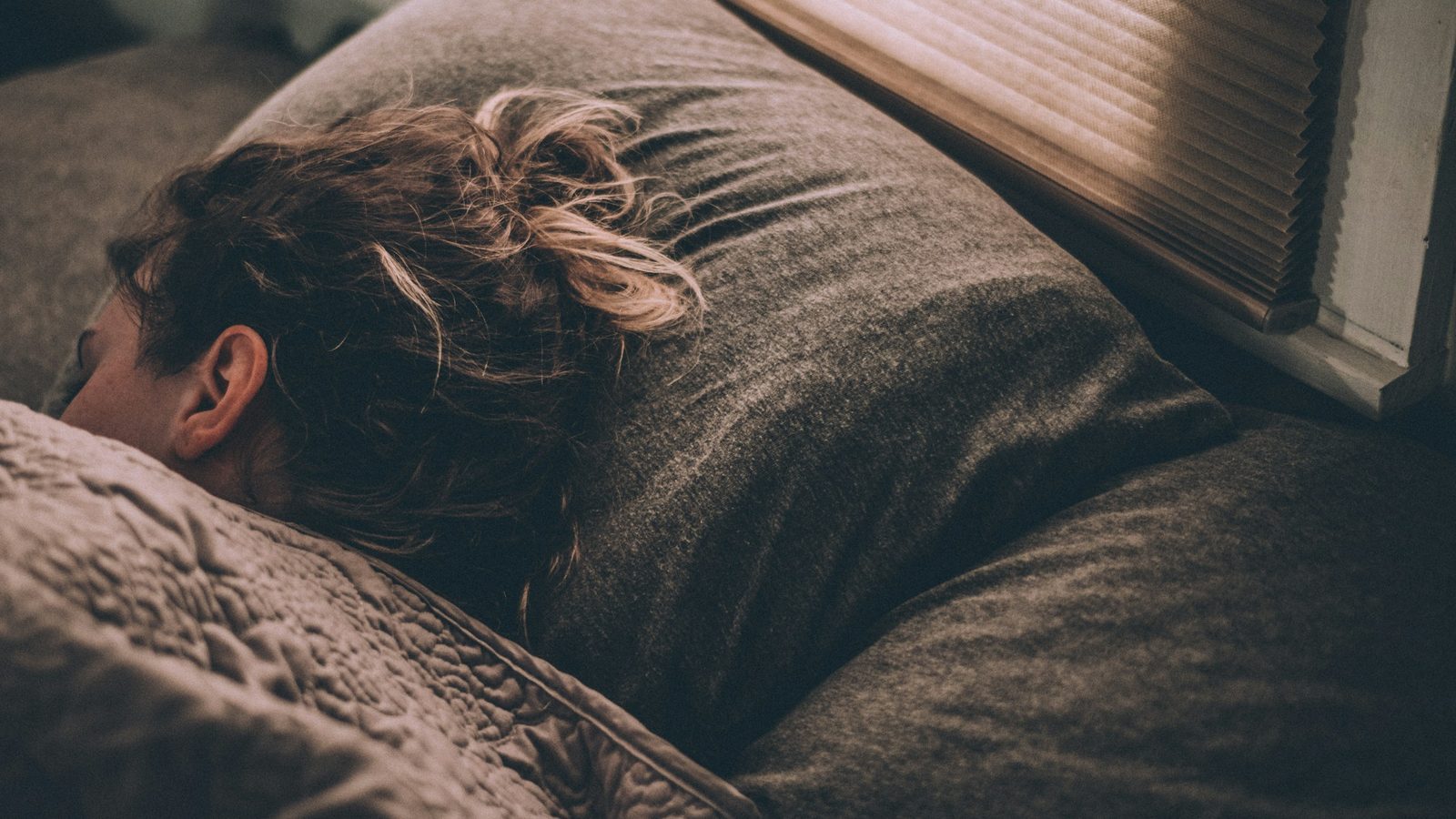
Saturday, no alarm set. You surface around 9:30 instead of 6:45, roll over, and it feels like winning. Sunday night you're wide awake at midnight anyway. Monday's 6:45 alarm then lands in what your body still insists is the middle of the night, and the whole day starts a step behind before you've even stood up. The rough edge of a Monday morning has less to do with how many hours landed in your weekend than with which time zone your body clock thinks it woke up in.
What social jetlag actually measures
In 2006, Marc Wittmann, Jenny Dinich, Martha Merrow, and Till Roenneberg gave that feeling a name. Working from Roenneberg's Munich ChronoType Questionnaire, they had 501 people report when they actually fell asleep and woke up on work days versus free days, then took the midpoint of each sleep window rather than the bedtime or the wake time alone. Social jetlag, in their definition, is the gap between those two midpoints. Someone asleep by midnight and up at 7 on weekdays has a workday sleep midpoint around 3:30 a.m. Let that same person drift to 1:30 a.m. and 10 a.m. on a Saturday and the free-day midpoint moves to roughly 5:45 a.m. That two-hour-and-fifteen-minute difference is social jetlag, measured the same way you'd measure a flight across time zones, because Wittmann and Roenneberg meant the comparison literally. The gap was largest in people with the latest chronotypes, whose body clock already ran behind a standard 9-to-5, and it tracked with heavier smoking and caffeine use on free days too, not only with later bedtimes.
How common the gap really is
A 2021 review in Nutrients, led by Rocco Caliandro at Erasmus MC, pooled data across industrialized countries and put rough numbers on it: about seven in ten students and working adults carry at least an hour of social jetlag, and close to half carry two hours or more, often for years at a stretch. Roenneberg himself said it plainer in comments picked up by ScienceDaily after his follow-up study ran in 2012: "Our surveys suggest that in Western societies two thirds of the population are burdened with a significant discrepancy between their internal time and the demands imposed by school and work schedules and leisure stress." One caveat worth keeping in view: the raw gap overstates the true clock shift somewhat, since part of a longer weekend sleep is just repaying a debt run up during a short working week rather than a pure circadian drift. Researchers have since built a sleep-debt-corrected version of the measure to separate the two, though the plain version is still what most studies, and most people's own weekends, run on.
What the larger studies link it to
Roenneberg returned to the question in 2012 with Karla Allebrandt, Martha Merrow, and Céline Vetter, publishing in Current Biology. Drawing again on the Munich questionnaire data, they reported that social jetlag tracked with higher body mass index even after accounting for how long people slept in total, not just when. A larger, more recent synthesis points the same direction without overselling it. Arman Arab and colleagues pooled 43 studies and 231,648 people in a 2024 meta-analysis in Obesity Reviews and found social jetlag correlated with higher BMI and waist circumference. The relationship was real but modest, a correlation of about 0.12 for BMI, and the underlying studies disagreed with each other enough that "consistent" is generous. On the heart and mood side, a University of Arizona team led by Sierra Forbush and Michael Grandner surveyed 984 adults and reported, at the 2017 SLEEP conference, that each added hour of social jetlag came with an 11 percent higher likelihood of reported heart disease, independent of total sleep time or insomnia symptoms, alongside worse mood and more fatigue. None of this proves that a late Saturday causes heart trouble by itself. These are observational snapshots, and people who run a bigger weekend-to-weekday gap often also work irregular hours or sleep short to begin with, which these studies can only partly untangle. Anyone noticing new chest symptoms, unusual fatigue, or a mood shift that doesn't lift should raise it with a doctor rather than chalk it up to a bad weekend.
Why sleeping in works like flying east on Monday
Two things happen on a free weekend that a simple hour of extra sleep wouldn't cause on its own. Bedtime slides later, usually by more than wake time does, because nothing forces you into bed at a fixed hour the way an alarm forces you out of one. And the light your eyes catch first thing slides later too, sometimes by two or three hours. Morning light is the strongest signal the brain's master clock uses to hold its rhythm in place, so pushing that signal back across Friday night and Saturday morning drags the clock itself later, not just your behavior around it. That's a phase delay, the same mechanism that makes flying west feel easy and flying back feel rough.
By Sunday night, the clock has settled onto a schedule that expects to start around 9 or 10. It has no idea Monday exists. The 6:45 alarm doesn't just wake you up; it asks a body still running on weekend time to perform like it's had a full night's rest on the old schedule, not unlike landing in London for breakfast after a red-eye out of San Francisco. That collides with the ordinary fog of sleep inertia, the slow return of alertness everyone gets after waking, so Monday morning stacks two problems instead of one.
Keeping the weekend within an hour of the alarm
The fix researchers keep landing on is unglamorous next to the biology behind it. The CDC lists it as a core sleep habit: go to bed and get up at roughly the same time every day, weekends included rather than carved out. That doesn't mean banning the lie-in. A short one, thirty minutes to an hour, barely registers by Wittmann's own definition and can genuinely help someone who is behind on sleep. Two or three hours is where the trouble starts, since that's close to the size of the gap the original research measured and also roughly what it takes to drag the clock's phase far enough that Monday feels foreign. Someone catching up on real sleep debt is usually better served by an earlier bedtime than a later wake time, since that protects the weekend's rest without moving the clock at all.
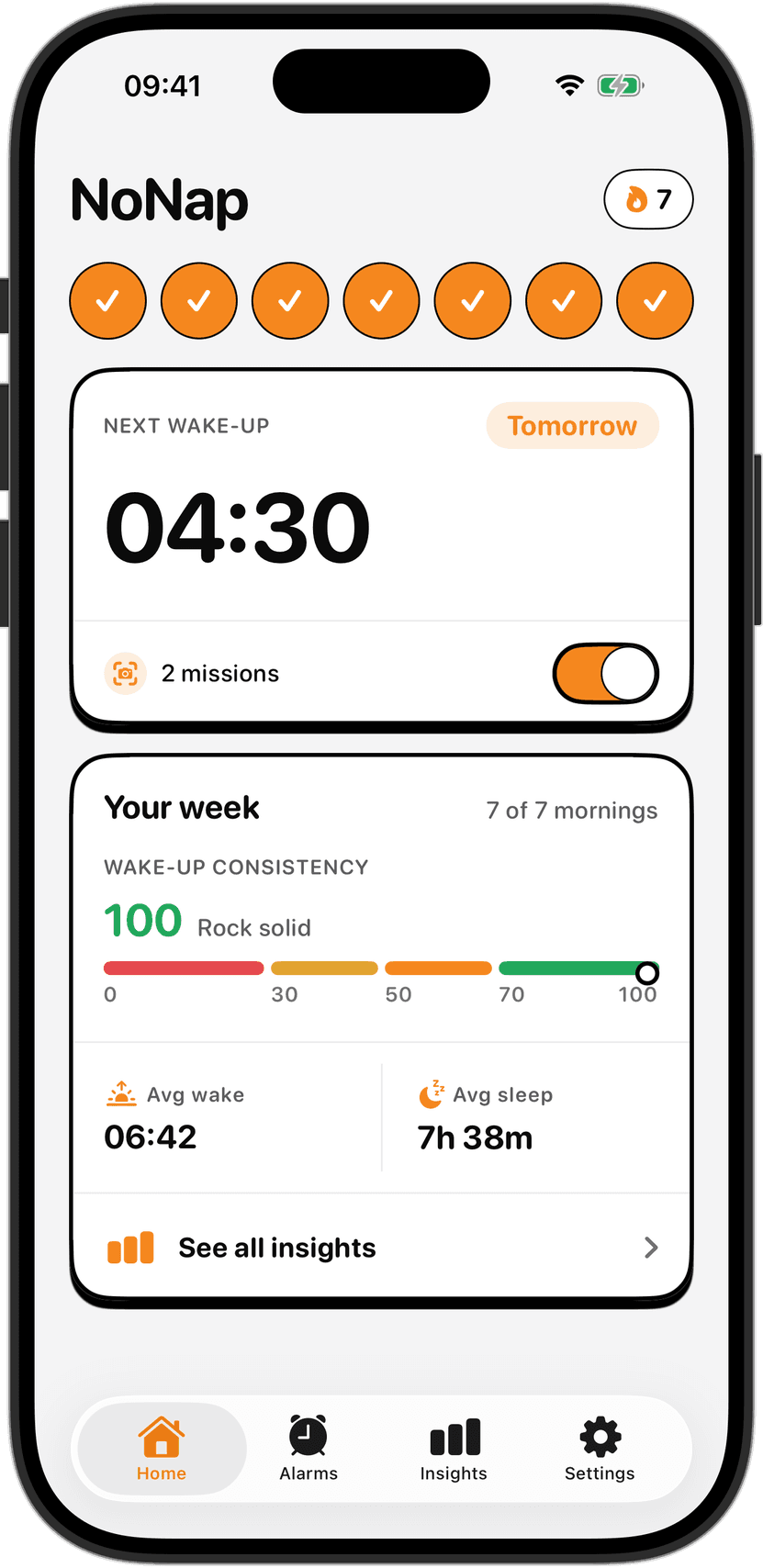
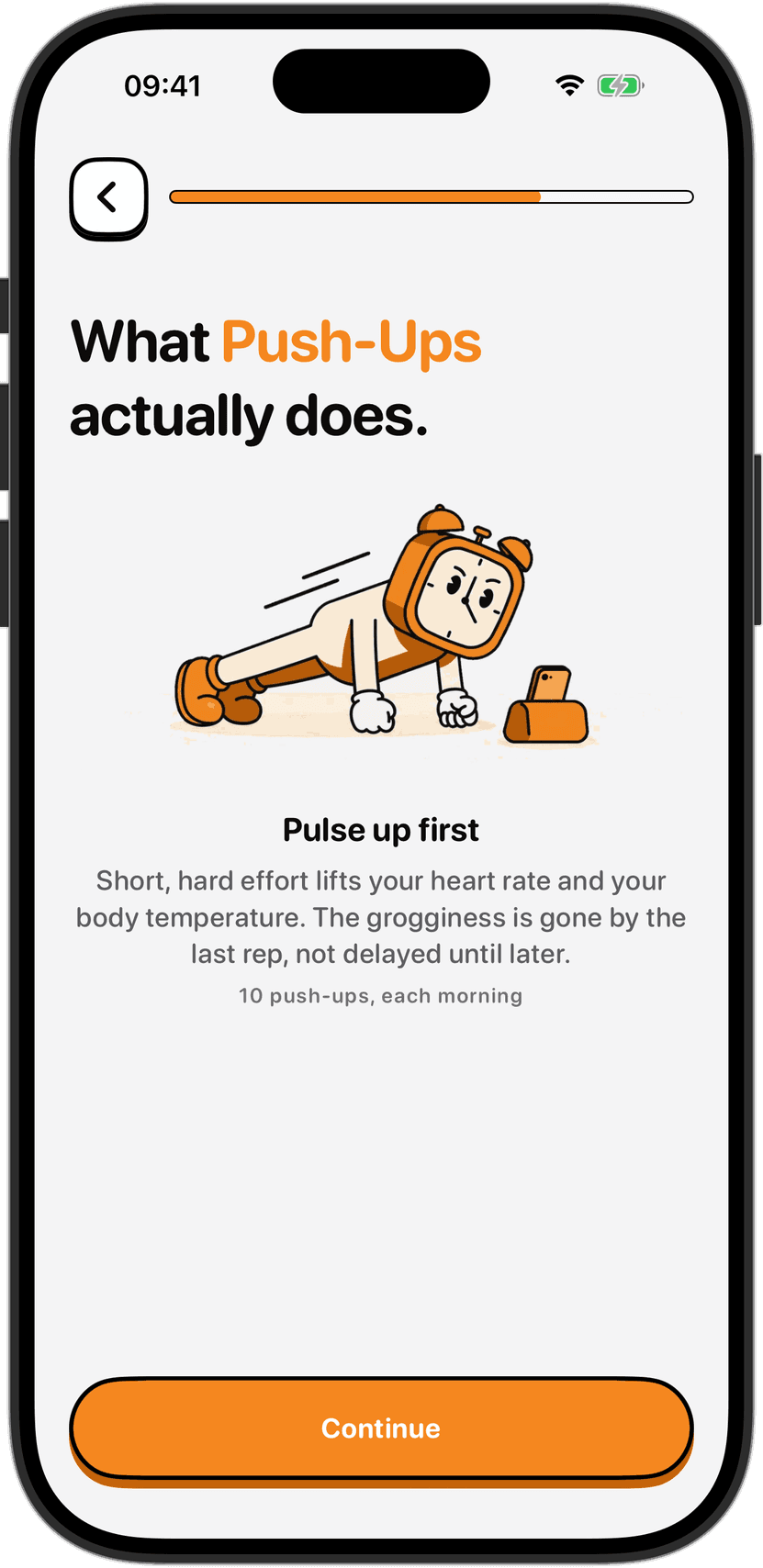
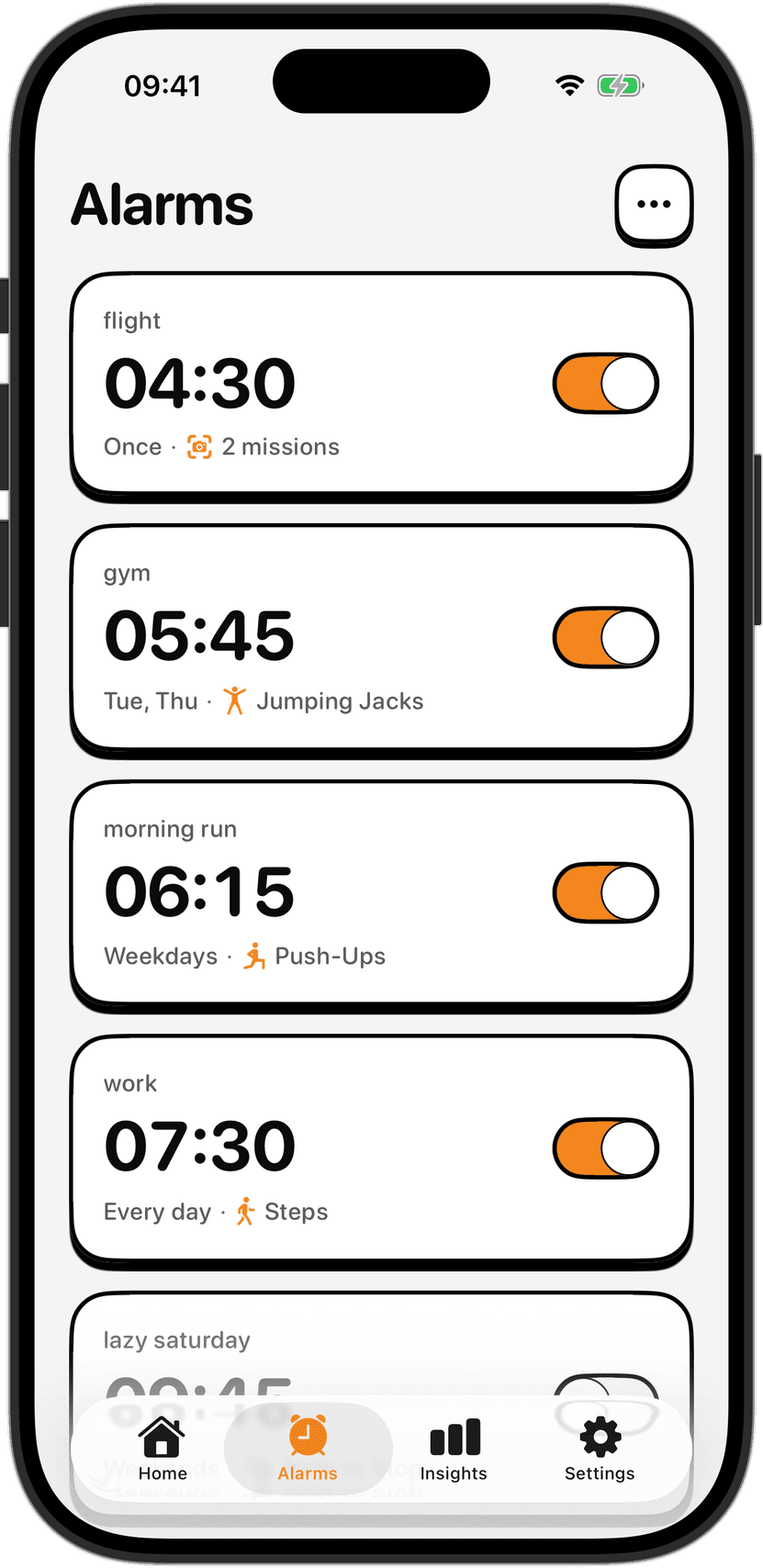
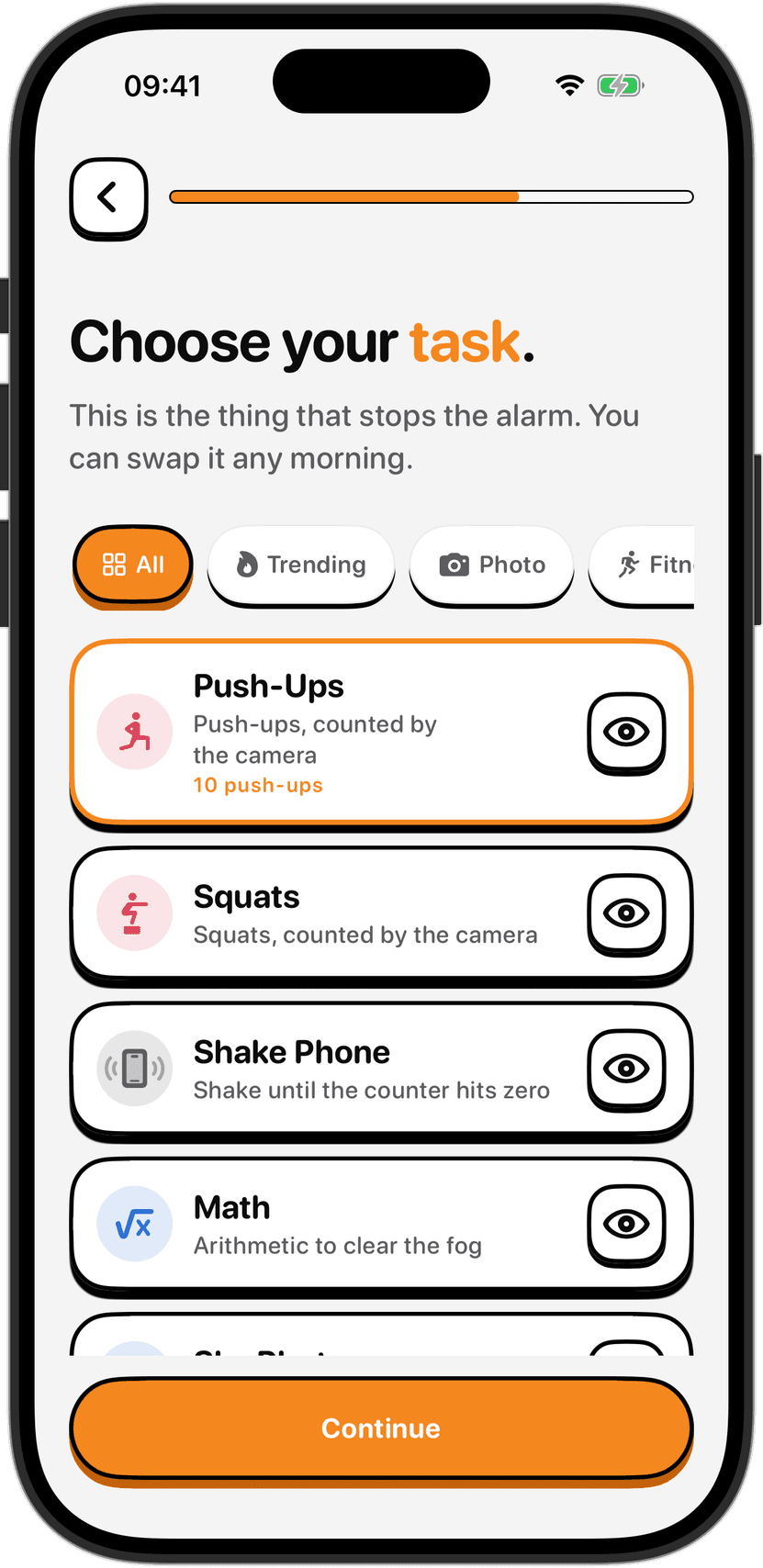
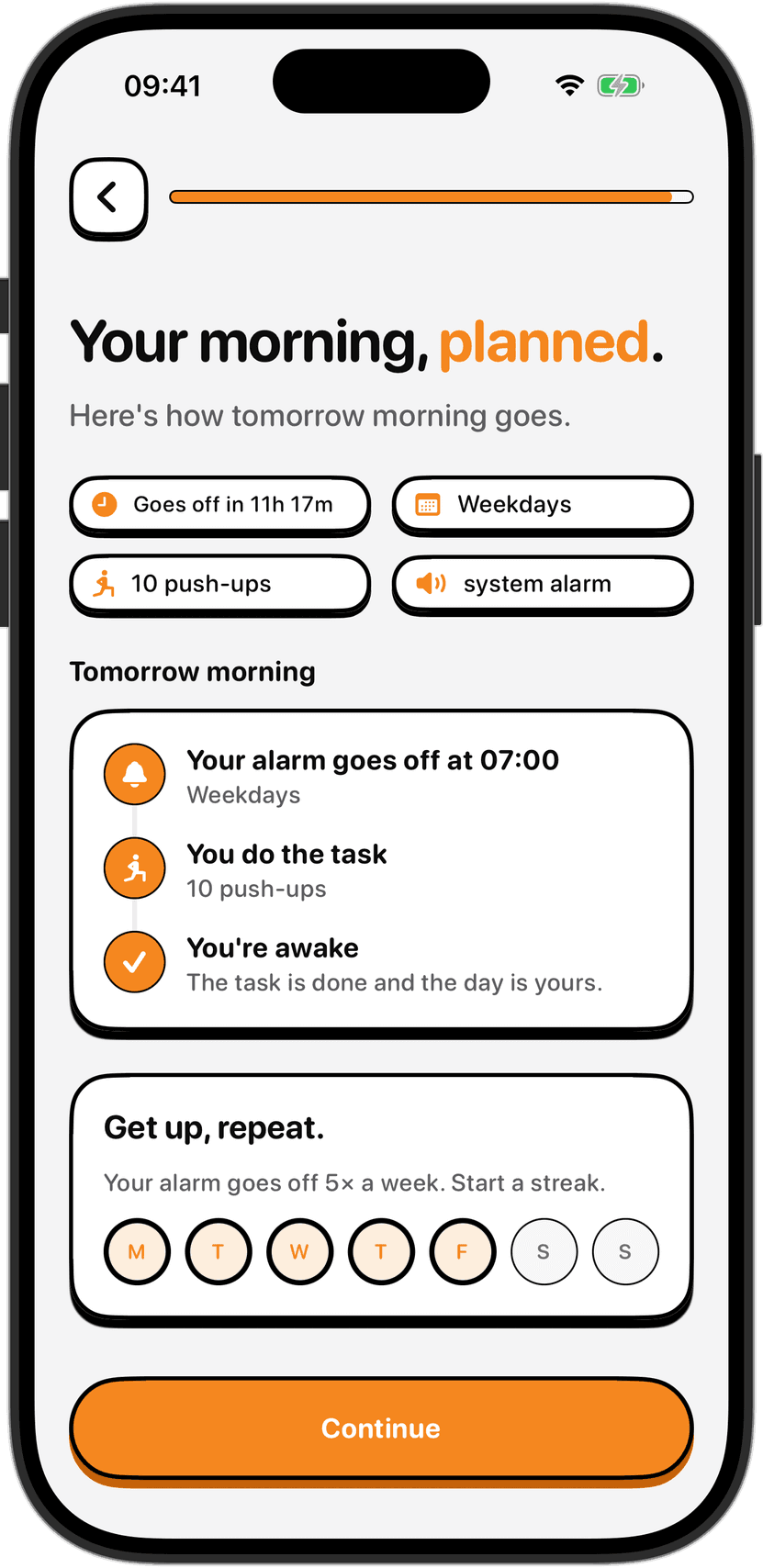
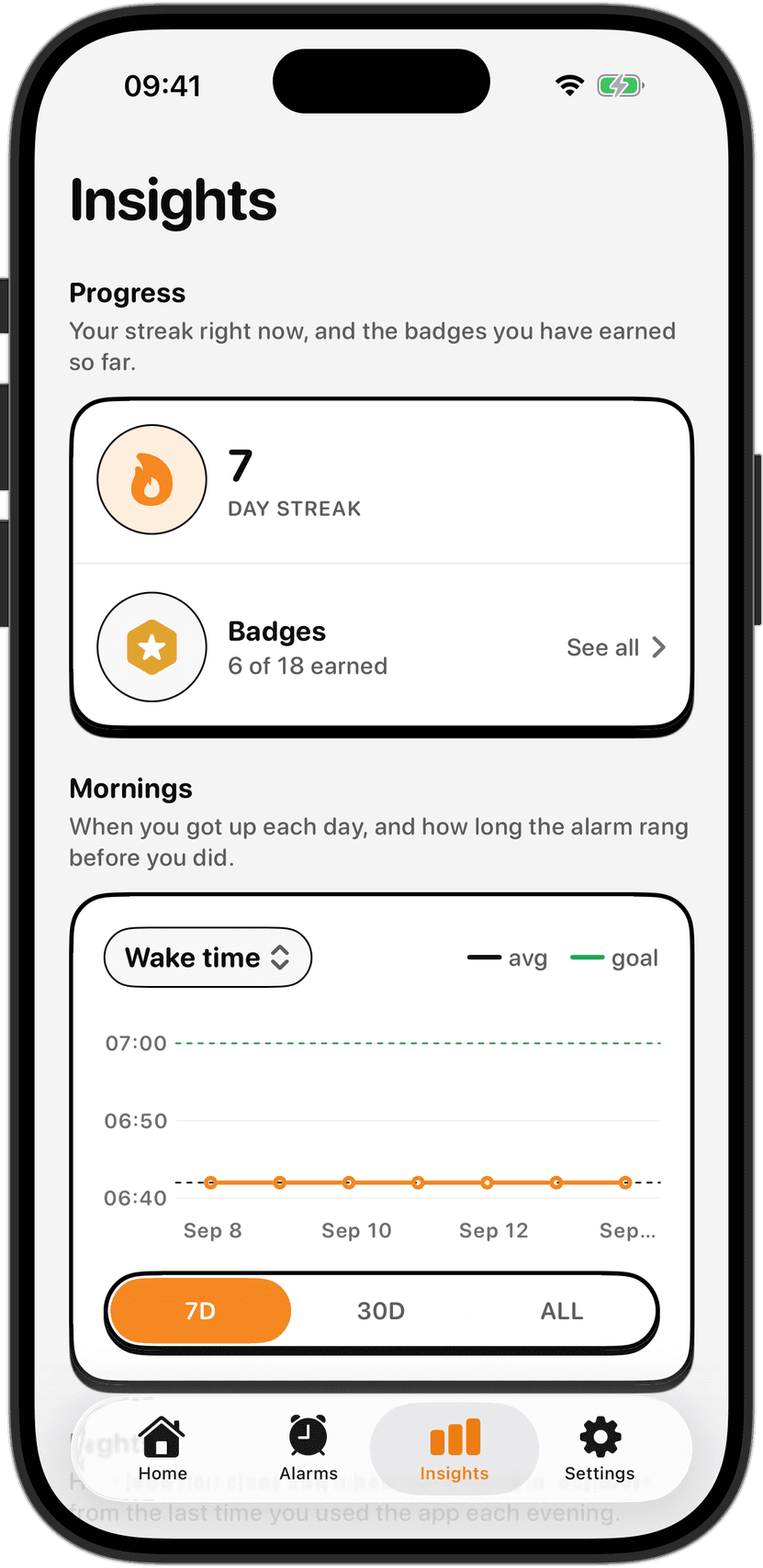
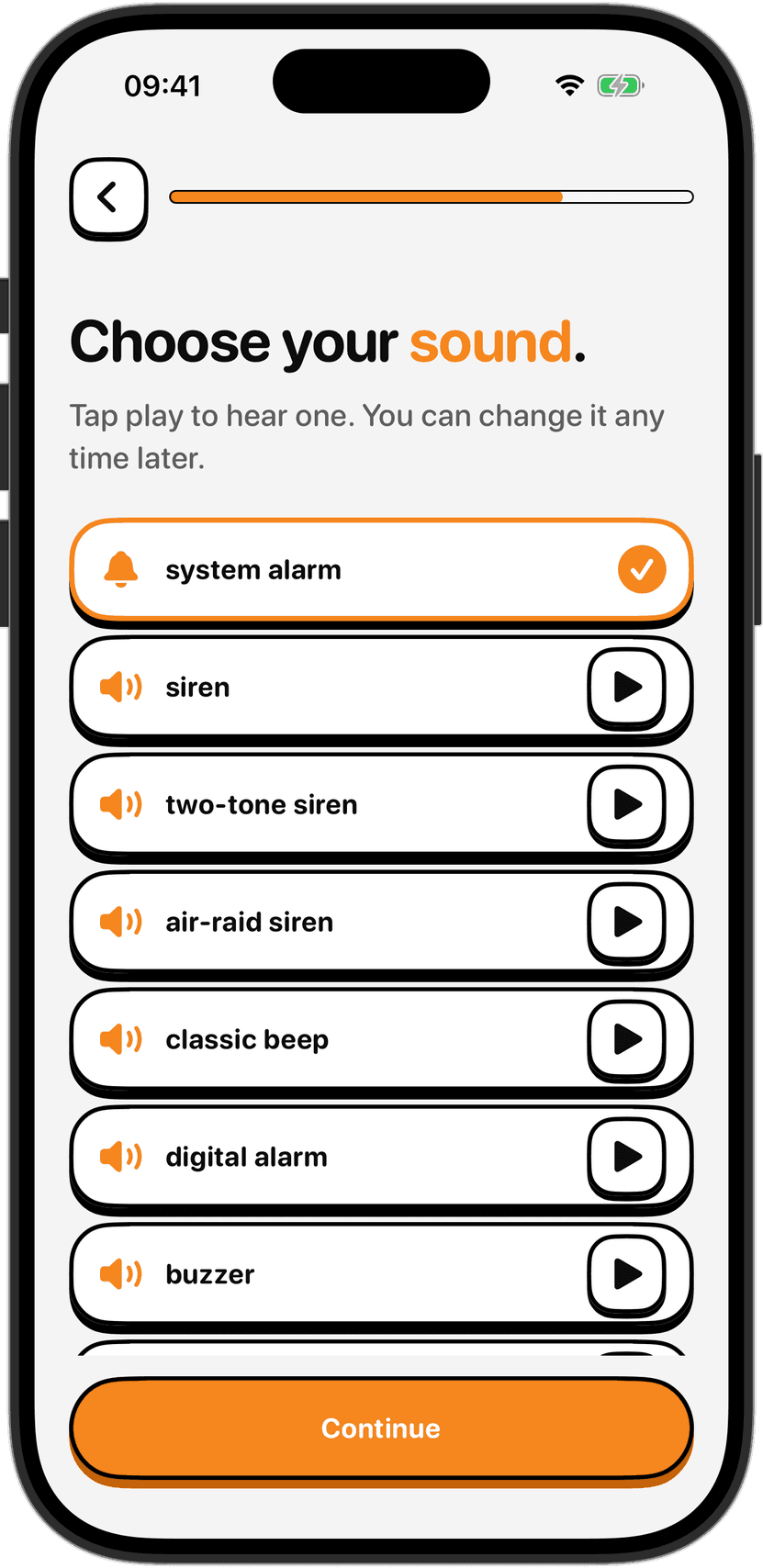
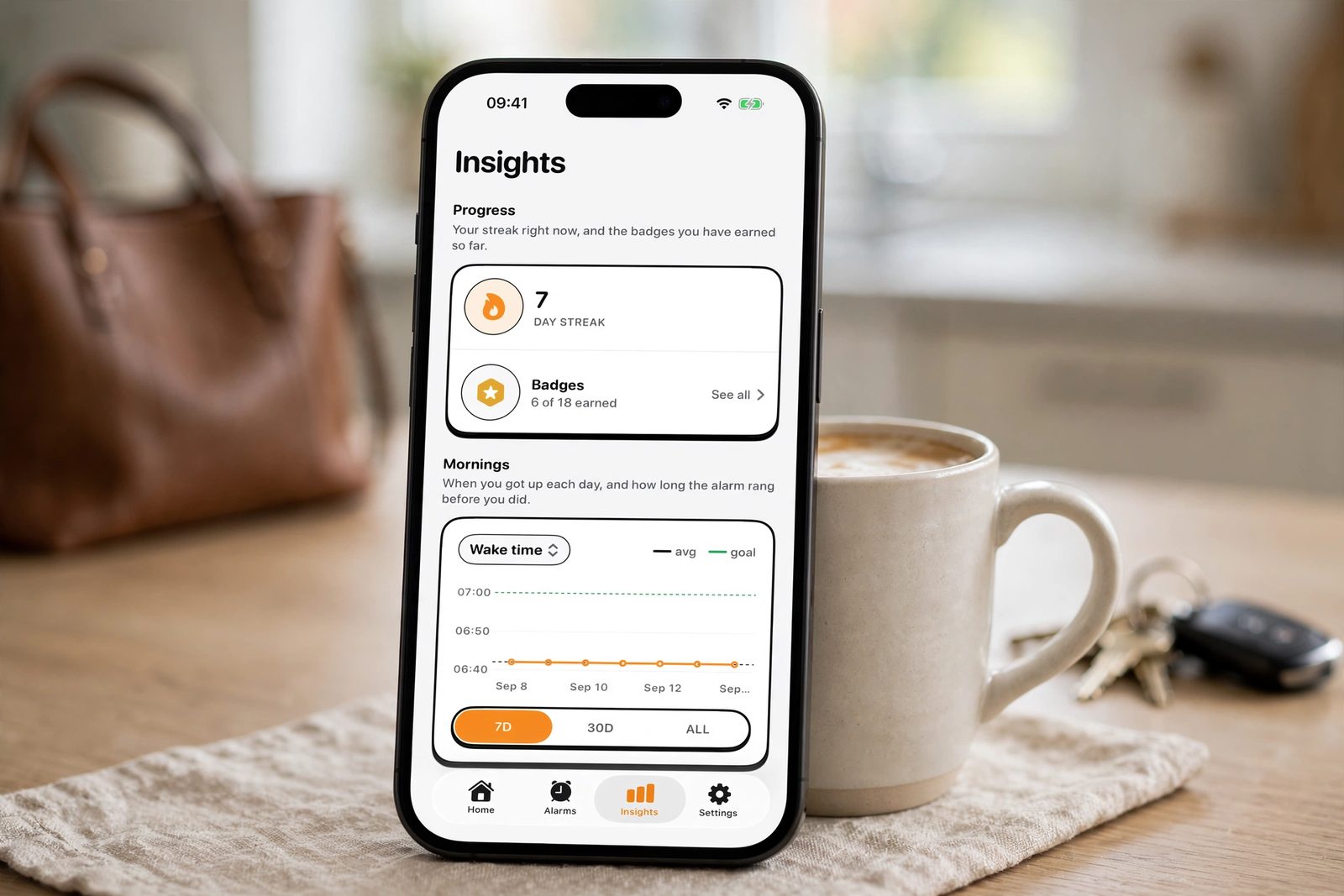
Holding a wake time steady is a behavior problem before it's a technology problem, but a stubborn alarm helps on the mornings willpower alone won't cut it. NoNap runs on iPhone's system alarm, so the ring or silent switch and Sleep Focus don't mute it, and it can't be swiped away from the lock screen. Stopping it means finishing a task picked the night before: push-ups or squats counted by the camera for anyone glad to move right after waking and cleared to do so, or gentler options like Shake Phone and Math for everyone else. An insights screen tracks how close the actual wake time lands to the target, weekend included, which is a more honest way to catch a creeping social jetlag than counting hours slept.
Sources
Wittmann, M., Dinich, J., Merrow, M., and Roenneberg, T. (2006). Social jetlag: misalignment of biological and social time. Chronobiology International, 23(1-2), 497-509. tandfonline.com/doi/full/10.1080/07420520500545979
Caliandro, R., Streng, A. A., van Kerkhof, L. W. M., van der Horst, G. T. J., and Chaves, I. (2021). Social jetlag and related risks for human health: a timely review. Nutrients, 13(12), 4543. doi.org/10.3390/nu13124543
Roenneberg, T., Allebrandt, K. V., Merrow, M., and Vetter, C. (2012). Social jetlag and obesity. Current Biology, 22(10), 939-943. cell.com/current-biology/fulltext/S0960-9822(12)00325-9
Arab, A., Karimi, E., Garaulet, M., and Scheer, F. A. J. L. (2024). Social jetlag and obesity: a systematic review and meta-analysis. Obesity Reviews, 25(3), e13664. doi.org/10.1111/obr.13664
American Academy of Sleep Medicine. Social jet lag is associated with worse mood, poorer health and heart disease. AASM press release, 2017, accessed August 2026. aasm.org/social-jet-lag-is-associated-with-worse-mood-poorer-health-and-heart-disease/
ScienceDaily, adapted from Cell Press materials. Obesity and the biological clock: when times are out of joint. ScienceDaily, May 10, 2012, accessed August 2026. sciencedaily.com/releases/2012/05/120510132637.htm
Centers for Disease Control and Prevention. About Sleep. CDC Sleep, accessed August 2026. cdc.gov/sleep/about/index.html
Image credits
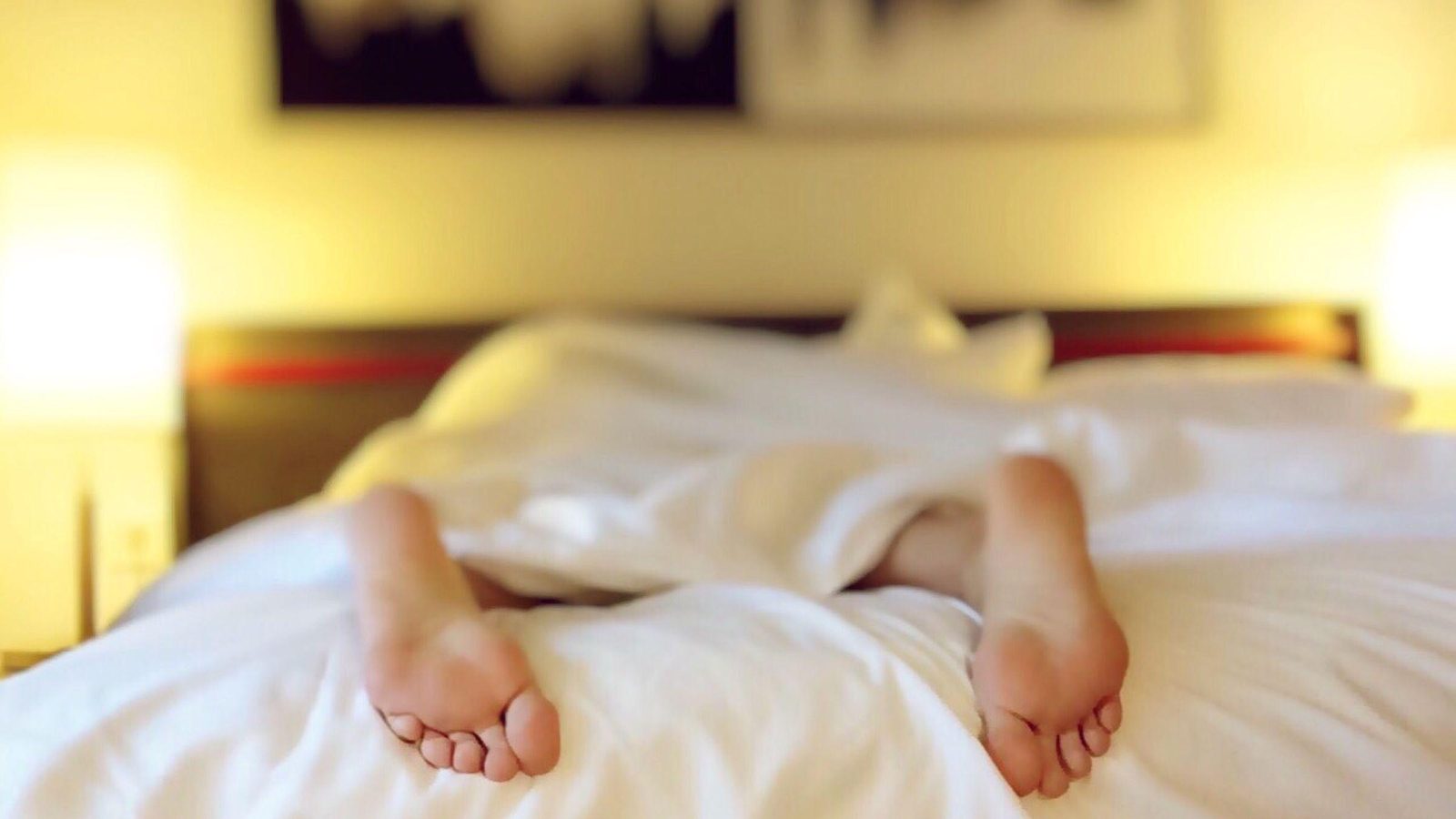
Cover photo by Greg Pappas on Unsplash (unsplash.com/photos/woman-sleeping-on-bed-under-blankets-rUc9hVE-L-E), used under the Unsplash License, which permits commercial use without payment.