Can you catch up on lost sleep over the weekend?
What happens to your body when you sleep longer on weekends, what the research shows about recovery sleep and health, and whether the trade-off is worth it.
Visana Studios
5 min read

Monday morning hits different when you slept 12 hours Saturday and Sunday. The question most people don't think to ask is whether those hours actually paid down the sleep debt from the week, or just postponed it until the alarm goes off again.
What sleep debt actually is
Sleep is not a bank account where you make deposits and withdrawals at will. The body runs on something closer to a physical law. Adenosine accumulates in the brain throughout the day as a byproduct of ordinary cell activity. The longer you stay awake, the more adenosine piles up, building what sleep scientists call sleep pressure. That pressure is why the second day of short sleep feels worse than the first. The body keeps score.
When you stay up late most nights and sleep just six hours, you are not spending down yesterday's sleep debt on Monday. You are adding to it. Wednesday you are running on a deficit that compounds every night. By Friday, the accumulated pressure is high enough that weekend sleep starts to look like a fix.
The 2019 study that tested whether it works
The clearest test came from a 2019 study by Depner and colleagues at the University of Colorado, published in Current Biology. They brought 36 healthy people into the lab for roughly two weeks. Some slept normally. Others went through cycles: five days of restricted sleep, two days of ad libitum recovery sleep (sleep as much as you want), then five more days of restricted sleep.
The question was direct: if you sleep longer on the weekend, does it protect you against the metabolic damage from the week of short sleep?
It does not.
The recovery sleep group showed the same reduced insulin sensitivity and the same disruption to how their bodies handled food and energy after the weekend ended. Weight went up. After-dinner energy intake climbed. Metabolic problems persisted even though the participants had slept nine or ten hours on the recovery days. The study had a small sample and lasted only two weeks, so it does not account for every human or every situation. But the finding was stark: sleeping longer on the weekend failed to prevent the metabolic dysregulation that comes with chronic insufficient sleep.
What a longer-term follow-up showed
A 2018 study by Åkerstedt and colleagues in the Journal of Sleep Research told a different story. This was not a lab experiment but a prospective follow-up of 43,880 Swedish participants tracked over 13 years. Researchers asked about usual sleep on weekdays, usual sleep on weekends, and then followed mortality.
For people under 65, short weekend sleep (five hours or fewer) doubled down on risk. Those who slept five hours or less on weekends showed a 52 percent higher mortality rate compared to the seven hour reference group. Long weekend sleep, by contrast, showed no increased mortality risk.
But here is the critical finding: people who slept insufficiently on weekdays but compensated with longer sleep on weekends showed no increased mortality compared to those who slept seven hours consistently. That suggests some recovery benefit exists, at least at the scale of years rather than days.
For people 65 and older, weekend sleep patterns showed no significant associations with mortality either way. The body's ability to be harmed by short weekend sleep diminishes with age.
The two studies are not in complete conflict. The Åkerstedt data comes from real life, where people sleep in their own beds with their own rhythms. It measures decades-long patterns. The Depner study is a tightly controlled lab experiment measuring metabolic markers in two weeks. One measures mortality; one measures insulin sensitivity and weight. What emerges is that weekend recovery sleep provides some protection at a population level over the long term, but it does not fully erase metabolic damage in the short term, and the protection is strongest when people are younger.
The catch: you do not get to keep it
Even when weekend sleep helps, the benefit is temporary. Sleep debt that reaccumulates Monday through Friday does not carry forward. You do not start Monday with a metabolic advantage from the weekend. Consistent short sleep during the week catches up with you before the next Saturday arrives. Pushing recovery into the weekend becomes a pattern that only works if weekdays stay short. The moment something changes, the deficit shows.
That pattern, sleeping short most nights and long some nights, carries its own health costs independent of the total amount of sleep. It creates something called social jet lag, the internal clock misalignment that comes from living by one schedule five days a week and another schedule two days a week. Morning light exposure, consistent wake times, and how early or late you naturally run all factor in. The body does not simply add up hours; it cares about consistency.
How to think about weekend sleep
The research suggests two practical takeaways. First, if you have to choose, short sleep on weekends is worse than short sleep on weekdays. A Friday night with seven hours will harm you less than a Saturday morning of five. Second, weekend recovery is not a workaround for chronic short sleep during the week. It can reduce some of the damage and does appear to provide a mortality benefit over years, but it is not a fix.
The better path is narrower: keep weekday sleep consistent as much as you can. When you do sleep longer on the weekend, you are taking a small amount of pressure off, not erasing the week. If weekday sleep is genuinely short enough to require recovery, that is a sign the schedule needs changing, not just the weekend.
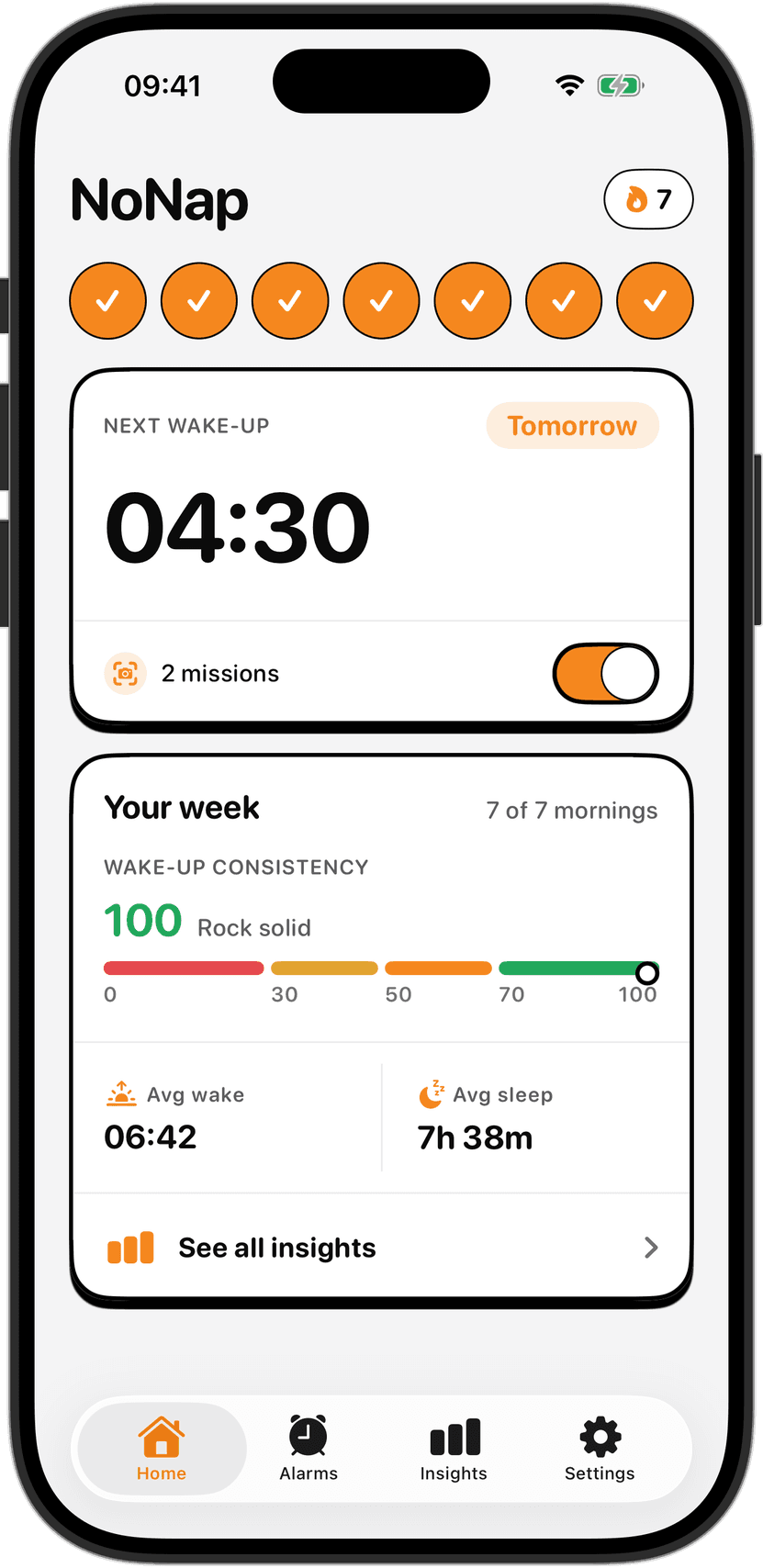
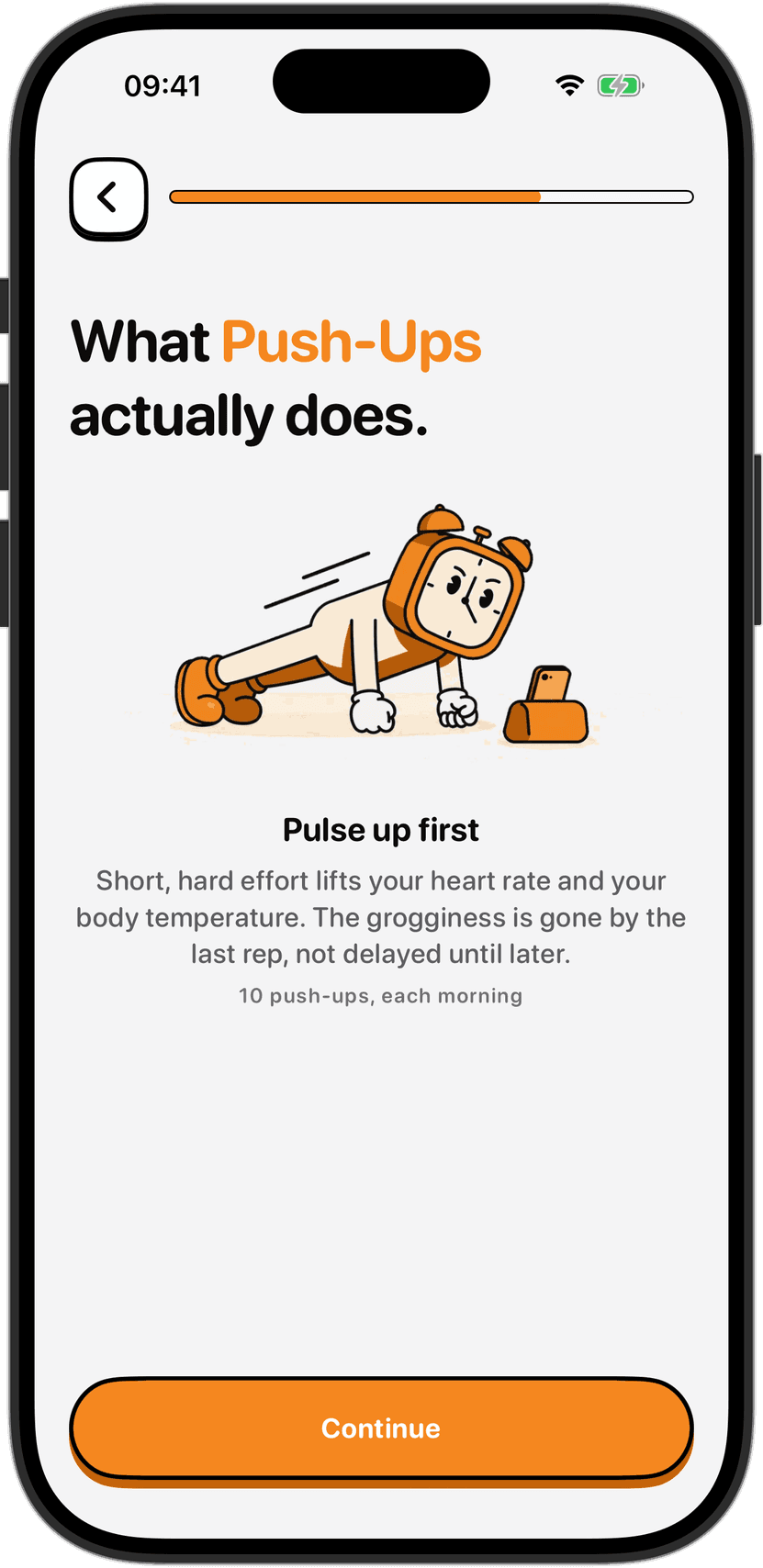
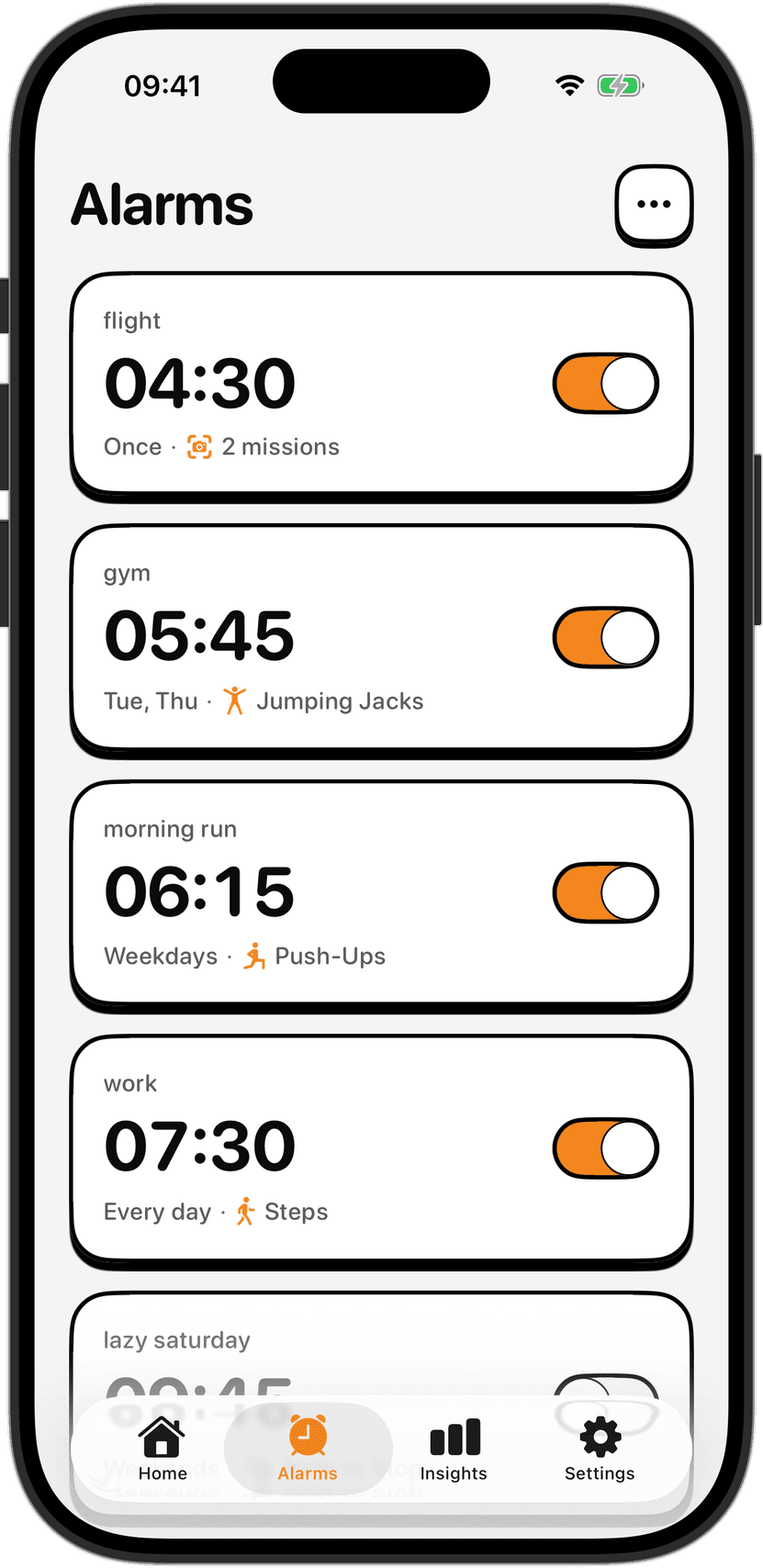
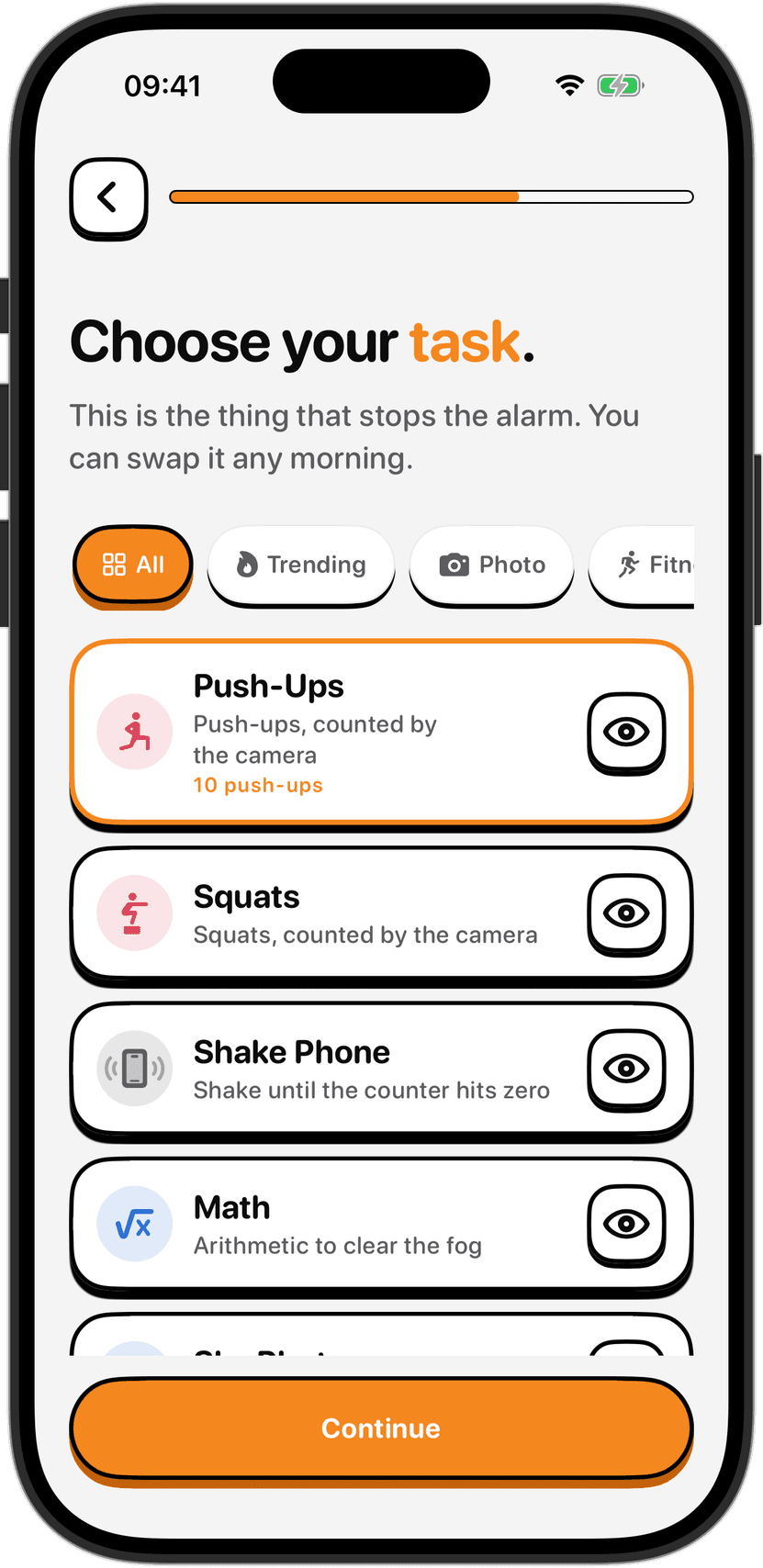
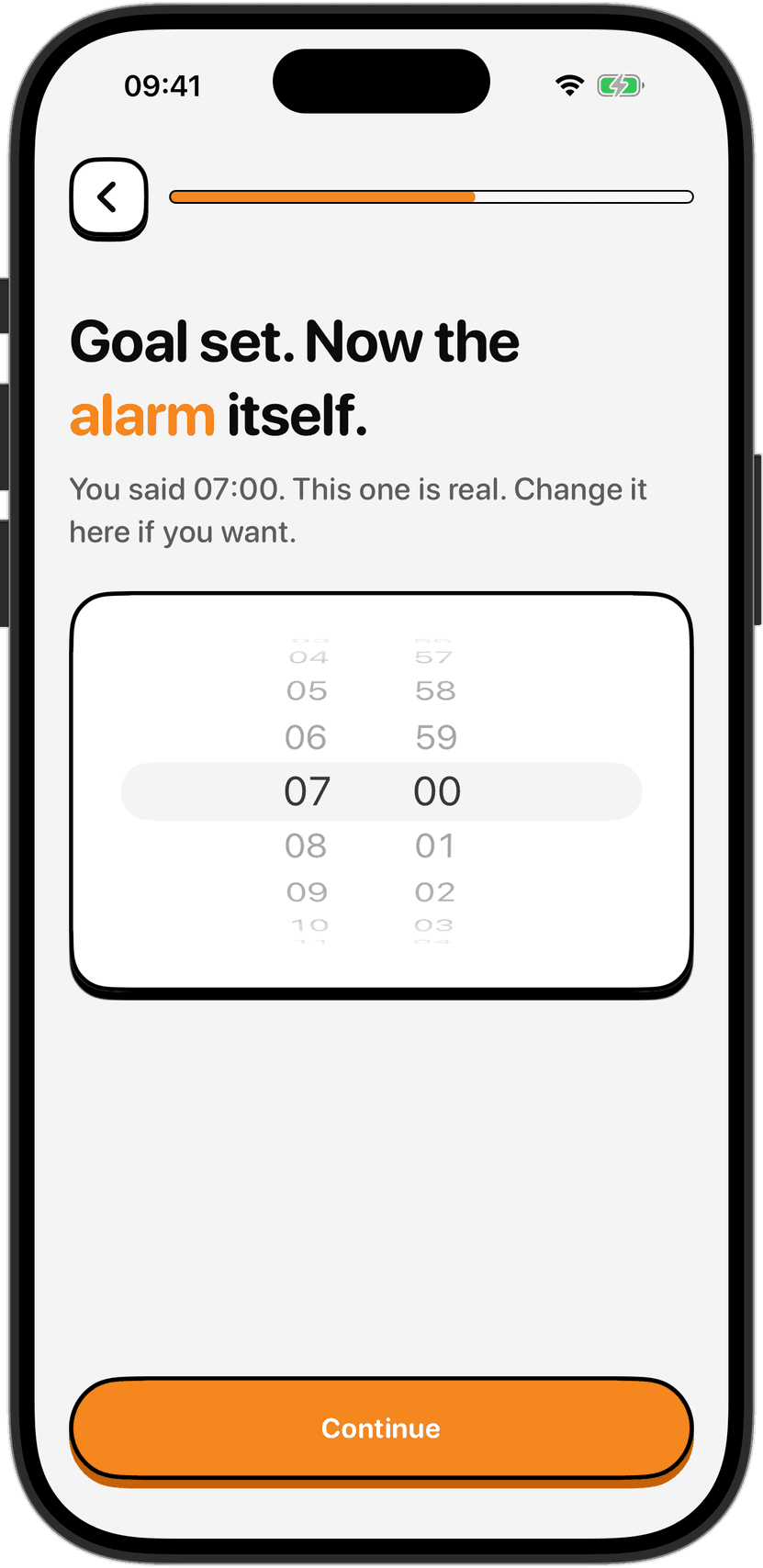
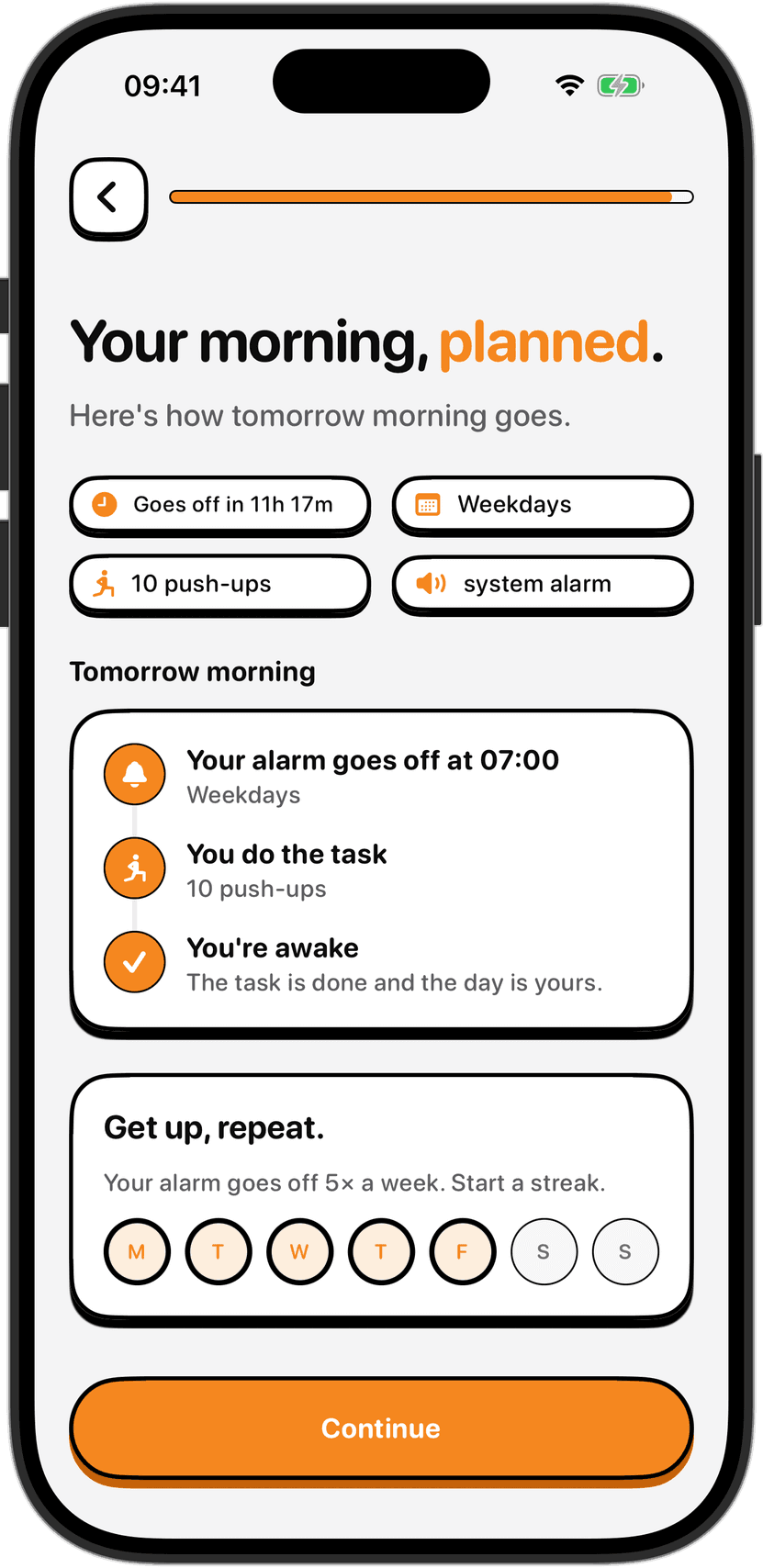
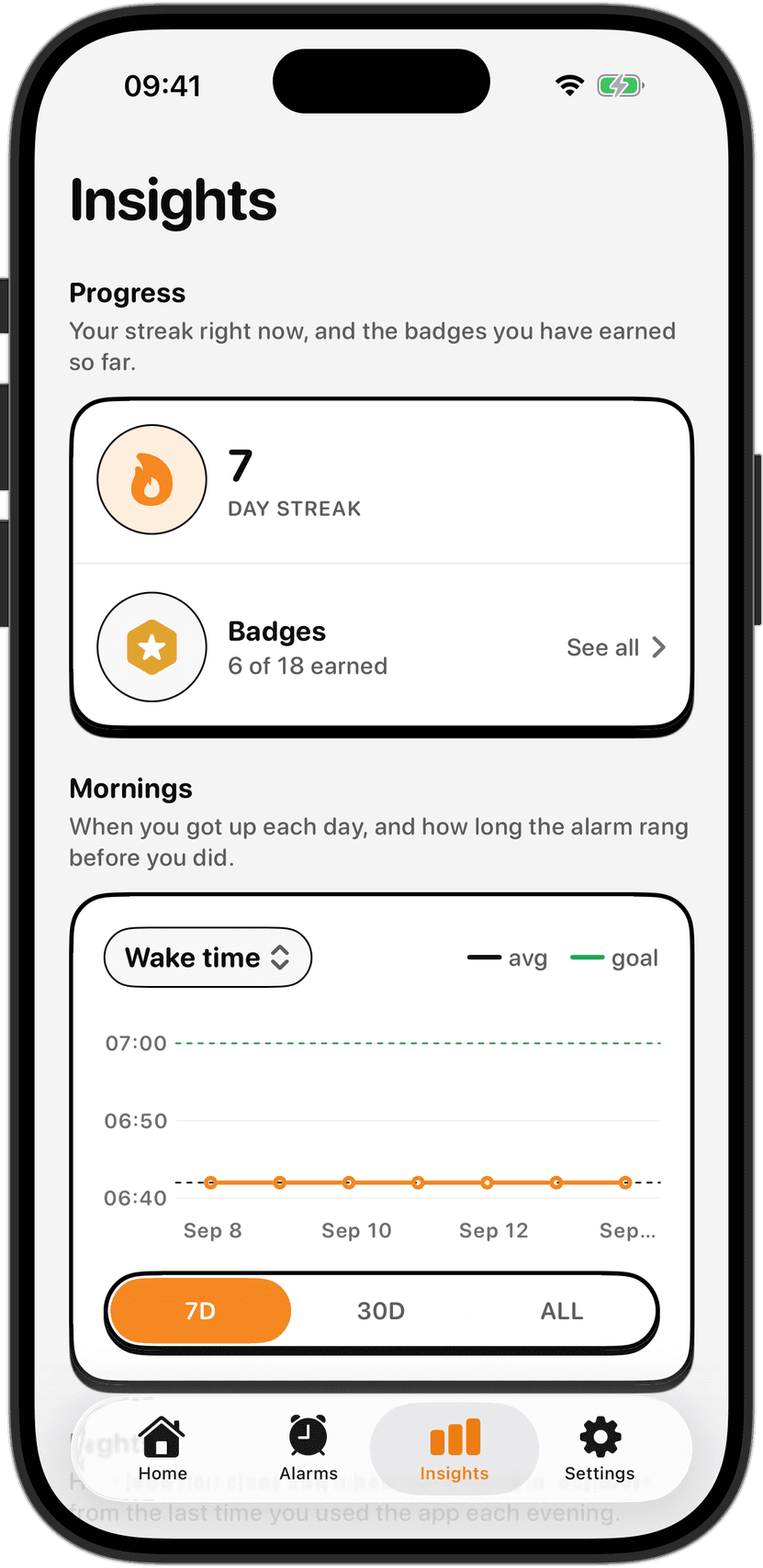
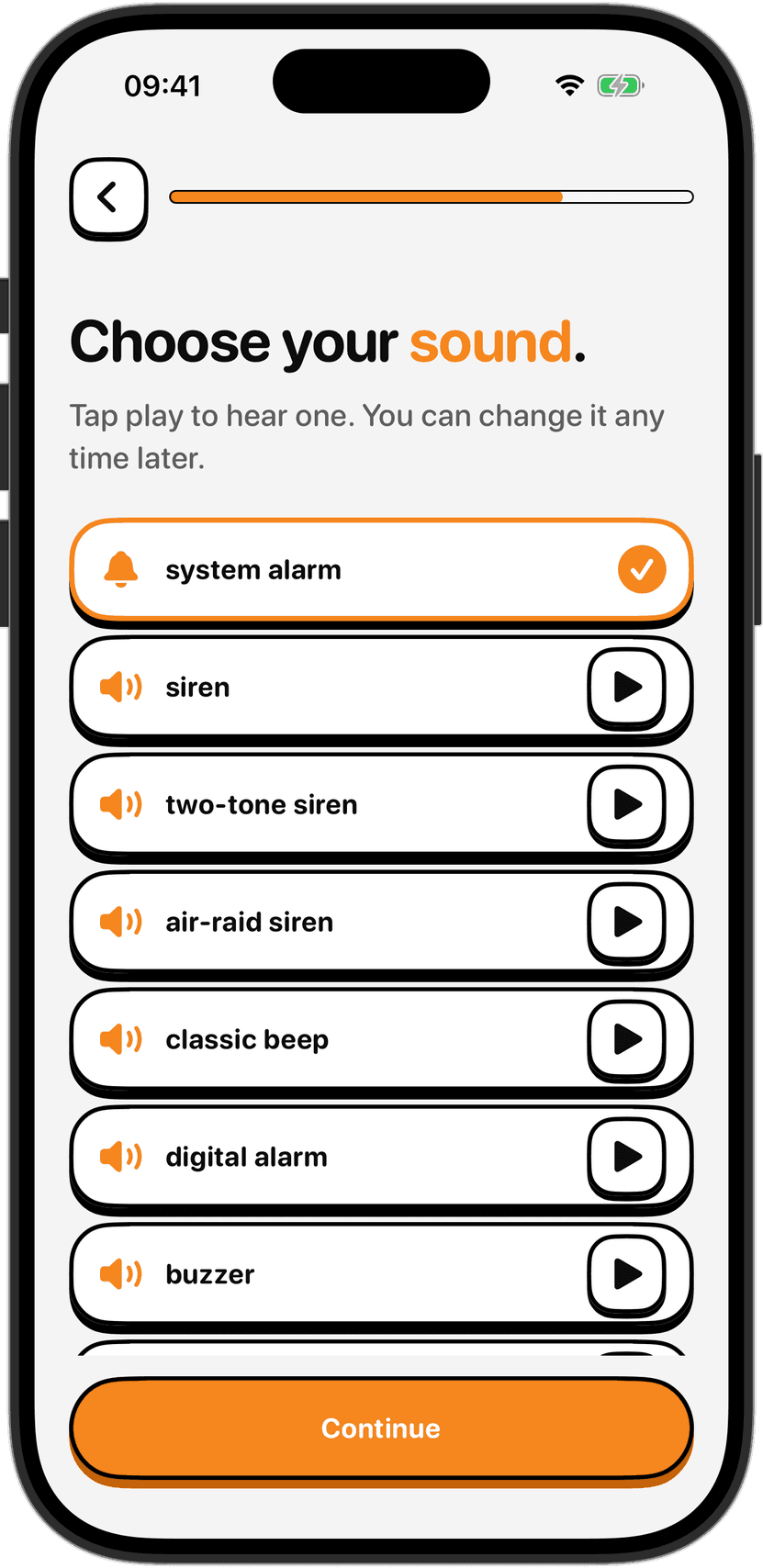
NoNap is built around one alarm at a fixed time, using Apple's system alarm so the Ring and Silent switches do not mute it and Focus modes do not override it. The only way to stop it is to finish a wake task: push-ups or squats counted by the camera, shaking the phone, a math problem, or getting out of bed. Skip the exercise option and pick math or shake phone if you have an injury that makes morning physical activity risky. A consistent wake time, even on weekends, is the foundation that makes sleep debt visible. Once you see the pattern, you can change it.
Sources
Depner CM, Melanson EL, Eckel RH, et al. (2019). Ad libitum weekend recovery sleep fails to prevent metabolic dysregulation during a repeating pattern of insufficient sleep and weekend recovery sleep. Current Biology, 29(6), 957-967.e4. doi.org/10.1016/j.cub.2019.01.069
Åkerstedt T, Ghilotti F, Grotta A, et al. (2018). Sleep duration and mortality - Does weekend sleep matter? Journal of Sleep Research, 28(1), e12712. doi.org/10.1111/jsr.12712
Image credits
Cover photo by Polina Kovaleva on Pexels (pexels.com/photo/sleeping-woman-6541074/), used under the Pexels License, which permits commercial use without payment.