Why You Can Turn Off an Alarm Without Ever Waking Up
Half-asleep hands can dismiss a phone alarm with one habitual swipe. What sleep research says about that gap, and what actually forces you awake.
Visana Studios
5 min read
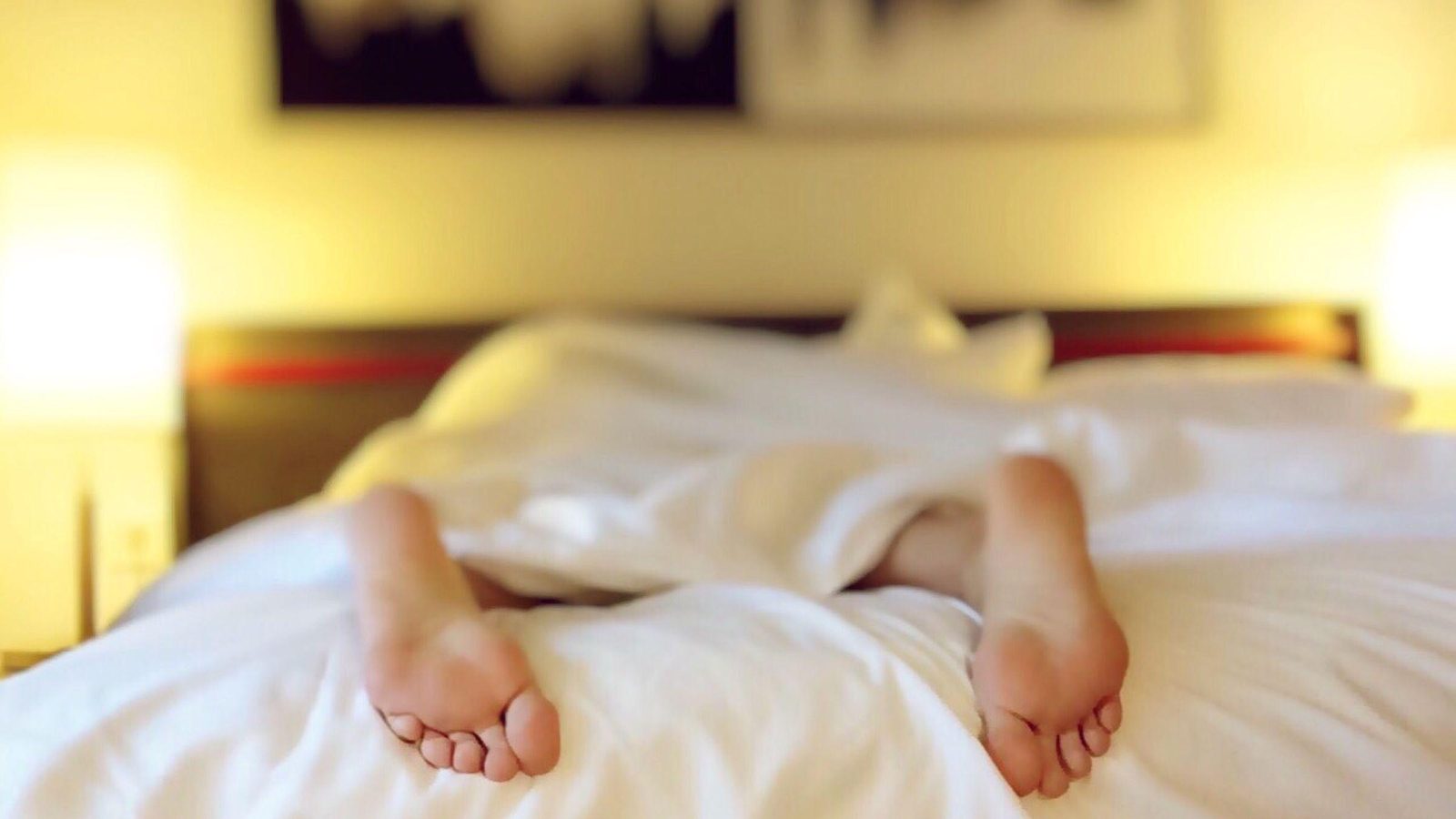
You wake up at half past eight. The alarm was set for half past six, and it already rang, because the lock screen shows it was dismissed hours ago. You don't remember doing that. Somewhere between asleep and awake, a hand reached over, touched the right part of the screen, and went back under the blanket. This happens to enough people that researchers have actually measured it, not by asking people to remember, but by watching what their phones recorded while they slept.
Your hand is awake before you are
In 2019, researchers at the University of Zurich and Leiden University tracked every touchscreen tap on 79 phones over roughly 1,400 nights, then compared those timestamps against wrist-worn sensors that estimated each person's sleep and wake times. Borger, Huber and Ghosh published the result in npj Digital Medicine: the probability of a screen touch stayed above zero for about two hours before the moment their model marked as "wake up," and for about two hours after the moment it marked as "sleep onset." Almost everyone in the study touched their phone somewhere inside a period their own sensors classified as sleep.
That doesn't mean people are conscious for two hours before they think they wake up. It means a touchscreen doesn't ask for much. It needs contact in roughly the right spot, held for long enough, and habit supplies the rest. If your alarm's stop button has lived in the same corner of the same screen for a year, your hand can find it on very little input from the parts of your brain that would, fully online, stop to ask whether silencing it right now is actually a good idea.
Why judgment lags behind the hand
Sleep inertia is the name for that lag, the stretch of low alertness and poor decision-making that follows waking. It is well documented. A 2019 review by Hilditch and McHill in Nature and Science of Sleep found it typically clears within 15 to 60 minutes, though measurable effects can linger for hours. A PET imaging study by Balkin and colleagues in 2002 helps explain why some parts of you recover faster than others: regions that handle basic arousal come back online within seconds of waking, while the prefrontal cortex, the part that weighs a choice against its consequences, catches up much more slowly.
That gap matters more for some tasks than others. Bruck and Pisani tested it directly in 1999, waking participants and dropping them into a simulated fire-management task with real complexity: competing resources, shifting priorities, a wrong call that cost something. Sleep inertia measurably hurt their performance on it. Swiping a phone screen to stop an alarm is close to the opposite kind of task. There is one correct motion, no branching, and nothing to weigh. It is exactly the kind of action a half-conscious brain can still pull off.
Even Apple noticed
In December 2025, Apple shipped iOS 26.1 with a small but telling change. The button that stops an alarm from the lock screen became a slider, mirroring the gesture that used to unlock the phone itself. Coverage of the update from 9to5mac and MacRumors traced the reasoning back to the previous redesign, where a bigger, easier-to-hit Stop button meant more people were dismissing alarms by accident. Apple's fix asks for a longer, more deliberate motion before the alarm gives up. It still doesn't ask whether you're actually awake, only that your thumb travels a bit further before the phone decides you meant it.
What actually requires you to be awake
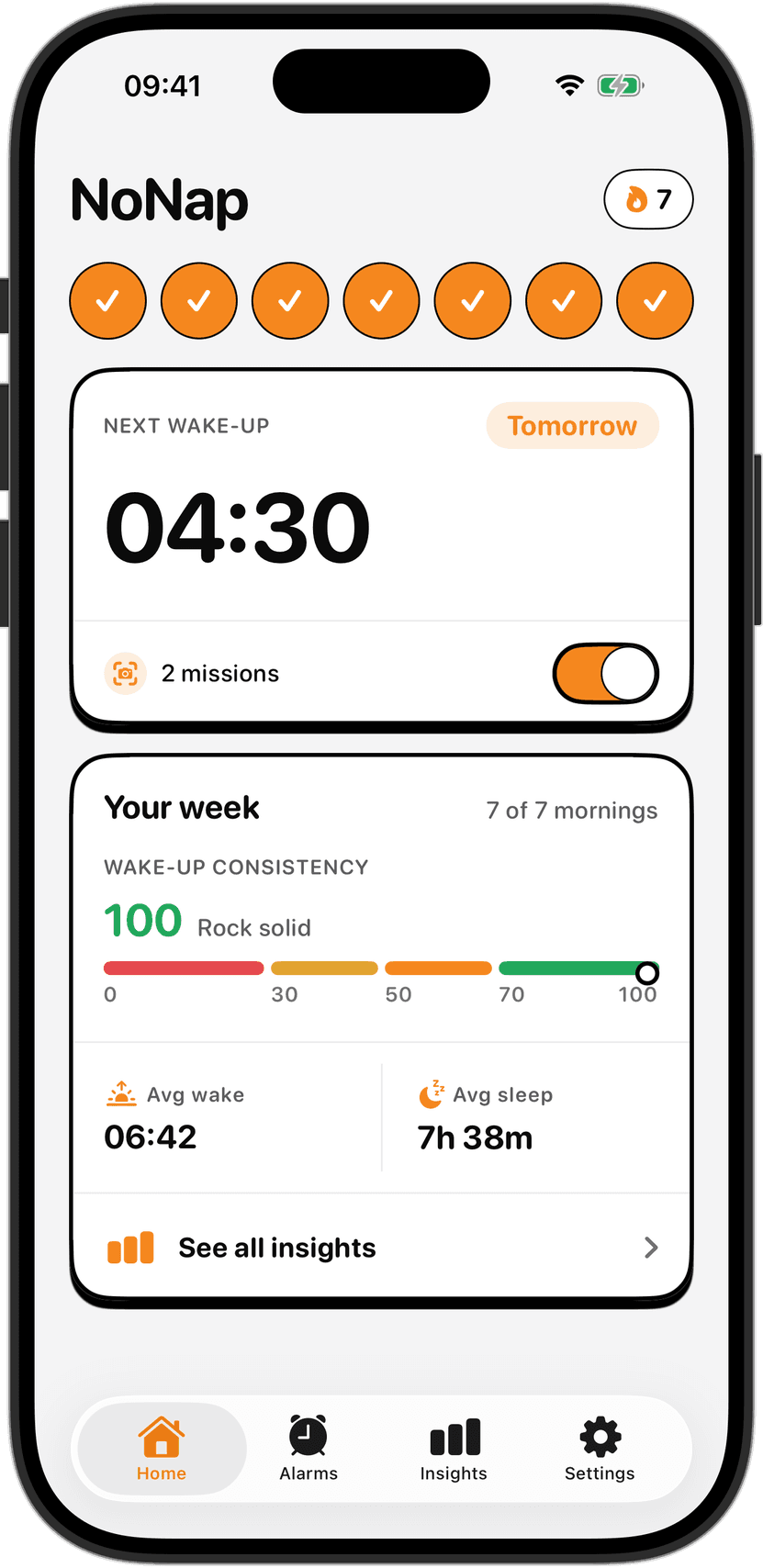
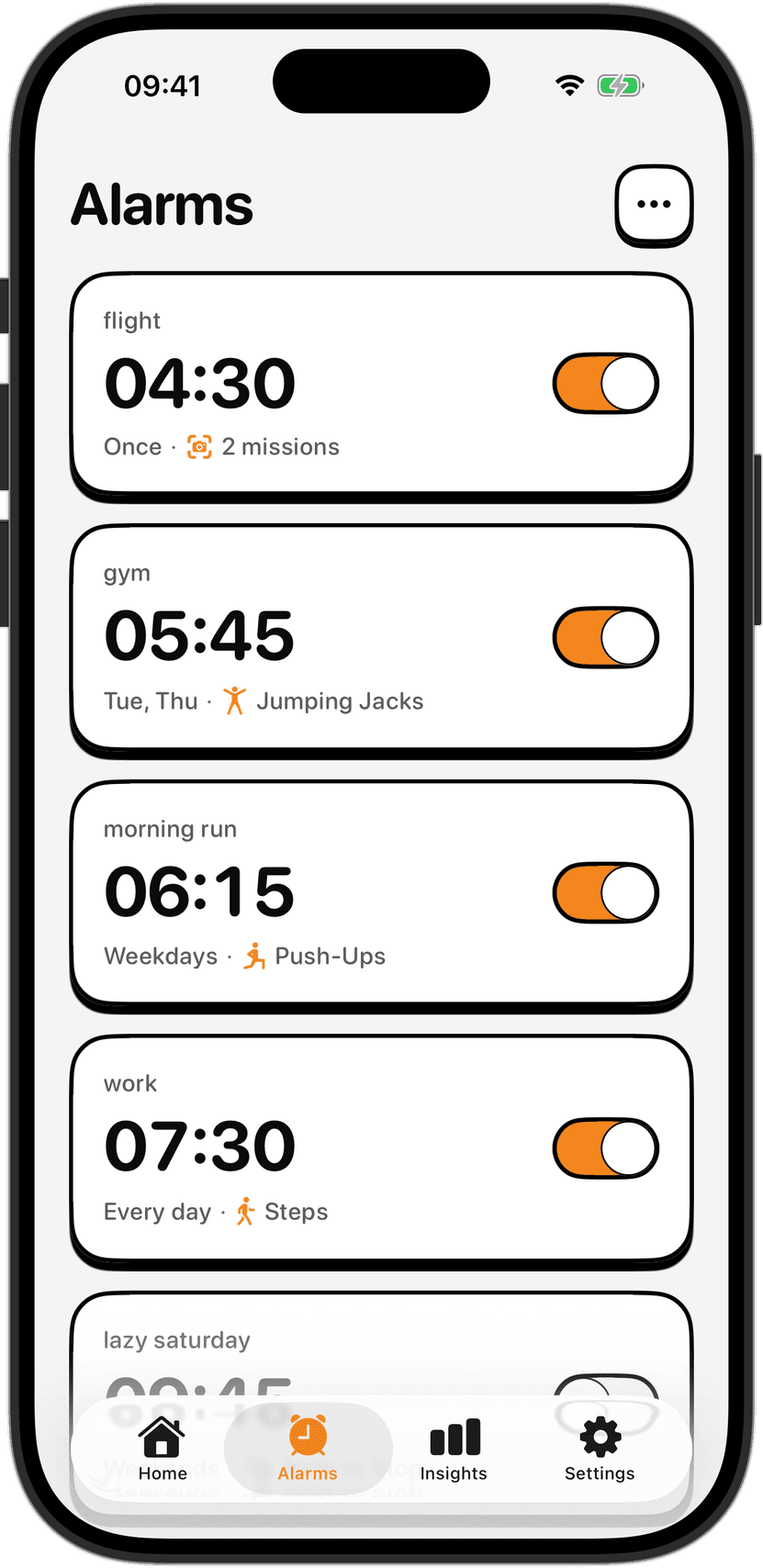
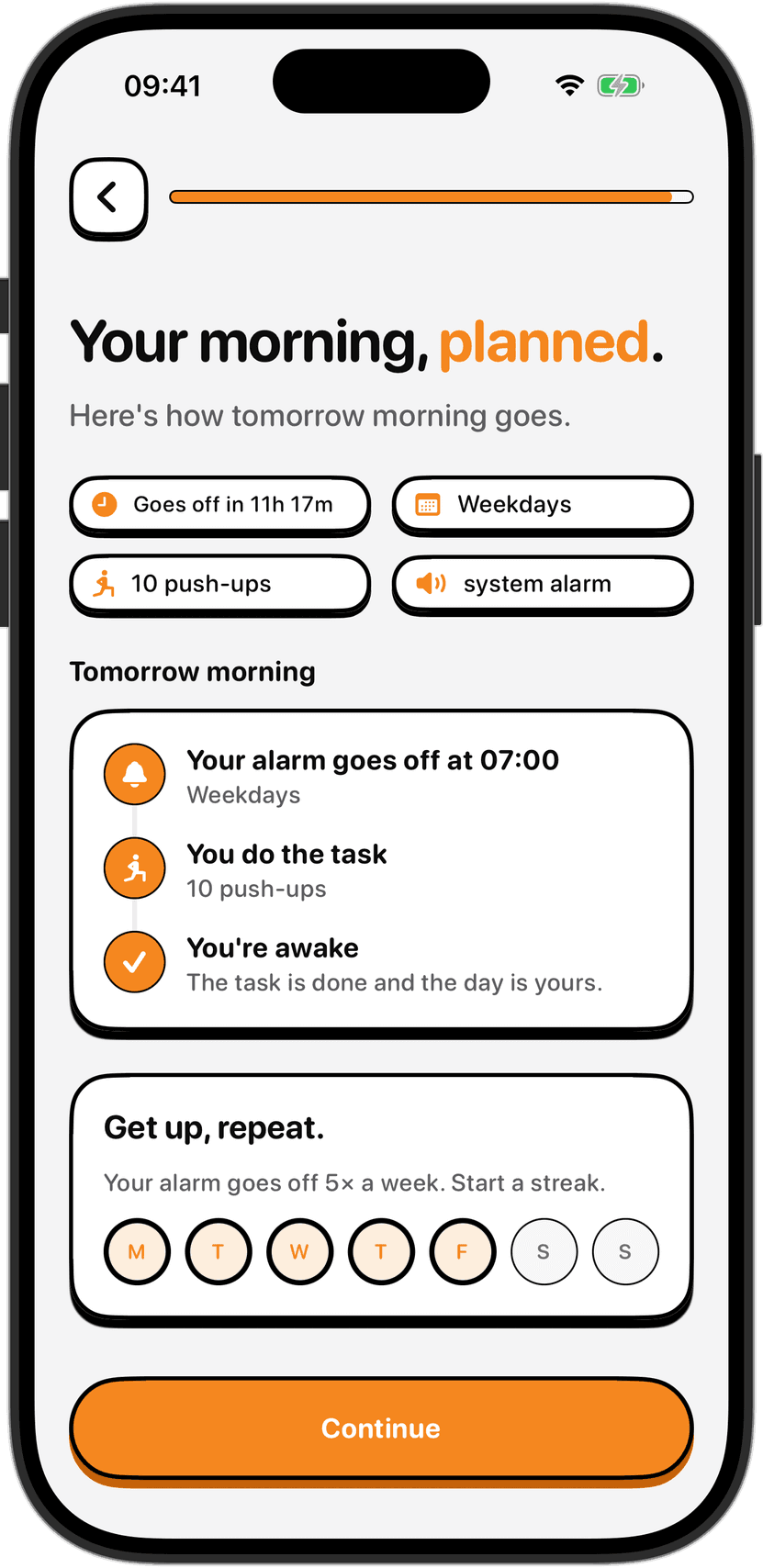
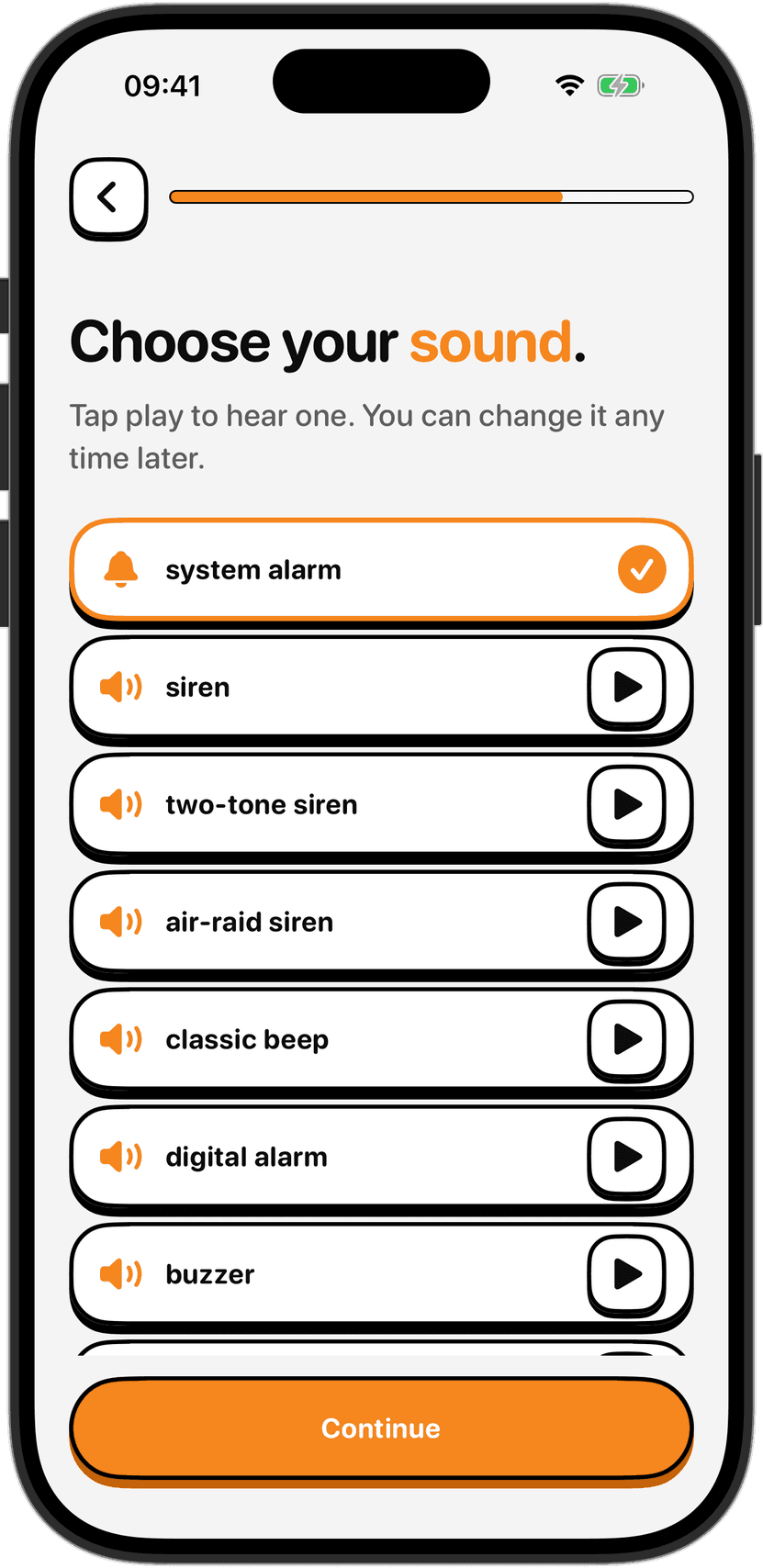
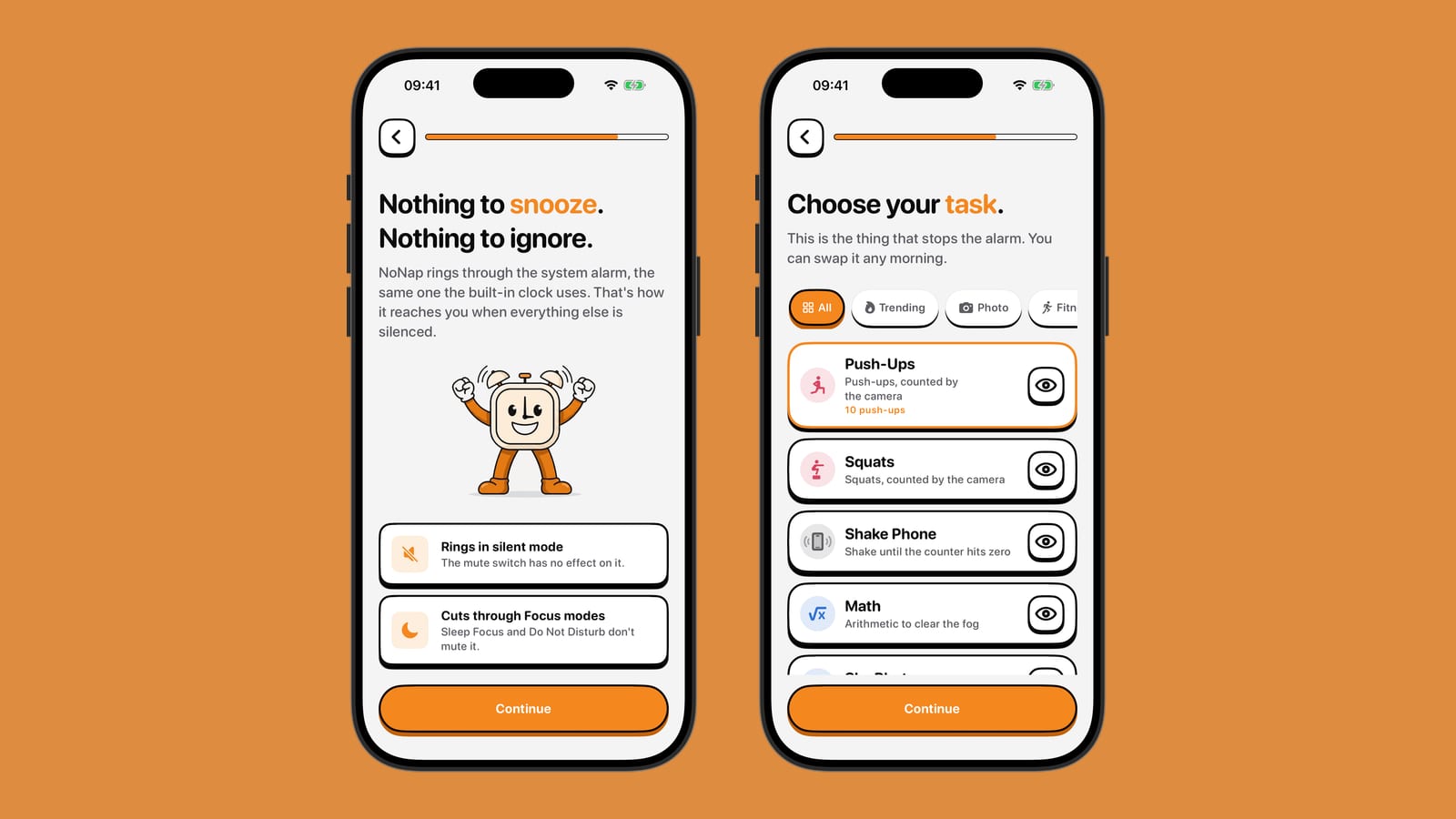
NoNap handles the same problem by removing the button rather than making it harder to hit. There is nothing to tap or slide on the lock screen at all. The alarm rings through the system alarm channel, the same one the iPhone's own Clock app uses, so silent mode and Focus modes don't touch it, and it stays ringing until you finish the wake task you picked the night before, not a decision made half asleep at 6am.
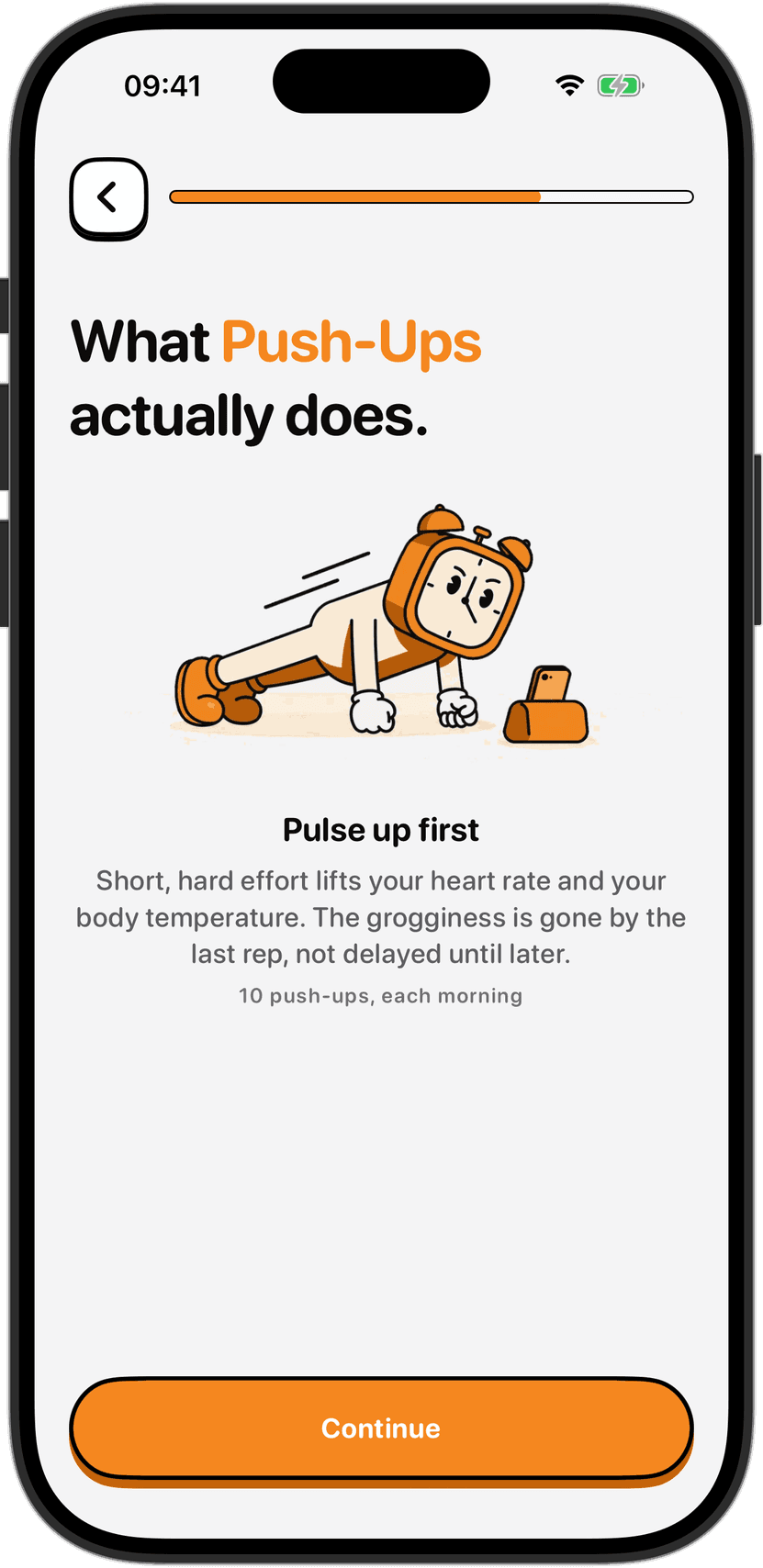
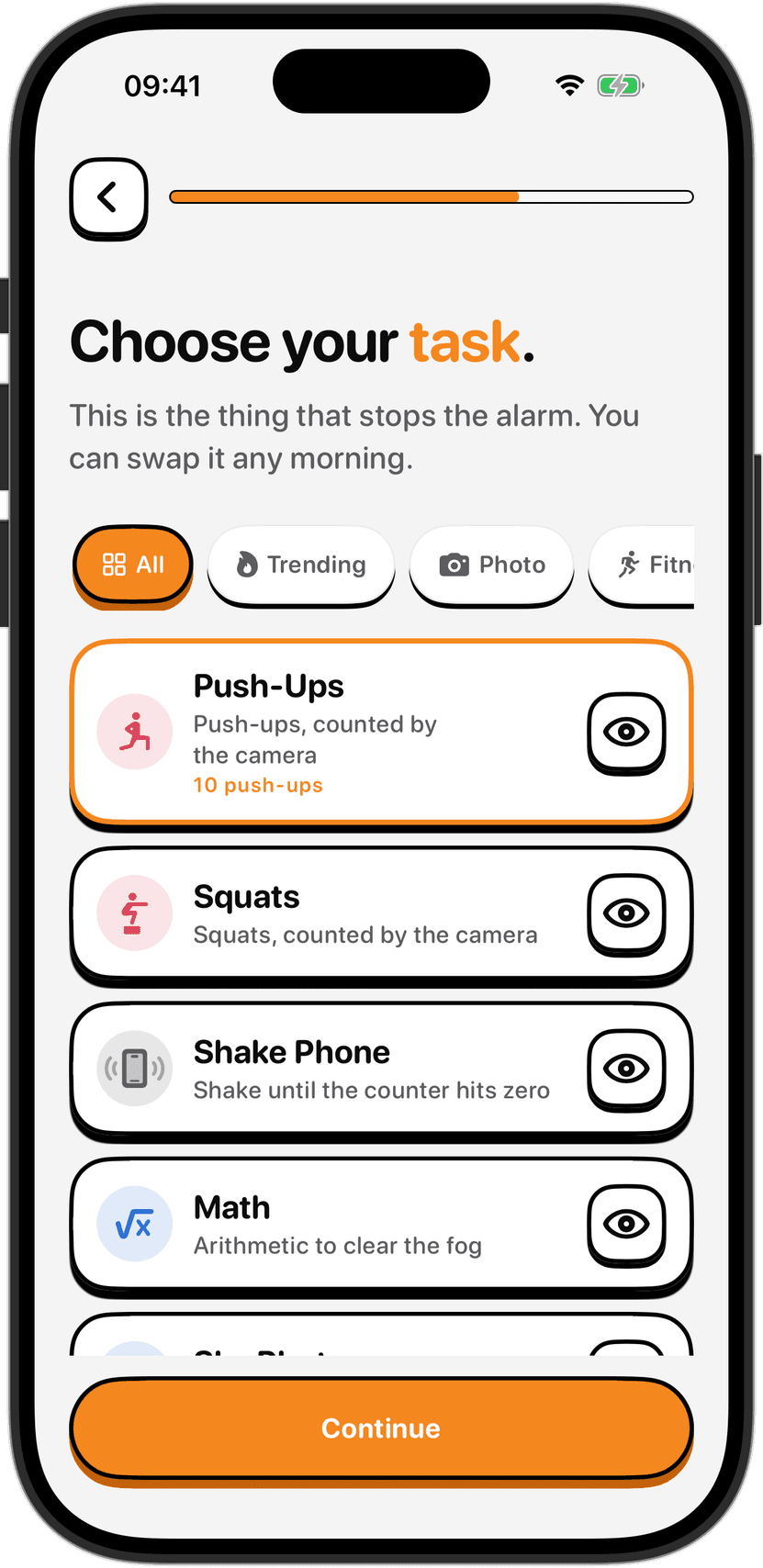
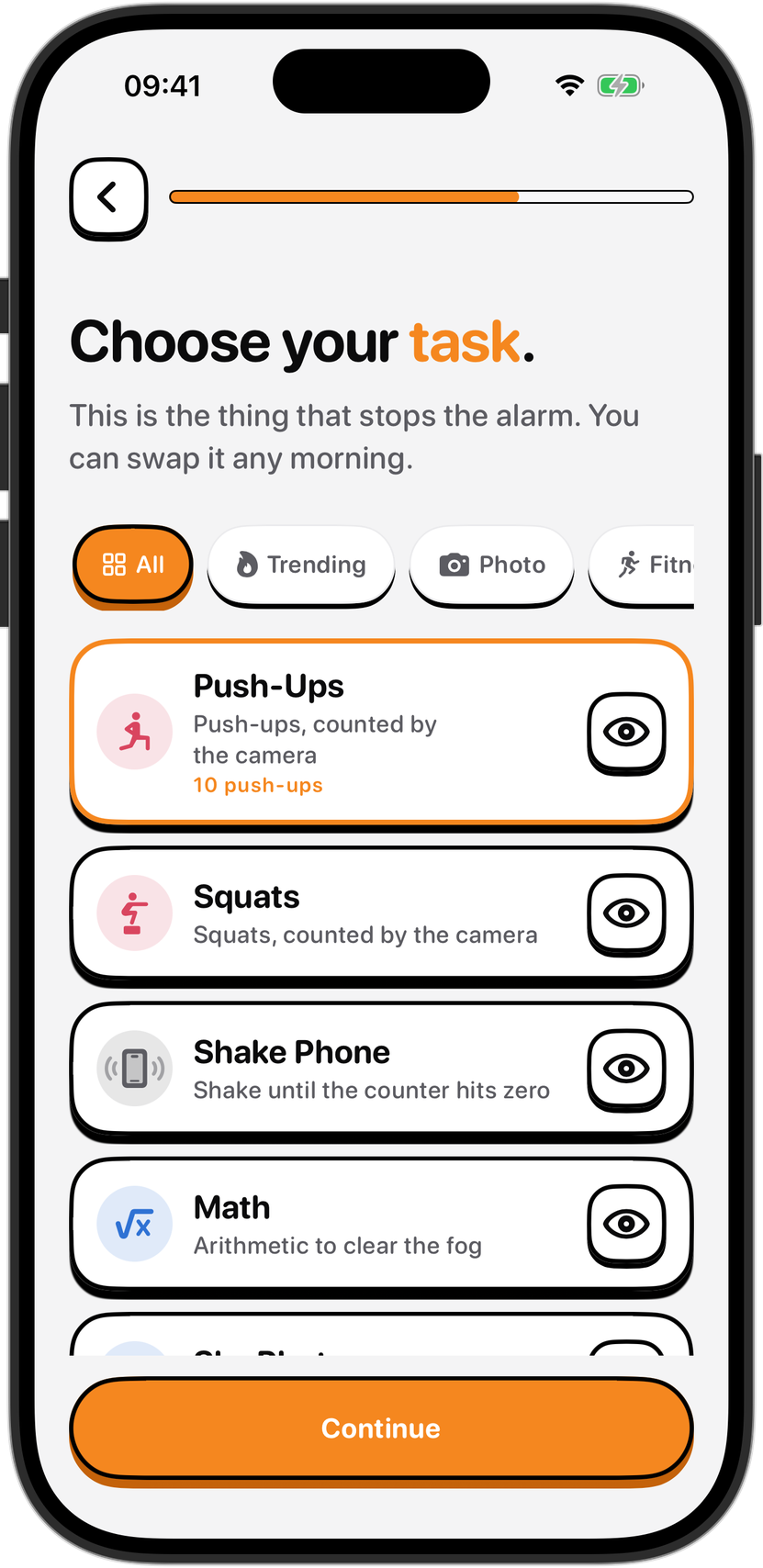
The task is the part built to need a working brain rather than a trained thumb. Push-ups and squats are counted by the camera, on the device, with nothing recorded or saved. Shake Phone asks for sustained motion, not one gesture. Math asks for an answer that's actually right or wrong. None of them can be completed the way a swipe can, in a motion you don't remember making by the time you're properly awake.
If you pick a physical task, check the space around you before you start moving. Sleep inertia affects coordination and balance as well as judgment, so clear a spot away from furniture, stairs and sharp edges, and stop right away if anything hurts. A wake task doesn't need to be gruelling. It only needs to require enough of you that finishing it, rather than dismissing it, is the easier path half asleep. That's the same idea behind ditching the snooze button entirely: the fewer decisions your groggy brain gets to make, the fewer chances it has to make the wrong one.
None of this requires an app. Anything that turns dismissal into an actual decision, rather than a spot your hand already knows, closes the same gap: an alarm clock across the room, a code you have to type out, a task with a wrong answer. What doesn't hold up is trusting a button, however deliberately placed, to tell an awake hand from a sleeping one.
Sources
Borger, J. N., Huber, R., and Ghosh, A. (2019). Capturing sleep-wake cycles by using day-to-day smartphone touchscreen interactions. npj Digital Medicine, 2, 73.
Hilditch, C. J., and McHill, A. W. (2019). Sleep inertia: current insights. Nature and Science of Sleep, 11, 155-165.
Balkin, T. J., Braun, A. R., Wesensten, N. J., et al. (2002). The process of awakening: a PET study of regional brain activity patterns mediating the re-establishment of alertness and consciousness. Brain, 125(10), 2308-2319.
Bruck, D., and Pisani, D. L. (1999). The effects of sleep inertia on decision-making performance. Journal of Sleep Research, 8(2), 95-103.
Christoffel, R. (2025, December 11). iOS 26.1 makes alarms use a slider, here's how to get 'Stop' button back. 9to5Mac. https://9to5mac.com/2025/12/11/ios-26-1-makes-alarms-use-a-slider-heres-how-to-get-stop-button-back/