Do sunrise alarm clocks work? The research on dawn simulation
What studies show about light-based wake clocks, their limits, how they compare with real daylight, and why the benefits are smaller than the marketing suggests.
Visana Studios
7 min read

An alarm that lights up instead of buzzing sounds like it should work. The sun pulls you out of sleep in nature, and a simulation of that sunrise hits the same biology. But the science turns out more complicated than the product descriptions, and the real benefits are smaller than most ads suggest.
How light wakes the body
Light does genuinely tell your brain something about the time of day. Specialized cells in the back of the eye, called intrinsically photosensitive retinal ganglion cells, or ipRGCs, contain melanopsin, a light-sensitive protein most responsive to blue wavelengths. These cells do not feed into vision. They wire directly to the part of the brain that controls circadian rhythm, the biological clock that regulates sleep, alertness, body temperature, and hormone timing throughout the day.
That pathway is powerful. Bright light exposure shifts the clock forward or backward, depending on when it arrives. Morning light nudges the clock earlier, which is why bright mornings help reset a schedule that has drifted late. Melanopsin is also responsible for the pupil's light reflex and, research suggests, for some of the alerting effect of light exposure itself. A burst of bright light can boost alertness and cortisol in the first minutes after waking, independent of any longer circadian shift.
A dawn simulator tries to exploit both effects. As you sleep, it starts dim and gradually brightens over 20 to 40 minutes, approaching the light level of a real sunrise by the time the alarm time arrives. The theory sounds clean: the rising light wakes you gently and nudges your circadian clock forward without the jolt of sound.
What actually happens in the studies
The most direct test came from Leppämäki and colleagues in a community-based trial published in BMC Psychiatry in 2003. They recruited 100 people, and 77 completed the study. Over eight weeks, participants alternated between two-week blocks with and without a dawn simulator. Sleep was tracked with the Groningen Sleep Quality Scale, a simple self-report of sleep satisfaction.
The simulator did produce measurable change. Sleep quality improved by an average of 1.7 points while people were using the devices, and the difference was statistically significant (p = 0.001).
But here is the reality behind the number. Only 35 percent of participants reported feeling better or somewhat better. About 9 percent experienced side effects they attributed to the light, such as headaches or irritability. The benefits appeared gradually, taking around six days to emerge. When people stopped using the devices, the benefits evaporated. No lasting shift in sleep or alertness remained.
A second study from Gabel and colleagues, published in Sleep in 2020, specifically tested whether dawn simulation improves alertness or cardiovascular function in middle-aged and older adults. They brought 23 participants into the lab for two overnight sessions, one with complete darkness and one with 30 minutes of simulated dawn before waking. The researchers measured alertness, cortisol, blood pressure, heart rate, and balance.
The results disappointed. The simulation decreased total sleep by 33 percent. No improvement in alertness emerged compared with regular waking. Cardiovascular stability and balance did not improve. Blood pressure fell and heart rate rose before waking, changes reflecting arousal but translating into no better function or clearer thinking.
A more recent study from Campanella and colleagues in 2024 examined bedroom-based smart alarm systems that combine light, sound, and sometimes vibration to reduce sleep inertia. Multimodal systems work better than light alone. But light by itself remains a weak tool for the morning brain.
Why dawn simulation's reach falls short
Sleep inertia is the heavy grogginess and impaired judgment of the first minutes after waking. Even a strong circadian signal does not erase it. Light can shift your clock over days. A bright flash can sharpen alertness acutely, in the manner of a splash of cold water. What light does not reliably do is replace sleep or substitute for the time your prefrontal cortex needs to come fully online.
Genetics and circadian type matter greatly. People vary widely in how responsive they are to light. A person with a genetic variant that speeds up their internal clock, called an early chronotype, may wake naturally before dawn and respond robustly to light. A late chronotype, driven by genetics toward a later schedule, may need much brighter light and longer exposure to budge their rhythm. The Leppämäki study found no way to predict who would benefit. Age, baseline sleep quality, and seasonal sensitivity all failed to predict response.
The light dose is also critical. Effective light therapy for circadian effects typically uses 10,000 lux or very bright simulated sunlight, delivered close to the eyes in the first hour of waking. Most home dawn simulators use bulbs in a lamp or light fixture at bedside, delivering only a fraction of that intensity. Light must reach the ipRGCs in the eye, not just bathe the room. A dawn simulator across the bedroom will never match a sunrise happening directly outdoors.
Winter mornings and light therapy
Dawn simulation does have a genuine niche: the dark months of winter, especially at high latitudes. In November and December in northern climates, sunrise can occur after 8 or 9 a.m., or not at all in places north of the Arctic Circle. Waking in darkness keeps the circadian clock stuck in sleep mode. Research on light therapy for seasonal affective disorder has found consistent benefits of bright morning light exposure for mood and alertness during winter, though studies vary in their methods and light doses.
For someone waking at 6 a.m. in mid-December in Toronto or Stockholm, a dawn simulator that gradually builds light before your alarm is genuinely useful. That signal reaches your brain during hours when the natural world is still dark. The device may not replace a full morning outside once the sun rises, but it does provide real utility.
In summer and at lower latitudes, where genuine sunrise arrives during the hours most people sleep, dawn simulation becomes far less critical. Gains shrink considerably for a person who wakes after true dawn has already started.
Real daylight beats the lamp
A natural sunrise carries advantages a bedside device cannot match. Real sunlight delivers higher intensity, a broader spectrum of wavelengths, and an outdoor environment rich in environmental cues about the time of day beyond light alone. You receive the full circadian signal. You also step into the day with access to activity, social contact, and the temperature change that accompanies morning, all of which reinforce wakefulness.
Bromundt and colleagues found in a 2019 study that both dawn and dusk light patterns, delivered through windows in a residential care setting, improved circadian alignment and mood in people with dementia, effects that a bedside lamp cannot produce. Real daylight's rhythm, consistency, and ecological validity matter more.
Nothing in the research suggests that using a dawn simulator at home should replace stepping outside after waking, especially during winter. A simulator is supplementary. Use one to nudge your clock toward an earlier wake time, soften the harsh alarm tone, and signal your brain that morning has arrived when the actual outdoors has not yet caught up. On its own, the device is modest, offering modest benefits for most people and none for others.
The research on morning light and circadian health is actually much stronger than the research on dawn simulators specifically. Simply opening your curtains or stepping outside for 15 minutes within an hour of waking produces measurable shifts in alertness and circadian timing, especially in winter. That costs nothing and works better than a device.
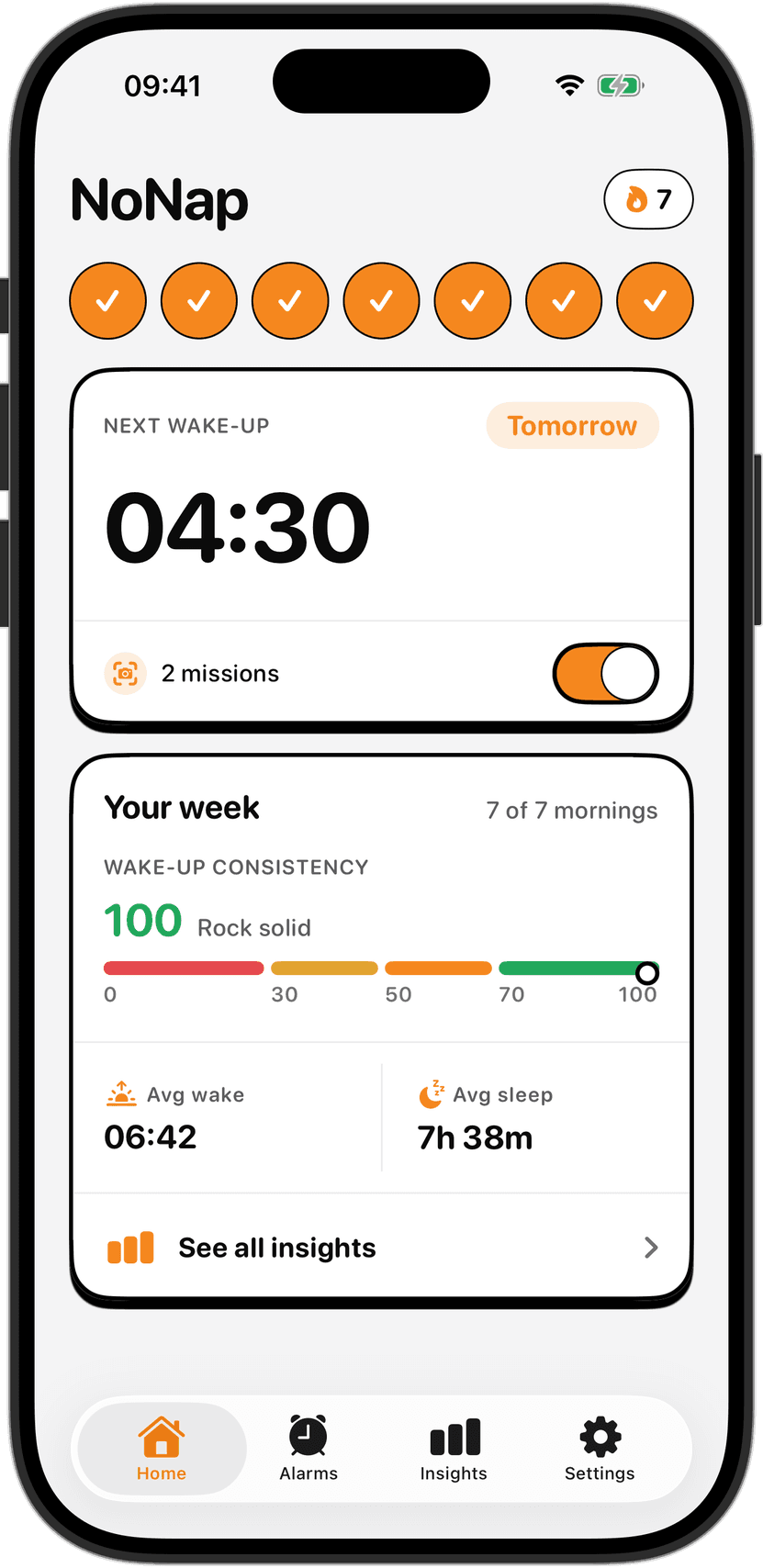
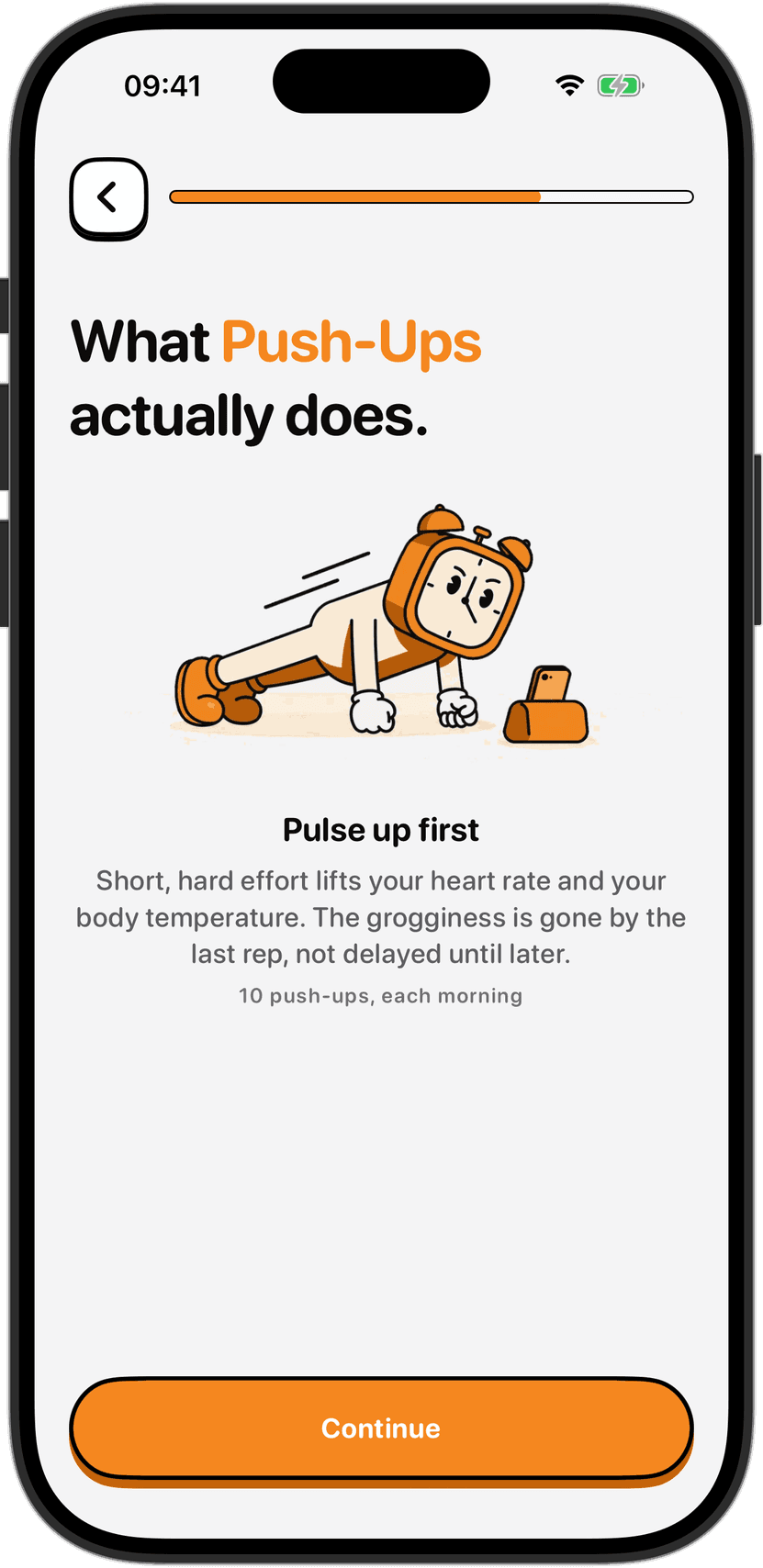
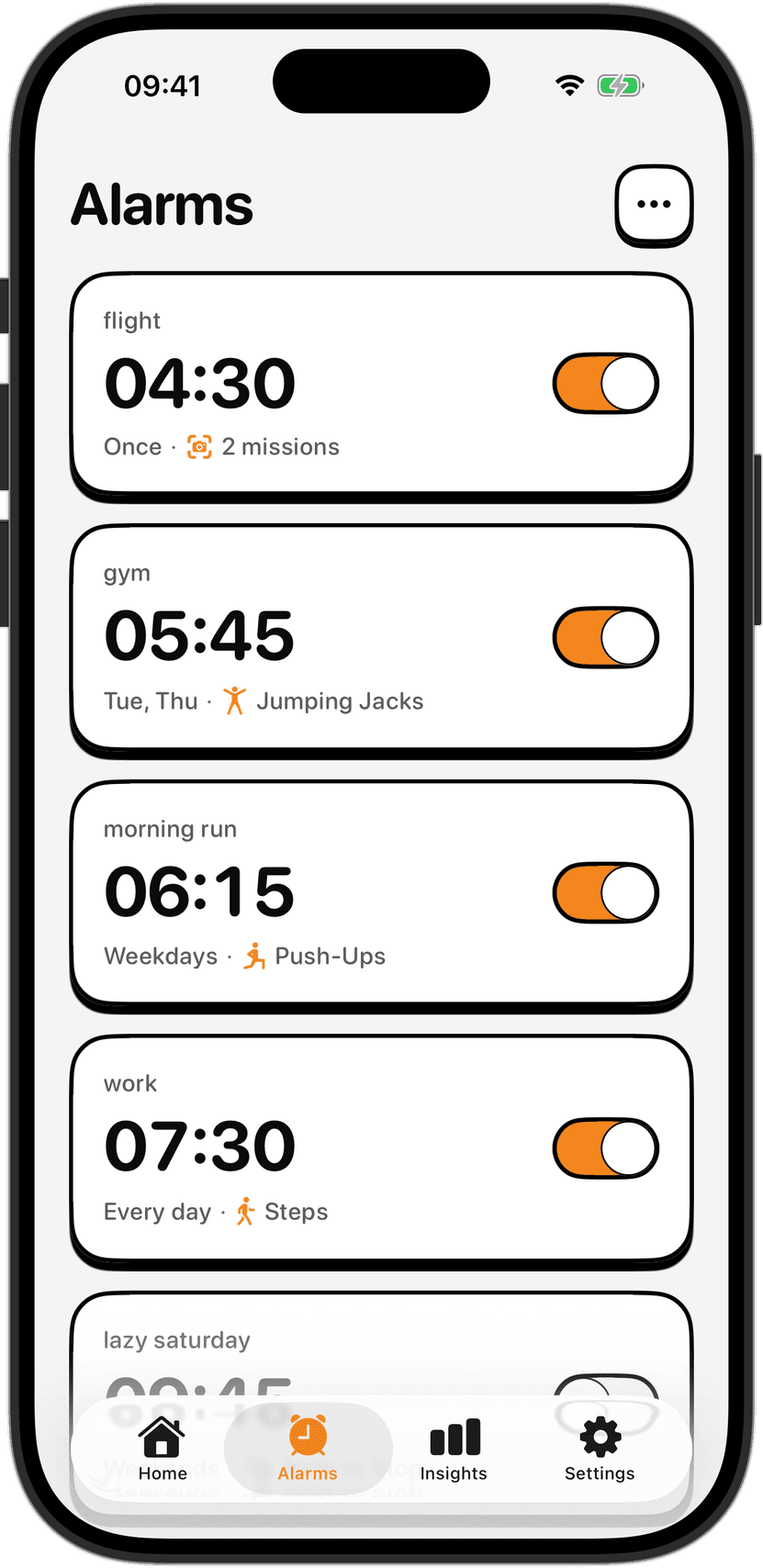
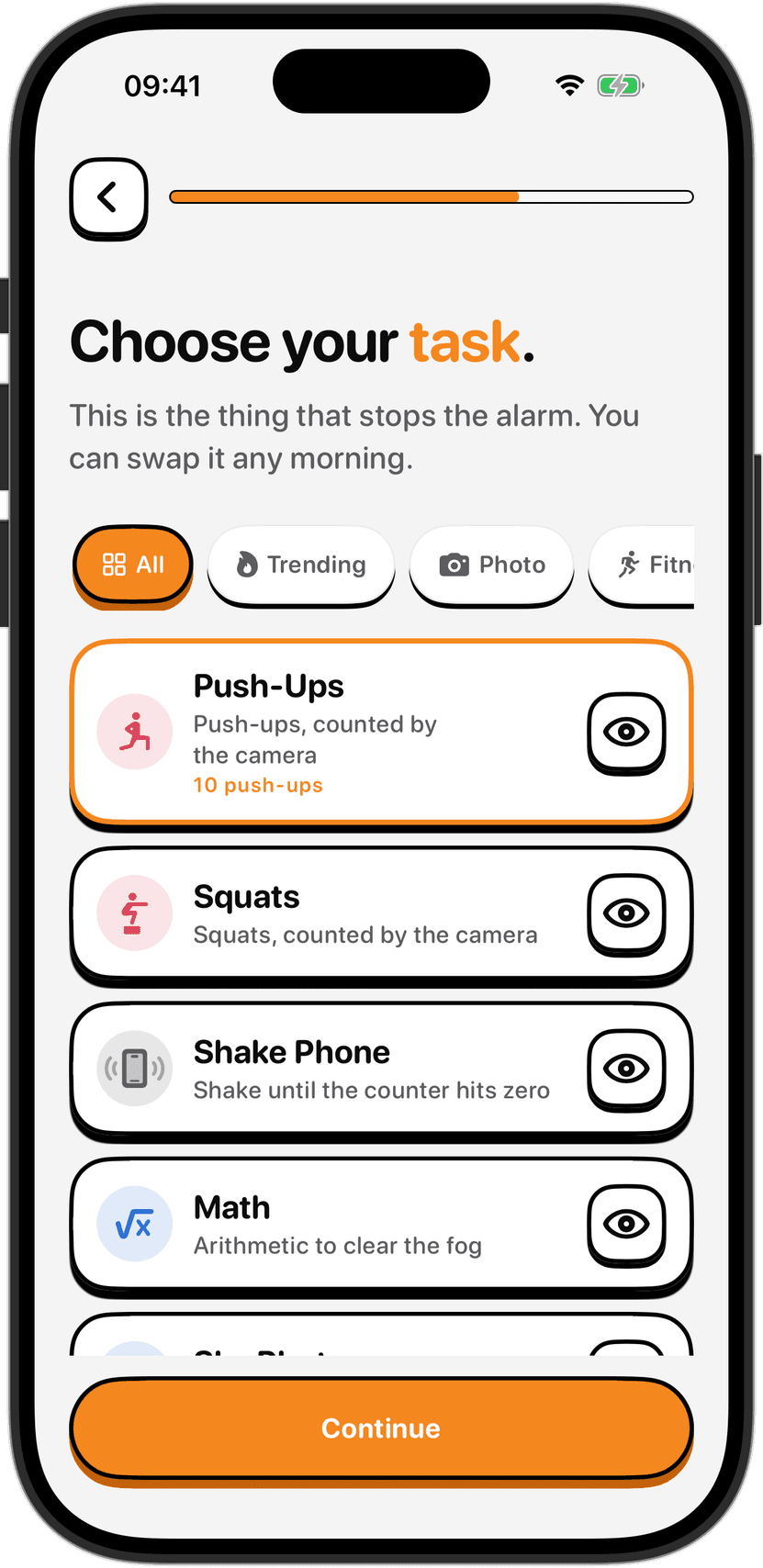
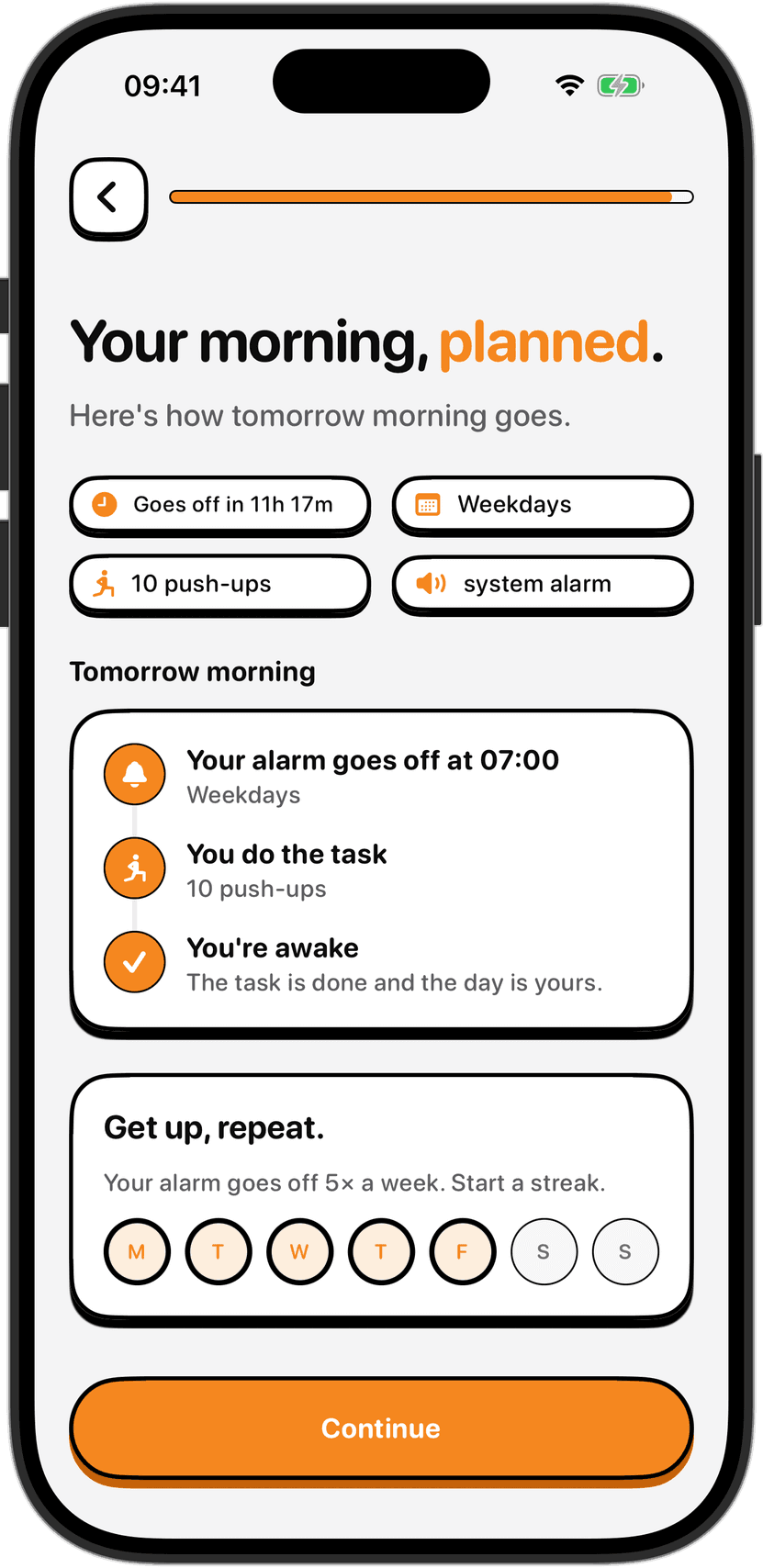
Getting yourself out of bed in the first place matters more than how the waking happens. A task that requires movement and thinking, like a few push-ups or a math problem, does far more for sleep inertia than any light device. NoNap is built around that principle: one alarm at a fixed time, no snooze button, and a wake task to finish before the alarm stops. The task demands physical effort and cognition before your prefrontal cortex is fully online. If you have an injury, pick a gentler task like math or shaking the phone instead of exercise. A night-before reminder nudges you to wind down, which helps the whole system work: a consistent wake time beats any alarm technology, because consistency is what your circadian clock actually needs.
Sources
Leppämäki, S., Partonen, T., and Lönnqvist, J. (2003). Effect of simulated dawn on quality of sleep: a community-based trial. BMC Psychiatry, 3(1), 14. ncbi.nlm.nih.gov/pmc/articles/PMC270037/
Gabel, V., Miglis, M., and Zeitzer, J. M. (2020). Effect of artificial dawn light on cardiovascular function, alertness, and balance in middle-aged and older adults. Sleep, 43(10), zsaa082. academic.oup.com/sleep/article/43/10/zsaa082/5873486
Campanella, F., Scaramuzzino, G., Magurano, M., et al. (2024). The Efficacy of a Multimodal Bedroom-Based 'Smart' Alarm System on Mitigating the Effects of Sleep Inertia. Clocks & Sleep, 6(4), 571-593. mdpi.com/2624-5175/6/4/41
Bromundt, V., Wirz-Justice, A., et al. (2019). Effects of a dawn-dusk simulation on circadian rest-activity cycles, sleep, mood and well-being in dementia patients. Experimental Gerontology, 124, 110641. doi.org/10.1016/j.exger.2019.110641
Image credits
Cover photo by Ravi Sharma on Unsplash (unsplash.com/photos/good-morning-nepal-hNv5s6NEYig), showing a sunrise over misty mountains. Used under the Unsplash License, which permits commercial use without payment.