How accurate is your sleep tracker?
Why consumer sleep trackers overestimate your sleep, what they measure poorly, and why tracking trends matters more than nightly scores.
Visana Studios
6 min read
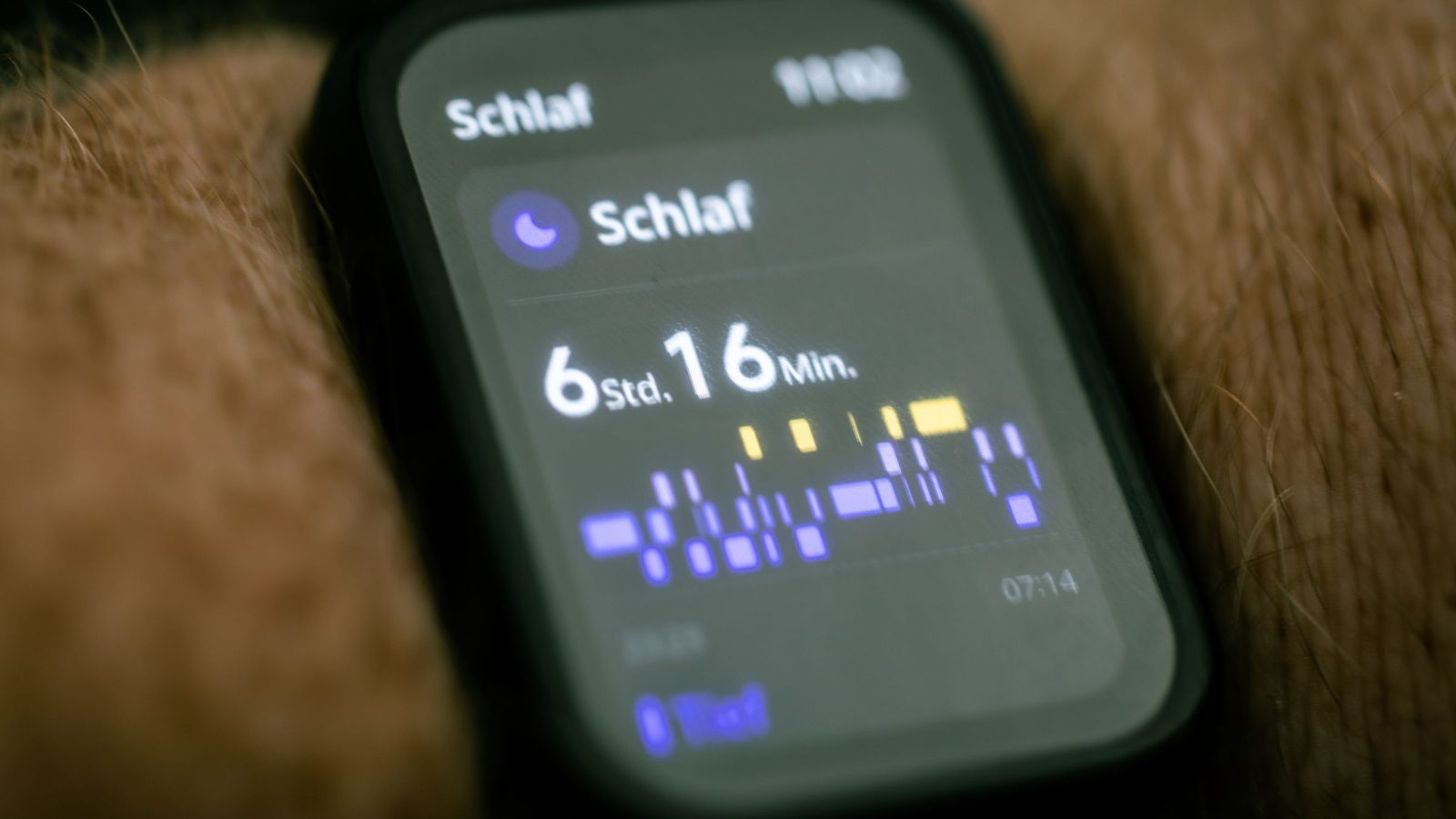
You wake up and check your sleep tracker. It says you got seven hours. You remember lying awake for thirty minutes around 2 a.m., but the graph shows solid sleep. Either your night was better than you thought, or the data on your wrist has a looser grip on reality than you might assume.
The rise of consumer wearables has made sleep tracking cheap and frictionless. A watch or ring that costs less than two dinners out will estimate your sleep, stage it, score it, and trend it. The problem is not that these devices are useless. The problem is that they are confident about things they cannot know, and that confidence can feel like truth.
What sleep trackers claim to measure
Consumer wearables use different approaches to guess at sleep. Most rely on movement sensors called accelerometers, which pick up when you are still. Some add heart rate data. A few add skin temperature or blood oxygen. None directly measures what researchers measure in a sleep lab: the electrical activity of your brain through electrodes taped to your scalp, a technique called polysomnography.
The gap between a movement sensor and a brain sensor is the root of every accuracy problem that follows. Lying still is not sleep. A person sitting motionless for an hour will look a lot like a sleeping person to an accelerometer. That matters for validation studies.
What validation studies have found
When researchers compare wearable estimates to polysomnography, the gold standard in sleep measurement that uses brain electrical activity to detect every shift in sleep state and arousal, the results are consistently mixed. Consumer devices tend to overestimate how much you sleep. They miss the thirty-minute chunks of wakefulness that most people spend lying awake at some point during the night. They also tend to underestimate short interruptions that happen within longer sleep periods, so a night fractured into four separate sleep bouts might be reported as one continuous block.
Total sleep time is the metric wearables handle best. If your watch says you got six hours, you likely got reasonably close to that, within a typical margin of error. It is a noisy but usable estimate, useful chiefly for tracking whether your sleep amount is drifting up or down over weeks.
Sleep stages are where wearables run into trouble. Distinguishing deep sleep from light sleep or REM sleep requires picking up patterns in brain activity that an accelerometer simply cannot detect. Wearables estimate stages by fitting movement data into proprietary algorithms that a user never sees and a researcher cannot easily audit. Published comparisons show large error margins. A night you remember as fitful might be logged as mostly deep sleep based on how still you lay between the stretches where you actually moved. A genuinely deep night might be split into lighter stages based on small movements from your breathing or a partner's.
Short arousals, the brief jumps back to lighter sleep or wakefulness that happen dozens of times each night, are invisible to wearables. A polysomnography trace will show these micro-awakenings clearly. Your watch will not.
The gap between what trackers show and what matters
For someone managing insomnia or sleep apnea, this gap matters. A doctor needs to know whether you actually have those conditions, not what your watch guesses. Wearables cannot diagnose. They can supplement clinical assessment only when a researcher or clinician can verify the data against a polysomnography study.
For the rest, the gap matters differently. A wearable gives you a number that feels more true than your own experience, complete with decimals and a trendline, which amplifies the temptation to treat it as objective fact rather than a device's best guess based on accelerometer data.
One documented consequence is orthosomnia, a term researchers have used for a pattern where people become preoccupied with their sleep metrics to the point where the tracking itself interferes with sleep. You lie in bed watching your heart rate, worried that it is not in the sleep zone you expect. You wake at 4 a.m. and stay awake partly because you are checking the app to see if the tracker has registered it. The device meant to help you sleep becomes a source of night-long performance anxiety. Some people find that putting the device away improves their sleep simply by removing the audience.
What actually works for your sleep, according to your tracker
The most useful signal from a wearable is not the nightly score but the trend that emerges over weeks, answering questions like whether your sleep amount drifts toward six hours or eight, whether Tuesday consistently feels worse than Monday, or whether an exercise day reliably leads to longer or shorter sleep.
These patterns have real value and require nothing exotic: a calendar, consistent sleep and wake times, and a willingness to notice connections. A wearable compresses this into a chart and makes it passive. You do not have to remember or add things up. The trade-off is that you get a precise-looking graph of imprecise data.
Use the trend. Ignore the nightly stage breakdown. Skip the sleep score. A device that tells you, over a month, that your sleep creeps toward seven hours on weeks when you exercise and drops to five-point-five on weeks when you work late is useful. A device that tells you that Tuesday night was 34 percent deep sleep, scored 72 out of 100 by an undisclosed formula, is dressed up noise.
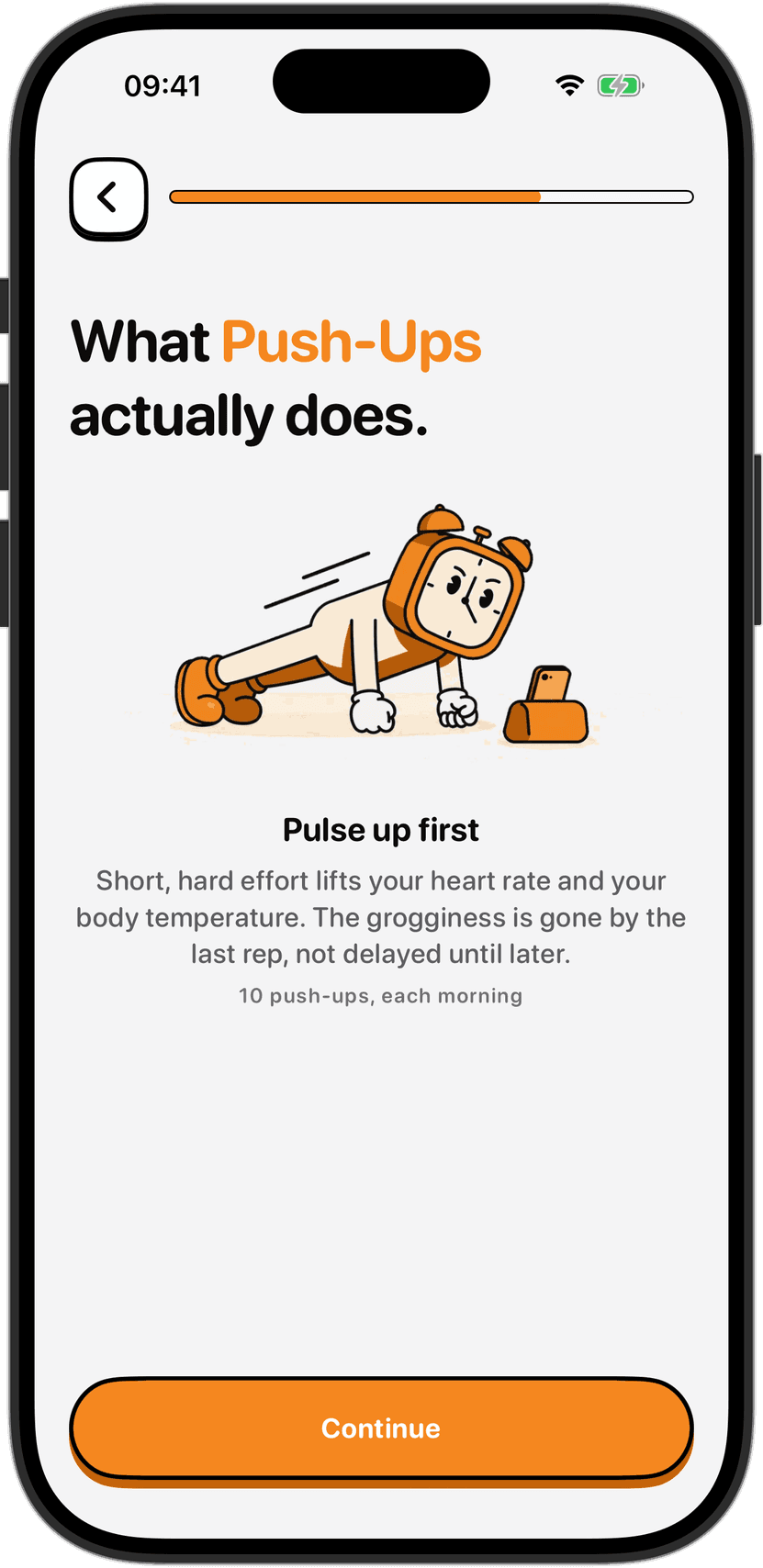
The other half of useful sleep tracking is the one thing trackers cannot do alone: keeping your wake time consistent. Morning light is the strongest signal your body clock gets, and a steady wake time, even on weekends, sets that cue every morning. Sleep inertia is real, and it fades faster with activity and bright light than with rolling back over and negotiating with the snooze button. That part requires no device.
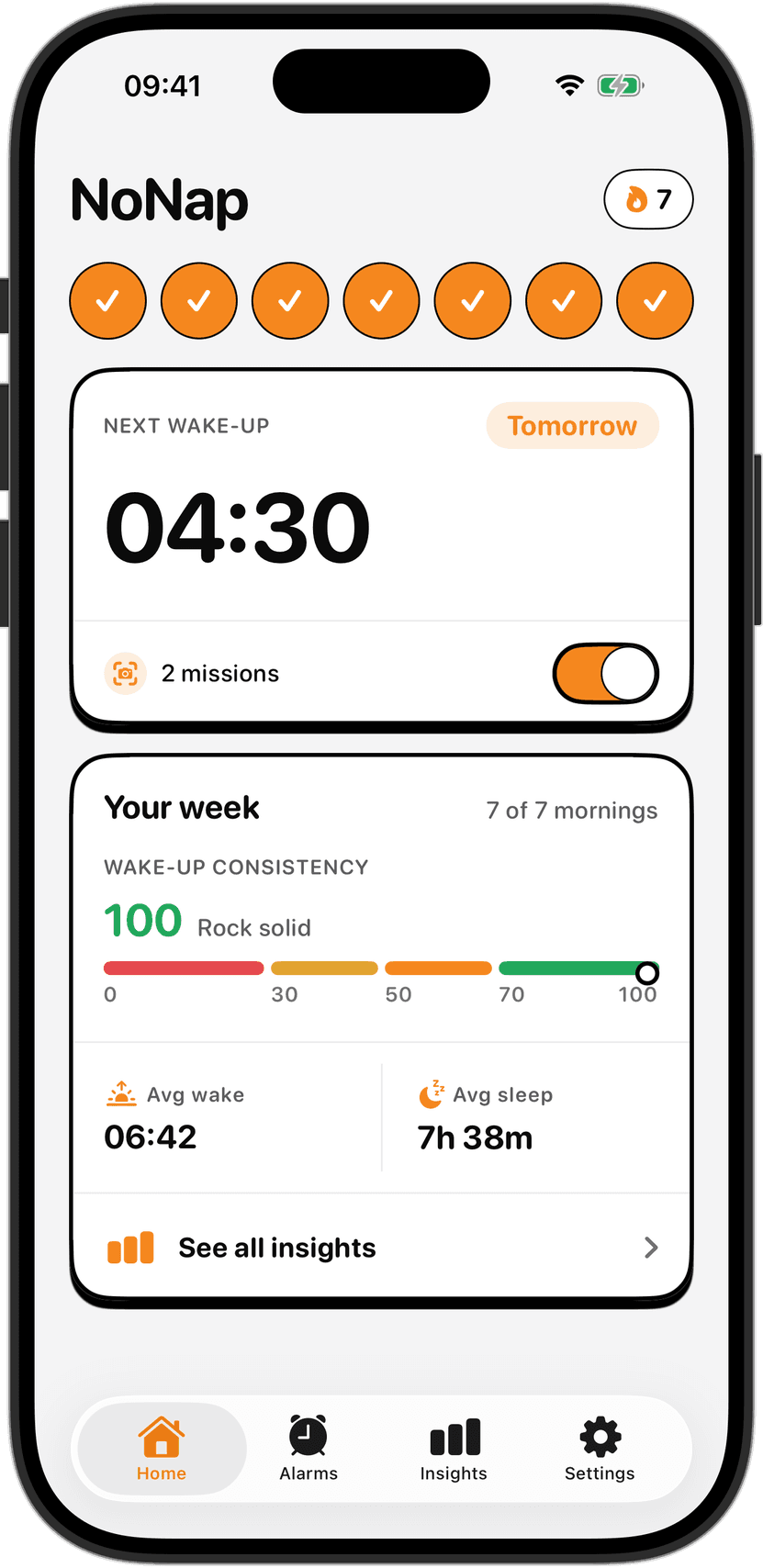
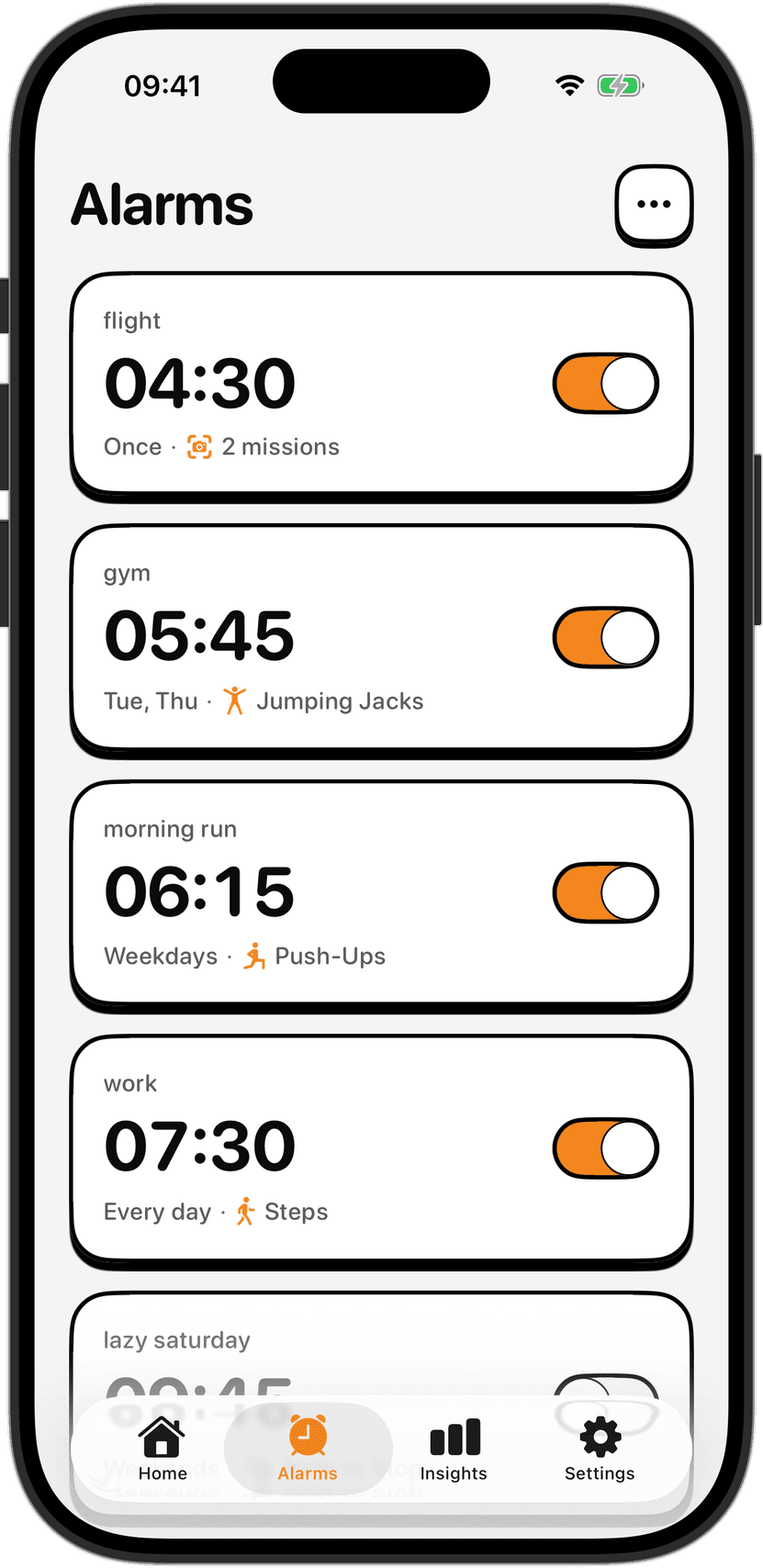
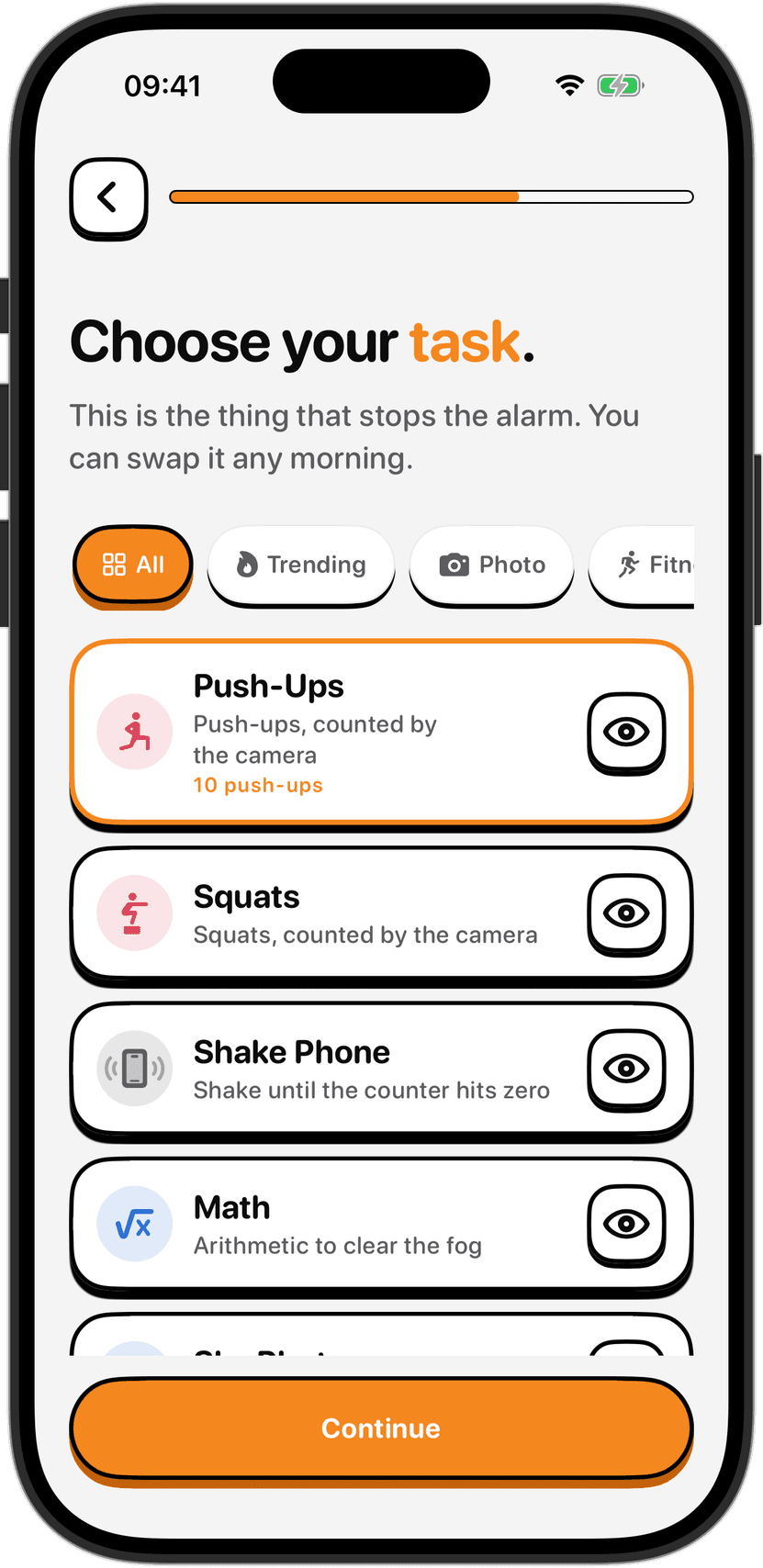
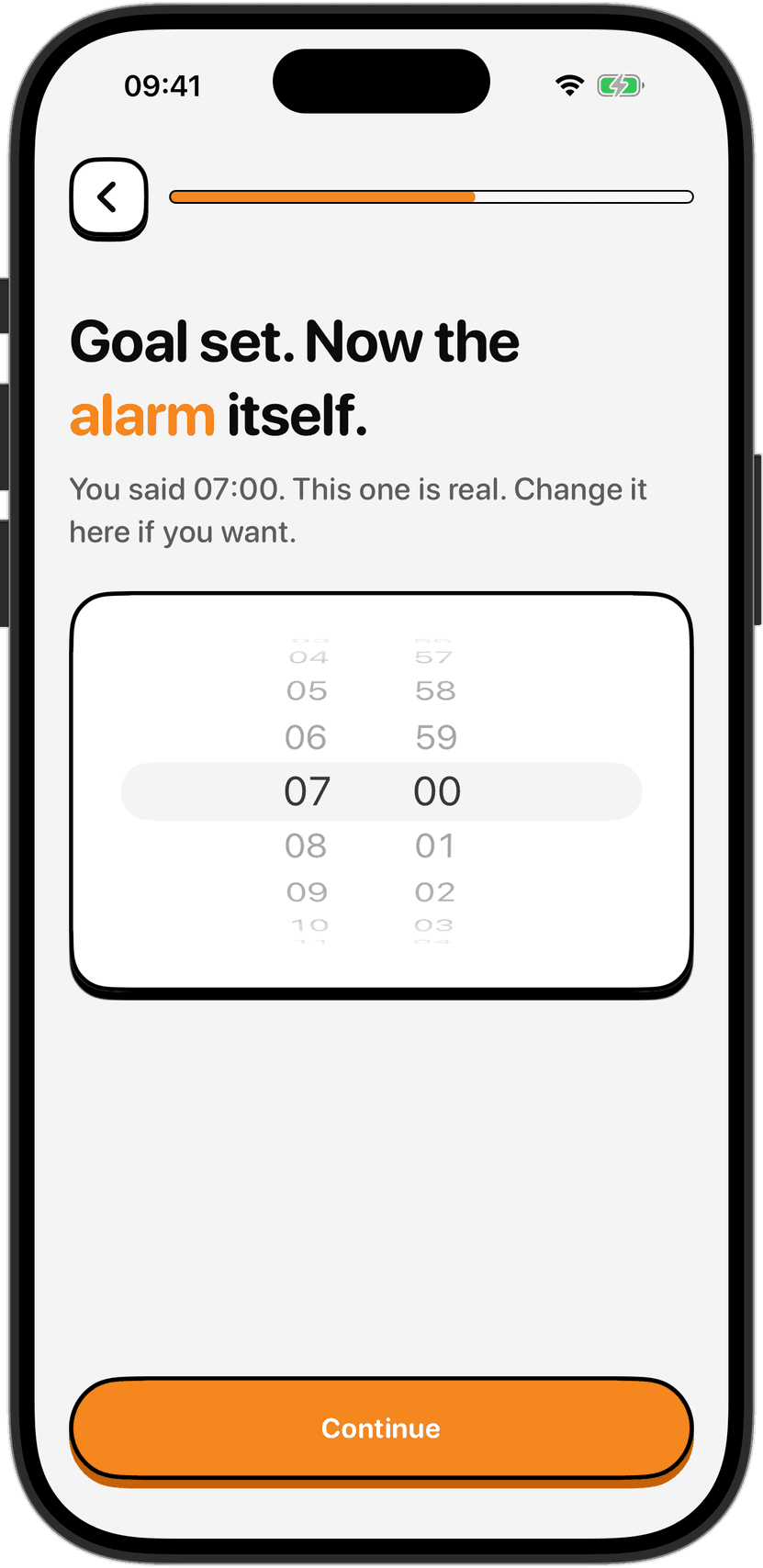
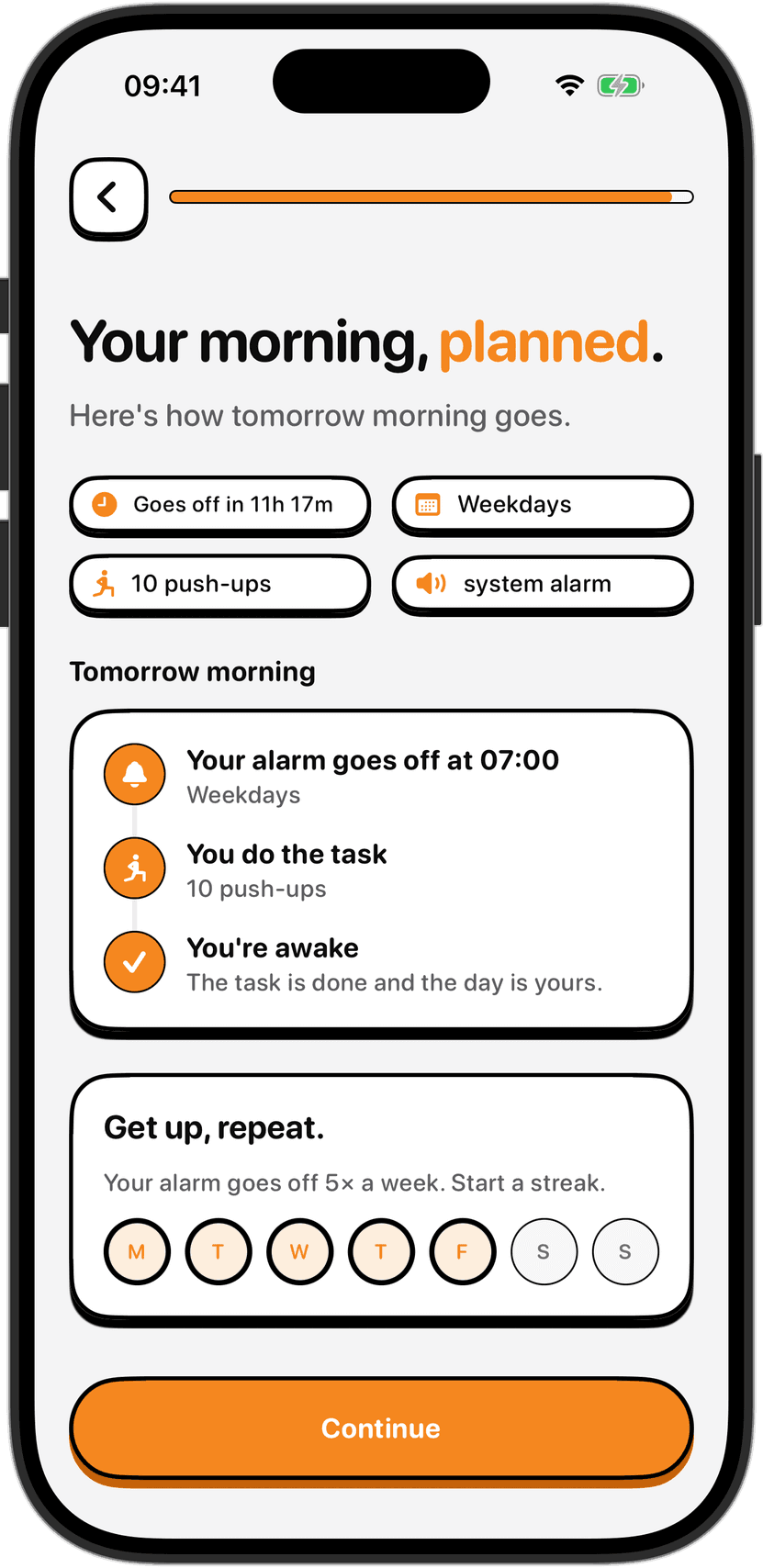
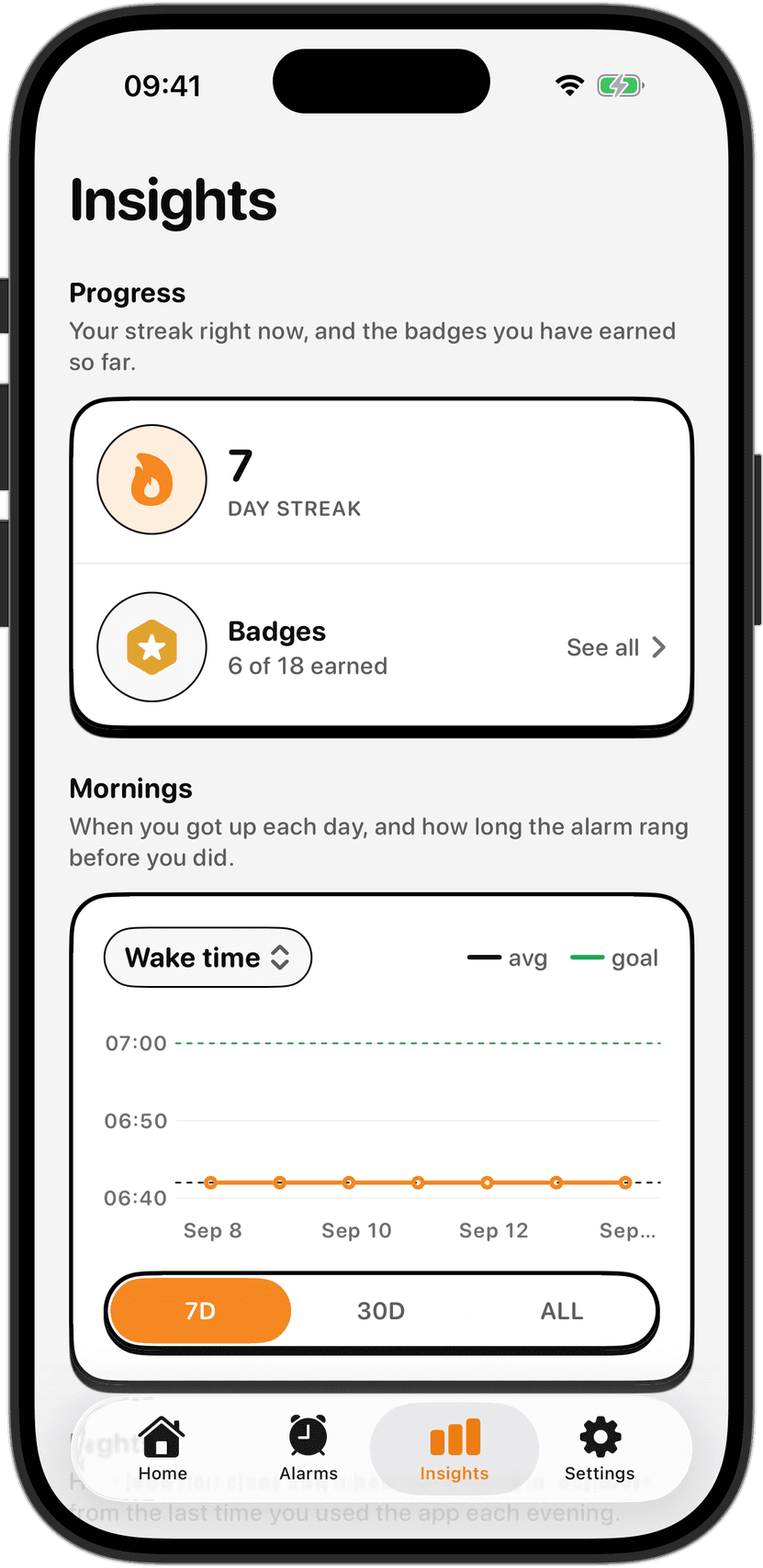
NoNap is built around one alarm with no snooze button, so your wake time has nowhere to drift. It uses the system alarm on iPhone, so the ring and silent switch do not silence it and Sleep Focus or Do Not Disturb do not either. The only way to stop it is to finish the wake task you chose: push-ups or squats counted by the camera, shaking the phone, a math problem, a photo, or getting out of bed itself. Skip the push-ups or squats and pick a different task if you have an injury or a condition that makes exercise first thing risky. The more consistent your wake time, the easier it becomes to notice whether any other change, including sleep tracking, is actually changing your sleep.
Sources
Lee Y.J., Lee J.Y., Cho J.H., Kang Y.J., Choi J.H. "Performance of consumer wrist-worn sleep tracking devices compared to polysomnography: a meta-analysis." Journal of Clinical Sleep Medicine. 21(3): 573-582. March 2025. https://doi.org/10.5664/jcsm.11460
Jahrami H., Trabelsi K., Vitiello M.V., BaHammam A.S. "The Tale of Orthosomnia: I Am so Good at Sleeping that I Can Do It with My Eyes Closed and My Fitness Tracker on Me." Nature and Science of Sleep. 15: 1-11. 2023. https://doi.org/10.2147/nss.s402694
Image credits
Cover photo shows a smartwatch display showing sleep tracking data. From Pexels (pexels.com/photo/27609746/), photographer Patrick (jaralol), used under the Pexels License, which permits free commercial use without attribution.