Sleep after studying: why the all-nighter backfires
How memory consolidation during sleep works, why sleep deprivation harms learning, and practical scheduling during a semester that actually leaves you time to sleep.
Visana Studios
6 min read

The night before the exam, you are three chapters behind. Sleep feels like a luxury you cannot afford. Cancel the morning gym session. Push dinner to midnight. Stay up as long as it takes to get the material into your head. The logic is simple: more study time equals more learning, and sleep can wait until after the test.
Neuroscience disagrees. The all-nighter doesn't buy you extra learning. It trades your studying for your memory, and the market rate is terrible.
How sleep builds what you learned
Memory has two stages. The first is acquisition, the raw act of taking in information. You read the chapter. You watch the lecture. You solve the practice problems. Your brain encodes the material into electrical and chemical patterns. This part happens while you are awake.
The second stage is consolidation. During consolidation, the brain reorganizes and stabilizes these patterns into long-term storage. Synapses strengthen. Proteins are synthesized. Redundant information is pruned. Emotional weight is added to material the brain flagged as important. The hard wiring that lets you recall what you learned weeks or months later happens largely during sleep.
REM sleep and non-REM sleep both contribute. Non-REM sleep, especially the deeper stages, handles declarative memories, the facts and concepts you need for an exam. REM sleep refines emotional associations and connects new information to what you already know. A normal night woven together with multiple complete sleep cycles gives both processes a full run.
Sleep is not a passive state where nothing happens to your memory. It is the final, essential stage of learning itself.
What happens when you skip the consolidation step
A study published in 2019 in npj Science of Learning tracked college students across an entire semester and measured three dimensions of sleep: duration, consistency of bedtime and wake time, and subjective sleep quality. The results showed clear links between sleep and academic performance. Students who slept longer performed better. Students who kept a consistent schedule performed better. Even sleep quality mattered. Students with the shortest sleep and worst consistency had measurably lower exam scores and GPAs than those sleeping well.
A semester is long enough for the effect to compound. Studying six hours one night and three hours the next, punctuated by all-nighters when deadlines loom, leaves both the brain and the body running a chronic deficit. The brain cannot learn efficiently when it is sleep-deprived.
Research on acute sleep deprivation, the kind triggered by a single all-nighter, shows why. When you have been awake for 24 hours or more, your ability to form new memories, especially the kind that requires the hippocampus, degrades sharply. A 2007 study by Yoo and colleagues in Nature Neuroscience found that sleep deprivation specifically impaired the formation of new hippocampal-dependent memories, even when the deprivation was relatively short. Studies on sleep-deprived subjects show impaired performance on tasks requiring the learning of new information. The all-nighter does not just move the deadline around. It reduces the number of things you can actually retain from the material you stayed up to study.
This is the core problem: you stayed up to study because you thought it would increase learning. The deprivation does the opposite. The last few hours of cramming, when you are most tired and the learning is slowest, come at the precise moment your brain is least capable of consolidating memories. You are studying hardest when sleep matters most, and the two cannot happen at the same time.
Building a sleep schedule that works around exams
Cramming happens because of a gap between the work assigned and the time available. Spread the work out earlier in the semester and the gap closes. Start problem sets the day they are assigned, not the week before the exam. Read chapters as they are assigned, not in a stack two weeks before the test. Review notes in the days after class while they are still fresh, rather than trying to rebuild understanding from scratch during finals week.
A consistent bedtime and wake time matters as much as the hours. The MIT study found that consistency itself predicted academic performance beyond just total sleep. Going to bed at different times, waking up randomly, chasing sleep debt on weekends, all of it adds friction to the consolidation process. The brain works better with predictability. Pick a bedtime that gives you at least seven hours before your first class. Stick to it even on the weekend.
When you feel behind on material, the instinct is to steal time from sleep. That is backwards. Cut from something else. Skip one nonessential video. Do fewer practice problems instead of none. Study less efficiently for two hours rather than less effectively for four while half-asleep. The tradeoff that looks worst on paper, giving up study time, is actually the one that maximizes what ends up in memory.
The psychological pull is real. Sleep feels optional when there is always more to do. In the days before an exam, when the material is still rough and time is short, staying up feels like control. You are doing something. Sleeping feels like abandoning the effort right when it matters most. The research on the MIT students suggests the opposite: the control comes from being well-rested enough to study effectively in the first place, and having done so consistently enough that the material had time to consolidate.
This is also why a light, stable morning wake time helps. Waking up at the same time every morning, even on days you did not sleep well, keeps the circadian rhythm steady. A steady rhythm supports better sleep consolidation, which supports better memory. For something as consequential as an exam, that marginal improvement stacks.
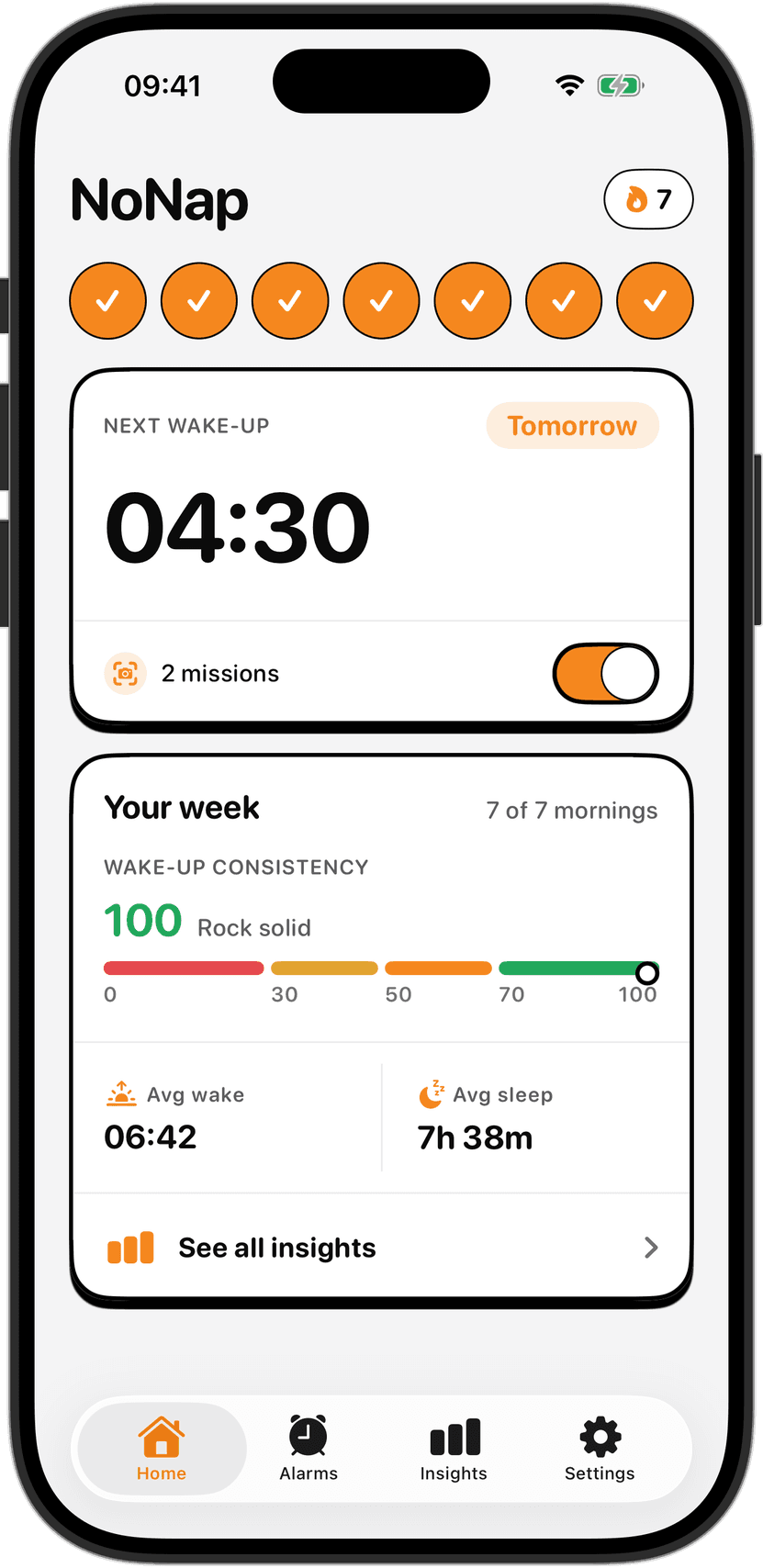
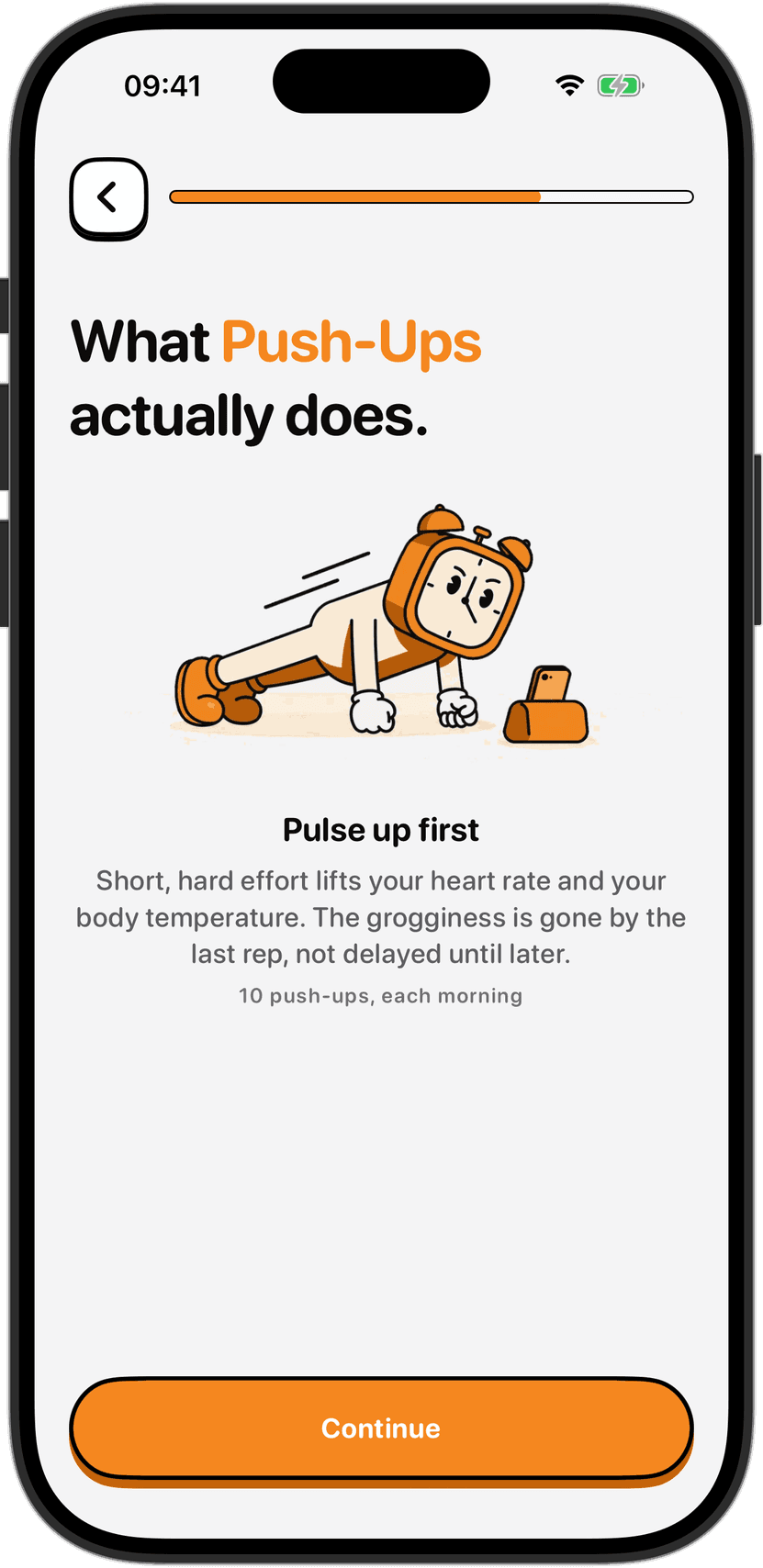
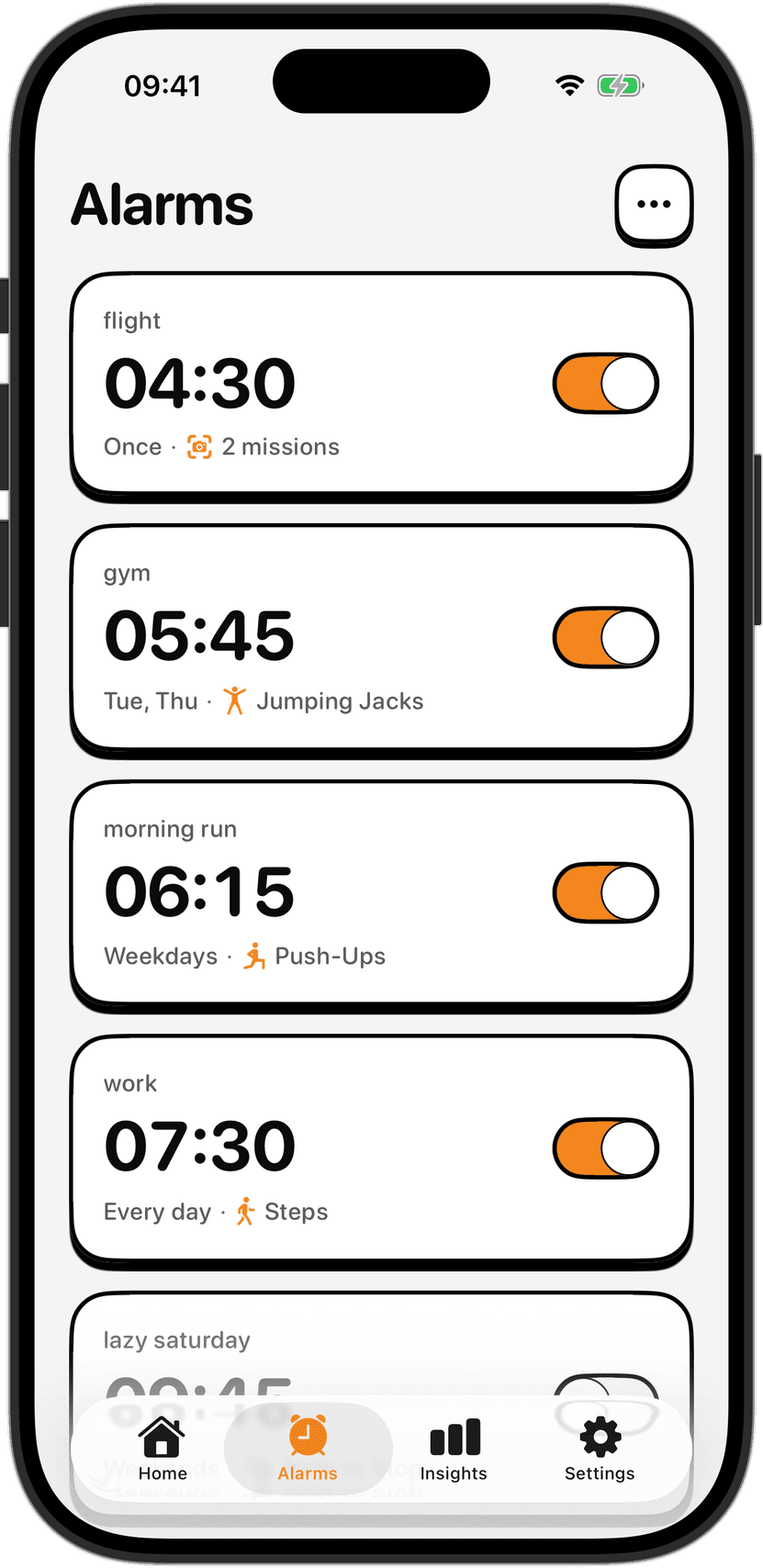
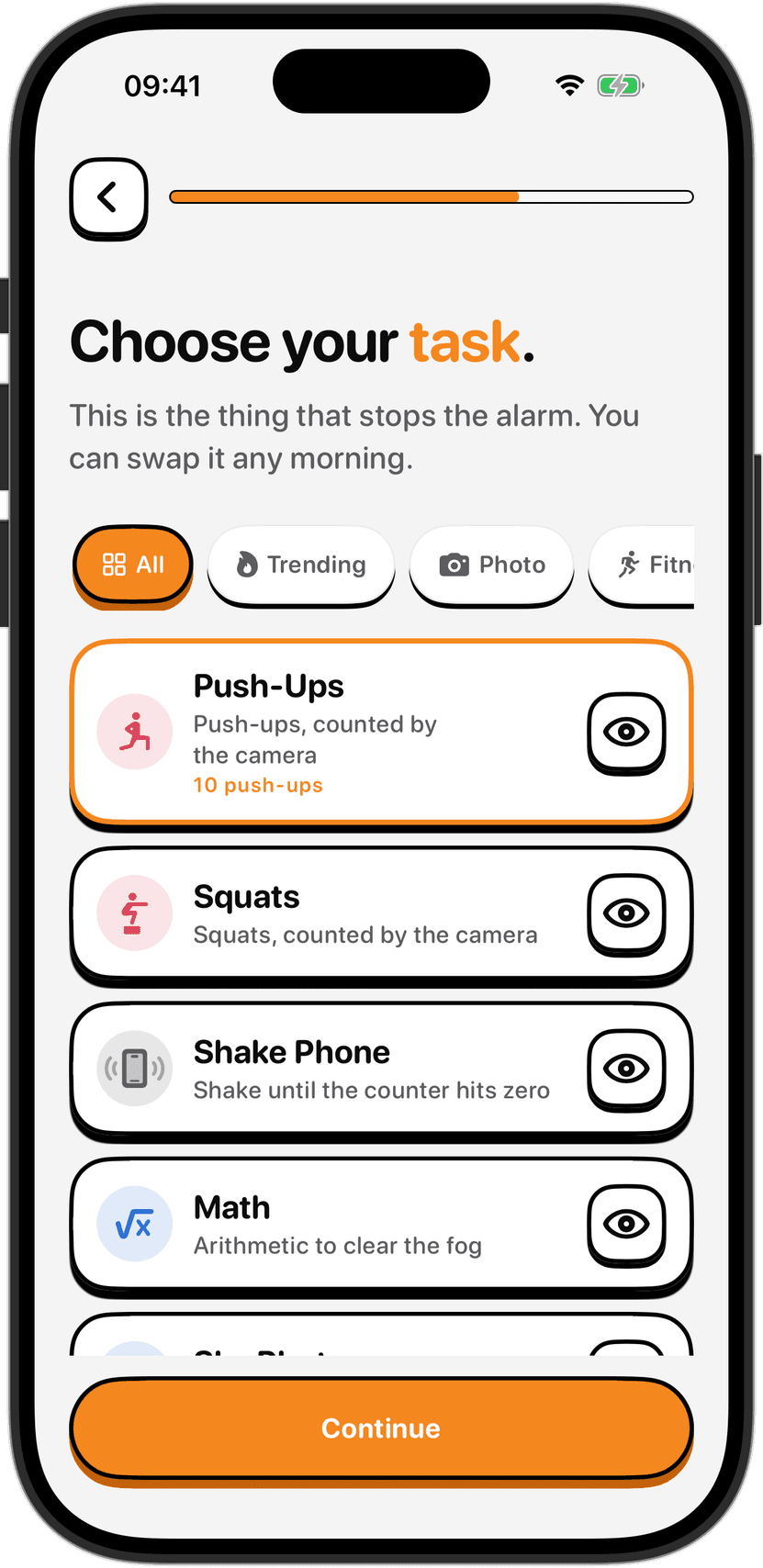
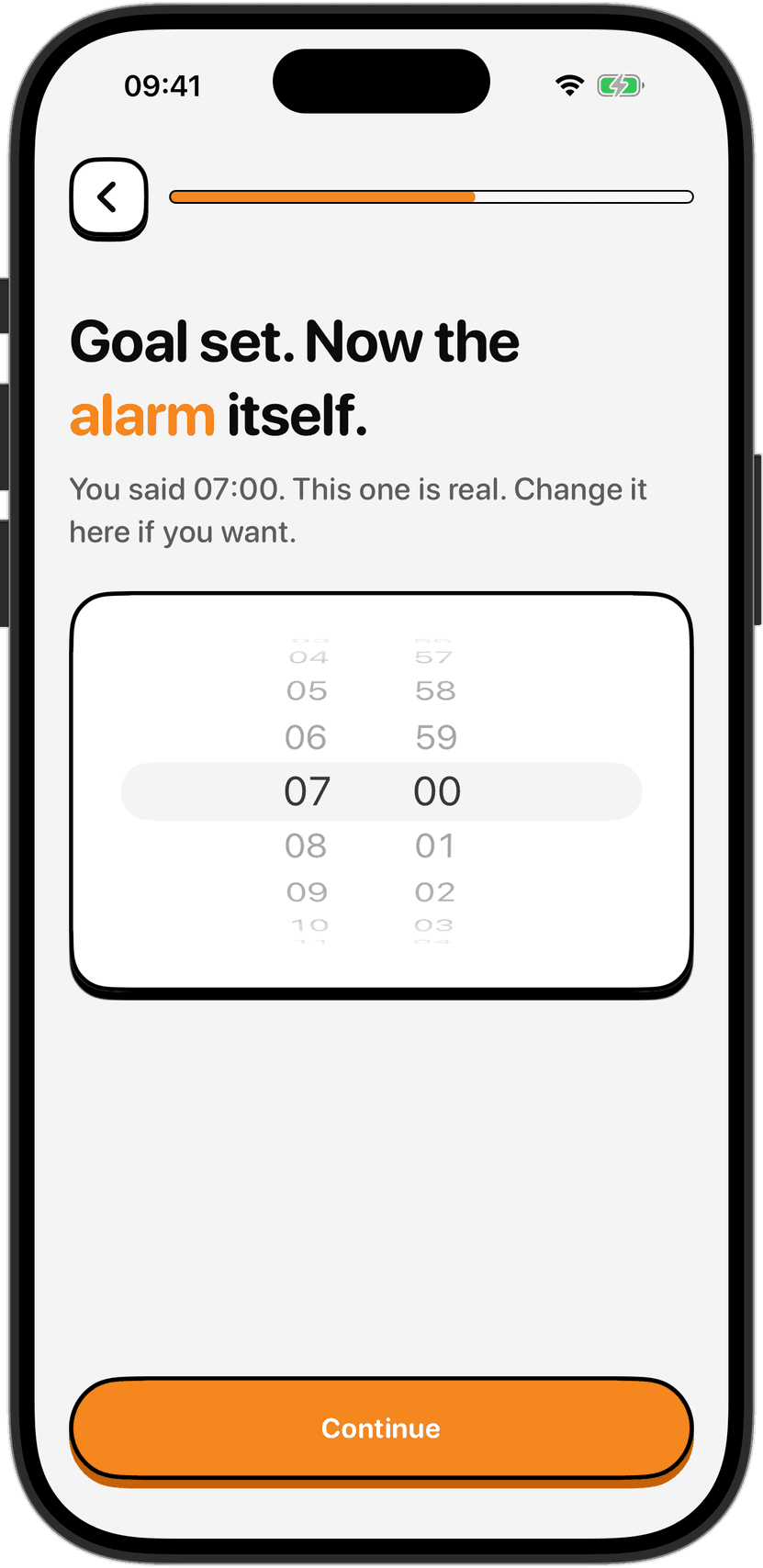
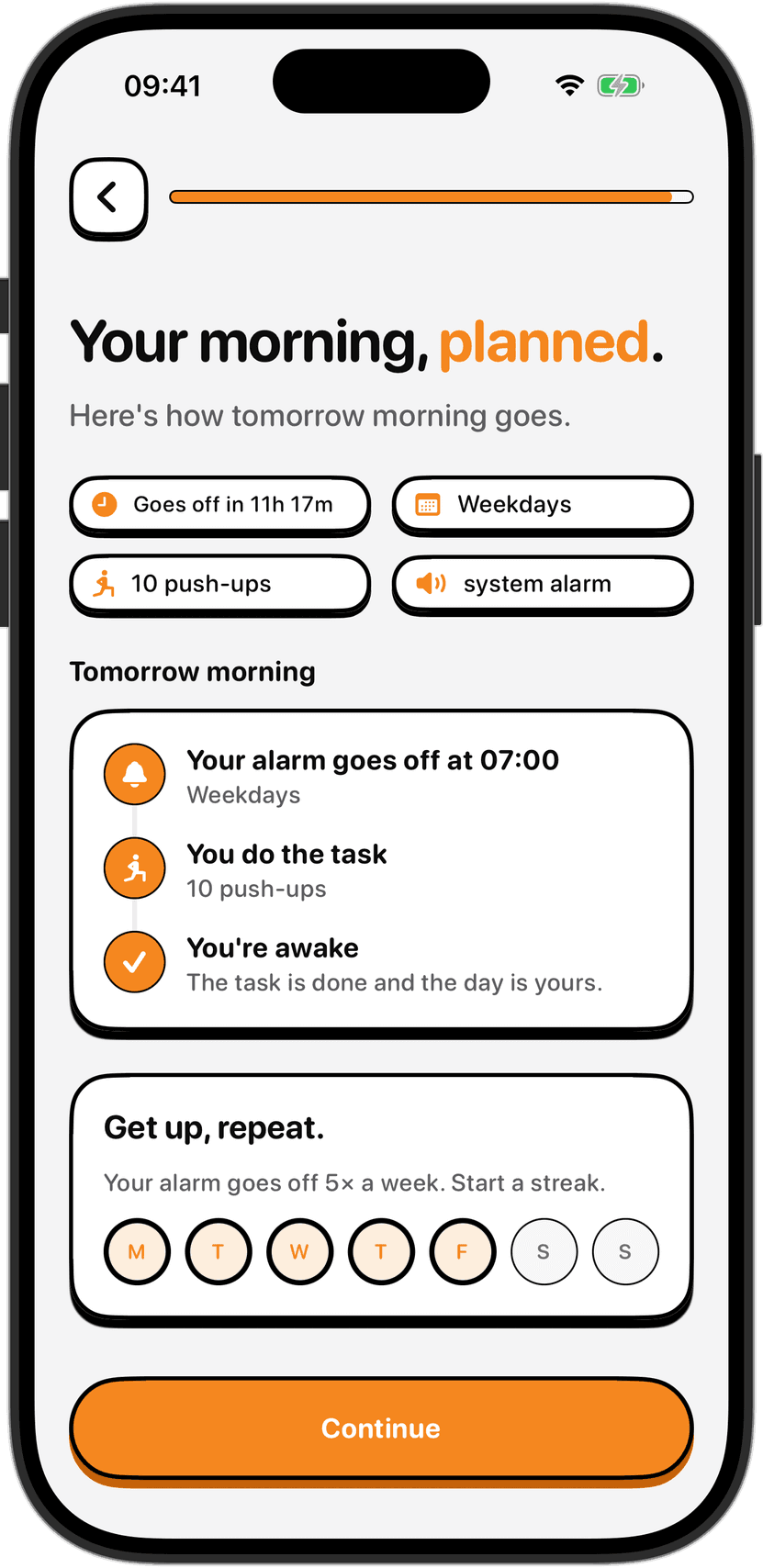
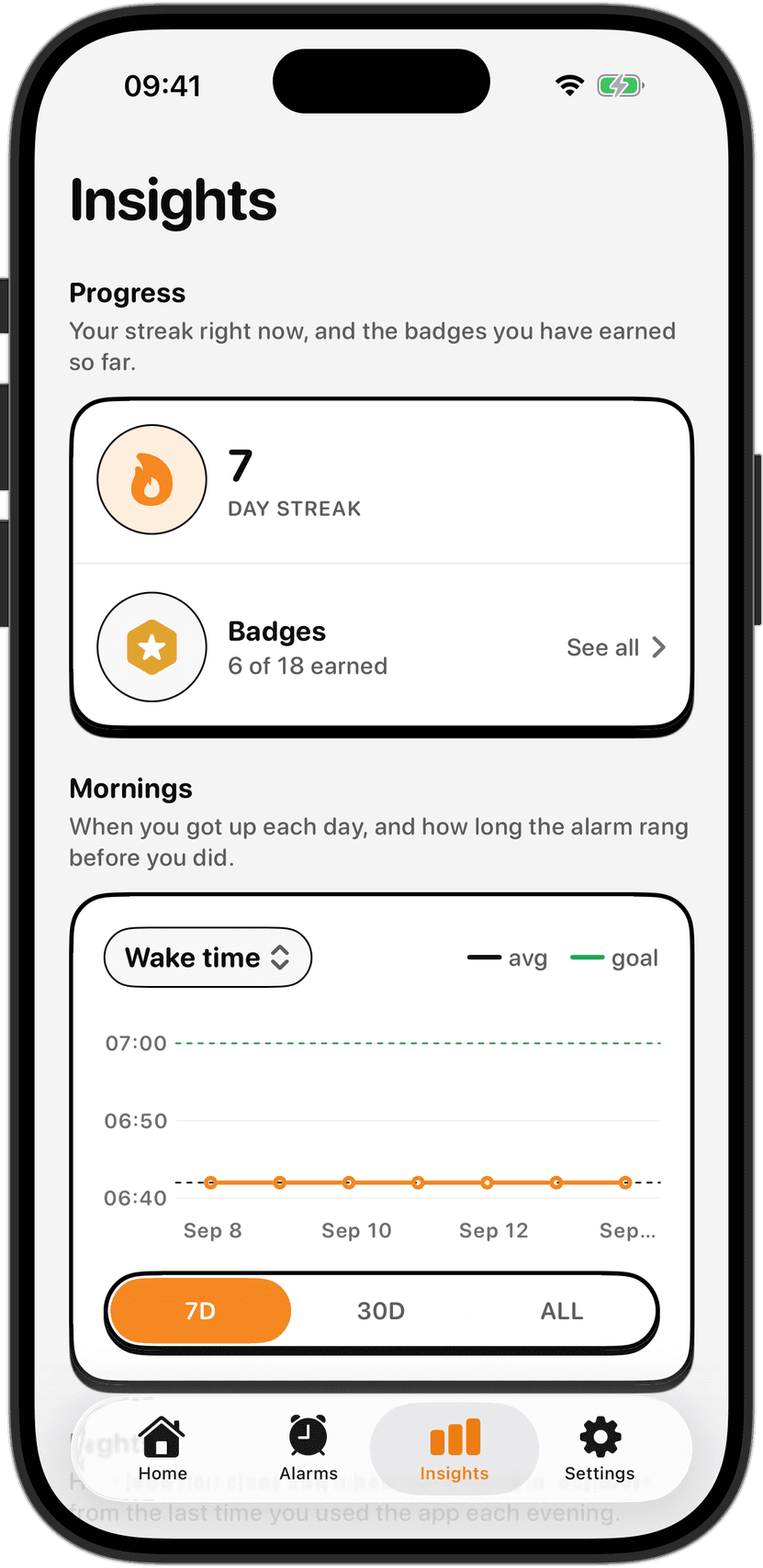
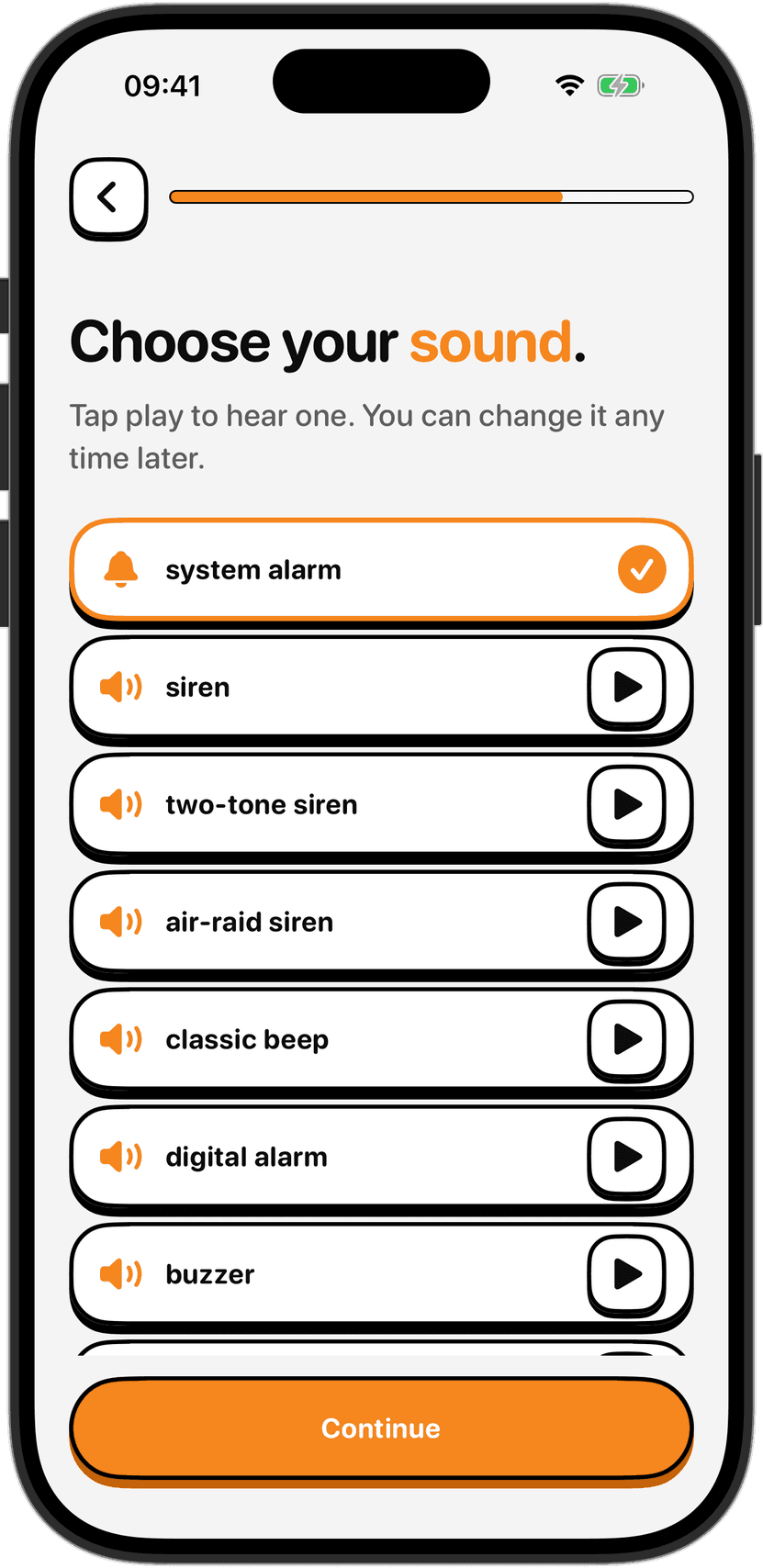
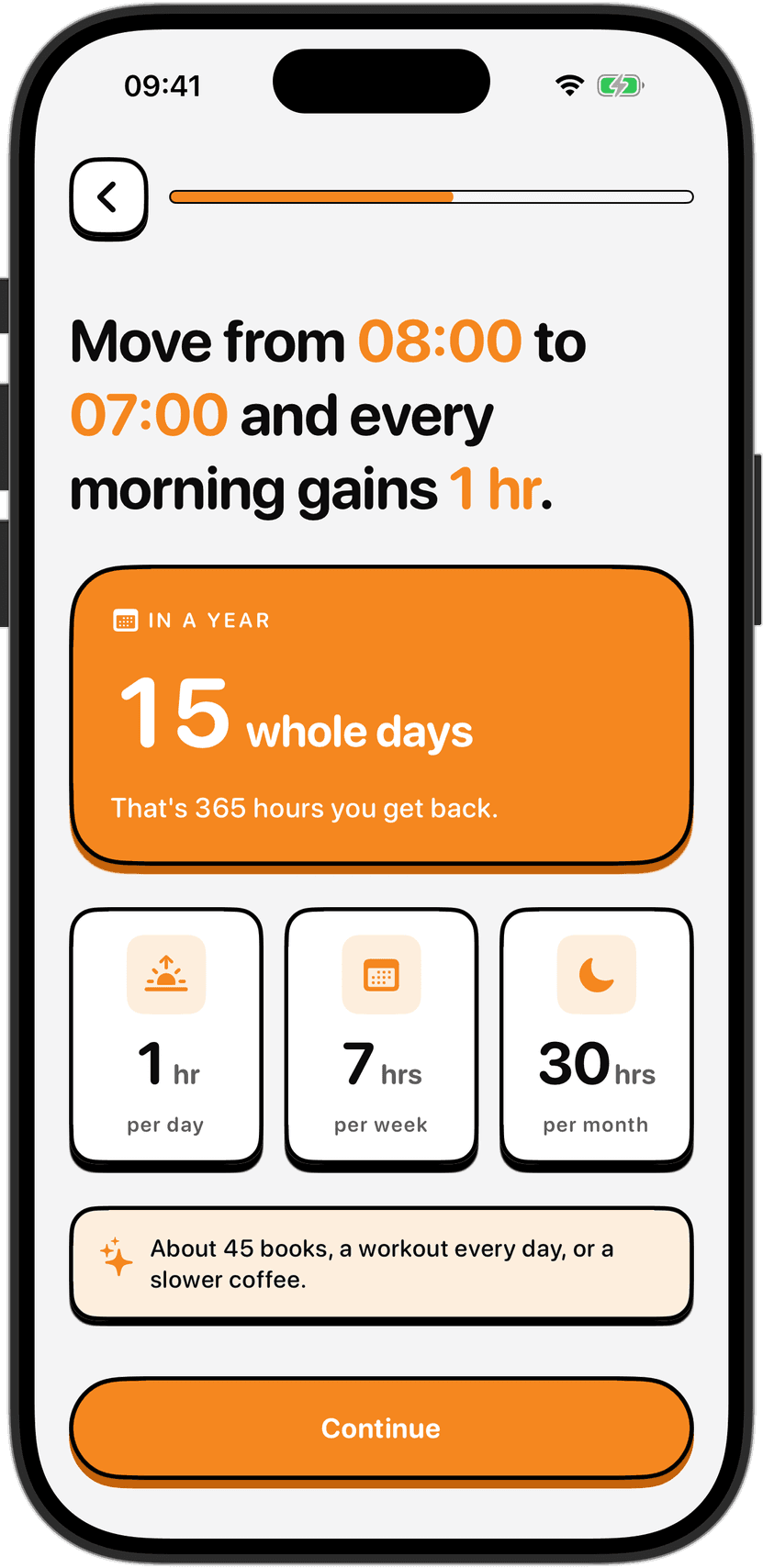
Keeping the same wake-up time is harder than it sounds in college, where the first class moves around from one day to the next. NoNap, an iPhone alarm app by Visana Studios, gives you one alarm and no snooze button, and it rings through the Silent switch and Sleep Focus. It stops only once you finish a wake task you picked the night before: a math problem, a photo, shaking the phone, or push-ups or squats counted by the camera, with Math or Shake Phone the better pick if exercise first thing isn't safe for you. A streak won't raise a GPA by itself. The studies above point at the habit underneath it, a steady sleep schedule.
The all-nighter feels like a strategy. It is actually a capitulation, a moment when the semester's accumulated delays forced a choice between studying and sleeping. The time to change that choice is weeks before the exam, when the gap between the work and the deadline is still small enough to close without sacrificing sleep.
Sources
Okano, K., Kaczmarzyk, J. R., Dave, N., et al. (2019). Sleep quality, duration, and consistency are associated with better academic performance in college students. npj Science of Learning, 4, 16. nature.com/articles/s41539-019-0055-z
Yoo, S. S., Hu, P. T., Gujar, N., Jolesz, F. A., and Walker, M. P. (2007). A deficit in the ability to form new human memories without sleep. Nature Neuroscience, 10(3), 385-392. nature.com/articles/nn1851
Rasch, B., and Born, J. (2013). About Sleep's Role in Memory. Physiological Reviews, 93(2), 681-766. physrev.physiology.org/doi/10.1152/physrev.00032.2012
National Institutes of Health, National Center for Biotechnology Information (2024). Sleep and Memory Consolidation. NCBI Bookshelf. ncbi.nlm.nih.gov/books/NBK542334/