Push-ups and squats right after waking: how to do them safely
Blood pressure drops when standing quickly, spinal stiffness after lying down, and how to warm up before bodyweight exercise in the morning.
Visana Studios
6 min read

Your alarm sounds at 7 a.m., and the first thing you think to do is drop and do twenty push-ups. Your body has other ideas. Stand up too fast and the room tilts. Your muscles feel stiff. A few minutes of easy movement and stretching might have made all the difference.
Bodyweight exercise is a reliable way to end sleep inertia and stay accountable, but the first minutes after waking come with a few physical realities that a cold start into intense exercise can clash with. Blood pressure and muscle readiness both need a moment to adjust. Understanding what changes when you wake up, and working with those changes instead of against them, keeps you from dizzy stumbles or strained muscles.
Blood pressure drops when you stand
When you have been lying down for seven or eight hours, your cardiovascular system has been running on a lower demand. The moment you swing your legs out of bed and stand, gravity pulls blood downward, and your heart and blood vessels need to recalibrate to push blood back up to your brain. In most people this happens in seconds, quick and automatic.
Orthostatic hypotension is the medical term for what happens when this recalibration stalls. Your blood pressure falls too sharply when you stand, and your brain doesn't get the blood flow it needs. According to the PubMed research literature, orthostatic hypotension is defined as a drop of at least 20 millimeters of mercury in systolic blood pressure, or at least 10 millimeters in diastolic, upon standing. The dizziness or lightheadedness that can follow typically lasts seconds or a few minutes once your nervous system catches up, but in that window you are less steady than you know.
This is especially common in the morning. Overnight, you lose fluid through breath and sweat, and your nervous system is in a different mode than it is during the day. Older adults, people with certain medical conditions like diabetes or Parkinson's disease, teenagers in rapid growth phases, and anyone who has been sedentary or on bed rest are more vulnerable to sharp blood pressure drops when standing. Dehydration and certain medications also raise the risk, as does simply not having moved in hours.
The practical result is that standing and immediately moving into intense exercise right after waking gives your cardiovascular system almost no time to stabilize. A few minutes of gentle movement, hydration, and a gradual increase in intensity let your heart rate and blood pressure adjust before you ask your muscles to work hard.
Morning stiffness comes from spinal fluid shifts
Your spine is different when you wake up than it is in the evening. Intervertebral discs, the gel-like cushions between vertebrae, are designed to absorb and cushion impact. They lose height over the course of a waking day as you move, sit, and bear weight, slowly squeezing out fluid. Lying down for hours reverses that. Fluid moves back in, disc height increases, and the tissue is fuller and slightly less flexible than it will be an hour or two after you get up and start moving. This added stiffness in the morning, combined with muscles that have been inactive for hours, creates a window where your spine is less ready for dynamic loading.
Weak core muscles, poor posture during the day, and age-related changes to your discs all make morning stiffness more pronounced. Activities that load the spine aggressively right away, like full-range squats or push-ups with poor form, can strain tissue that hasn't had time to accommodate movement. You do not need to avoid exercise in the morning. You need to give your spine and muscles a gentle introduction to being upright.
Start with a warm-up and easier variations
A warm-up does several things at once. It raises heart rate and body temperature, preparing muscles to work. It increases blood flow to joints and connective tissue, gradually working fluid into the spaces between vertebrae. It gives your nervous system time to coordinate movement patterns. And it gives your cardiovascular system a chance to adjust to being upright and active before exercise intensity climbs.
A good morning warm-up takes five to ten minutes. Start with easy movement: gentle walking in place, arm circles, slow shoulder rolls, bodyweight squats or lunges with a partial range of motion. If you have the space, a few minutes of light stretching helps. The goal is not to exercise yet. The goal is to wake up your body systems gradually.
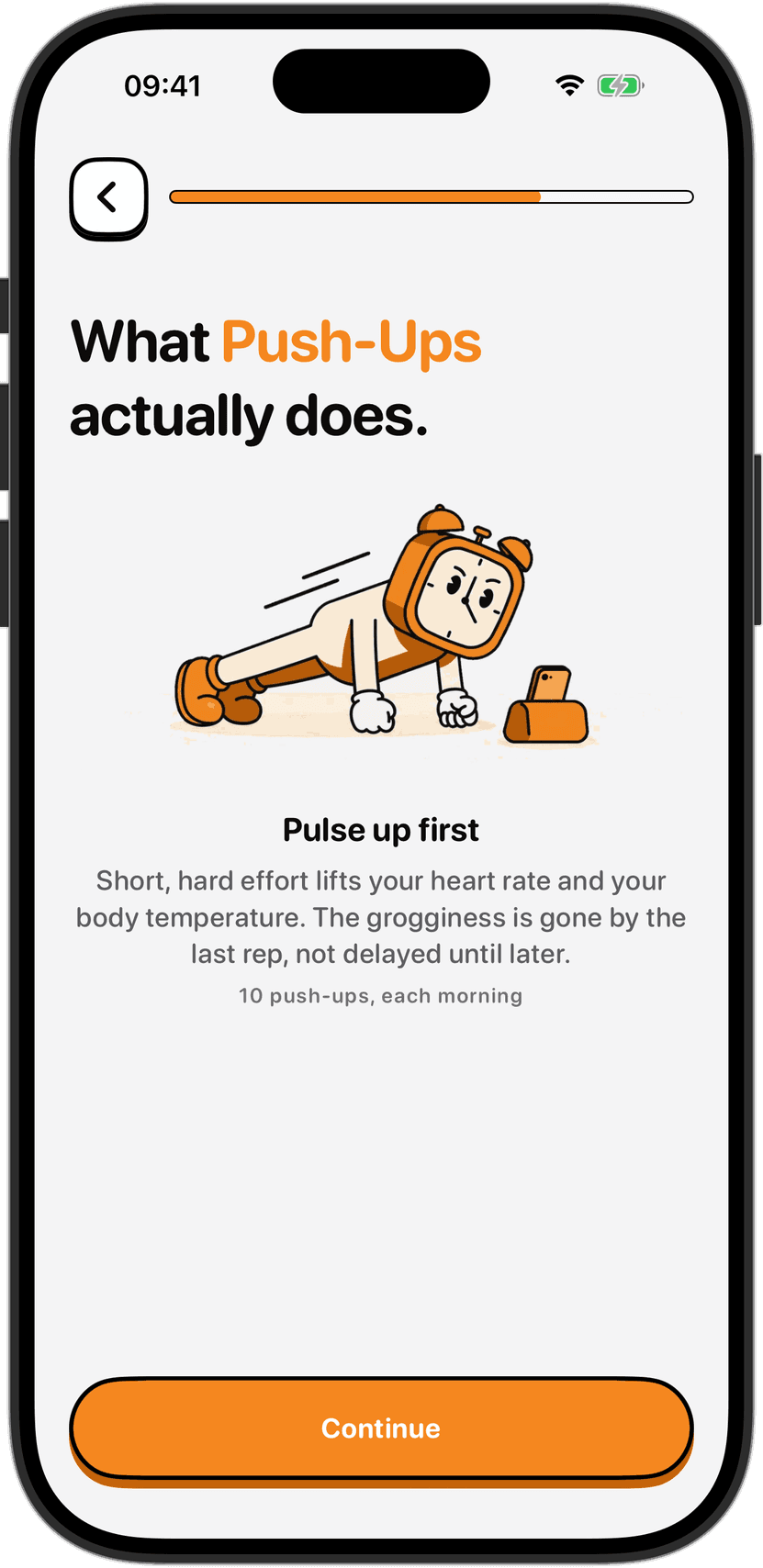
Once you have been moving gently for a few minutes, then move to the main exercise. If you are doing push-ups, start with easier variations. Incline push-ups, with your hands on a step or low table rather than the floor, require less body weight and are gentler on your shoulders and core. Knee push-ups reduce the load further. If you are doing squats, start with a partial range of motion, going only a quarter or halfway down rather than all the way, and add depth as your body warms up.
Progression matters. If you are new to morning exercise or returning after time away, lighter versions of your main exercise are not cheating or a sign of weakness. They are your body adapting to moving under load when it is least ready for it. You will feel stronger and more resilient in the weeks ahead as your muscles, cardiovascular system, and spinal stability adapt.
Who should talk to a doctor first
Exercise is medicine for most people, but it is not medicine for everyone in every situation. You should talk with a doctor or physical therapist before starting a new exercise routine if you are older than 45 and have not exercised regularly in years, have a history of heart disease, high blood pressure, or diabetes, have back or joint pain that flares with movement, or are recovering from childbirth or surgery. You should also investigate frequently feeling faint or dizzy when standing, even on days when you are not exercising, before you add bodyweight exercise to your morning.
Orthostatic hypotension, in particular, can be a symptom of an underlying condition. When the room spins when you stand, when you get black spots in your vision, when your legs feel weak, or when you have actually fainted, talk to a doctor. Many causes are simple: dehydration, a medication side effect, or simply needing to move more slowly. Some are more serious. You do not need to be alarmed, but you do need information from someone who can examine you and your history.
Morning tasks and gentler alternatives
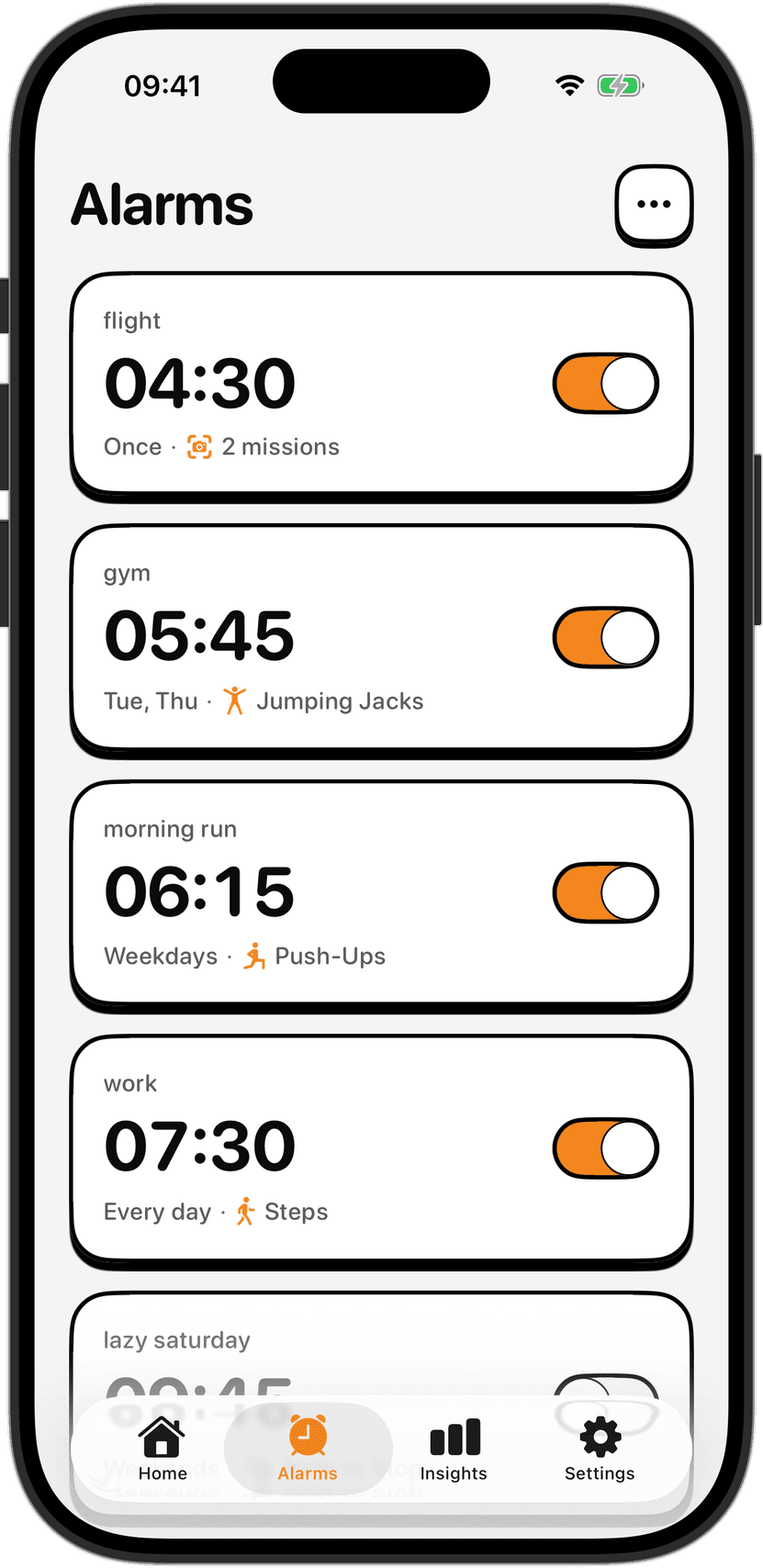
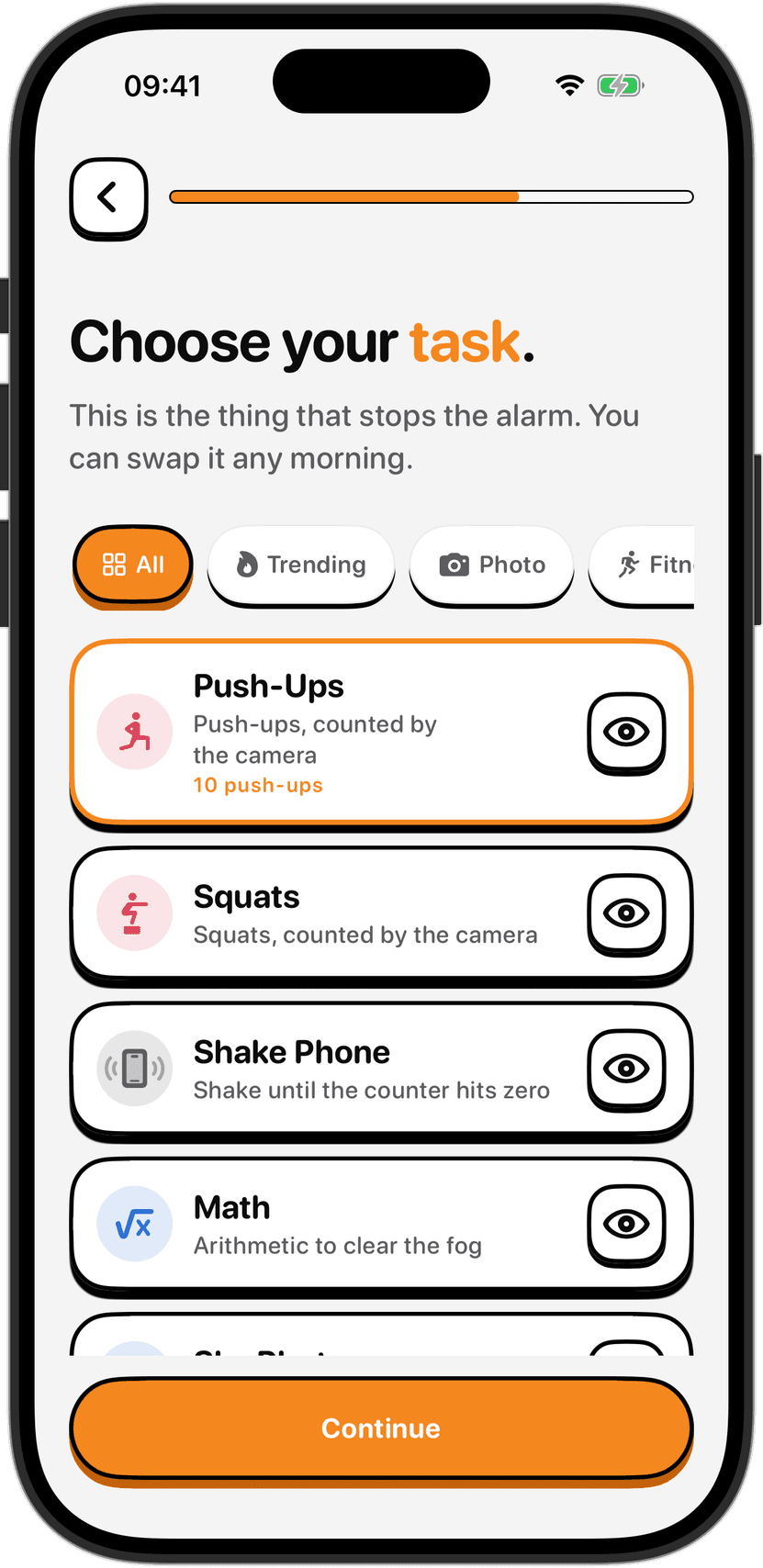
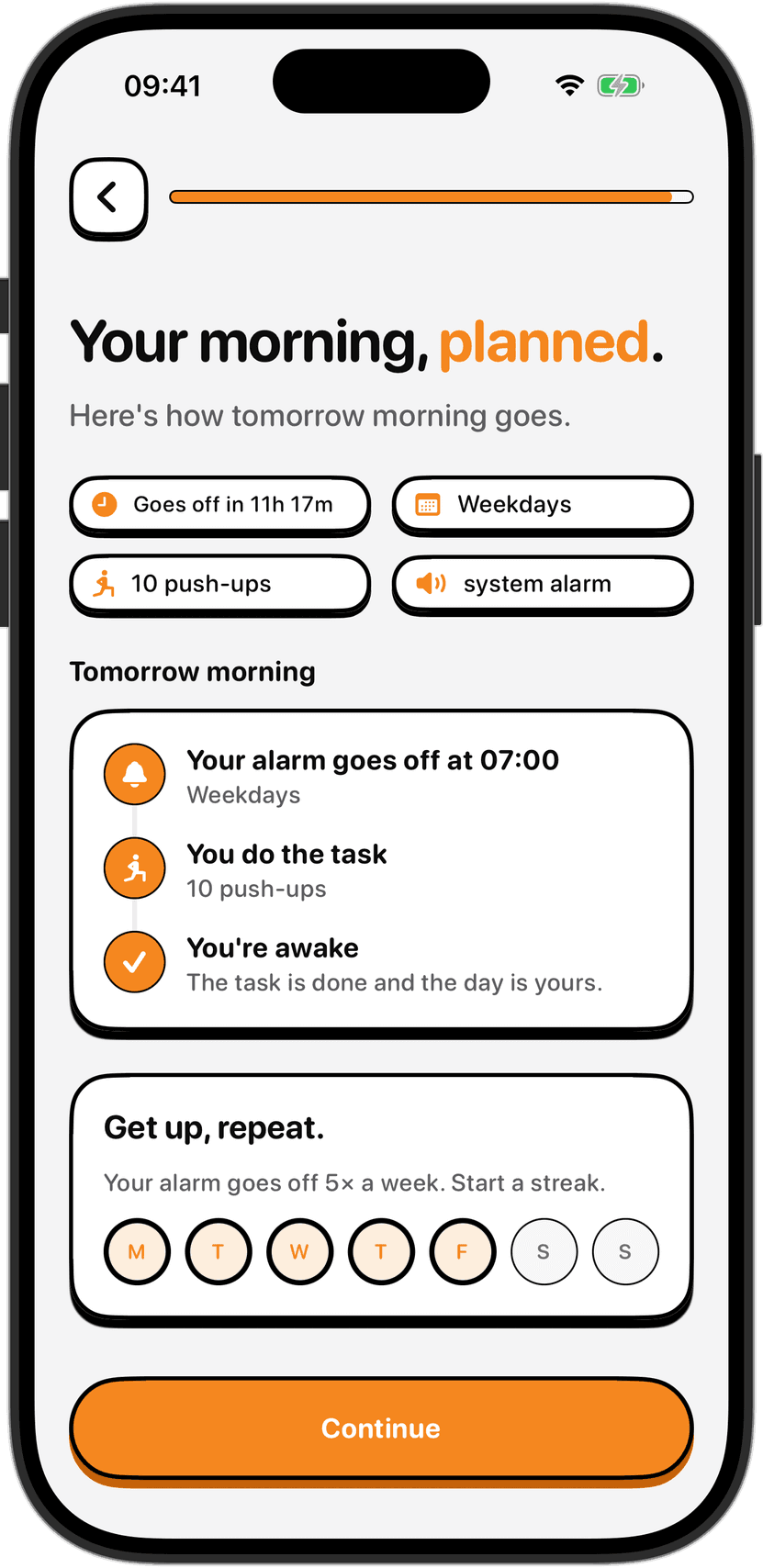
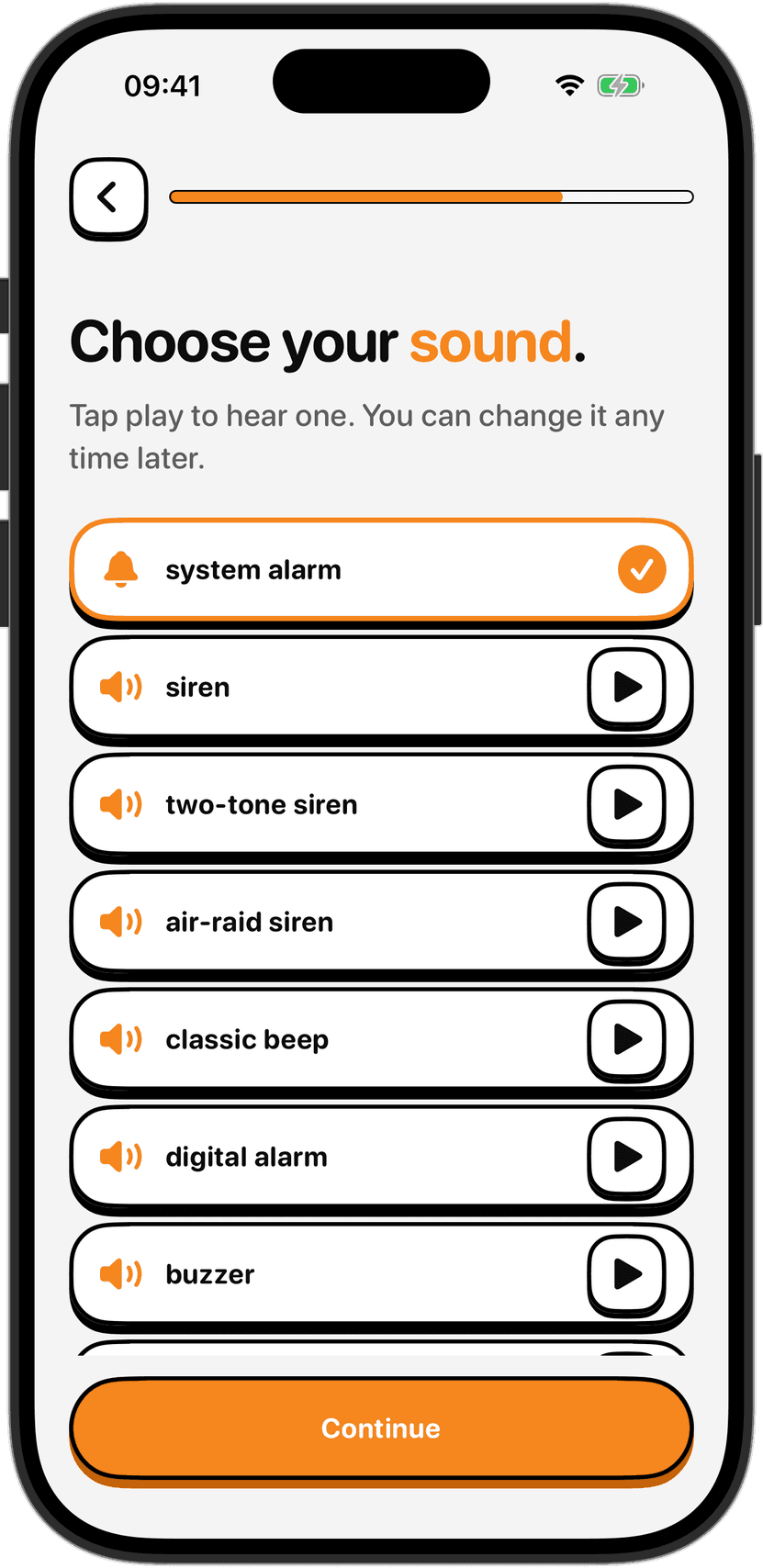
NoNap uses a system alarm on iPhone, the same kind the Clock app uses, so the silent switch and Do Not Disturb do not silence it. The only way to stop the alarm is to finish a wake task you pick the night before: push-ups or squats counted by the camera, shaking the phone, solving a quick math problem, taking a photo, or simply getting out of bed. If push-ups or squats feel risky for you in the morning, or if you are recovering from injury, the alternative tasks are just as effective at anchoring you to intention and ending sleep inertia. Math gets your brain working. Shake Phone builds habit with less load on your joints. A photo makes you engage with your surroundings. Any of these work.
A few minutes of a warm-up is a small price for steadier mornings and a lower risk of injury or the dizzy stumble that sends you back to bed. Your waking body will thank you.
Sources
Balkin, T. J., Braun, A. R., Wesensten, N. J., Jeffries, K., Varga, M., Baldwin, P., Belenky, G., & Herscovitch, P. (2002). The process of awakening: a PET study of regional brain activity patterns mediating the re-establishment of alertness and consciousness. Brain, 125(10), 2308-2319. https://doi.org/10.1093/brain/awf228
National Institute of Arthritis and Musculoskeletal and Skin Diseases. Back Pain Information. Accessed August 2026. niams.nih.gov/health-topics/back-pain
National Health Service. Dizziness, conditions and treatments. Accessed August 2026. nhs.uk/conditions/dizziness
Healthline. Orthostatic Hypotension: A Sudden Drop in Blood Pressure. Accessed August 2026. healthline.com/health/orthostatic-hypotension