Working from home and the slow slide of your wake-up time
Why remote work changes your sleep schedule and how to keep a fixed morning routine when a commute stops being your external clock.
Visana Studios
6 min read

The pandemic lockdowns taught us something unexpected about sleep. When millions stopped commuting, they slept differently. Not better, but differently enough that researchers noticed. They woke later. They slept longer. And crucially, the gap between their weekday and weekend sleep shrank to nearly nothing. A person whose sleep had been pinned to workday constraints suddenly found their body clock running to its own schedule.
That shift, documented in a 2020 study by Blume, Schmidt, and Cajochen in Current Biology, reveals something about how structure works on sleep. A commute is not just logistics. It is a time cue. It forces you to move, to face daylight, to synchronize your waking time with external demands. Remove it, and the timing of sleep starts to drift.
What happens when the commute disappears
The study followed people before and during COVID-19 lockdowns when remote work became the norm. Sleep timing changed. Median wake time shifted later. Sleep duration increased by about 13 minutes. Social jet lag, the misalignment between your biological sleep schedule and the clock on the wall, shrank by 13 minutes. On the surface, that sounds like a win. No more fighting to wake at an unnatural hour. No more dragging yourself through the morning.
The catch emerged in the details. Social sleep restriction, the difference between how long people slept on work nights versus free nights, fell by 25 minutes. The boundary between weekdays and weekends blurred. With no commute to anchor the day, the timing of work became fluid. Someone who once had to be awake and moving by 7 a.m. could slide that to 7:30. Then 8. The alarm still rings, but the pressure to meet it at a fixed time relaxes.
But the study found something else: sleep quality, measured by self-report, actually declined. Not by much. The scale ran 0 to 25, and quality dropped by 0.25 points on average. The flexibility that reduced social jet lag also removed something the commute had been providing. Structure. Predictability. An external signal that morning had arrived.
Why light matters when you never leave the house
One reason the commute works as a time cue is light. A 20-minute commute exposes you to the morning sky. The sun's intensity in the first hours after dawn is the strongest signal your body clock receives all day. It resets your circadian rhythm every morning, a process called phase advancement. The timing of that light exposure anchors when you feel alert, when you get hungry, when melatonin rises in the evening.
Work from home erases that. You wake indoors. Your office is indoors. If morning light never reaches your eyes, your body clock loses its primary synchronizer. For some people, this causes the wake time to drift later over days and weeks. The body's natural period is slightly longer than 24 hours, so without light cues, sleep onset and wake time both creep backward. You go to bed a little later, wake a little later, and within a month you have shifted an hour.
The research on morning light is unambiguous. A single hour of exposure to bright, natural light in the early morning has measurable effects on sleep timing, alertness, and mood. Getting light right when you wake up, before caffeine and breakfast, moves your circadian rhythm earlier. Miss that window and the rest of the day follows the original schedule, not the one your alarm demanded.
The structure you lose without even noticing
A commute provides more than light cues. It structures the morning into discrete steps. You wake, you shower or dress, you move through a series of fixed actions that build momentum. The time between waking and arriving at your destination is bounded. You know it will be 20 minutes, or 45, or an hour. That predictability is a form of constraint. Constraints, it turns out, are useful for sleep timing.
When work happens at home, those steps dissolve. You can roll out of bed and open your laptop in your pajamas. There is no transition time, no movement, no point at which you are definitely awake and committed to the day. Sleep researchers call this lack of structure a risk factor for what they term social jet lag, and the lockdown study confirmed it. Even though the median social jet lag shrank, the variability in wake times increased. Some days you were up at 7. Other days at 9. Your body clock cannot lock onto a moving target.
The absence of a commute also removes what might sound like a minor detail but acts as a powerful psychological trigger: the decision that morning has begun. On a commute, that decision is made for you. The alarm goes off, the schedule demands you move, and your brain accepts that today has started. At home, you can argue with that decision. The alarm ends, but the day hasn't actually begun yet. You check your phone. You lie in bed thinking about the meeting at 10. By the time you actually get up, your sleep inertia has deepened and your commitment to a specific wake time has weakened.
Keeping a fixed start without external pressure
The practical fix is straightforward but requires intention: set a wake time and keep it fixed, even on days when you have no external obligation. This is harder than it sounds when the commute is gone, because the cost of sleeping 30 minutes later is invisible. Nobody notices. Your meeting was on video anyway.
Light is the first tool. Open the curtains or step outside in the first 30 minutes after waking. If you work in a building with few windows or you live somewhere the early sun is blocked, a light therapy lamp rated for 10,000 lux, used for 20 to 30 minutes right after waking, works better than guessing in dim light. Room lighting, even a well-lit office, is typically 300 to 500 lux, enough to see but not enough to shift your circadian rhythm effectively.
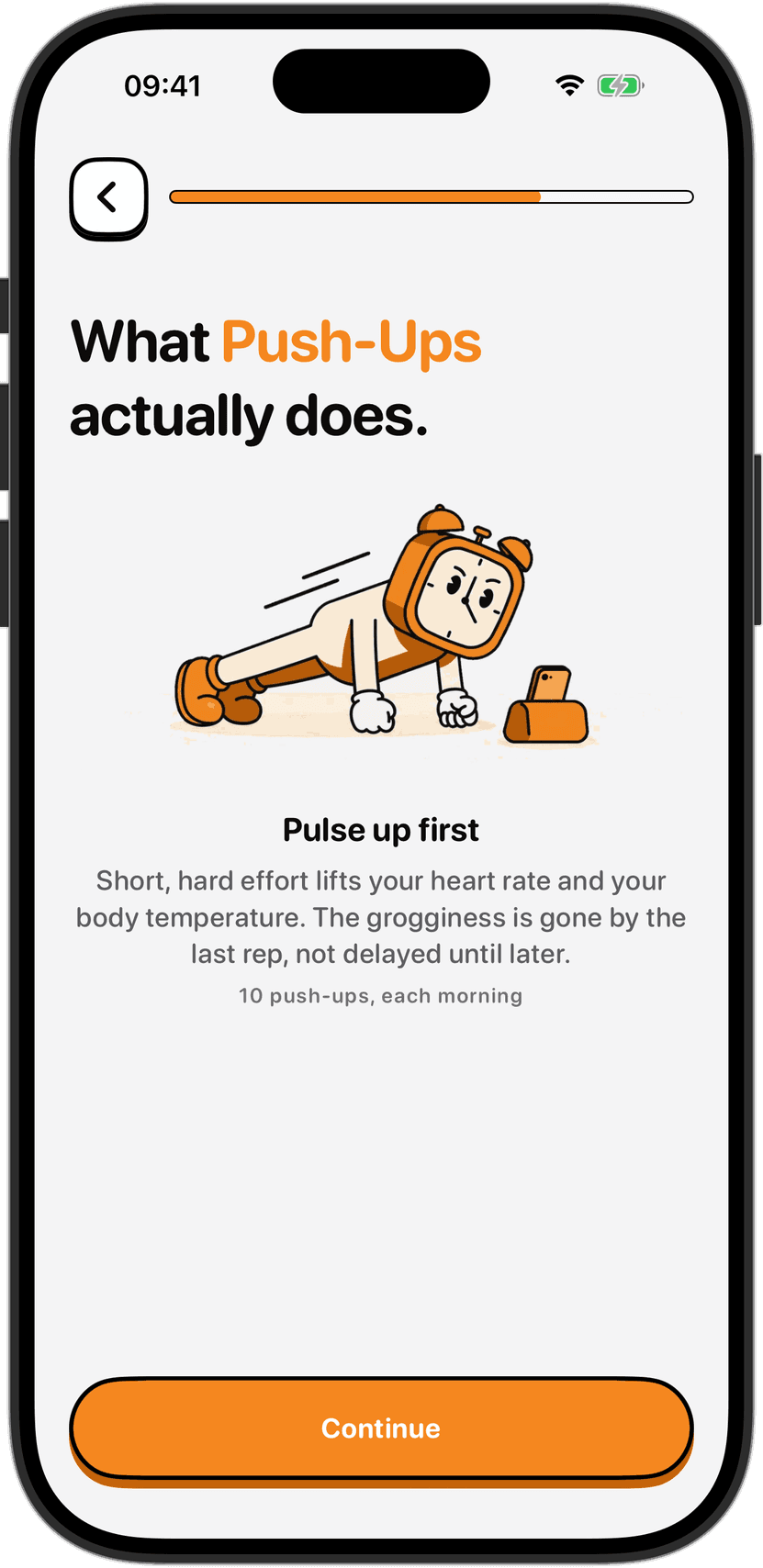
The second is movement. The commute worked partly because it involved getting from one place to another; at home, you have to create that yourself. Exercise, even a 10-minute walk, raises your core body temperature and signals the body that night has ended. If exercise first thing is not safe for you due to injury or an existing condition, a math problem or task requiring thought serves the same purpose. What matters is that your first action after waking is not passive.
The third is consistency. A wake time that drifts by an hour on weekends will drift again on Monday, since your body clock cannot distinguish between Saturday morning and Wednesday morning. If you have one fixed wake time on weekdays and another on weekends, your circadian rhythm will be caught between them all week, leaving you groggy on most mornings. The people in the Blume study who maintained the most stable sleep timing were those who kept the same wake time regardless of the day.
Replacing the structure a routine provides
Without the commute, you have to build routine deliberately. Some people find that a night-before ritual helps. Setting an alarm you take seriously, planning what you will wear or what you will eat, reviewing your first task of the day. All of these create the sense that morning is an event, not an accident. They replace the structure the commute used to impose.
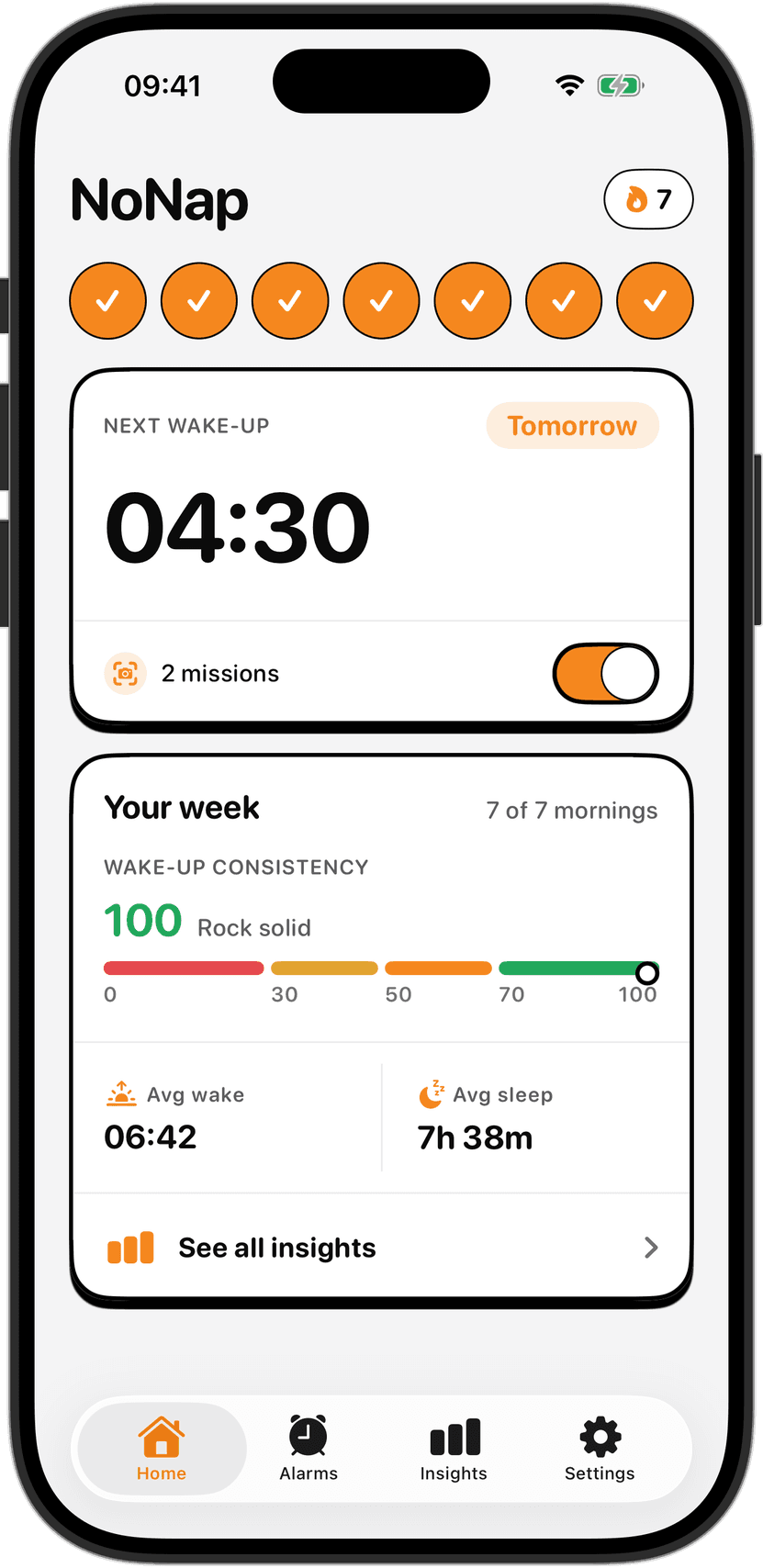
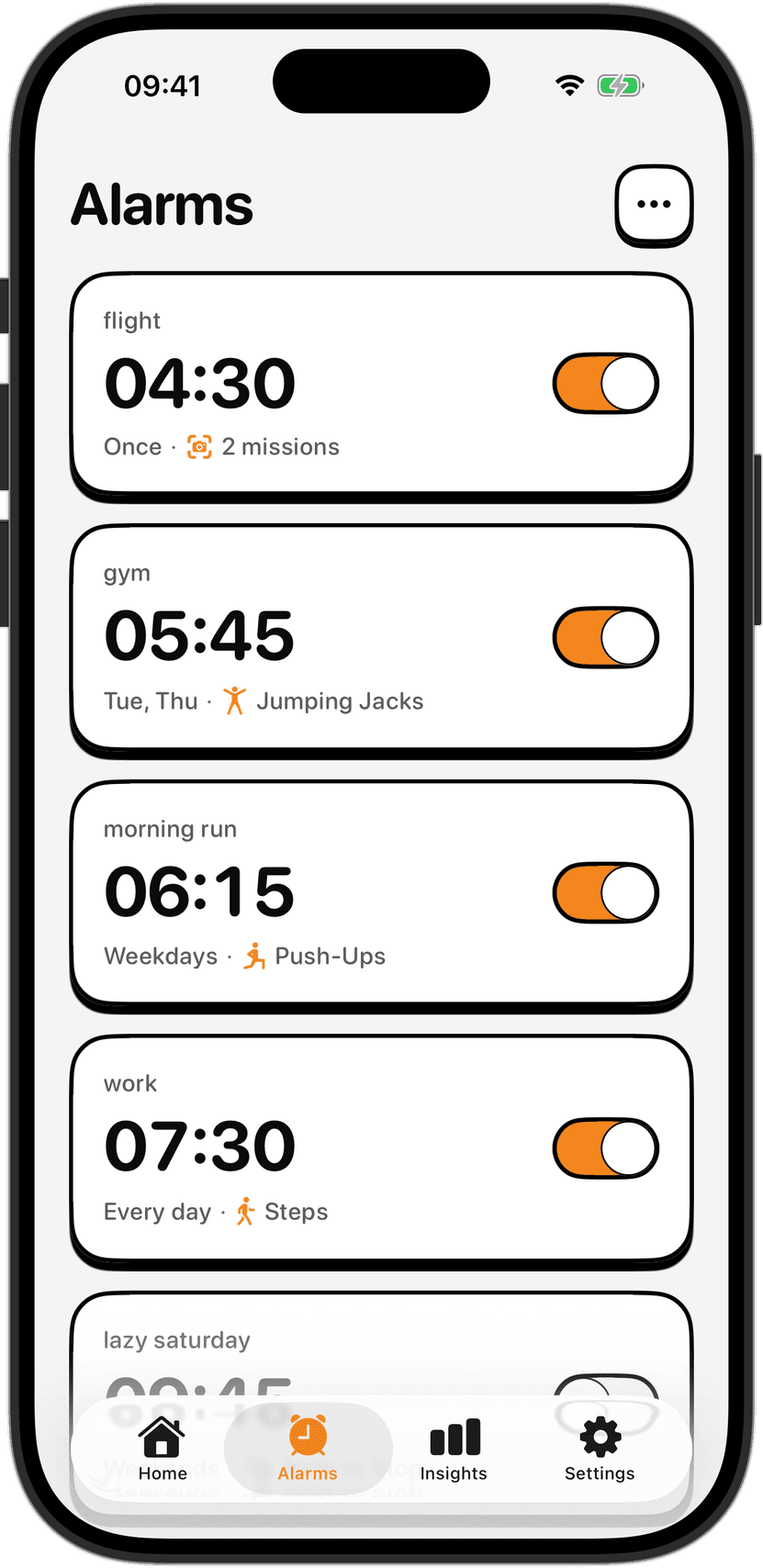
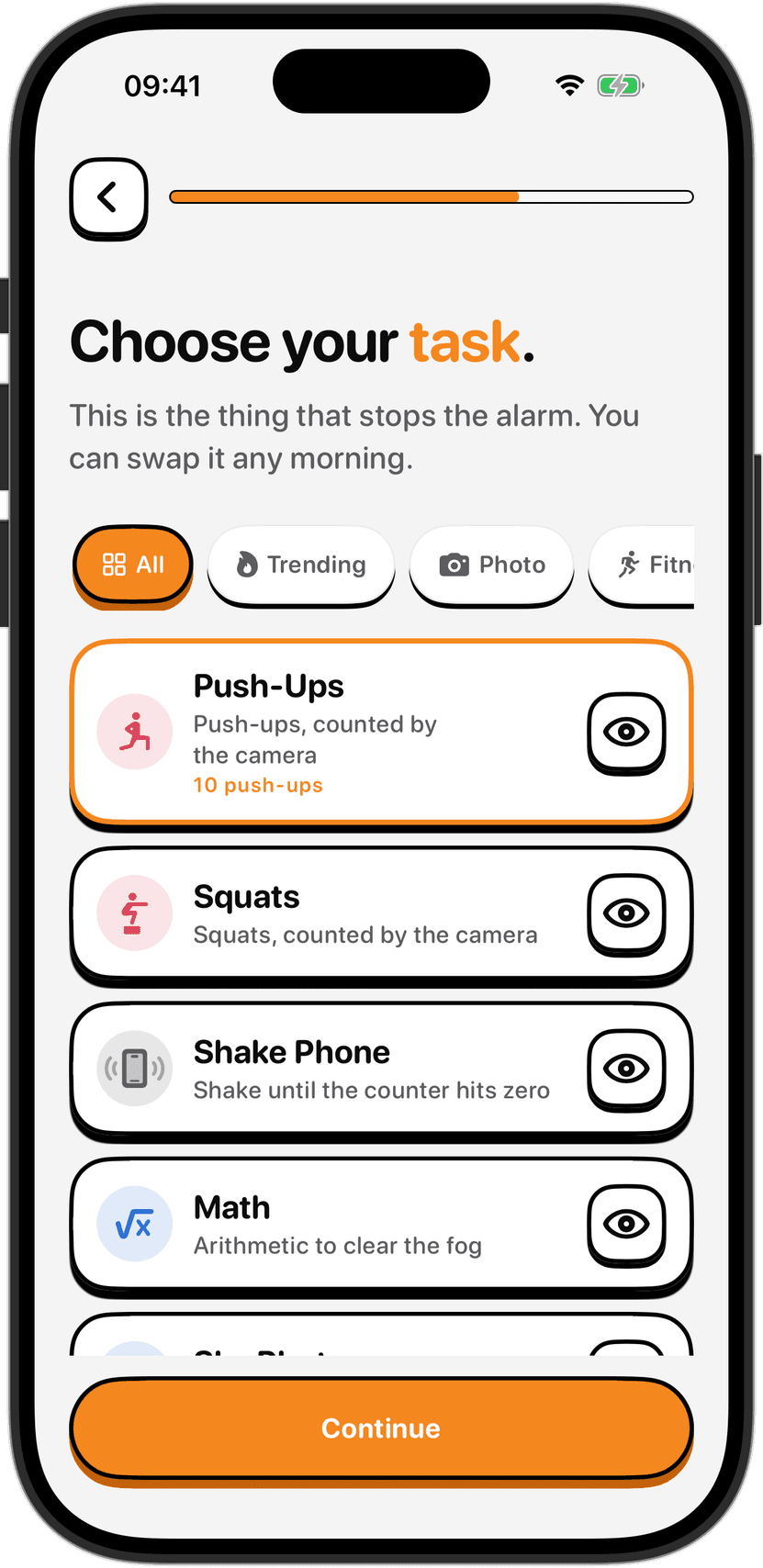
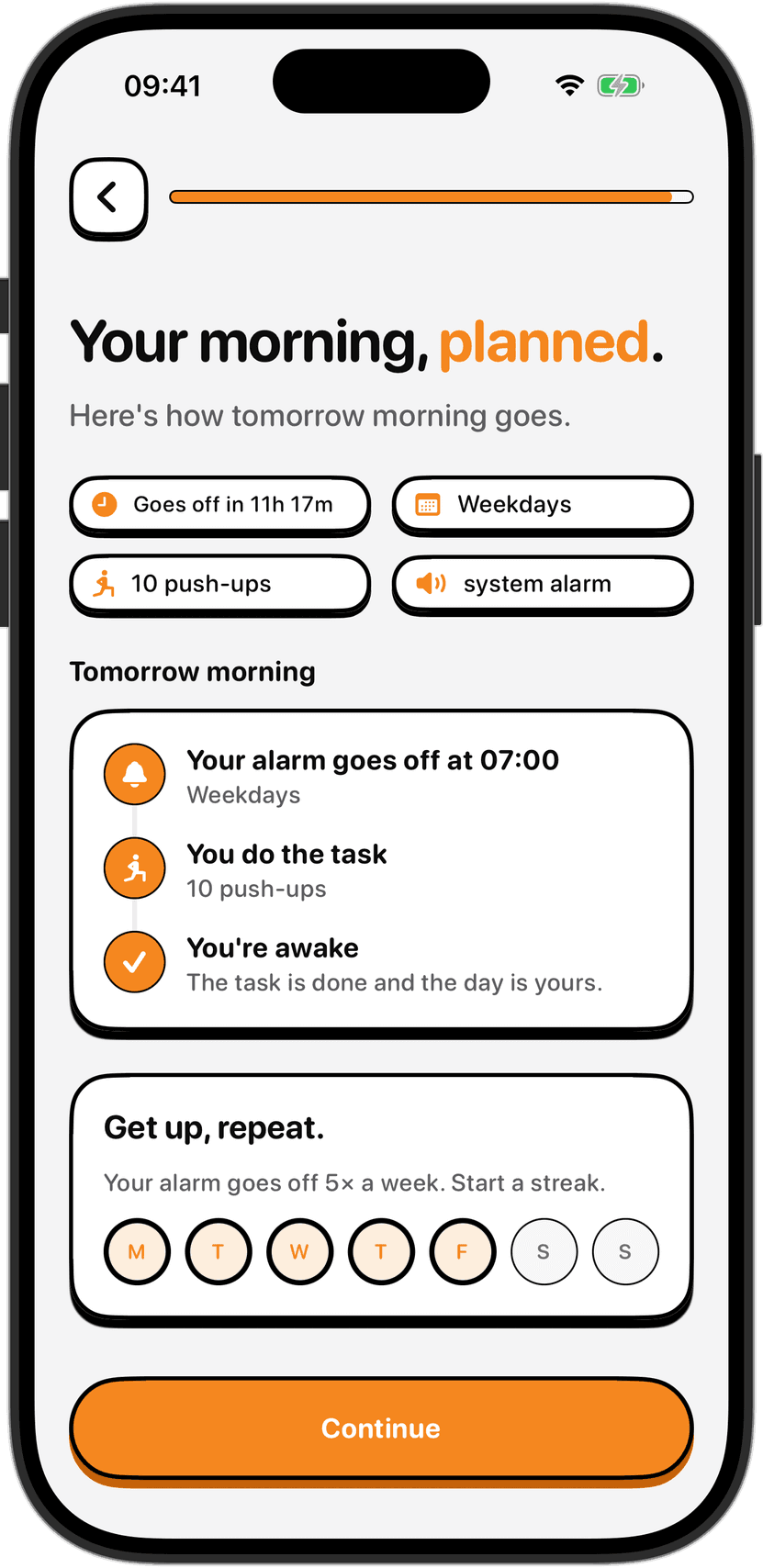
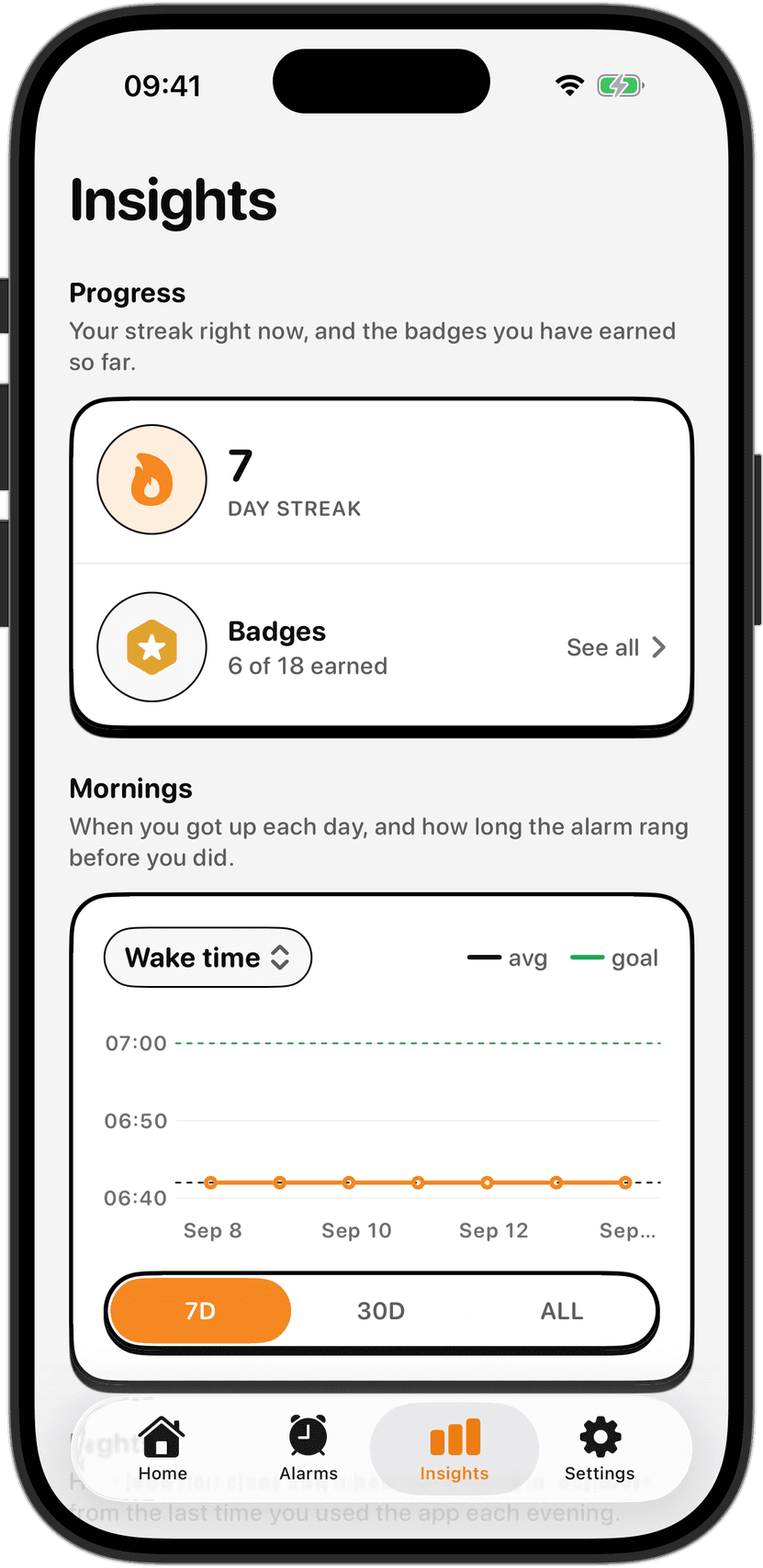
NoNap takes a different approach to that problem. The app uses the system alarm on iPhone, so it cannot be silenced by the Ring/Silent switch, Sleep Focus, or Do Not Disturb, and it cannot be dismissed from the lock screen. The only way to stop the alarm is to complete a wake task you selected the night before: push-ups or squats counted by the camera, a math problem, shaking the phone, taking a photo, or simply getting out of bed. If exercise first thing is not right for you, pick a gentler task like math or shake phone. The point is that the alarm creates a forced choice. Morning has arrived, and it demands something of you now.
This is not a substitute for light exposure or for keeping a consistent wake time, but it does replace the external pressure the commute once provided. It forces a transition between sleep and your day, the same way stepping onto a train used to do.
Sources
Blume, C., Schmidt, M. H., and Cajochen, C. (2020). Effects of the COVID-19 lockdown on human sleep and rest-activity rhythms. Current Biology, 30(14), R795-R797. pmc.ncbi.nlm.nih.gov/articles/PMC7284244/