NoNap vs Sleep Cycle: Two Different Alarm Jobs
A fact-checked look at NoNap and Sleep Cycle: how each wakes you, what each tracks overnight, and what it costs, based on their own App Store listings.
Visana Studios
6 min read
Sleep Cycle has been listening to people sleep since 2009. NoNap doesn't care what happens before the alarm rings at all, only what happens in the minute after. Both call themselves alarm apps. They are solving two different problems, and the App Store listing each one publishes about itself makes that pretty clear.
How each one gets you up
Sleep Cycle's Smart Alarm doesn't necessarily ring at the exact minute you set. It rings inside a window you choose, and it tries to catch you at the lightest point in your sleep during that window, using sound analysis or your phone's accelerometer to estimate which sleep stage you're in. Its own App Store description says tracking works this way with "no wearables needed," though the app is also available on Apple Watch. The logic is straightforward: waking from light sleep is supposed to feel less brutal than being pulled out of deep sleep. Once the alarm actually sounds, it behaves like a normal alarm. You can tap to stop it, or tap to snooze it.
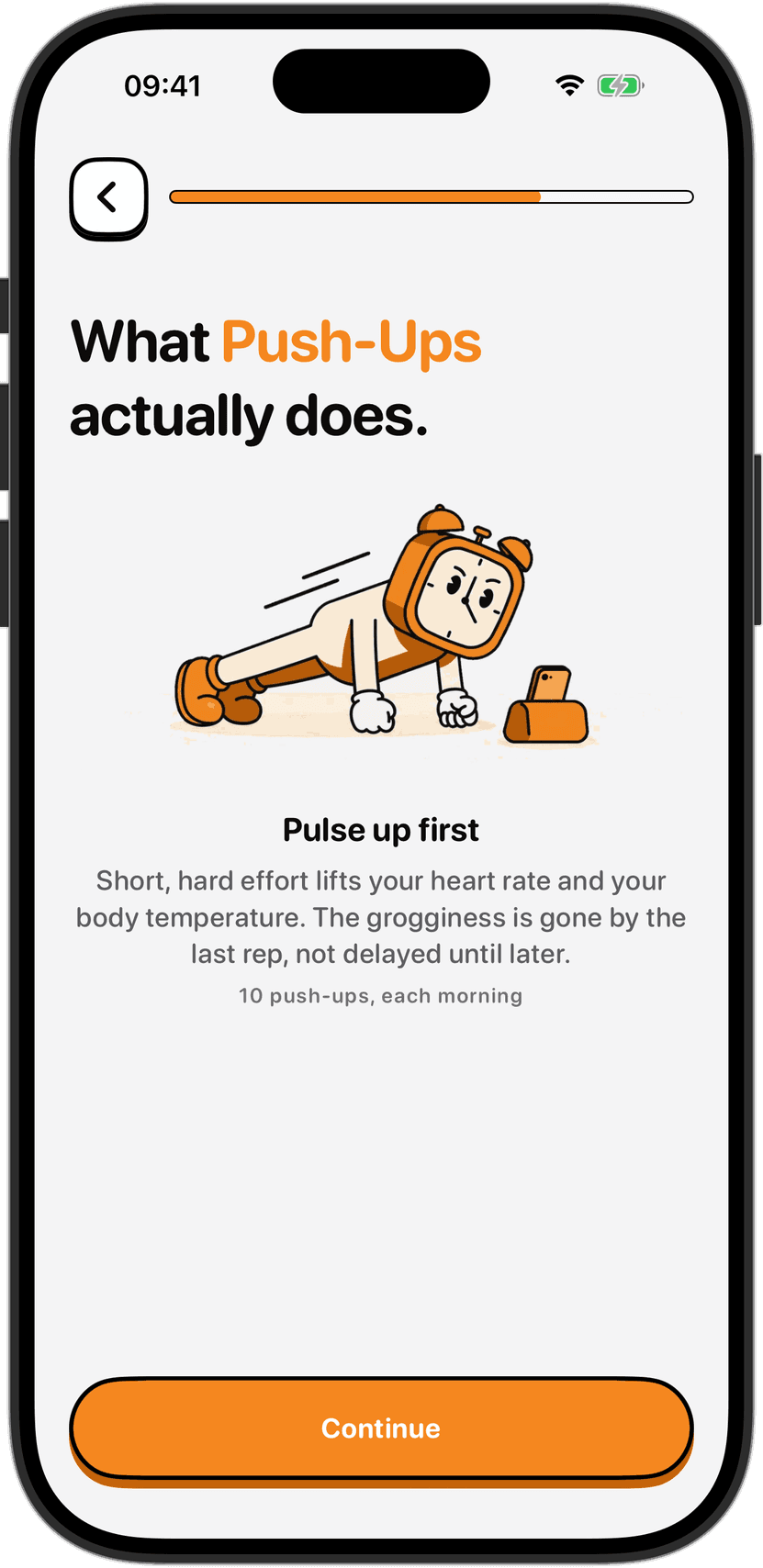
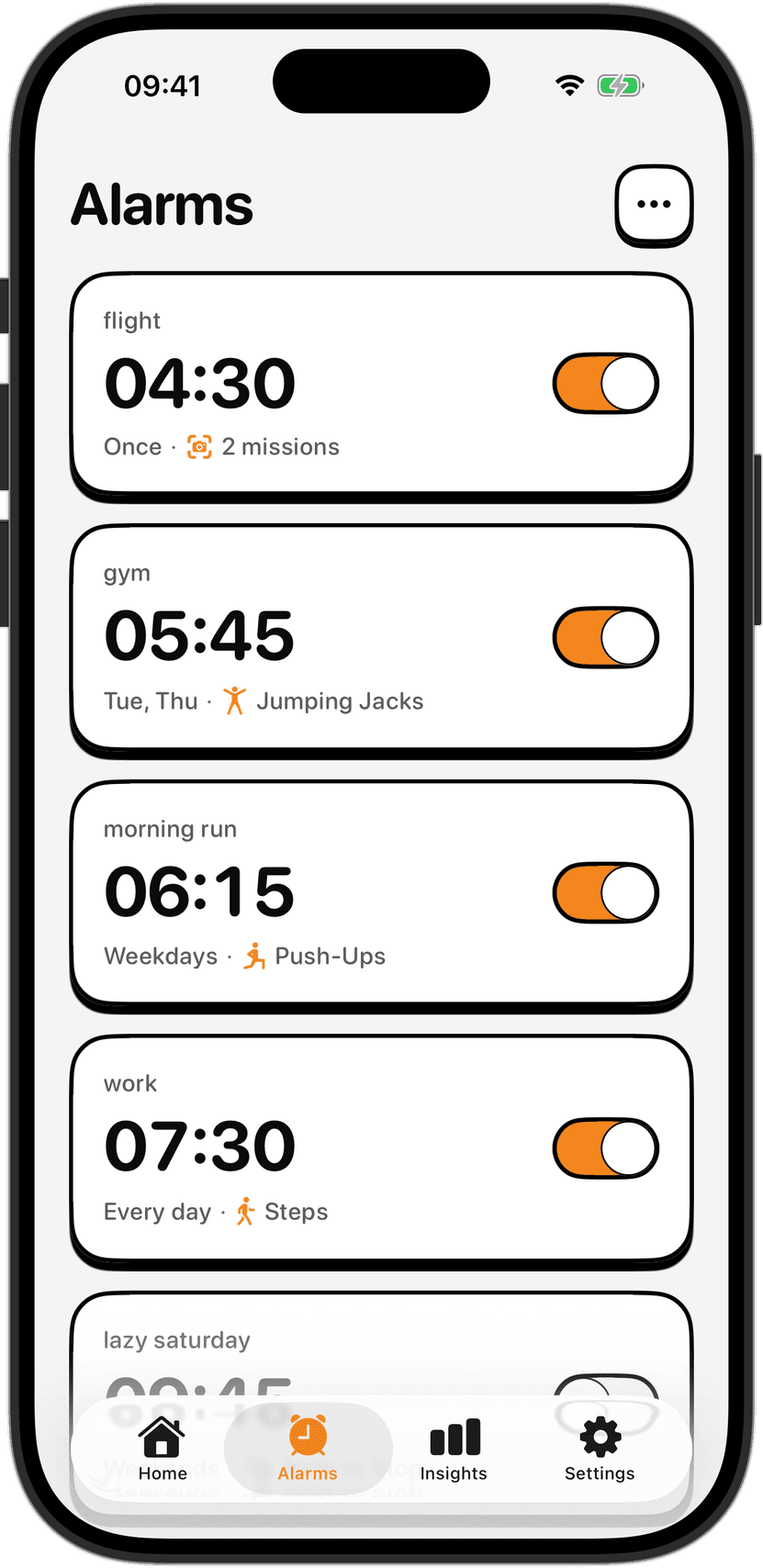
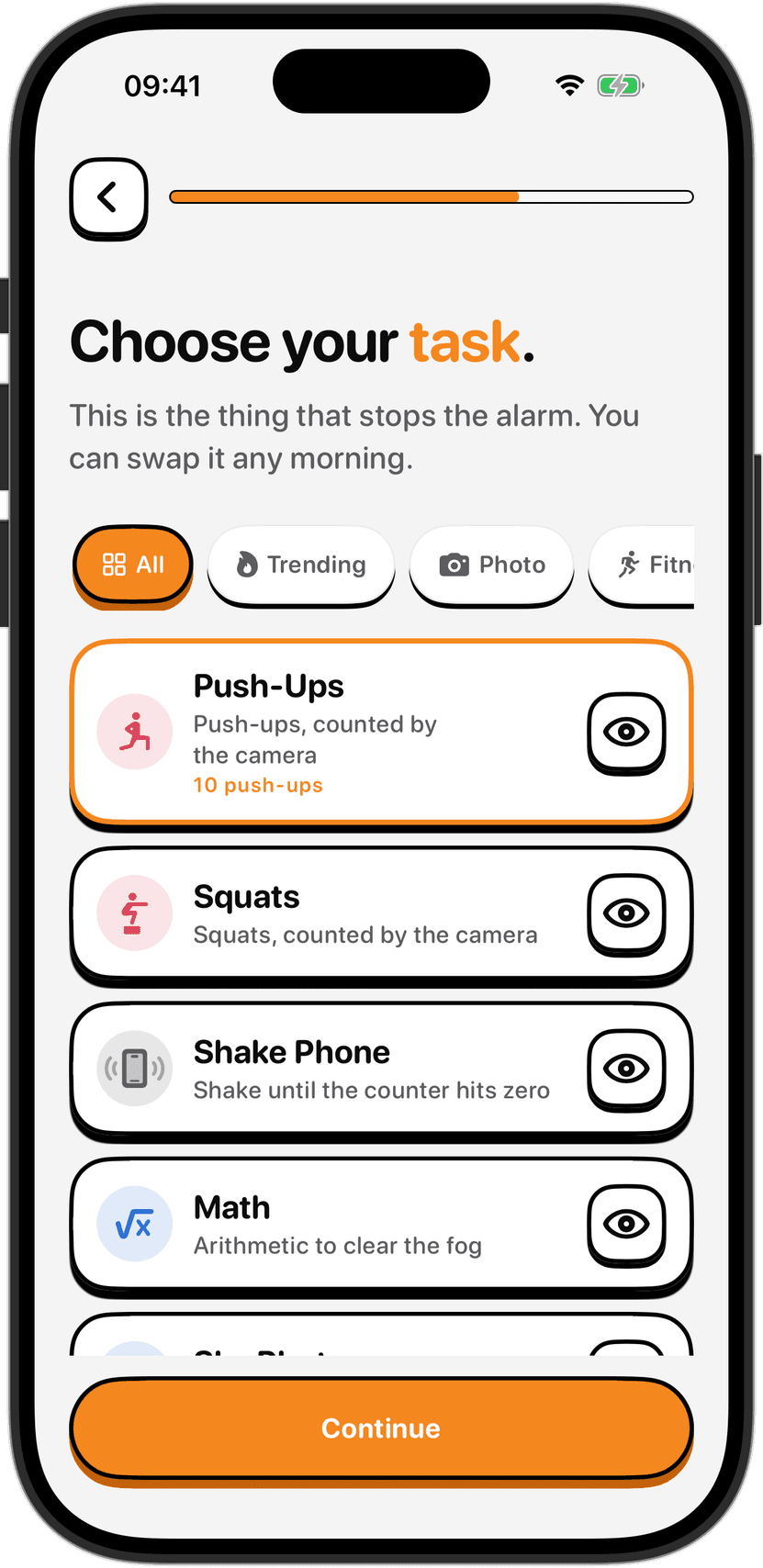
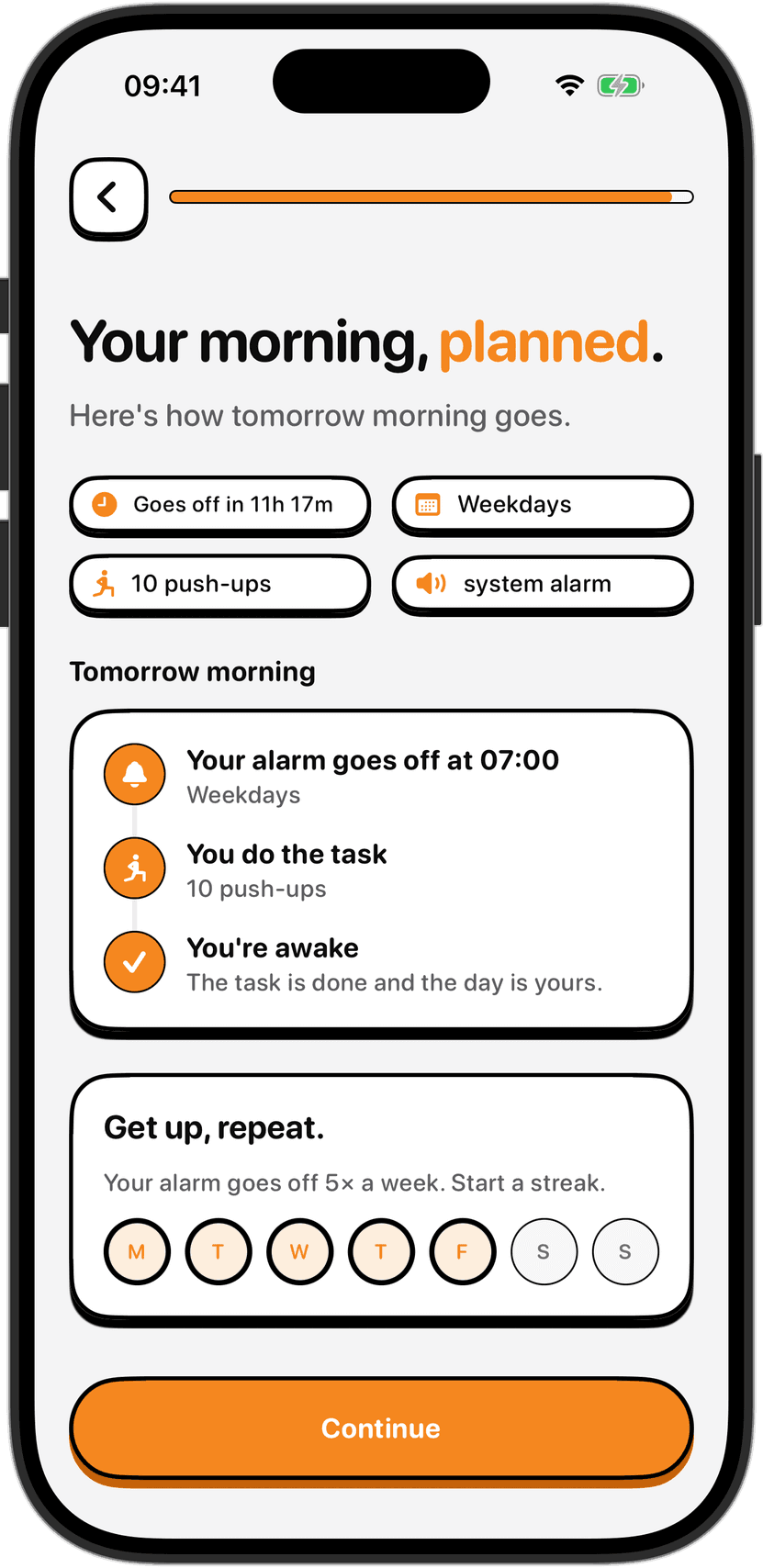
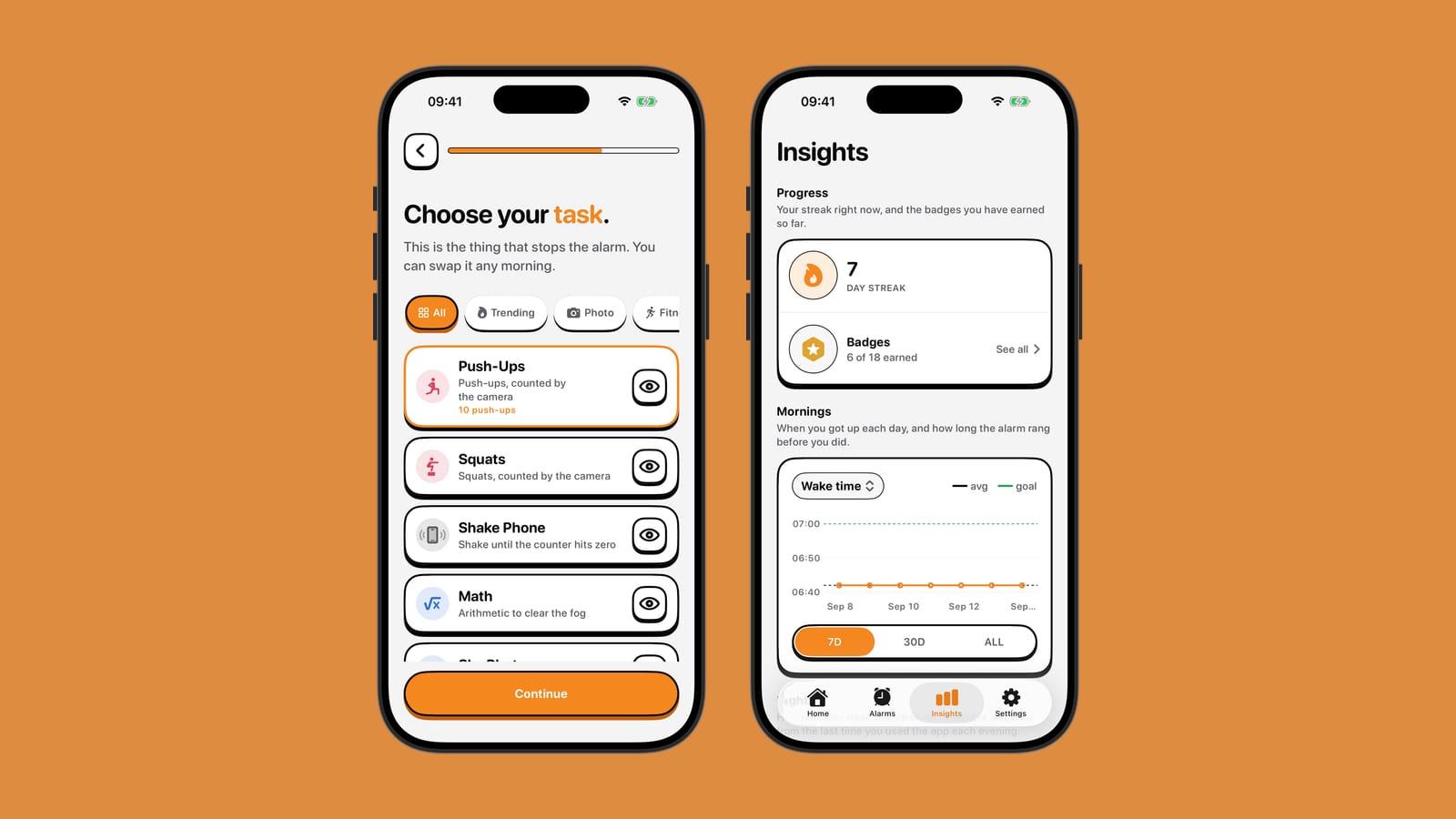
NoNap skips the sleep-stage guessing entirely and goes straight for the exact time you set. It rings then, no window, and it does not stop until you finish a wake task you chose in advance. Push-Ups, Squats, Dance and a task called 67 are counted by the phone's camera, on the device, while you do them. Steps and Distance use motion sensors and GPS to confirm you actually moved. Photo and Object ask you to point the camera at something you picked beforehand, a made bed or a specific object. Math is the only task with no physical component. None of this happens before the alarm. All of it happens after, and none of it is optional once the alarm starts.
If a physical wake task is part of your morning, be a little careful with it. Sleep inertia dulls coordination and judgement right when you're doing something that has reps and balance involved. Check the space around you before you start, stay clear of stairs and sharp edges, and stop the moment anything hurts. Pick a target you could hit on your worst morning, not your best one.
What each one knows about your night
This is where the two apps really split. Sleep Cycle's whole product depends on knowing what happened while you were asleep. As of September 2026, its own listing says it tracks every night using sound analysis or accelerometer data, and separately detects snoring, coughing and sleep talking. Apple's privacy label for the app, which the developer fills in itself, lists Identifiers as data that may be used to track you across apps and websites owned by other companies. The same label lists health data, purchase history, coarse location, your email address and name, and device or user identifiers as data linked to your identity, used across four stated purposes: the developer's own advertising and marketing, analytics, personalizing the product, and basic app functionality.
NoNap collects essentially none of that. There's no account and no server that ever receives your alarms, wake tasks, camera frames or wake-up history, so there's nothing on our side to link back to you. Camera frames from Push-Ups, Squats, Dance, 67, Photo and Object are analyzed live and discarded, never saved to a photo library, never uploaded anywhere. Location is only requested while a Distance task is actively running. What does leave the device is the App Store purchase record, sent to RevenueCat purely to confirm your subscription or lifetime purchase is active, and anonymous usage statistics and crash reports, which carry none of your alarms or history and can be switched off in Settings.
Neither approach is wrong on its own terms. Sleep Cycle needs detailed nightly data to do the one thing it promises, catching you at the right moment in a sleep cycle, and Apple's label is simply that disclosure done the way Apple requires of every developer. But there's a real gap between an app whose business model touches advertising and marketing use of your data and one that never has your data to begin with, and it's worth knowing which one you're installing before you do it.
What it costs
Sleep Cycle is free to download, and a basic tracker, alarm and some sounds work without paying anything. As of September 2026, its App Store in-app purchase list shows a Premium subscription across several tiers, from about 2.99 to 57.99 dollars depending on billing period and region, which unlocks things like the AI sleep coach, the full sleep sounds library, data export and Apple Health sync.
NoNap has no free tier. Every plan, weekly, monthly, yearly, or a one-time lifetime purchase, is paid from the first screen, and the exact price for your country is shown before you buy. There's no ad-supported version to fall back on if you decide not to pay.
The features that don't overlap
Sleep Cycle is a sleep app before it's an alarm app. Its snore and cough detection, long-term sleep trend charts, sleep sound library and an AI coach it calls Luma all sit on top of nightly tracking that NoNap simply has no version of. It also runs a companion app on Apple Watch, syncs with Apple Health, and can trigger a Philips Hue light as a sunrise wake-up. NoNap does none of that. It does not track sleep in any form, does not read Apple Health data, and does not record audio, ever.
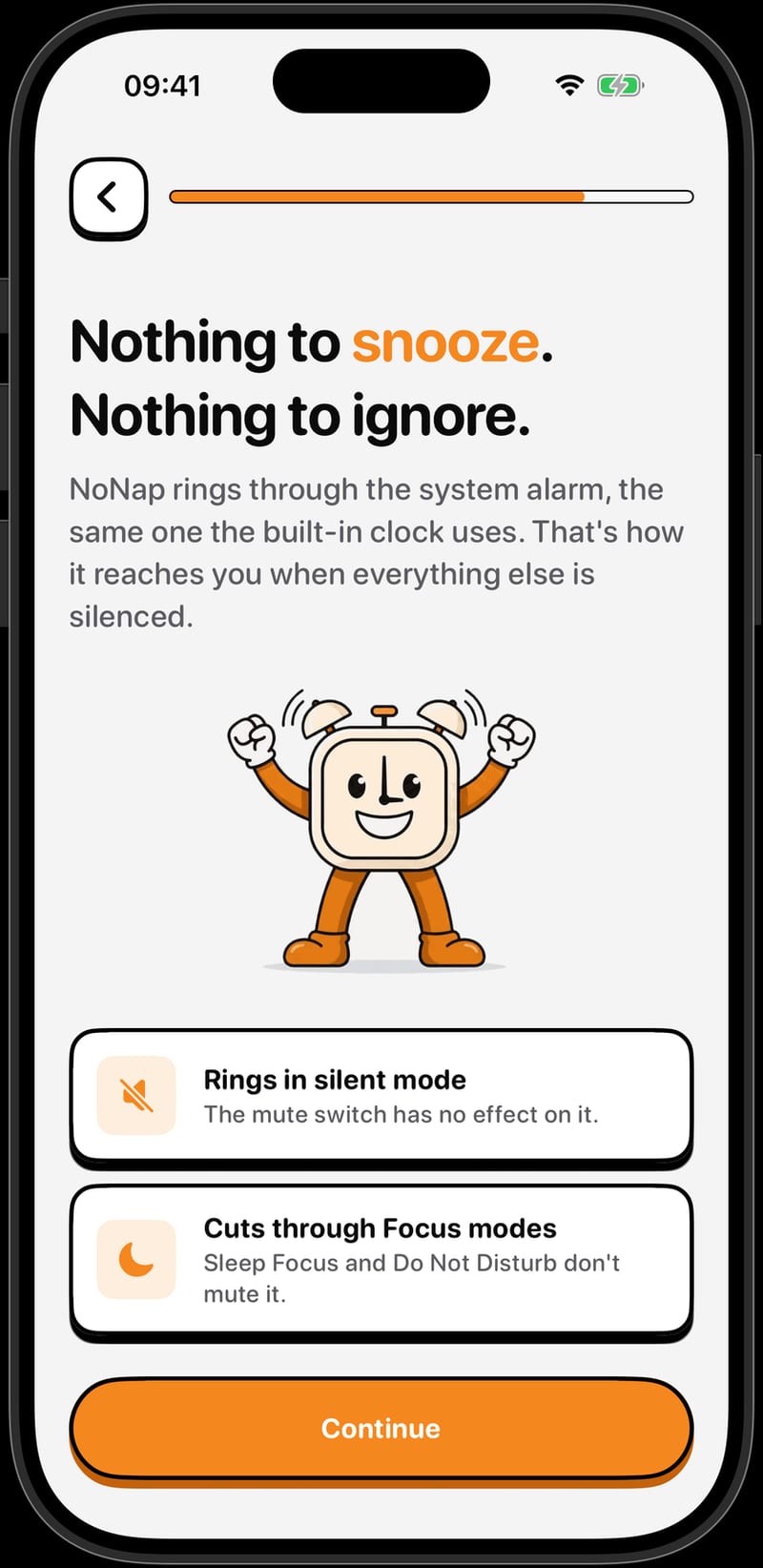
NoNap's whole edge is in how hard its alarm is to escape once it starts ringing. It uses the same system alarm the built-in Clock app relies on, and that's what lets it come through even when the ringer is off or a Focus mode like Sleep Focus or Do Not Disturb is active.
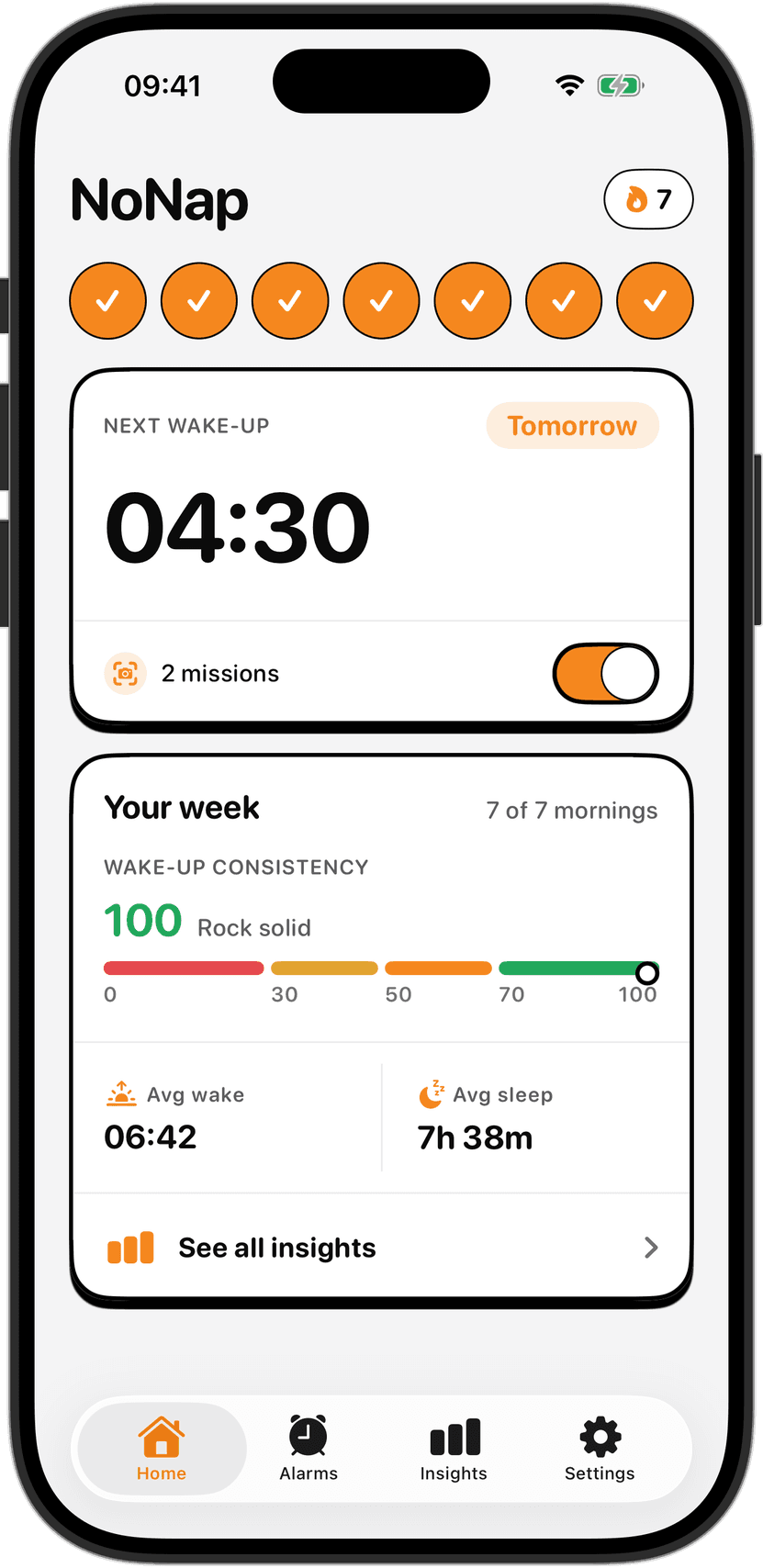
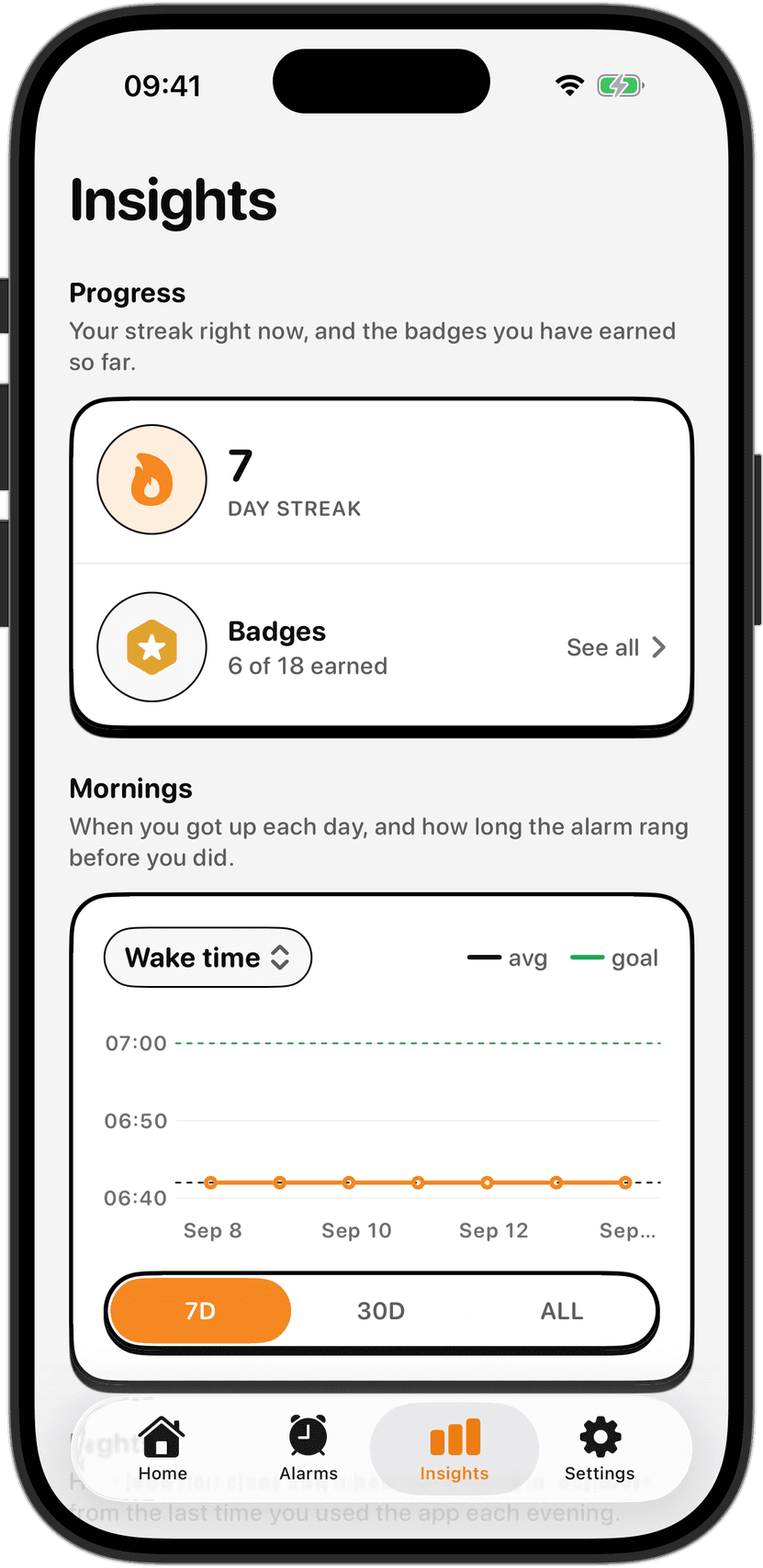
It also cannot be dismissed from the lock screen at all. Finishing the wake task you chose is the only way out, and NoNap tracks streaks alongside a chart of the gap between the alarm time you set and the time you actually finished the task. Sleep Cycle has no equivalent statistic, because catching someone mid-snooze was never the problem it set out to solve.
Which one fits you
If what you want is a picture of your night, a gentler wake somewhere inside a window rather than at an exact minute, and you're fine with a developer using some of your data for its own advertising and marketing in exchange for a free tier, Sleep Cycle covers a lot of ground before you'd ever pay it anything. If what you actually need is an alarm that will not let you drift back off no matter how many times you've talked yourself into five more minutes, checked by your own camera or sensors instead of a tap on the screen, that's the single wake task NoNap is built around, and it's the only thing it tries to do. Anyone deciding between the weekly, monthly, yearly or lifetime plan should read the FAQ first.
Sources
Sleep Cycle's tracking method, Smart Alarm behaviour, Apple Watch support and premium feature list are from its own App Store listing, Sleep Cycle - Tracker & Sounds (Sleep Cycle AB), apps.apple.com/us/app/sleep-cycle-tracker-sounds/id320606217, fetched September 2026.
The data categories Sleep Cycle may collect, and the four purposes each is used for, are from the App Privacy section of that same listing, which Apple requires developers to fill in themselves, fetched September 2026.
Sleep Cycle's in-app purchase pricing range is from the In-App Purchases section of the same App Store listing, fetched September 2026.
NoNap's wake task mechanisms, pricing structure and data practices are from Visana Studios' own product terms and privacy policy for NoNap, current as of September 2026.