Nicotine and sleep: why smokers wake early
Nicotine fragments sleep while you use it, withdrawal adds arousals, and early-morning waking may be the link. What three studies found, and their limits.
Visana Studios
4 min read
Smokers sleep worse than people who have never smoked. That part is well established. The more useful question is what nicotine does to the night itself, and why the first nights after quitting can feel worse than the years of smoking that came before. Three studies, one of them a review of 52 others, help answer it.
What nicotine does while you smoke
Nicotine acts on several neurotransmitter systems, and those systems help decide how easily you fall asleep and how long you stay under. A 2009 review by Jaehne and colleagues in Sleep Medicine Reviews pooled 52 studies on nicotine, smoking, withdrawal and sleep. During regular use, the most common pattern looked like insomnia: a longer time to fall asleep, more fragmented sleep, less slow-wave sleep and more daytime sleepiness. Most studies also found that nicotine suppressed REM sleep.
Smoking was associated with a higher rate of sleep-related breathing disorders as well, and those disorders made sleep quality and daytime sleepiness worse. The reviewers were careful about the mixed results. They blamed differences in method, including how studies confirmed smoking status, how they allowed for other health conditions and medication, and how they defined their outcomes. They asked for a more unified approach, which is a fair request. Until one exists, any single study should be read with its design in mind.
The first nights after the last cigarette
Withdrawal is where the evidence gets sharper. In 2015, Jaehne and colleagues recorded full sleep studies, called polysomnography, on 33 smokers with a median age of 29. Each person was measured three times: while still smoking, 24 to 36 hours after stopping, and three months after quitting. Compared with the smoking state, the withdrawal nights showed a higher arousal index and more time awake.
The study then split the group by what happened next. Eleven people relapsed and 22 stayed abstinent. The people who relapsed were more dependent on nicotine to begin with and had more withdrawal symptoms. They also got less REM sleep, took longer to reach REM, and rated their sleep as more impaired during withdrawal. The authors suggest that sleep trouble during withdrawal may contribute to earlier relapse. A study like this can show that the two travel together. It cannot show which one drives the other.
The sample is small, and polysomnography is done in a sleep lab, so these were measured nights in an unfamiliar bed. The result describes a specific group of people. It does not tell you how any one person will sleep when they quit.
Why early waking is the clue
A 2016 study by Branstetter and colleagues asked a sharper question. Rather than comparing smokers with non-smokers, they looked at how heavily people were addicted and how that related to their sleep. They analysed data from 2,015 daily smokers aged 16 to 85 who took part in the US National Health and Nutrition Examination Survey in 2005 to 2006 and 2007 to 2008.
Their key measure was time to first cigarette after waking, usually shortened to TTFC. The authors describe it as a strong indicator of addiction severity, so a shorter time means heavier dependence. A shorter TTFC was linked to shorter sleep and more daytime sleepiness. The researchers then tested three possible routes between the two: delayed sleep onset, waking during the night, and waking too early in the morning. Only early waking carried the link.
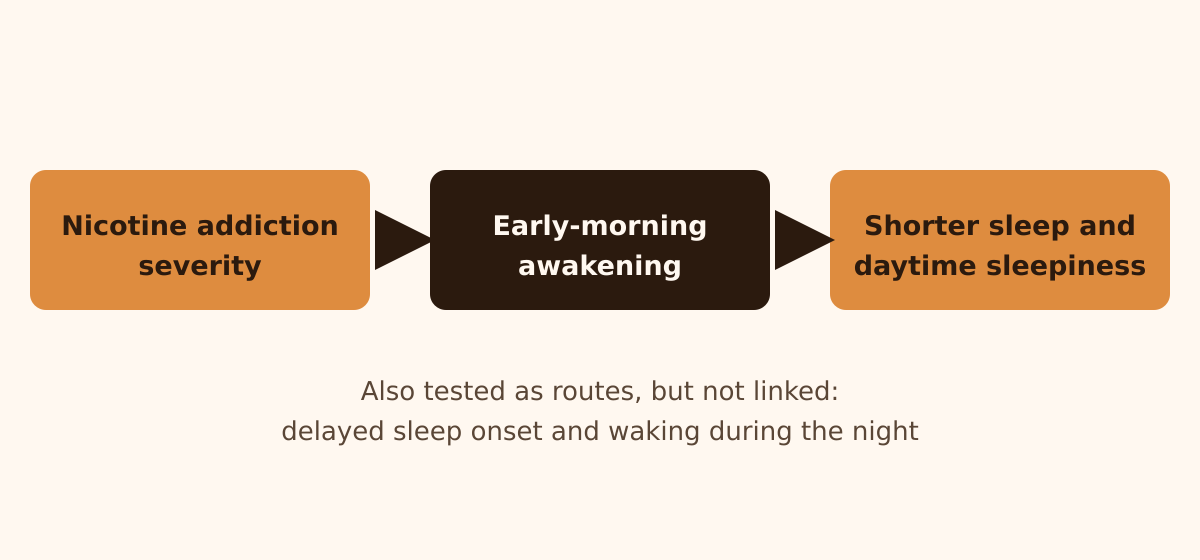
This is a cross-sectional survey, which captures one moment rather than change over time. The authors say their findings may inform cessation strategies and call for longitudinal studies. That is the right next step, and until it arrives, early waking is best treated as a plausible mechanism rather than a proven one.
If you smoke and your sleep has changed
If you are cutting down or quitting and your nights have got worse, withdrawal is a plausible cause. The research cannot tell you what will help you personally, though. Some sleep problems have nothing to do with nicotine, and smoking itself is linked to breathing problems that deserve a medical check.
See a doctor if poor sleep lasts for weeks, if you wake early most mornings and cannot get back to sleep, or if you feel very sleepy during the day. A doctor or pharmacist can also talk you through support for stopping. The 2009 review found that the sleep effects of nicotine replacement after quitting were often hard to separate from withdrawal itself, which is one more reason to get advice rather than guess.
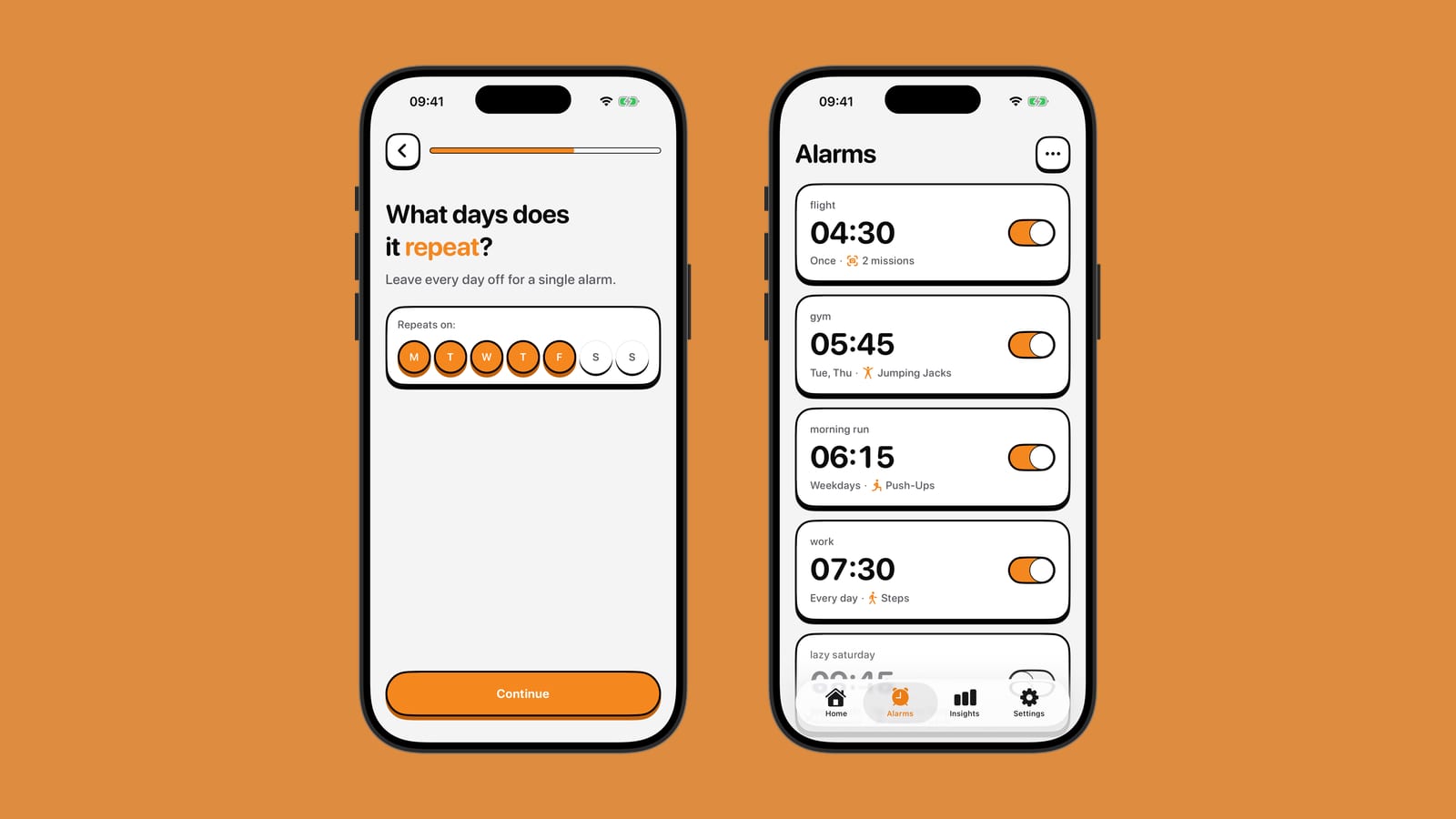
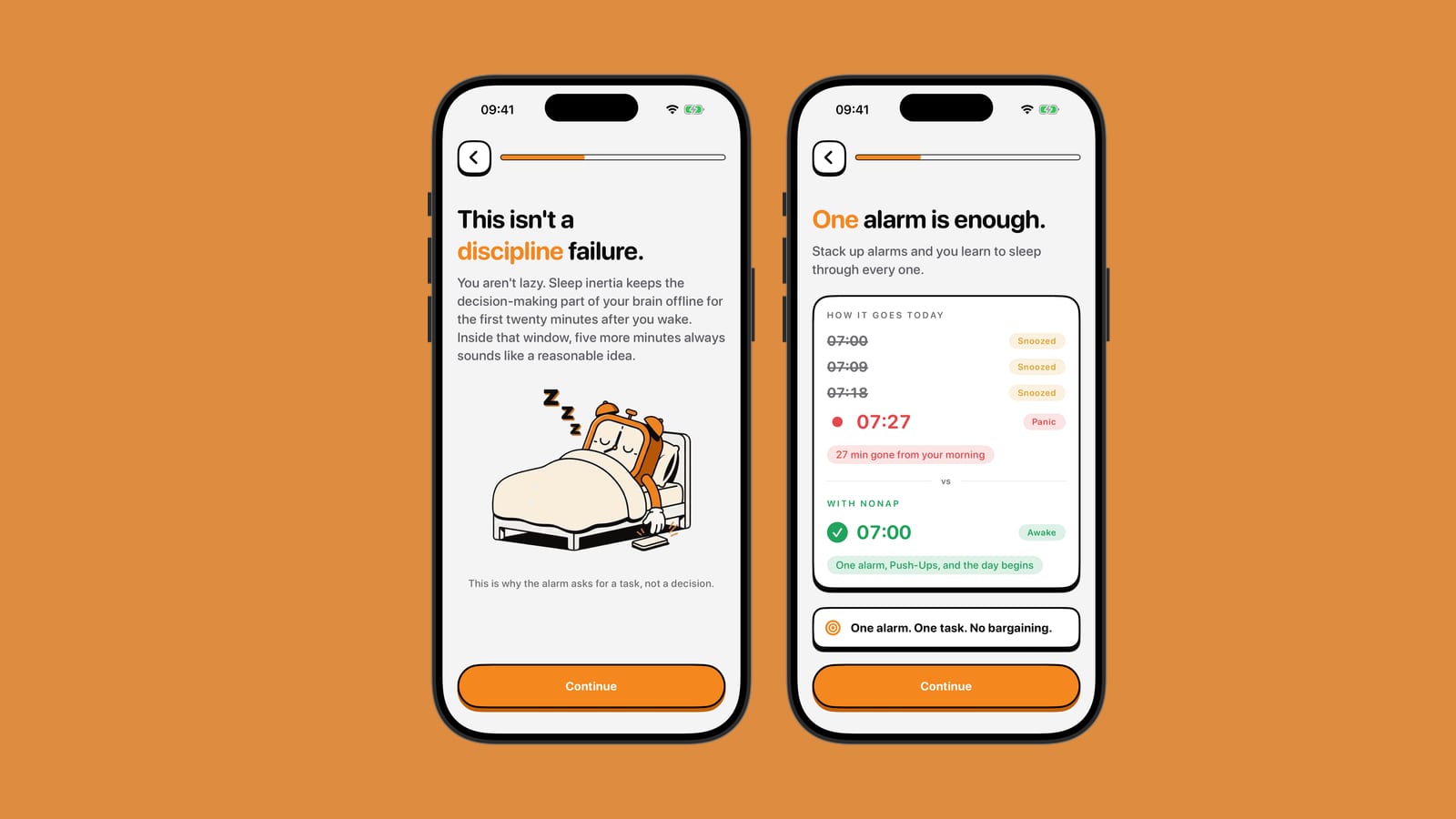
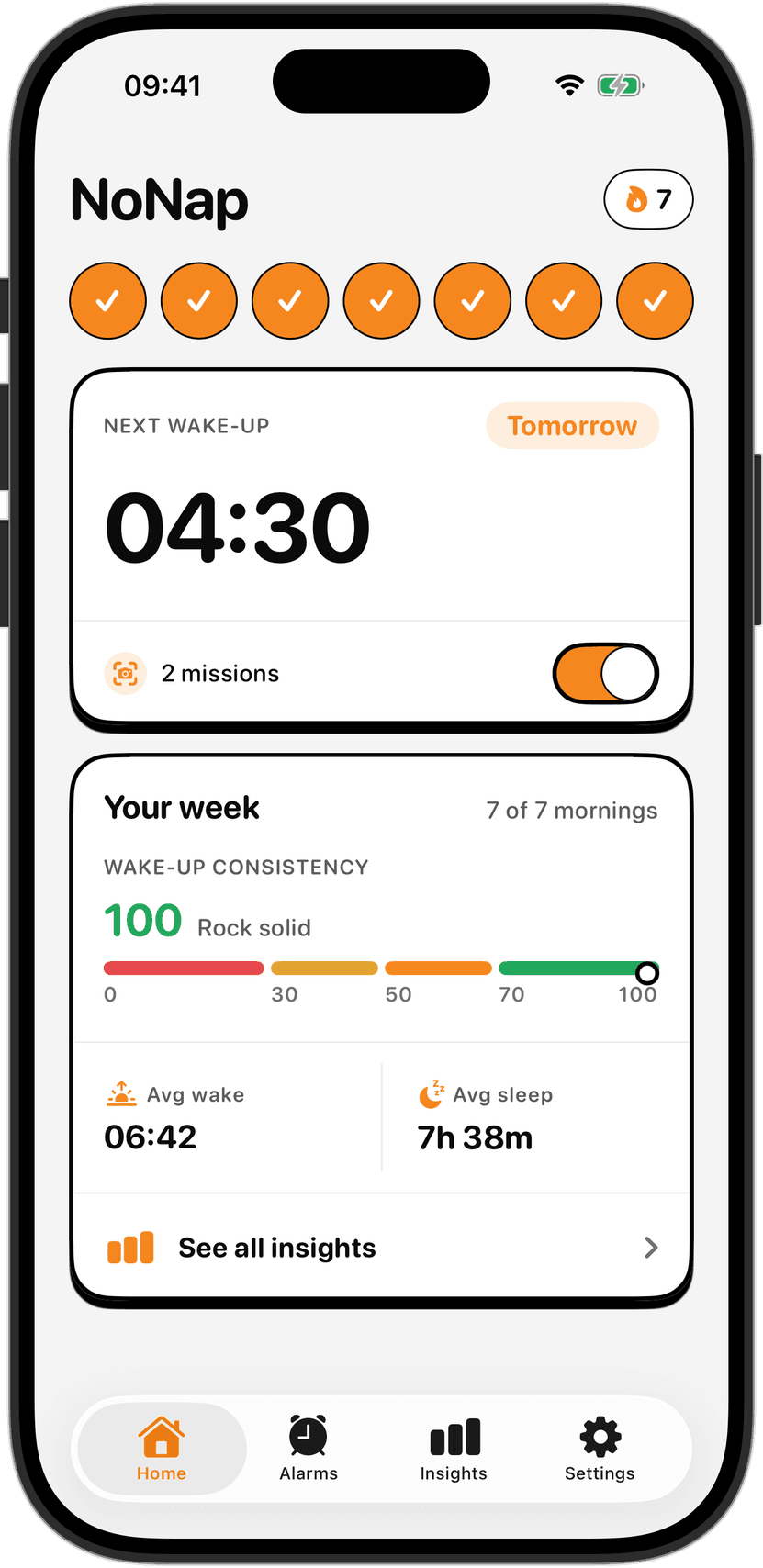
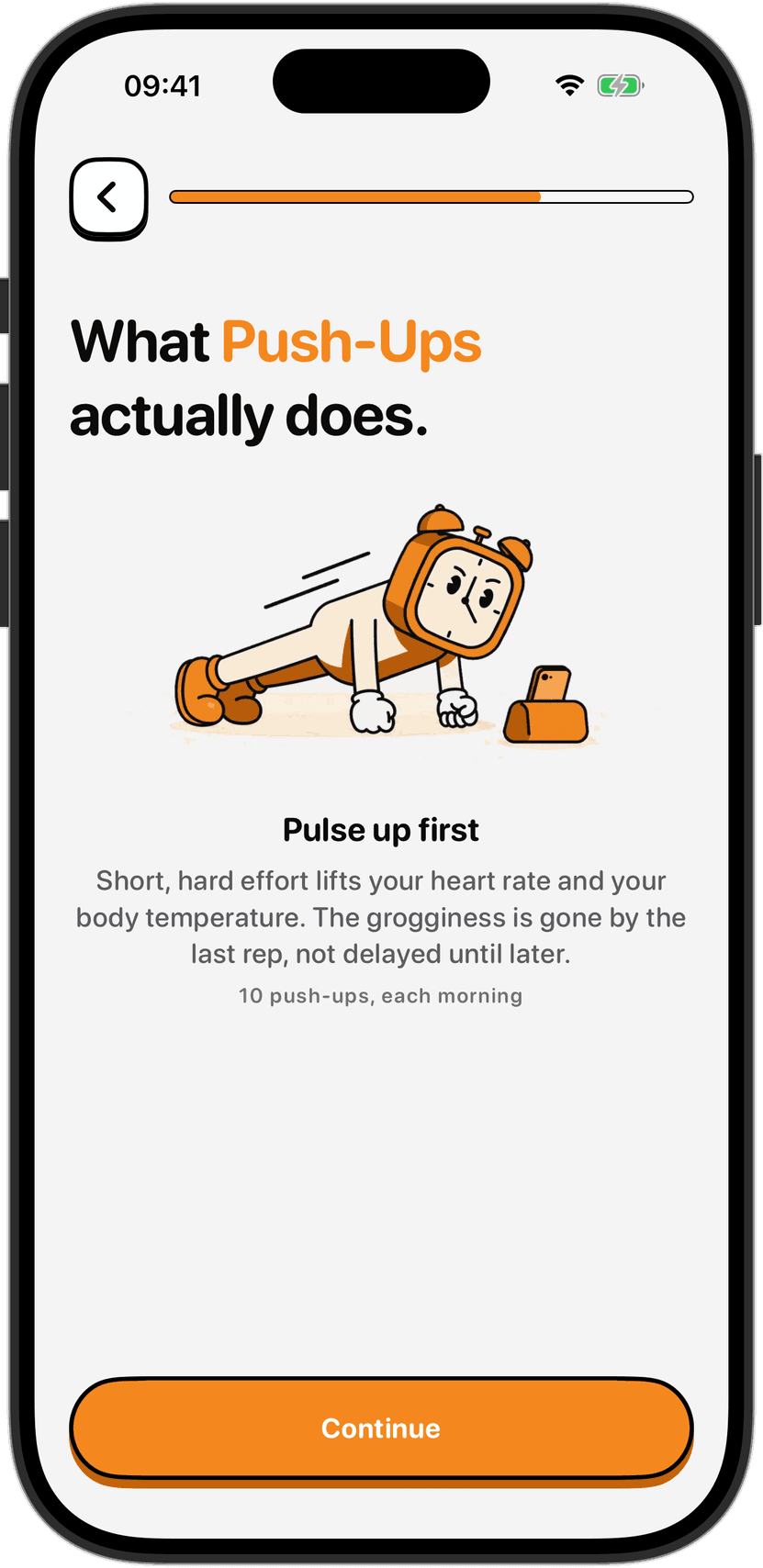
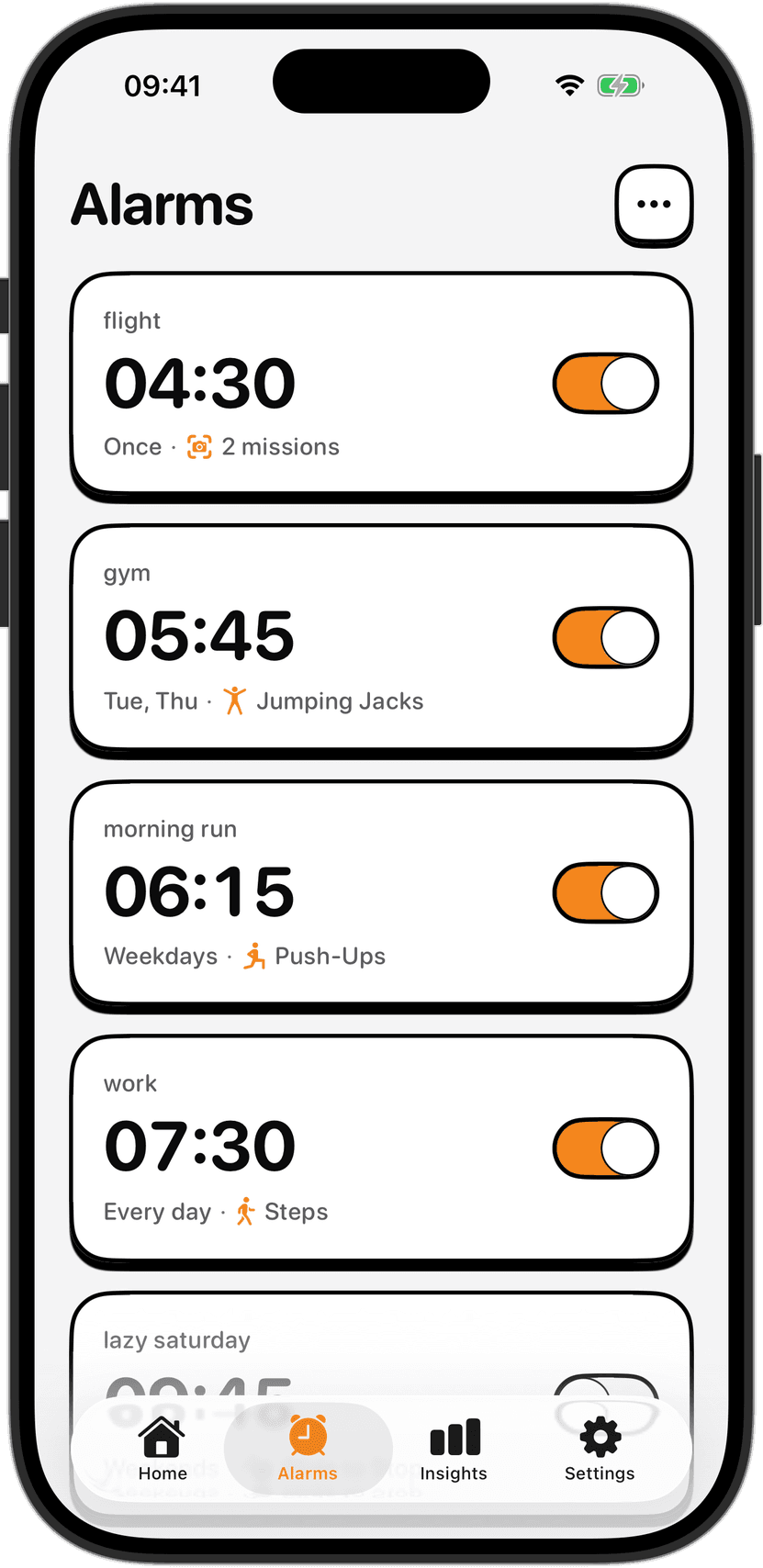
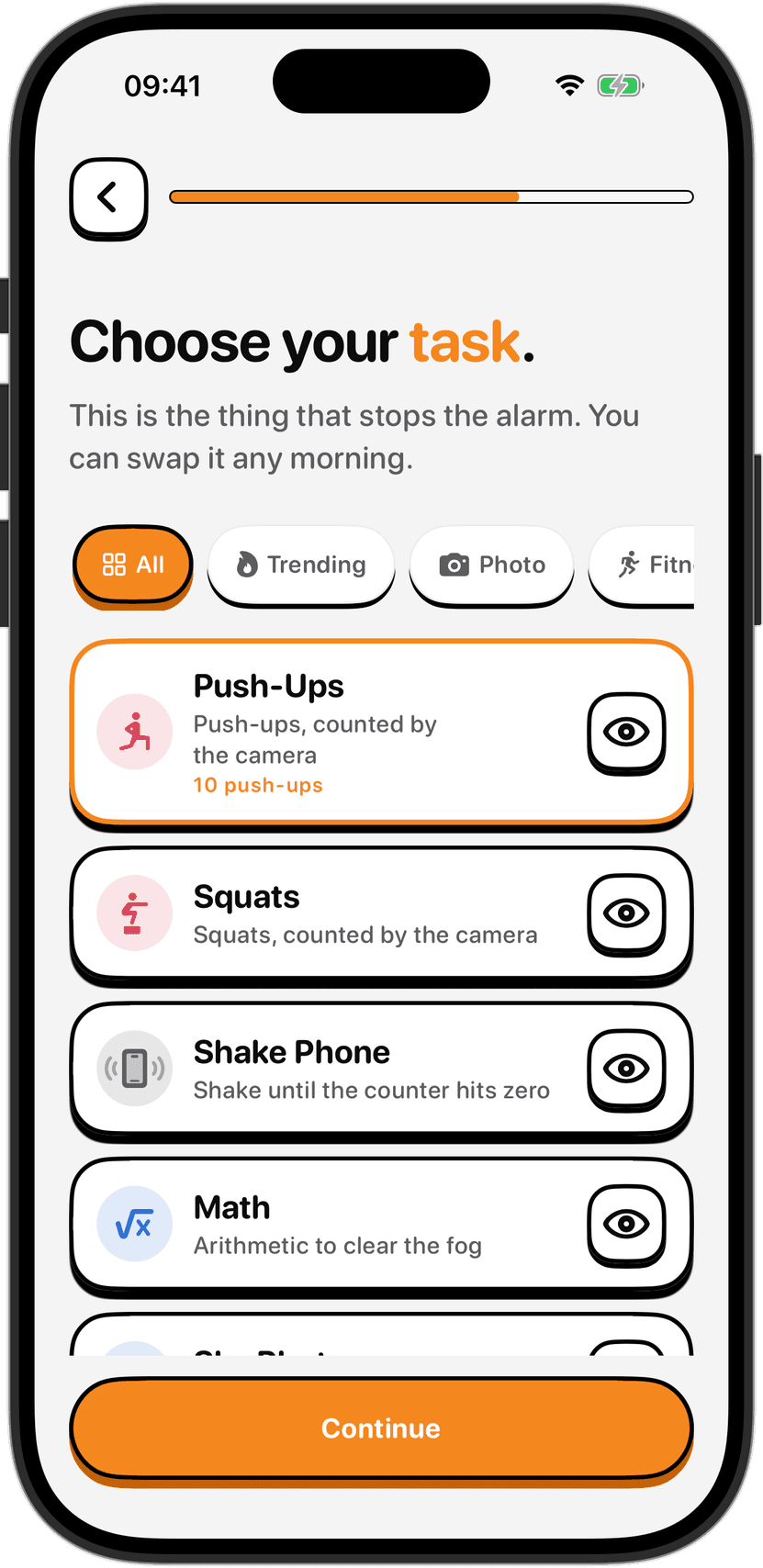
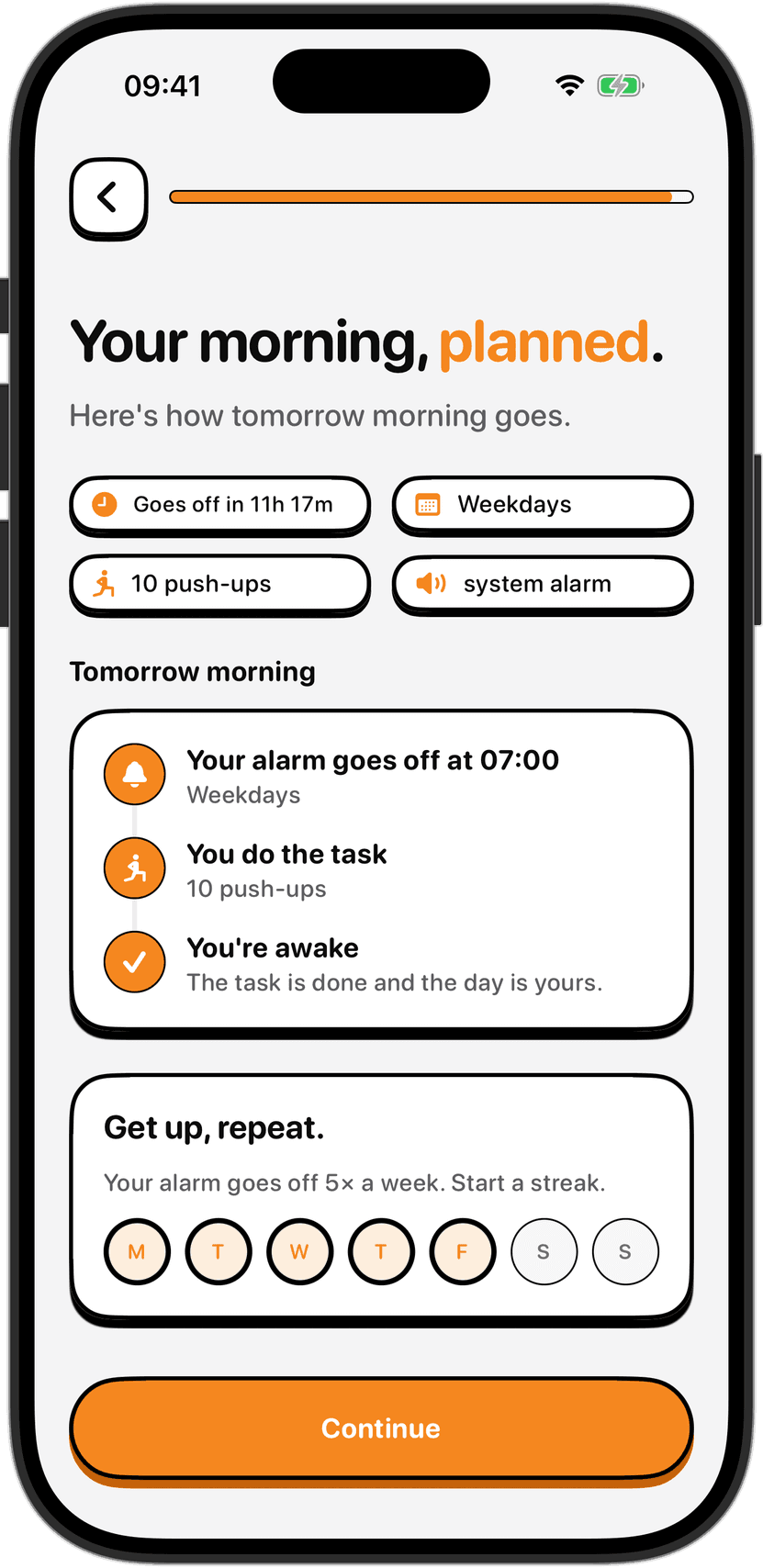
NoNap is an alarm, and it does not treat sleep problems or help with quitting. It rings through silent mode and Focus because it uses the system alarm, and you finish a wake task you chose in advance. Math involves no movement at all. The camera-verified tasks, Push-Ups and Squats, ask for real physical effort, so pick one you can do safely on a bad morning, with clear space around you. NoNap does not track your sleep, so it cannot tell you whether a night was disrupted.
Sources
Jaehne A, Loessl B, Bárkai Z, Riemann D, Hornyak M. Effects of nicotine on sleep during consumption, withdrawal and replacement therapy. Sleep Medicine Reviews. 2009;13(5):363–377. doi:10.1016/j.smrv.2008.12.003. https://pubmed.ncbi.nlm.nih.gov/19345124/
Jaehne A, Unbehaun T, Feige B, Cohrs S, Rodenbeck A, Schütz AL, Uhl V, Zober A, Riemann D. Sleep changes in smokers before, during and 3 months after nicotine withdrawal. Addiction Biology. 2015;20(4):747–755. doi:10.1111/adb.12151. https://pubmed.ncbi.nlm.nih.gov/24797355/
Branstetter SA, Horton WJ, Mercincavage M, Buxton OM. Severity of Nicotine Addiction and Disruptions in Sleep Mediated by Early Awakenings. Nicotine and Tobacco Research. 2016;18(12):2252–2259. doi:10.1093/ntr/ntw179. https://pubmed.ncbi.nlm.nih.gov/27613886/
Image credits: the cover and the diagram were made for this post.