A morning routine that survives a bad night's sleep
Elaborate morning routines fail first after a short night. What habit research says about building a shorter one that runs on autopilot instead.
Visana Studios
4 min read
A bad night doesn't ruin the next morning by itself. It ruins the version of the morning that needs you to be sharp: the one with a particular stretch sequence, a specific breakfast, fifteen minutes of reading before the phone comes out. That routine runs on small decisions made in order, and decision-making is exactly what a short night takes first.
A 2018 study at Dalhousie University restricted 20 healthy young women to three hours in bed for one night and compared them with 19 women who got nine hours. The sleep-restricted group didn't lose ground on everything the next day. Orienting attention, the simple act of shifting focus toward something, held up fine. What fell apart was inhibition, filtering out distraction, and verbal working memory, the ability to hold a short list in mind. One night. Three specific losses. That's most of what a morning routine actually asks of you: ignore the phone, filter out the urge to check it, remember what step comes next.
What keeps working when willpower doesn't
Not every part of a morning collapses under fatigue, and the part that survives is worth understanding. Habits, in the sense researchers use the word, are behaviors triggered by a stable cue rather than chosen fresh each time, and they hold up under exactly the conditions that break a deliberate routine.
David Neal, Wendy Wood and Aimee Drolet ran a series of studies published in 2013 on what happens to goal-directed behavior when self-control is depleted by an earlier demanding task. Deliberate, effortful choices got worse under depletion, as expected. Strong habits didn't. People with an established habitual response kept performing it at close to full strength even when their measured capacity for self-control was lower. The habit wasn't running on willpower that had been spent elsewhere. It had never needed any.
That's the real gap between a routine and a habit. A routine is a sequence you choose each time. A habit is a response your environment triggers with barely any choosing at all. The version of your morning built entirely from routine steps is the one most exposed on a bad night. The version built from two or three genuine habits is the one still standing at 6:15 after four hours of sleep.
Shrinking it down to what has to happen
Most morning routines are too long to run as habits. Six or eight steps is a schedule, not a cue and a response, and a schedule needs exactly the working memory and inhibition a bad night removes first.
The fix isn't more willpower, it's arithmetic. Pick two things, at most three, that have to happen no matter how the night went, and build only those around fixed cues: same time, same first physical action, same order. Feet on the floor, then the curtains open, every day, whether you slept nine hours or four. Everything else, the stretch sequence, the particular breakfast, the reading, is worth keeping on a good day, but put it in a second tier you're allowed to skip without the morning counting as a failure.
Getting into daylight belongs near the top of that short list if you can manage it. Morning light is the strongest cue your body clock gets, and it does that job regardless of how rested you feel when you receive it. A short walk, or even standing at an open window, works on a bad night about as well as it does on a good one, because it doesn't ask anything of the parts of your brain currently running slow.
Deciding the morning before it starts
The other lever is moving decisions out of the morning entirely. Every choice made the night before is a choice your groggy self doesn't have to make after a night that already went badly. Laying out clothes, knowing what's on the counter for breakfast, deciding in advance which one or two habits are non-negotiable: all of that takes five minutes at 10pm and feels close to impossible at 6am on four hours of sleep.
A fixed wake time helps here too, for a reason beyond the obvious one. Keeping the same wake time even after a rough night means your short routine never has to compete with the pull of a later, unfamiliar start. Part of what keeps a habit intact is that the moment it fires never moves.
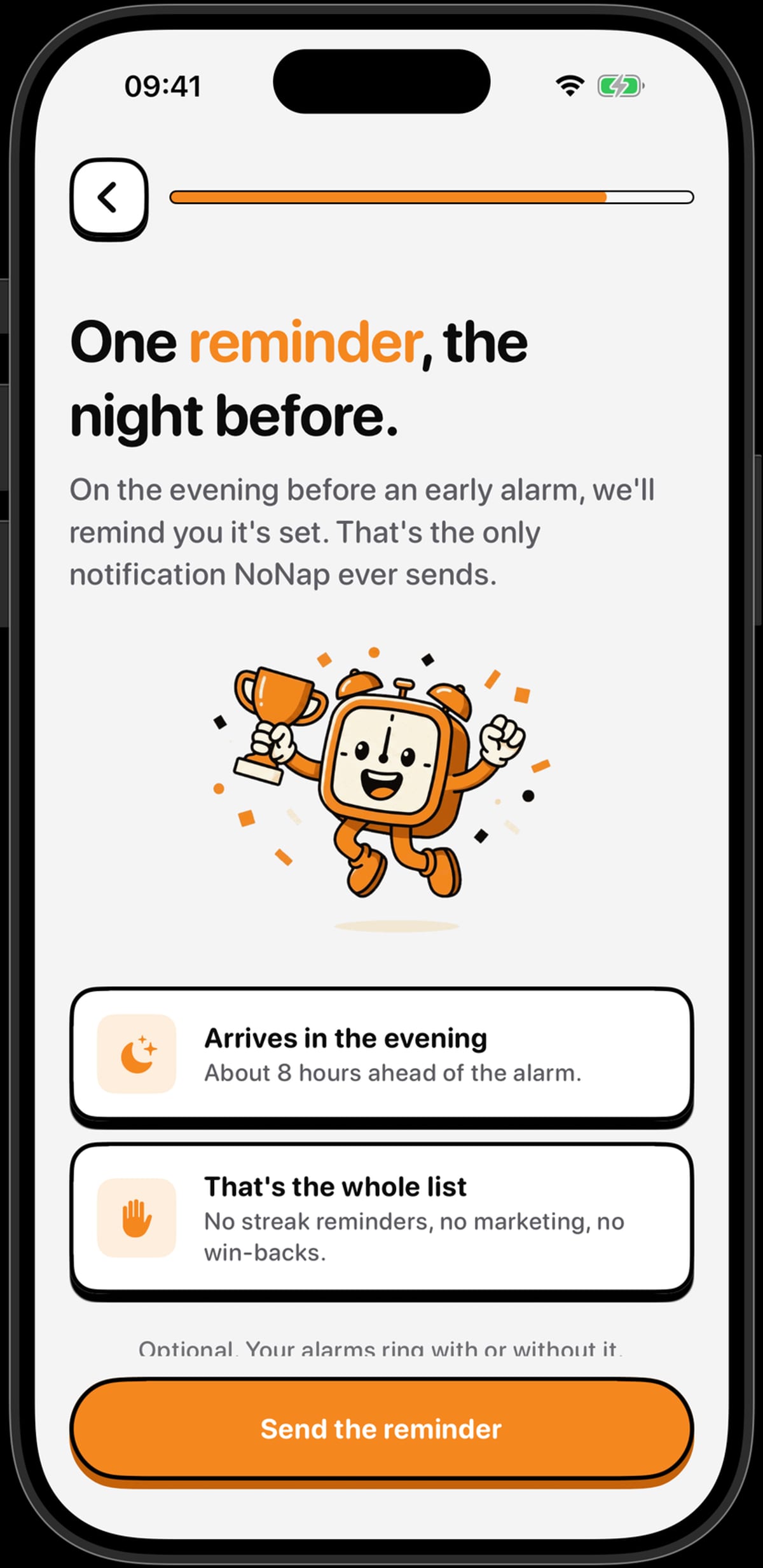
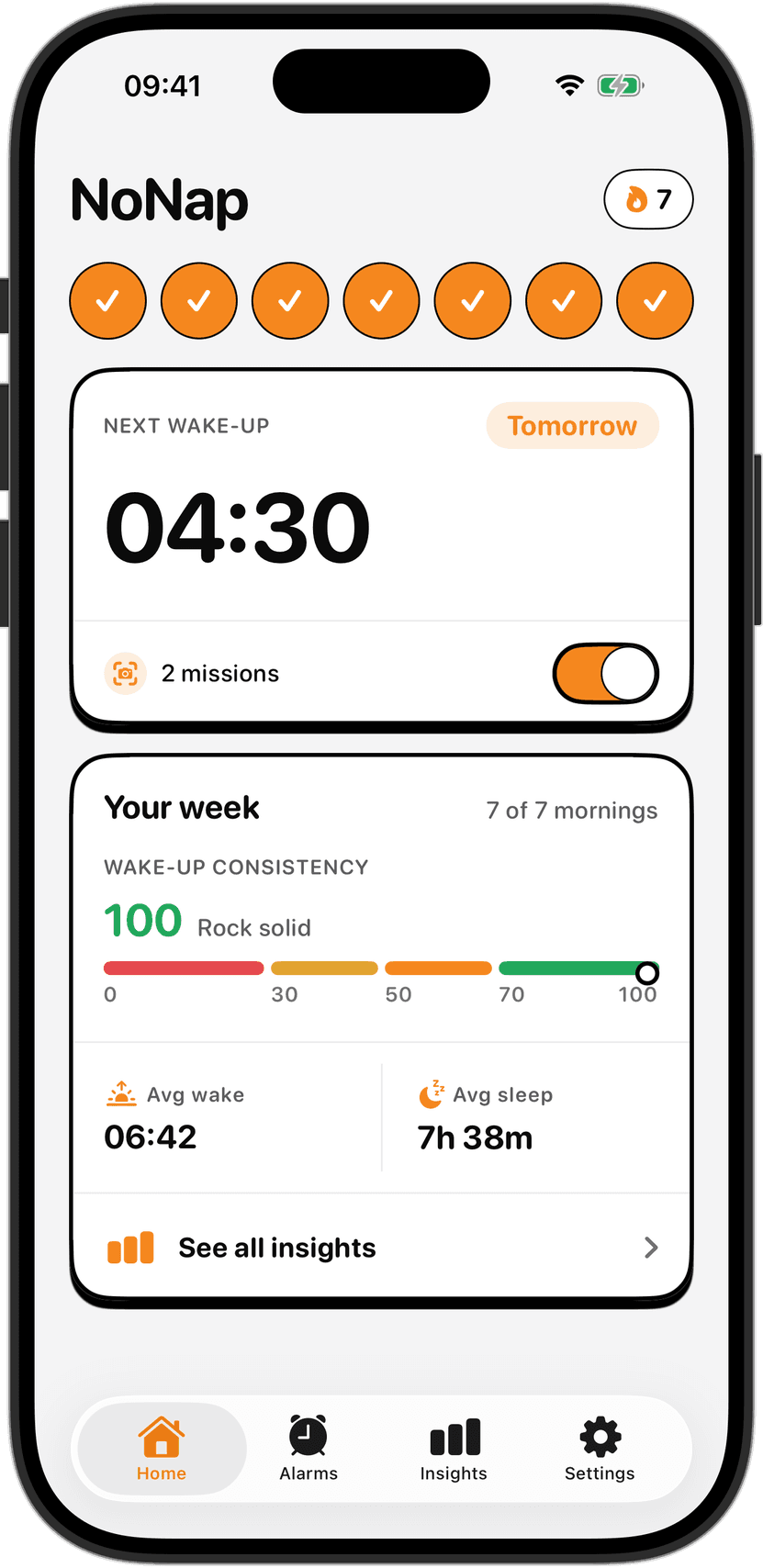
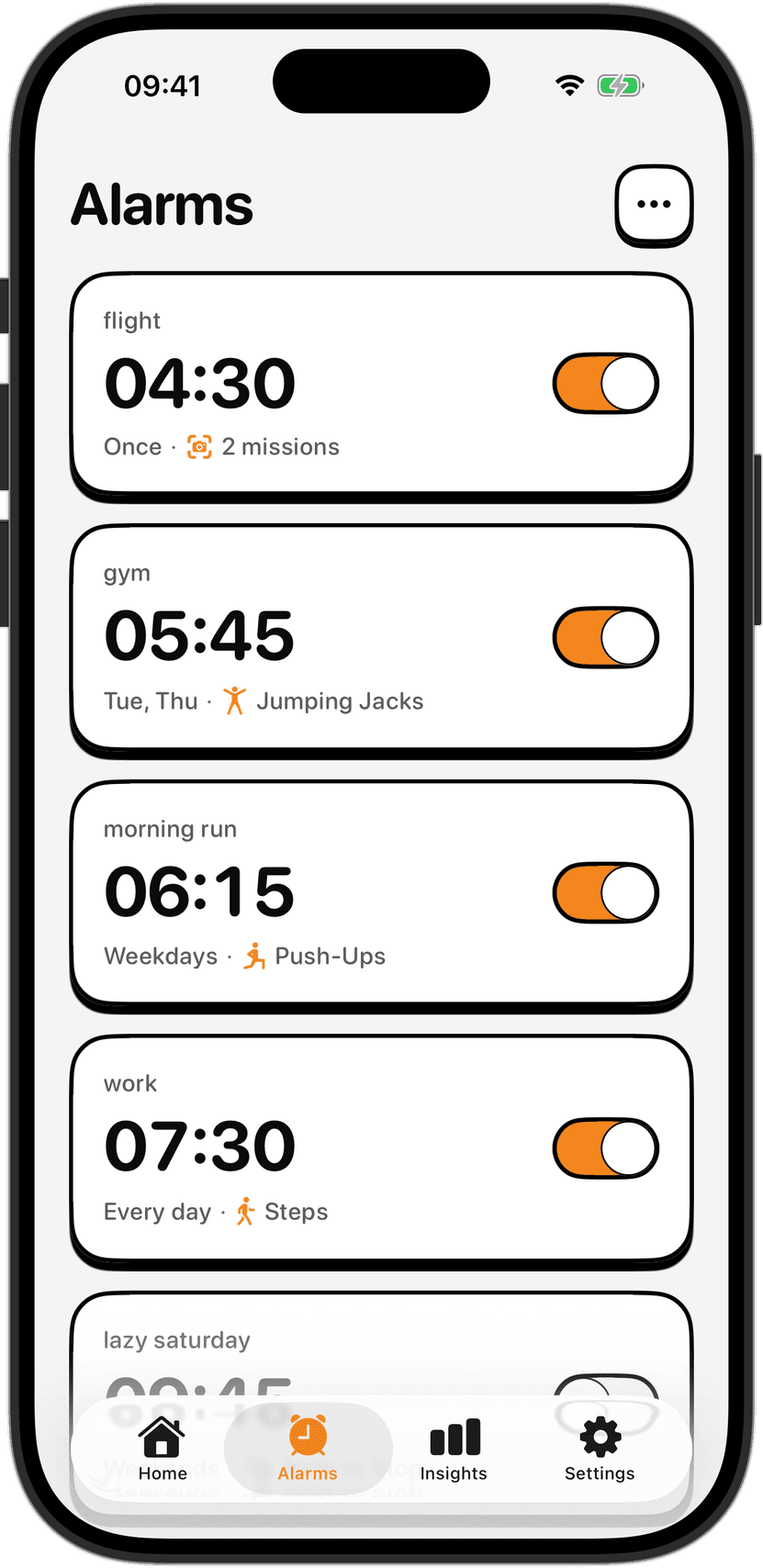
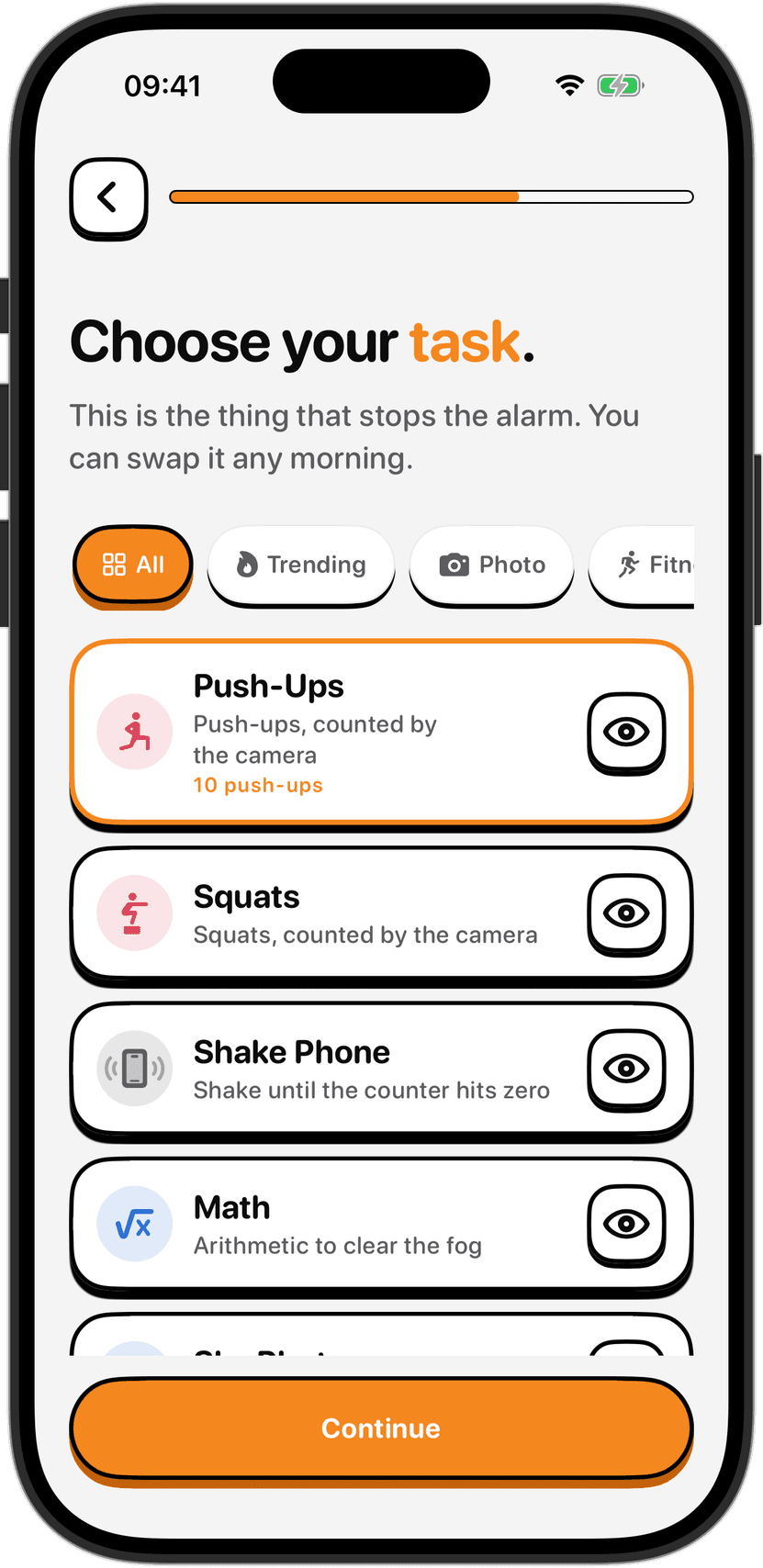
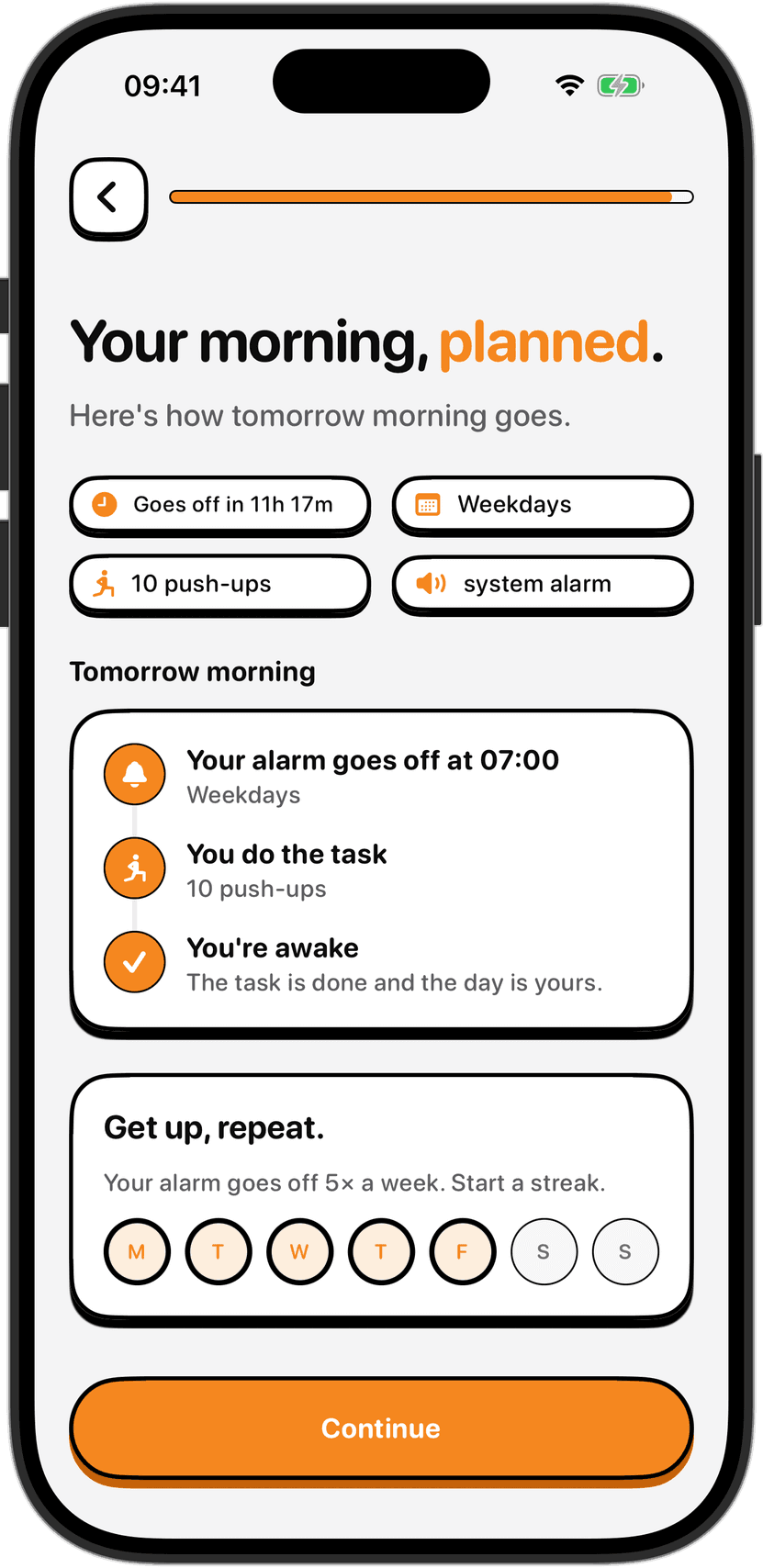
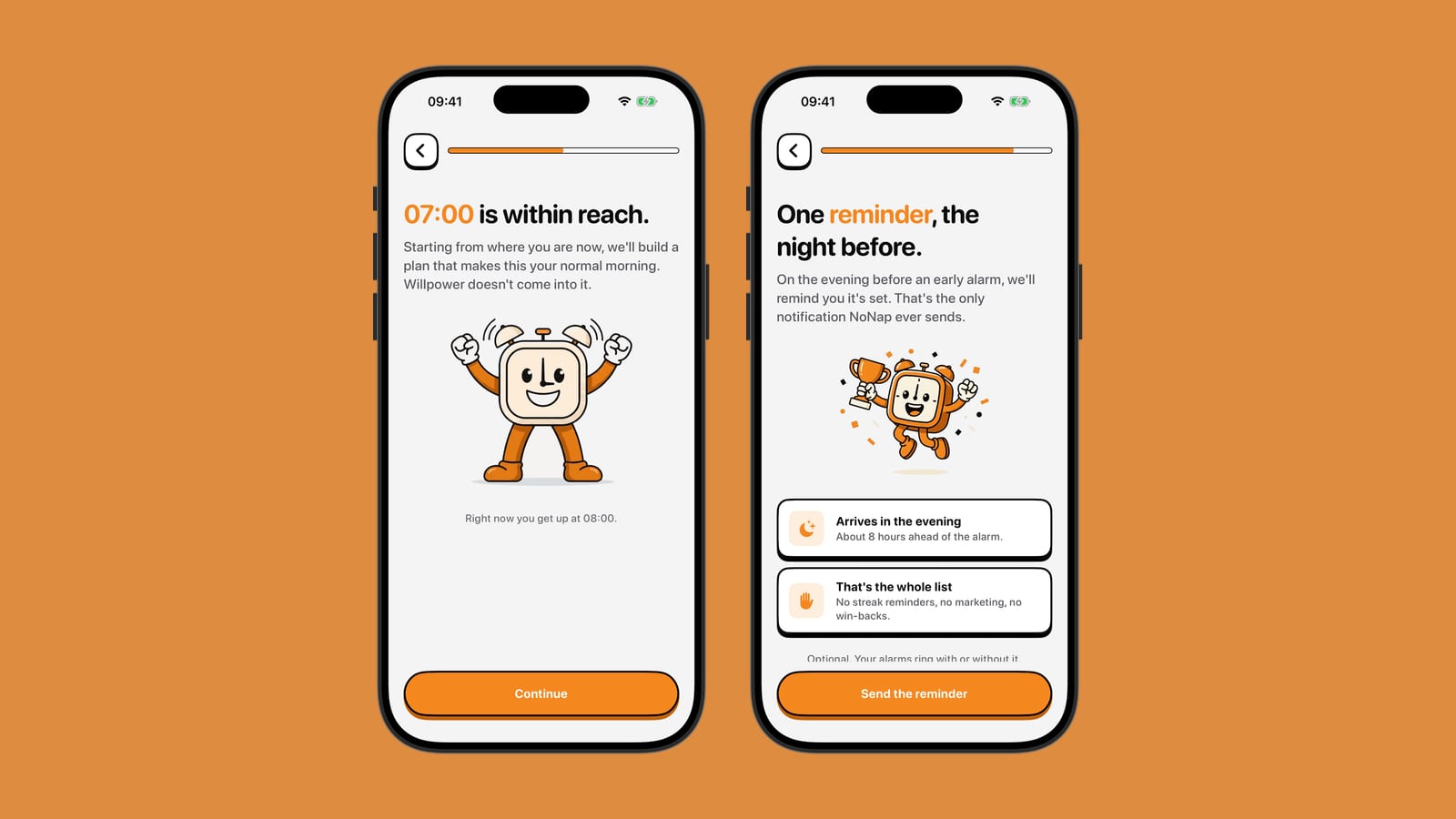
NoNap's design leans the same direction without trying to be clever about it. It reminds you the night before instead of leaving every decision until the alarm goes off, and it asks for one required task rather than a checklist, because a single fixed action survives a bad night in a way a longer list doesn't.
None of this fixes the bad night itself. A short, broken night still costs you attention and mood the next day; no routine changes that arithmetic. What it can change is whether one bad night also costs you the pattern built around it. It doesn't have to, as long as the pattern was never asking for more than a bad night can pay.
Sources
Cunningham, J. E. A., Jones, S. A. H., Eskes, G. A., and Rusak, B. (2018). Acute sleep restriction has differential effects on components of attention. Frontiers in Psychiatry, 9, 499. doi.org/10.3389/fpsyt.2018.00499
Neal, D. T., Wood, W., and Drolet, A. (2013). How do people adhere to goals when willpower is low? The profits (and pitfalls) of strong habits. Journal of Personality and Social Psychology, 104(6), 959-975. doi.org/10.1037/a0032626