Light Wake Tasks for Difficult Mornings: Shake Phone and Math When Movement Is Hard
When push-ups or squats feel impossible at 6am, gentle alternatives work better. Why Shake Phone and Math help you wake up without the physical risk.
Visana Studios
5 min read
You set your alarm for a task you thought was reasonable. Then the alarm goes off at 6am and your body announces that push-ups were a terrible idea. Your muscles are tight, your balance is off, and the last thing you want is to throw yourself on the floor while you are still half asleep. That moment, when the wake task you picked in the evening no longer matches your half-awake body, is exactly when gentler alternatives become the smarter choice.
Sleep inertia, the grogginess that lasts minutes after waking, impairs your coordination, balance and judgment. Research from the University of Colorado shows that your cognitive performance runs at only 50 to 70 percent of normal capacity in the first few minutes of waking. Your muscles are stiff, your body temperature is still low, and a hard exercise can feel risky. In that window, light physical movement or a cognitive task beats pushing yourself into strenuous exercise you are not ready for.
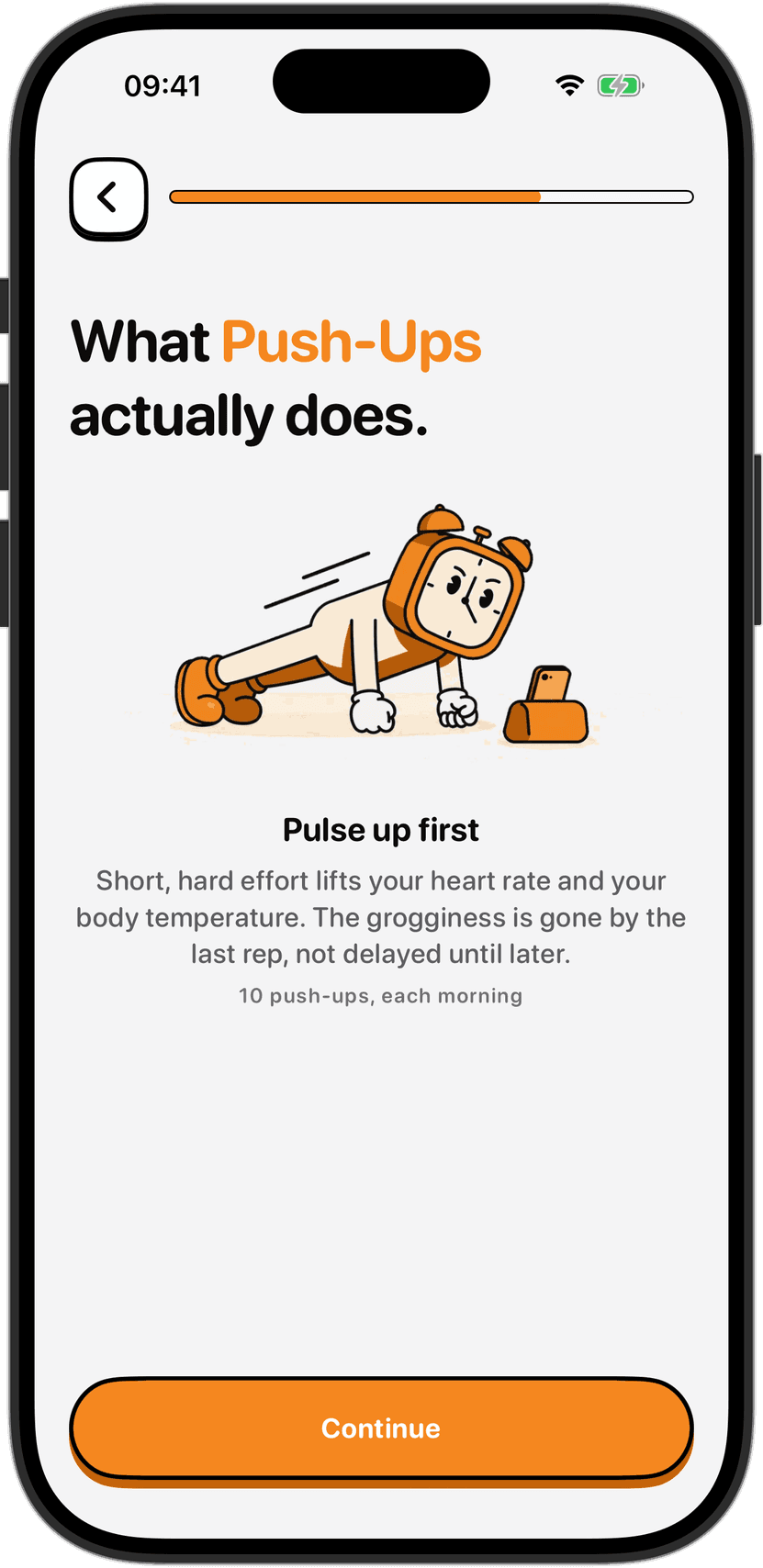
Why Not Just Do Push-Ups Anyway
The sleep inertia research offers context for the risks of jumping straight into intense exercise. A study on morning exercise found that a natural surge in blood pressure occurs during the first two hours after waking, and people who experience a larger surge face a higher stroke risk. For older adults with high blood pressure, early-morning exercise carries particular danger. Hypoglycemia can also happen during intense morning exercise, especially if you exercise before eating, because your muscles are depleted of carbohydrates after an overnight fast.
That is not to say you should avoid morning activity altogether. Light movement (stretching, gentle shaking, slow walking) increases blood flow, oxygen and endorphin release. A controlled trial found that brisk awakening (getting up quickly and moving, ideally in sunlight) cut sleep inertia duration in half. The key is intensity matching where you are: gentler on hard mornings, more intense on the mornings you can manage it.
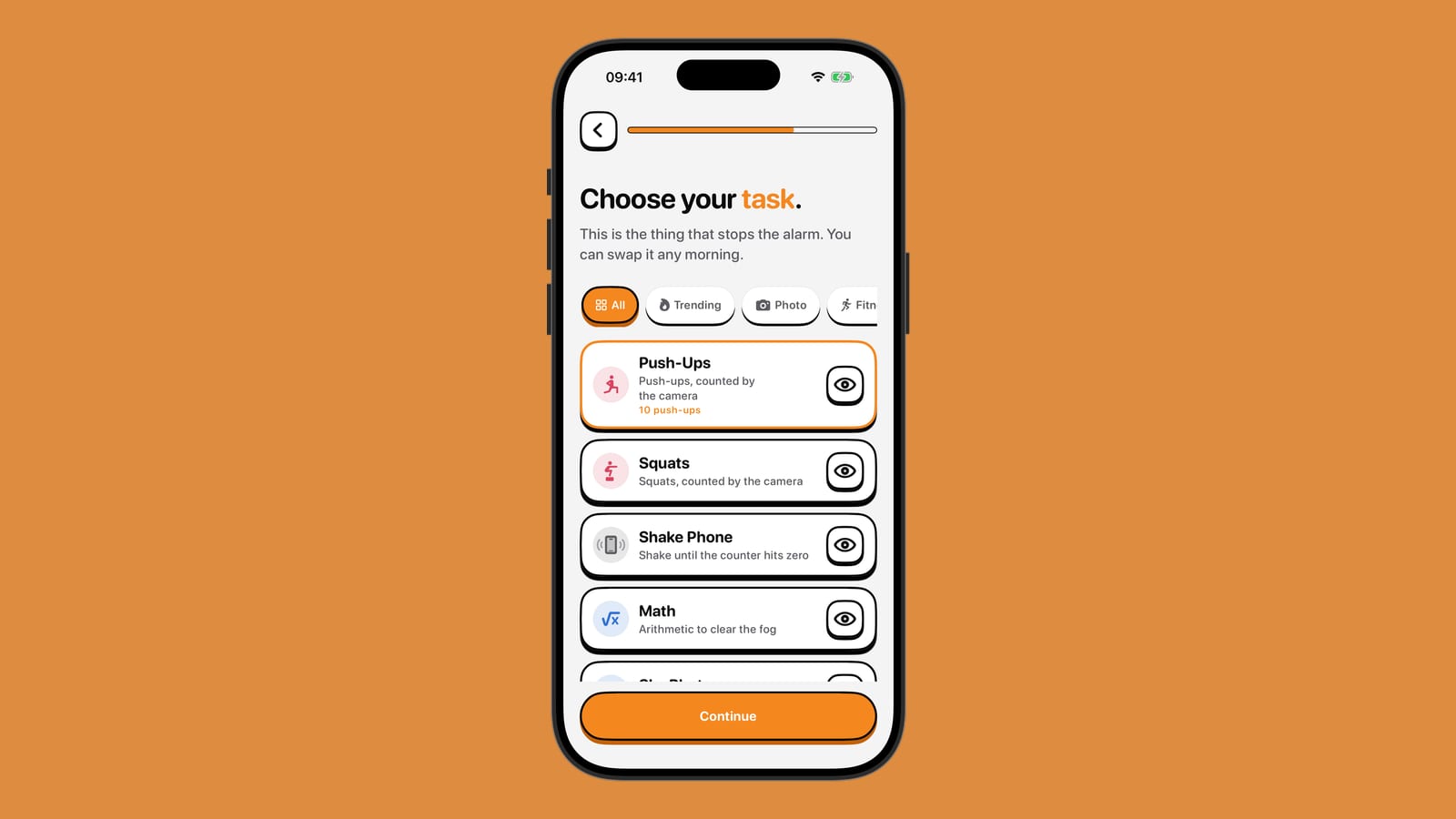
What Shake Phone Does
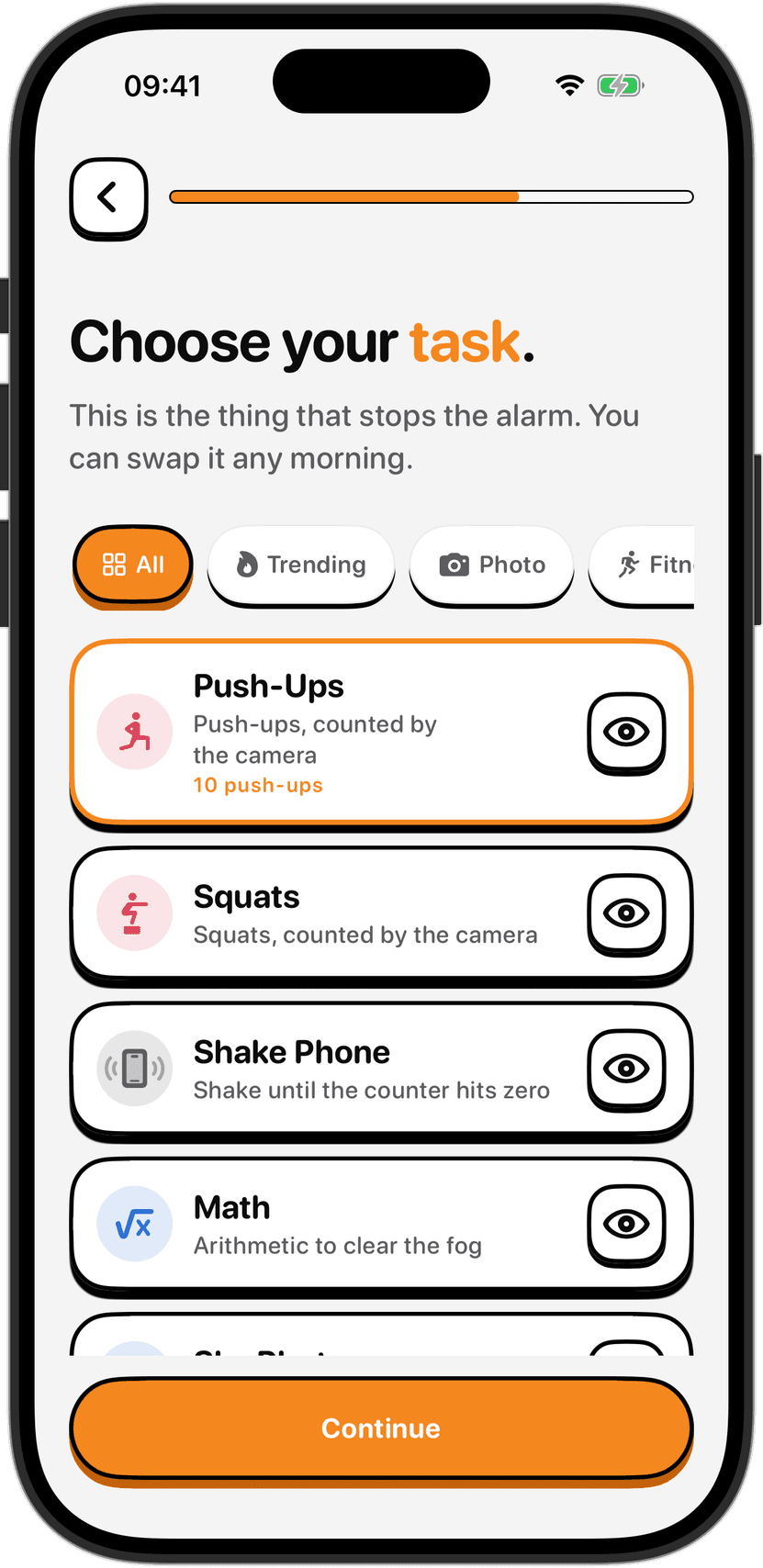
Shake Phone asks you to move your phone back and forth in a shaking motion for a few seconds. It uses your phone's motion sensors to detect that movement, and it works entirely on the device. No recording, no location, no upload.
From a wake-up perspective, Shake Phone bridges the gap between "I cannot move right now" and "I need to do something." It requires movement (your arm moves, which moves your shoulder, which starts to wake your body) but not the controlled repetition or balance required for a bodyweight exercise. You do not need to think about form or count. You are not at risk of tripping, colliding with furniture, or falling. Your muscles do not need to be warm.
The movement is minimal enough that it works even on mornings when you are at your worst: after a bad night of sleep, a late wake-up goal, or when you have pain or stiffness that makes bigger movements impossible.
What Math Does
The Math task asks you to solve a problem on your screen. You see an addition, subtraction, multiplication or division problem and you type the answer. No movement required.
Sleep inertia impairs cognitive performance along with physical function, but a study specifically testing math performance after waking found that accuracy recovered quickly. Nine healthy subjects were given simple addition problems within moments of waking, and in the first three minutes they showed severe impairment. Between three and six minutes, performance rose to 75 percent of normal, and it reached 84 percent by 12 minutes. The researchers concluded that while sleep inertia suppresses about 10 to 25 percent of cognitive performance immediately upon waking, the suppression is temporary and recovers within minutes of engagement.
That recovery matters. A cognitive task forces your brain to stop drifting and engage with a specific problem. You cannot be half-asleep and solve math. The act of waking your prefrontal cortex (the decision-making part of your brain) while you are still groggy is uncomfortable in a way that works. You are not pushing your body into risk. You are pushing your mind into clarity.
When to Use Each
Pick Shake Phone on mornings when your body is the limiting factor. You slept badly. Your back hurts. You are stiff or sore from the day before. You have not eaten and you know intense exercise on an empty stomach will make you lightheaded. You are older and you know your blood pressure surges in the morning.
Pick Math on mornings when physical movement feels impossible or you are in a space where you cannot move. You are sleeping in someone else's house or a small room. The floor is cold. You do not want to wake anyone else nearby with noise or movement.
Either task works on mornings when the wake task you set in the evening no longer matches your actual morning, and that disconnect is normal. Your brain is not the same at 6am as it was when you set the alarm at night. One of the points of having options is this: you can change your task any morning when your body or your morning has changed.
Pair Gentler Tasks with Realistic Goals
A gentle task works best when you set realistic targets. If you set a 100-push-up goal when you know you cannot do 10 first thing in the morning, you have set yourself up to argue with your alarm. The right wake task is one you can finish on a bad morning, one where the goal is achievable even when you are groggy and stiff.
Shake Phone and Math let you reset that goal. Shake your phone for a few seconds. Solve one simple problem. Then you are done. You have finished the task, you have proved you are awake, and you can move on with your morning.
Sources
Your guide to sleep inertia from Manual provides an overview of sleep inertia mechanisms and recovery strategies.
Overcoming Sleep Inertia: Shake Off the Grogginess from Manta Sleep explains light movement and its effect on sleep inertia recovery.
The impact of a short burst of exercise on sleep inertia from the National Center for Biotechnology Information presents research on exercise intensity and morning awakening.
Study: Sleep Inertia Affects Decision Making from ABC News reports on cognitive performance suppression after waking.
Colorado University research on grogginess and sleep inertia demonstrates sleep inertia duration and blood pressure surge after waking.
Are There Dangers Associated with Early Morning Exercise? from Livestrong examines cardiovascular risks of intense early morning exercise.
The impact of a short burst of exercise on sleep inertia from Nutrition Evidence reviews research on light versus intense exercise for morning awakening.