Teaching younger kids to wake up on their own for school
Sleep needs for children 6 to 12, the role of bedtime routines, why ok-to-wake clocks work, and giving kids their own alarm as a learning step into responsibility.
Visana Studios
7 min read
Six-year-old wakes at 5:47, before the alarm. Seven-year-old needs to be roused three times, then dragged from bed. Eight-year-old sleeps through the first alarm but jolts awake on the second one. Every child wakes differently, and every parent who has spent mornings juggling which one needs help knows how quickly a routine breaks. The gap between needing an adult to wake them and being able to get up on their own isn't about laziness or stubbornness. It's about how much sleep they actually got, what time they went to bed, and whether their body is ready to be up.
How much sleep children 6 to 12 actually need
The American Academy of Sleep Medicine recommends that children aged 6 to 12 get 9 to 12 hours of sleep per night. It is a range on purpose, because children of the same age differ in how much sleep they need. It sounds simple until you try to build it around a school day that starts at 8 a.m.
If your child wakes at 7:00, getting 9 to 12 hours means bedtime somewhere between 7:00 p.m. and 10:00 p.m. depending on their age. That window is actually narrower than it looks. Kids on the younger end, six to eight years old, usually land around 7:30 to 8:30 p.m., while older school-age children might hold a 9:00 or 9:30 bedtime and still sleep enough. Short or fragmented sleep the night before makes getting up harder regardless of what the clock says. A child who went to bed an hour late is running a sleep deficit and waking to an alarm they're not ready for.
The bedtime routine is doing most of the work
The bedtime routine matters more than the wake-up routine. A consistent sequence each night (washing up, putting on pajamas, reading or talking quietly) signals to a child's body that sleep is coming. The circadian rhythm, the internal 24-hour clock that tells the body when to sleep and wake, responds to timing and habit. A child who follows the same routine at 8:15 every night with dimmed lights and no screens for at least 30 minutes before bed will fall asleep more easily and stay asleep longer than one who climbs into bed at wildly different times with a phone still in hand.
This matters most for the earlier bedtime. If your goal is a 7:30 or 8:00 wake-up, the real change happens at 7:30 or 8:00 p.m., not in how you shake the bed in the morning.
The ok-to-wake clock for younger kids
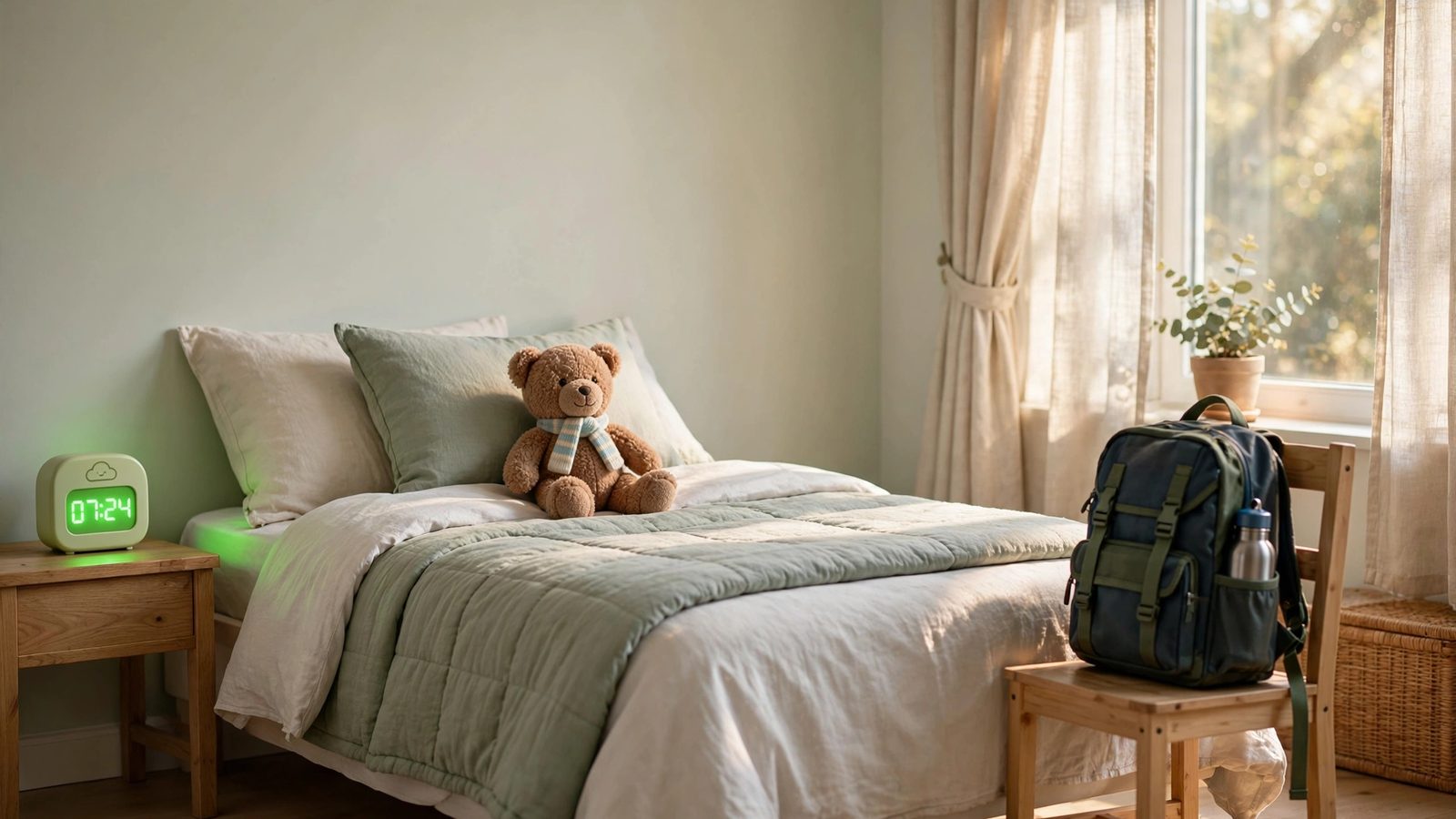
An ok-to-wake clock is a simple tool for children under about nine: a light that stays red or dark until a set time, then turns green. The child learns to stay in bed until the light changes color. It works because it gives young kids a concrete rule they can follow without interpretation. There is no pleading for five more minutes because the light is the authority, not the parent.
These clocks remove the parent from the equation at the moment of waking. Instead of "Mom says get up," it's "the clock says get up." That shift changes what the child is negotiating with. They see the green light and the rule is already decided.
Do they always work on day one? No. Kids need a few nights to get used to the new rule. But most take to it quickly because the setup is clear. The clock picks the wake time. The child waits for green. There is no ambiguity about whether five more minutes are allowed.
Giving your child an alarm of their own
Somewhere between eight and ten years old, many kids are ready to own their own alarm. This doesn't mean they wake up magically or without help the first week. It means they are taking responsibility for waking up instead of waiting for you to do it.
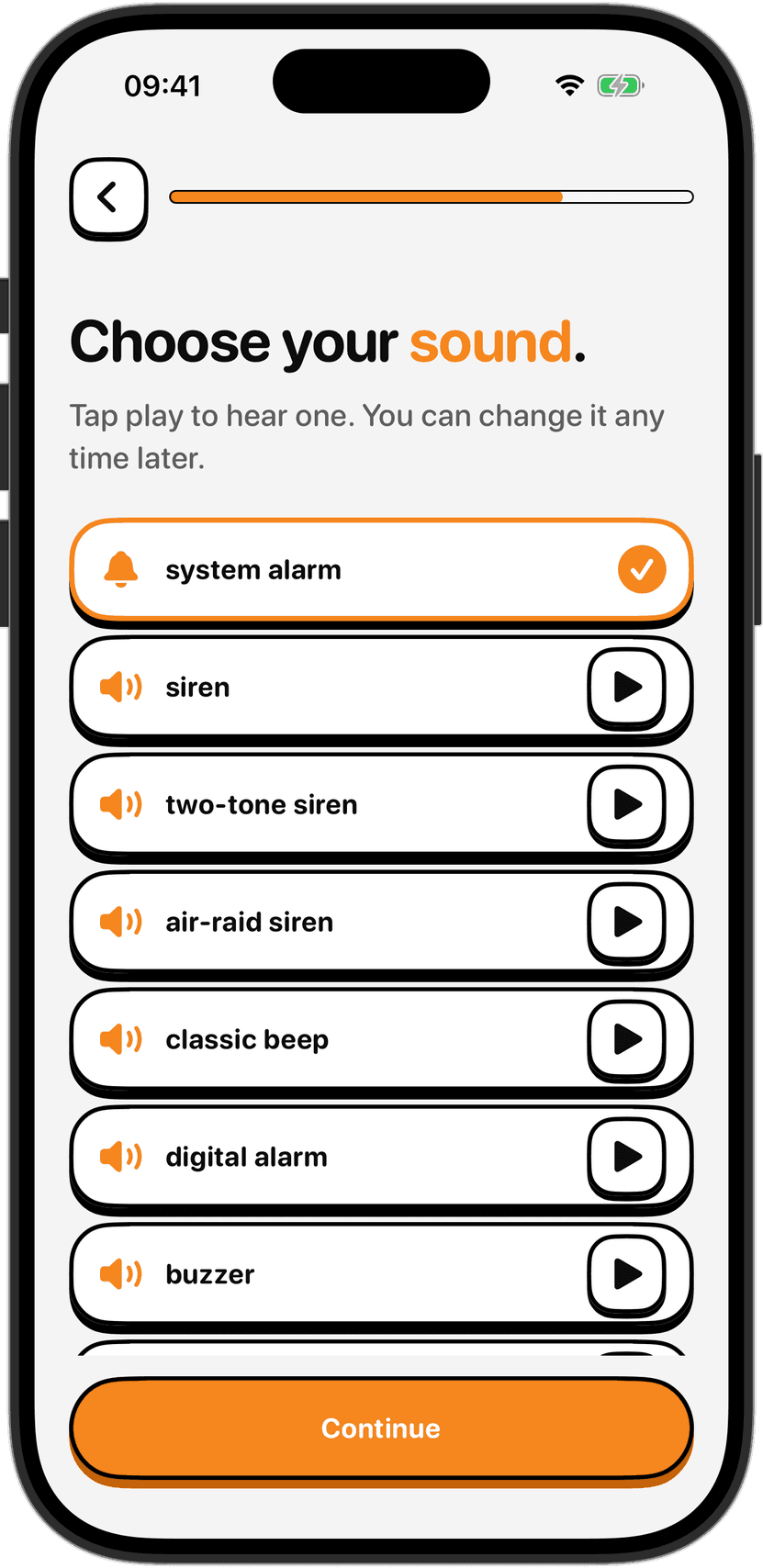
The transition usually works better if you frame it as a big-kid step rather than a chore. Let them pick the alarm sound if the device allows it. Show them how to set the time. Explain that when the alarm goes off, their job is to get up, and your job is no longer to be the one who wakes them. Your job becomes making sure they went to bed at the time you agreed on.
The first week will involve oversight. You might still need to remind them to set it. You might still hear the alarm and get up to check they got out of bed. But you're transitioning from doing the waking to supervising the wake. Over time, the child learns that when the alarm goes off, something changes, and they handle it.
The alarm doesn't have to be complicated
A child doesn't need a smartwatch or app notifications. A basic alarm clock, loud enough to hear from the next room, works. Or an alarm on a tablet kept outside the bedroom so they have to get up and go turn it off.
Some kids respond to alarms better than others. A child who is a heavy sleeper might need a louder sound or even a vibrating alarm. A light sleeper might wake to something much quieter. You learn this by listening to which alarms get their attention and which don't.
One alarm, set at the right time, is better than multiple alarms across the night. Multiple alarms teach a child that the first one is negotiable and the real deadline comes later. That's the opposite of what you're trying to build.
Back-to-school sleep usually takes two weeks
When school starts after a long break, most kids need about two weeks to shift back into an earlier schedule. If summer bedtime drifted to 9:30 or 10:00 p.m., moving back to 8:00 p.m. on the first day of school almost always fails. The child won't fall asleep.
The Sleep Foundation recommends moving bedtime and wake time in small steps, usually about 15 minutes every two or three days, rather than attempting the full shift in one night. Start moving earlier bedtimes a week before school starts. A child who naturally falls asleep around 9:30 in August can reach 8:00 p.m. by early September if you make incremental changes.
Morning light reinforces the earlier wake time once it's set. Bright light shortly after waking suppresses melatonin and signals to the body clock that day has started. For kids heading to school during morning darkness, turning on bedroom lights as soon as they wake helps. In late August and early September when the sun rises earlier, open the curtains immediately.
Siblings and early risers
If your 6-year-old wakes at 5:30 naturally but your 10-year-old needs a gentler start, that asymmetry is normal. Don't bend the 10-year-old's schedule to match the early riser. Kids have different sleep needs and different wake times.
If early wakers are disturbing later sleepers, dark curtains, a white noise machine, or earplugs for the sleeper are simpler adjustments than trying to keep a naturally early riser in bed.
When your child is ready to handle their own wake-up
NoNap is built for people who have learned that a single alarm and a reason to get up works better than negotiating with sleep. For teenagers, that's often the point where a phone alarm and a commitment to the wake time become the real lever. Younger kids usually land in between: needing the ok-to-wake clock or your help through the transition, then graduating to their own alarm once they're old enough to set it reliably and understand that getting out of bed is their job, not yours.
Understanding why the first few minutes after an alarm feels like climbing out of a fog helps here too. That's sleep inertia, and it affects kids the same way it affects adults, just with different thresholds for how much sleep debt tips the balance.
The goal isn't to hand off all responsibility at once. It's to gradually move from you waking them to them waking themselves. That shift takes weeks, not days. A child who wakes to an alarm and gets up without argument is closer to independent than one who wakes to the same alarm and stays in bed until you come back in. That difference matters more than whether the alarm came from a clock in the room or from you standing over their bed.
Sources
Paruthi, S., Brooks, L. J., D'Ambrosio, C., et al. (2016). Recommended Amount of Sleep for Pediatric Populations: A Consensus Statement of the American Academy of Sleep Medicine. Journal of Clinical Sleep Medicine, 12(6), 785-786. https://doi.org/10.5664/jcsm.5866
Sleep Foundation. How to Go to Sleep Earlier: 7 Tips to Reset Your Sleep Schedule. https://www.sleepfoundation.org/sleep-hygiene/how-to-go-to-sleep-earlier