Jet lag: resetting your wake up time after summer travel
Why eastward flights are harder than westward ones, how many days jet lag really takes, and what CDC and AASM say about light and melatonin timing.
Visana Studios
6 min read

Fly from New York to London in August and you land at breakfast time, five time zones ahead of the body you brought with you. It's 7 a.m. local, the airport smells like coffee and jet fuel, and every system under your skin is convinced it's 2 a.m. and time to be asleep. Coming back the other way is easier. That asymmetry, harder going east and gentler coming west, isn't about how well someone travels. It's built into how the human body clock runs.
Why flying east hits harder than flying west
The internal clock, driven mainly by a cluster of neurons in the brain called the suprachiasmatic nucleus, doesn't run on exactly 24 hours by itself. Left alone, without light or a schedule to correct it, it drifts to something a bit longer. The CDC's Yellow Book, the agency's reference for clinicians who treat travelers, puts it plainly: for most people it's easier to delay the circadian rhythm than to advance it, since the average period of that internal rhythm runs slightly longer than 24 hours, and people naturally want to go to bed a little later each night even with no travel involved at all. Flying west asks the body to do something it already leans toward, stay up later, wake up later, stretch the day out. Flying east asks for the opposite: fall asleep and wake up earlier than the body wants to, night after night of the trip. The Sleep Foundation puts a rough number on how unevenly that lands. By its account, about three in four people find eastward travel the harder direction, while the remaining quarter still struggles more heading west, so individual variation is real even where the average tilts firmly east. Averages hide people.
How many days it actually takes
Ask how long jet lag lasts and the honest answer runs longer than most people plan a trip around. The CDC Yellow Book gives rough adaptation speeds: about 1.5 hours of circadian shift per day when adjusting to a westward trip, and closer to 1 hour per day heading east. Run that arithmetic on the New York to London flight and the five hour gap resolves in three to four days on the way home heading west, and closer to five days outbound, assuming nothing is done to speed it along. Cross seven time zones, London to Singapore territory, and an unmanaged eastward shift can take the better part of a week before the internal clock and the airport clock agree again.
None of this is fixed in stone. With light and melatonin timed well, adaptation can move faster than the body would manage left to its own devices, which is the entire reason travel medicine bothers with a protocol instead of just telling people to nap it off.
Timing light to pull the clock the right way
Light is the strongest lever available for shifting a circadian clock, and the CDC's guidance gets specific about the timing. Bright light in the morning, roughly 2 to 4 hours after the body's daily low point in alertness, pushes the clock earlier. Light in the evening pushes it later. That single principle drives opposite advice depending on which way someone is flying, a mechanism explored in more depth in how morning light steers the body clock. Heading east, chase morning sunlight at the destination and keep sunglasses on for the first evening or two, so the clock gets nudged earlier rather than later. Heading west, do close to the reverse: avoid bright light first thing and let afternoon and evening light hold the schedule back instead.
Getting the order backward doesn't just fail to help. Bright light at the wrong point in the body clock's cycle can shift someone in the wrong direction entirely, which is part of why generic advice to just get outside and tough it out doesn't reliably work.
What the CDC and AASM actually say about melatonin
Melatonin is one of the few over the counter supplements with something close to a professional consensus behind it for this specific use. The American Academy of Sleep Medicine's practice parameters, published by Morgenthaler and colleagues in 2007 and still the field's reference document, list timed melatonin administration for jet lag disorder as a Standard recommendation, the guideline's strongest tier, based on evidence that a correctly timed dose reduces symptoms and improves sleep after crossing multiple time zones.
The CDC Yellow Book is specific about both dose and timing. It states that 0.5-1 milligram is often enough to produce a circadian shift, and it explicitly warns against high doses above 5 milligrams, since too much melatonin can end up circulating at the wrong point in the body's cycle and work against the shift instead of for it. Taken when the internal body clock reads roughly midnight to 5 a.m., melatonin does little useful work. Taken in the early evening ahead of an eastward trip's earlier bedtime, it helps pull sleep forward. None of that is a reason to start melatonin blind on the strength of a blog post. Anyone taking other medications, pregnant, or simply unsure how their body handles it should check with a doctor or pharmacist before adding a supplement to a travel routine.
Setting the alarm before you leave and the morning you land
The clock doesn't have to wait for takeoff to start moving. The CDC Yellow Book describes shifting sleep in the 2-3 days before departure, about an hour a day in the direction the trip demands: earlier before flying east, later before flying west. In practice, that means setting tomorrow's alarm for a time that matches the destination's rhythm before you've even left the house, not after landing groggy and jet lagged.
The same logic carries through after arrival, maybe more so. It's tempting to sleep until the body wakes up naturally on day one, especially after an overnight flight, but that natural wake time is still running on the old time zone, and sleeping through it teaches the clock nothing new. Setting a firm alarm for a normal local morning, and getting up with it even on the rough first day, is what actually anchors the shift. For the flight there and back, missing an early departure is its own separate problem, worth planning around on top of everything above.
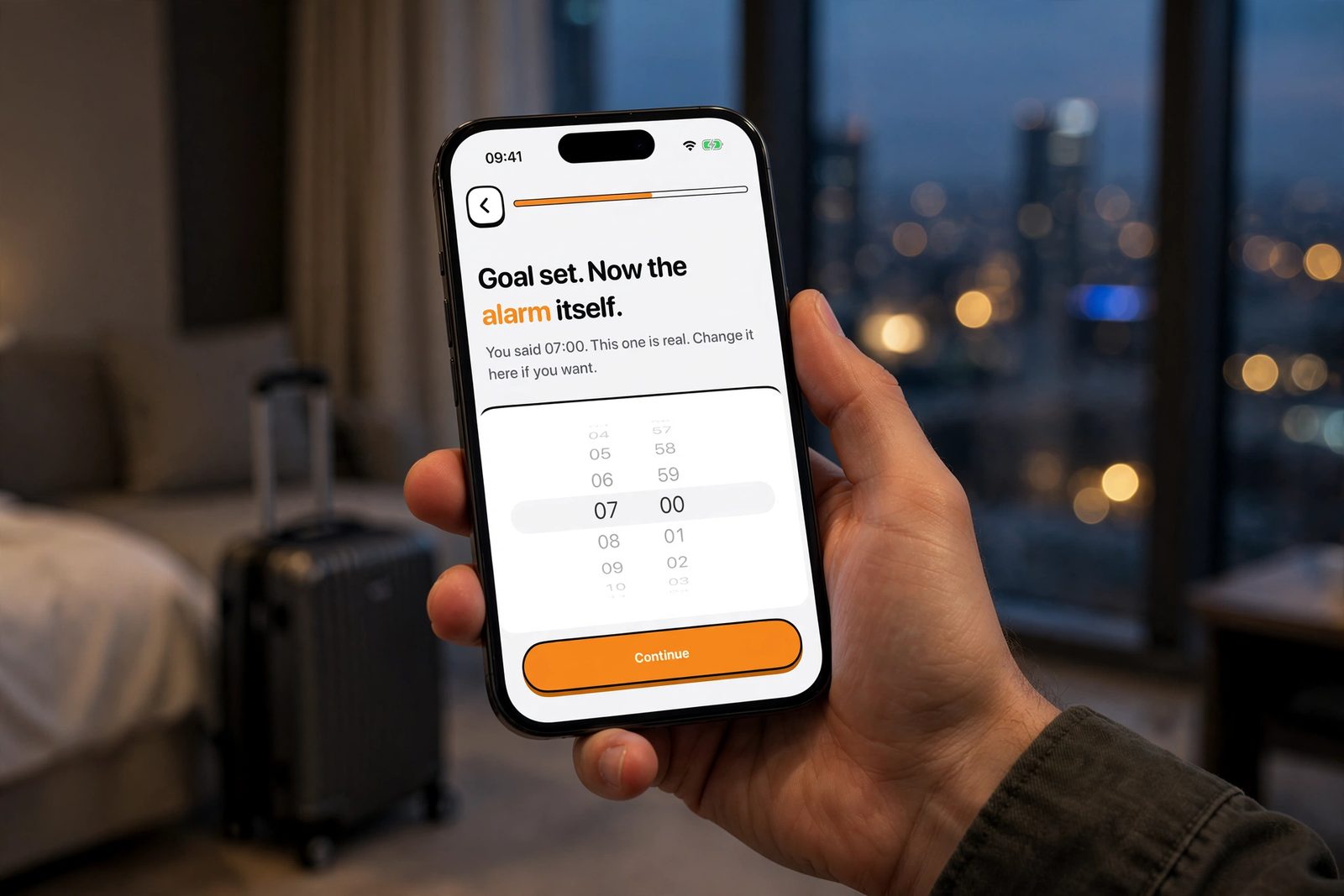
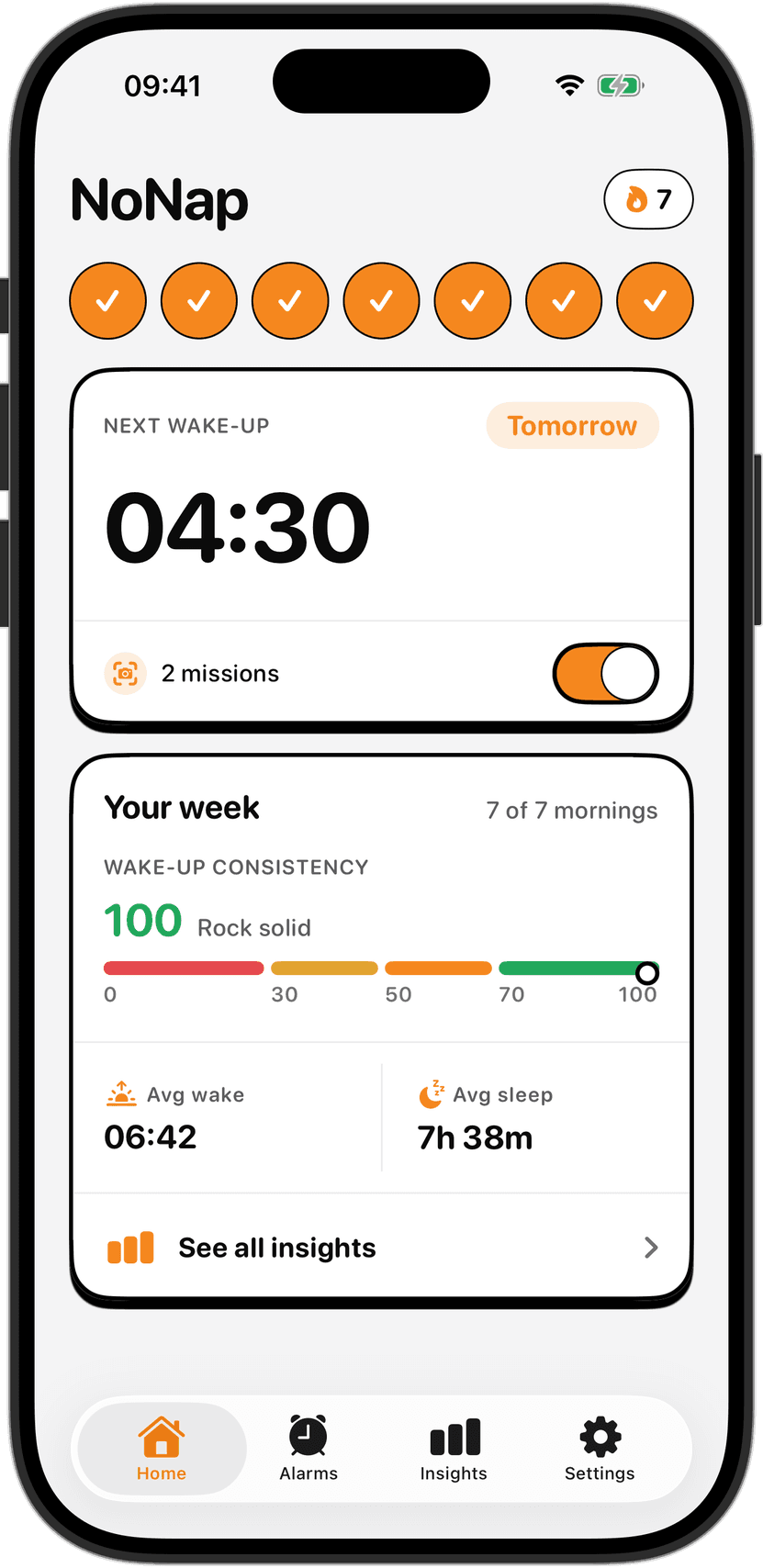
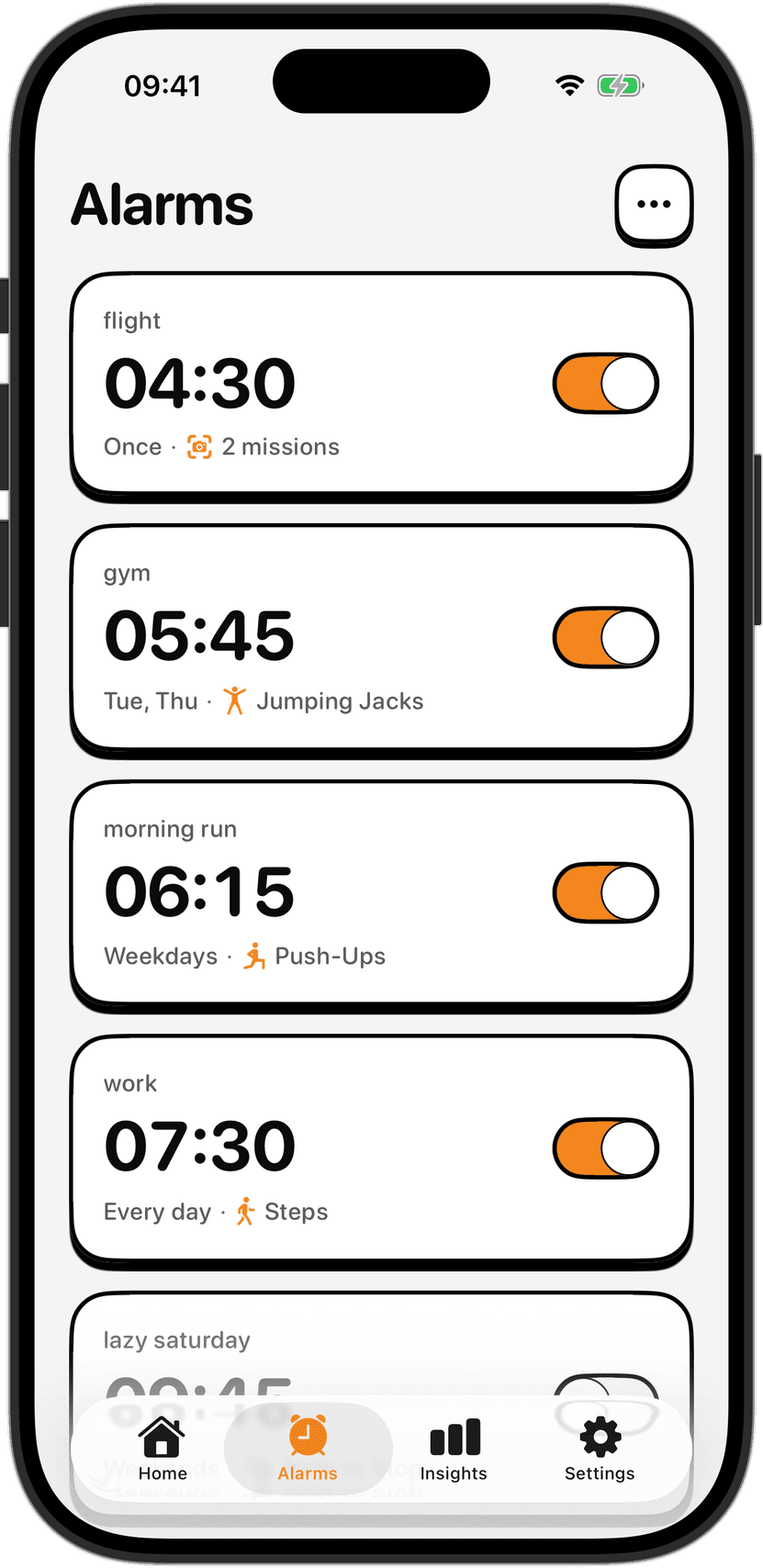
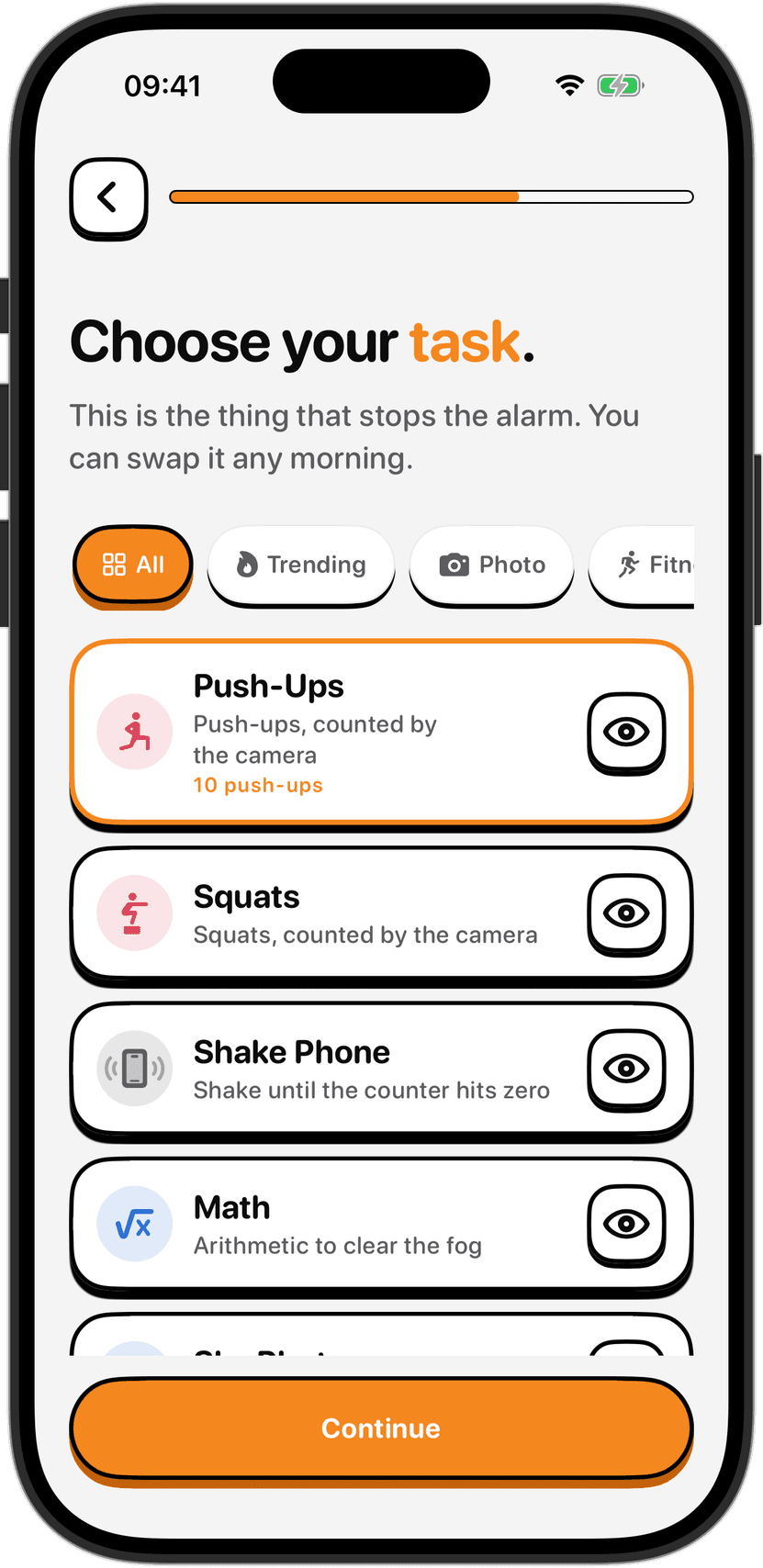
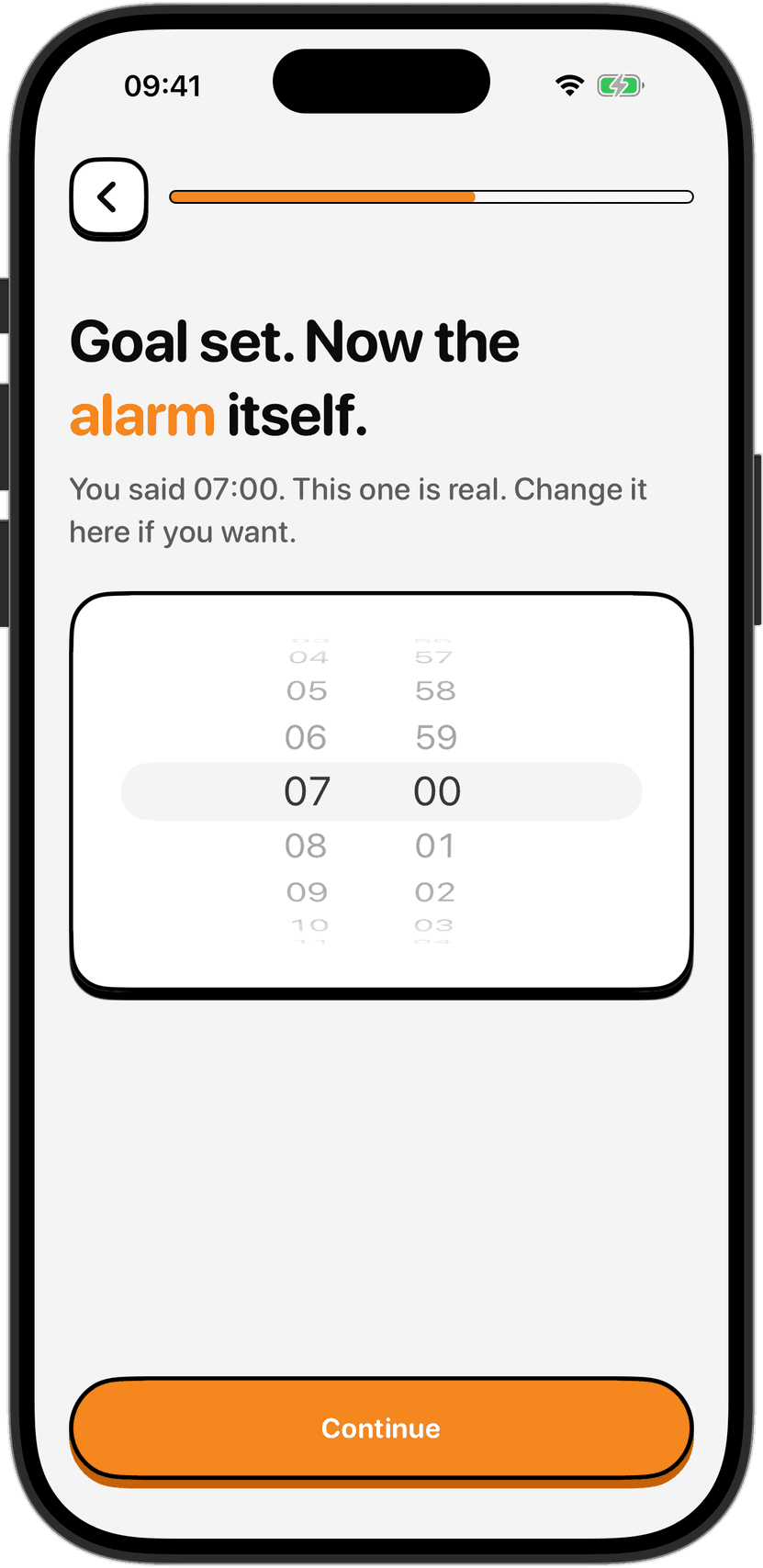
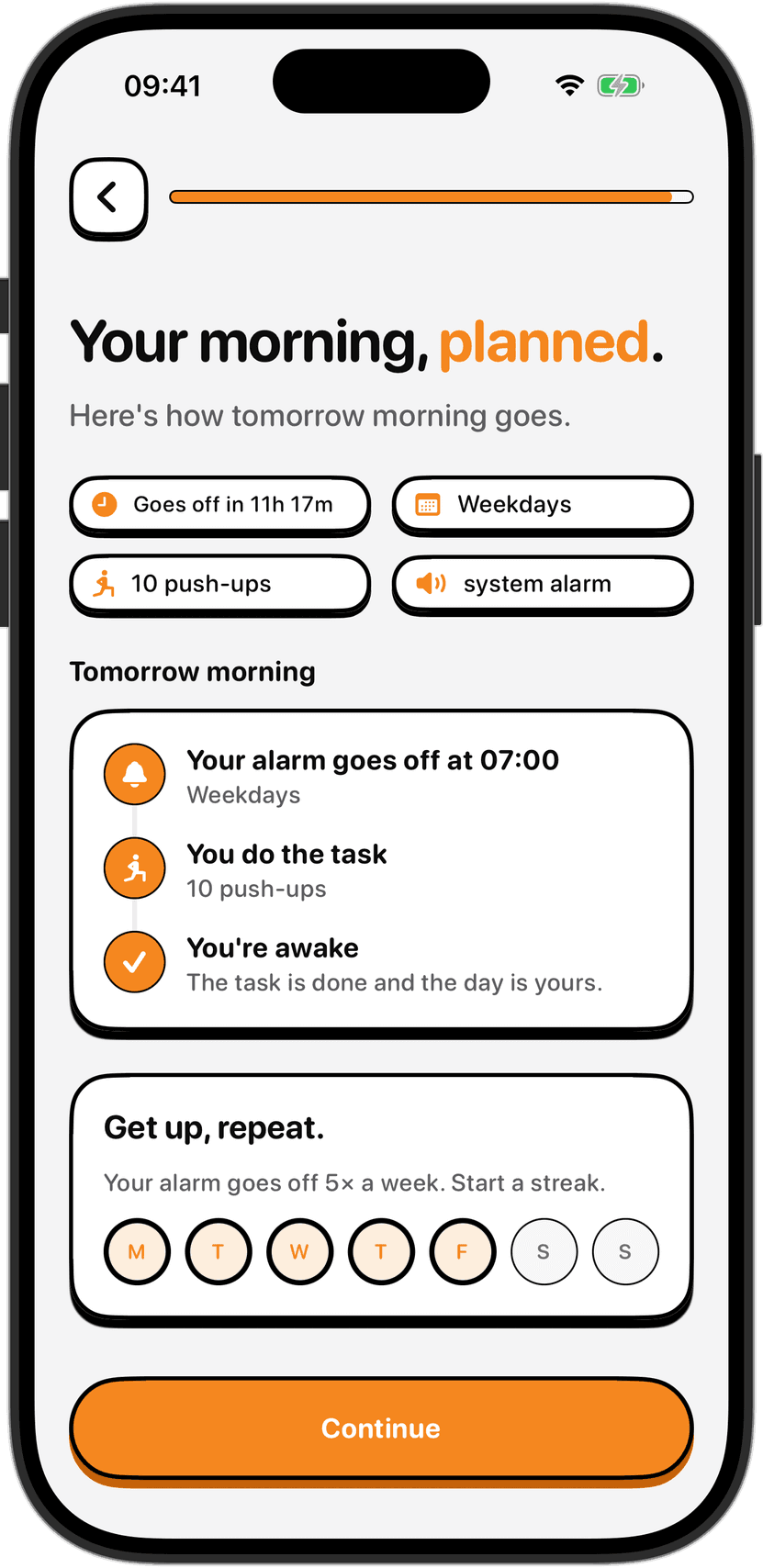
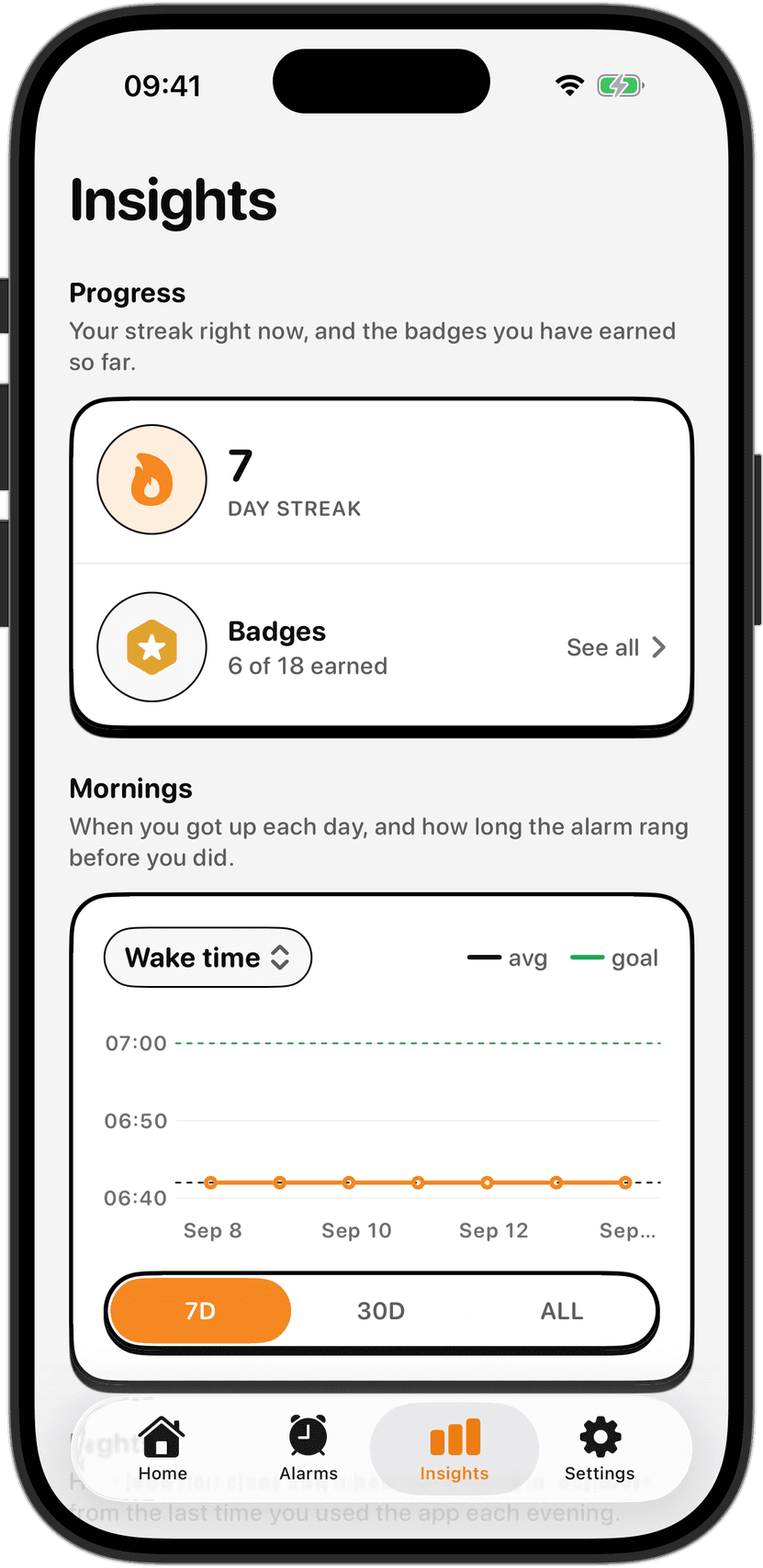
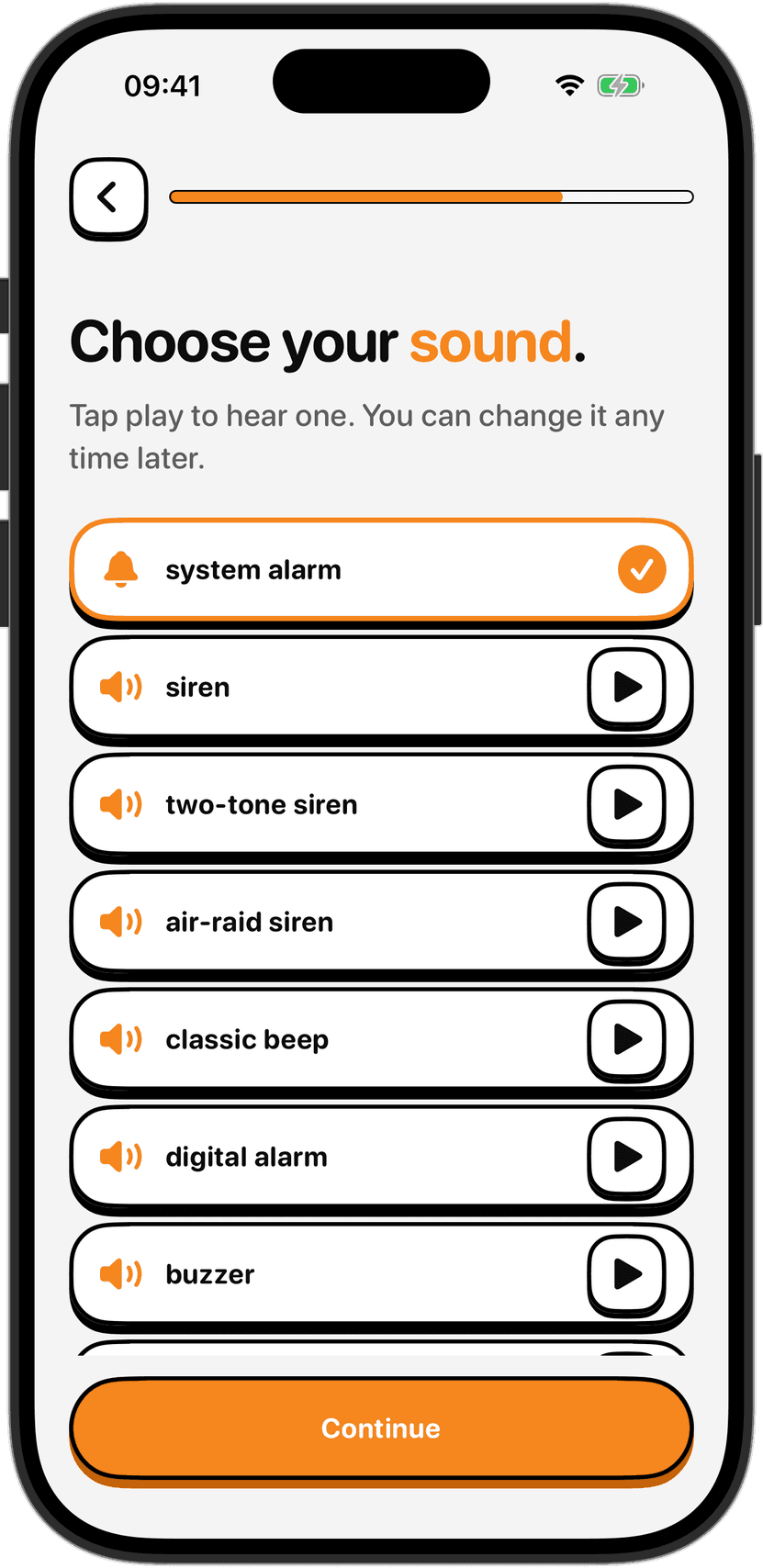
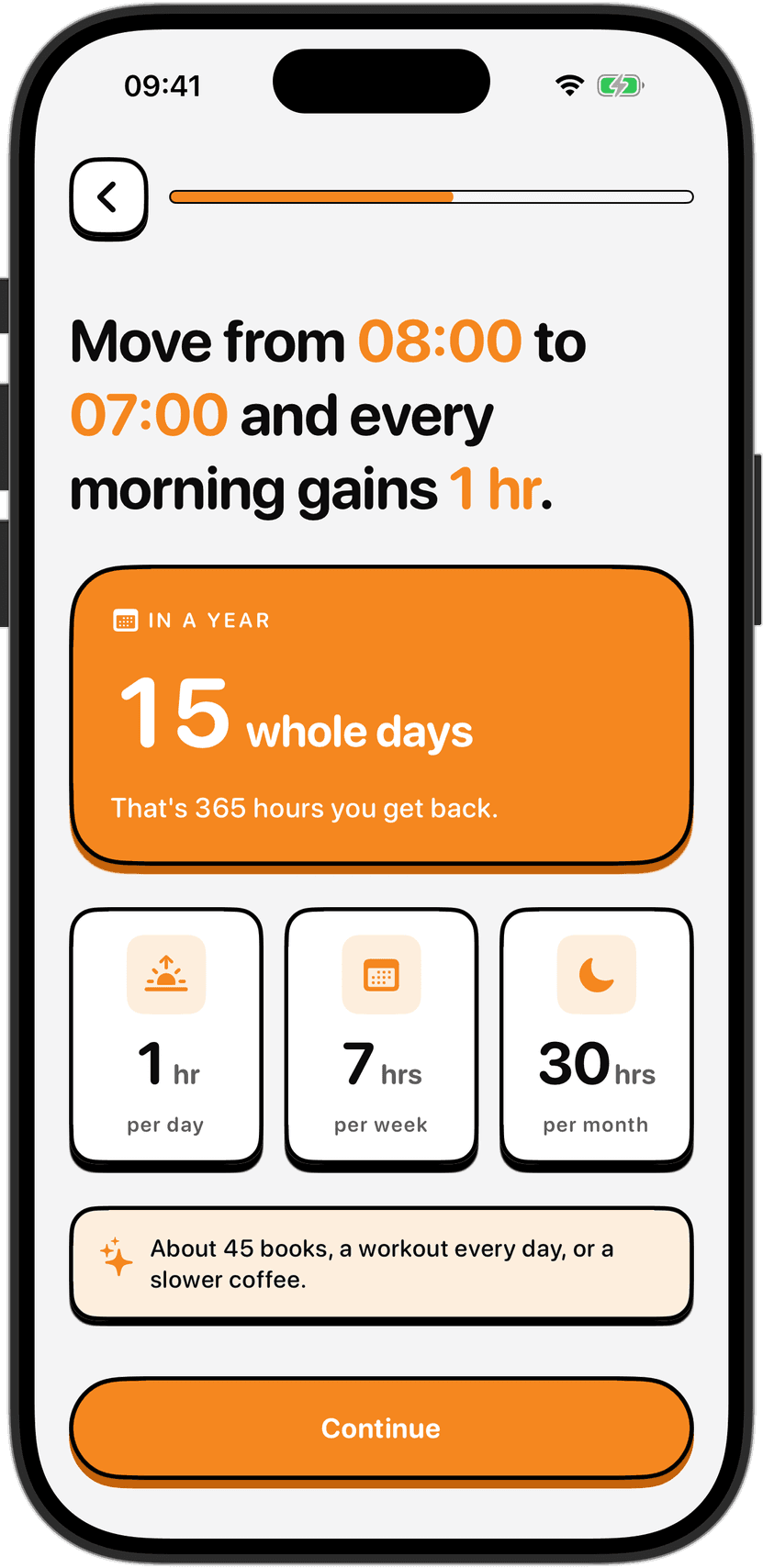
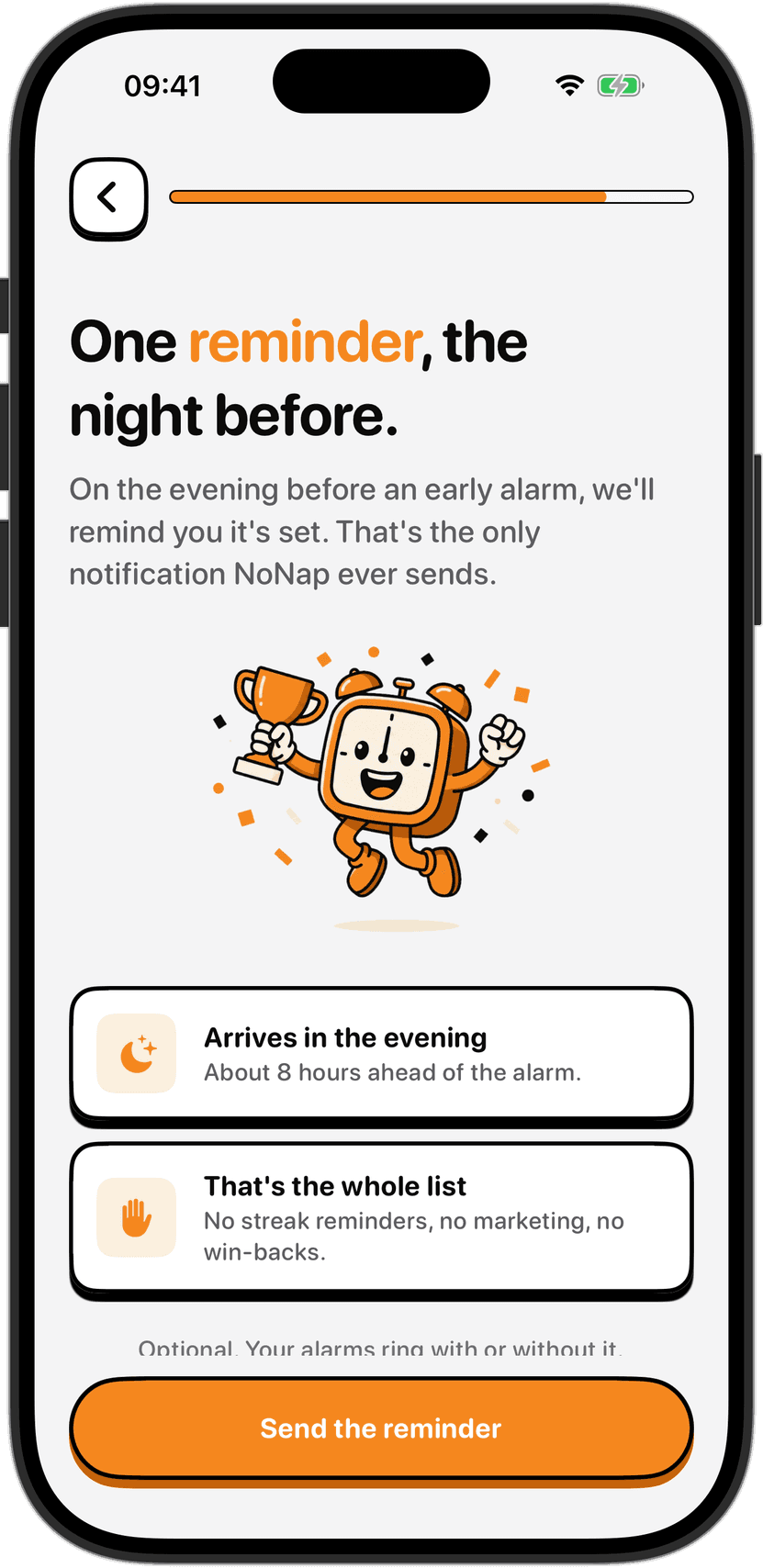
This is the exact kind of morning NoNap was built for: a single alarm with no snooze button to bargain with when the old time zone is still pulling hard. It runs on iPhone's system alarm, the same one behind the Clock app, so a Ring or Silent switch flipped by habit and a Focus mode left on from the flight don't get in the way, and stopping it means actually getting up rather than dozing until the old clock wins the argument. On the roughest jet lagged mornings, picking a gentler wake task like Shake Phone or Math is worth doing on purpose. Save push-ups or squats for a day the body isn't running on four hours of cramped airplane sleep, and stop immediately if anything feels off balance or wrong.
Sources
Riedy, S. M., and Williams, S. G. Jet Lag Disorder. CDC Yellow Book, 2026 edition, Centers for Disease Control and Prevention, accessed August 2026. cdc.gov/yellow-book/hcp/travel-air-sea/jet-lag-disorder.html
Morgenthaler, T. I., Lee-Chiong, T., Alessi, C., et al. Practice Parameters for the Clinical Evaluation and Treatment of Circadian Rhythm Sleep Disorders: An American Academy of Sleep Medicine Report. Sleep, 2007;30(11):1445-1459.
Sleep Foundation. How to Get Over Jet Lag: Tips, Suggestions, and Treatments. Sleep Foundation, accessed August 2026. sleepfoundation.org/travel-and-sleep/how-to-get-over-jet-lag
Image credits
Cover photo by Jon Tyson on Unsplash (unsplash.com/photos/sunrise-viewed-through-an-airplane-window-over-land-tsLQAKVIsSo), used under the Unsplash License.