How to Wake Up When You Sleep Through Your Alarm
Why some people don't wake to an alarm, what sleep debt and volume actually change about it, and the fixes that work better than a louder ringtone.
Visana Studios
5 min read
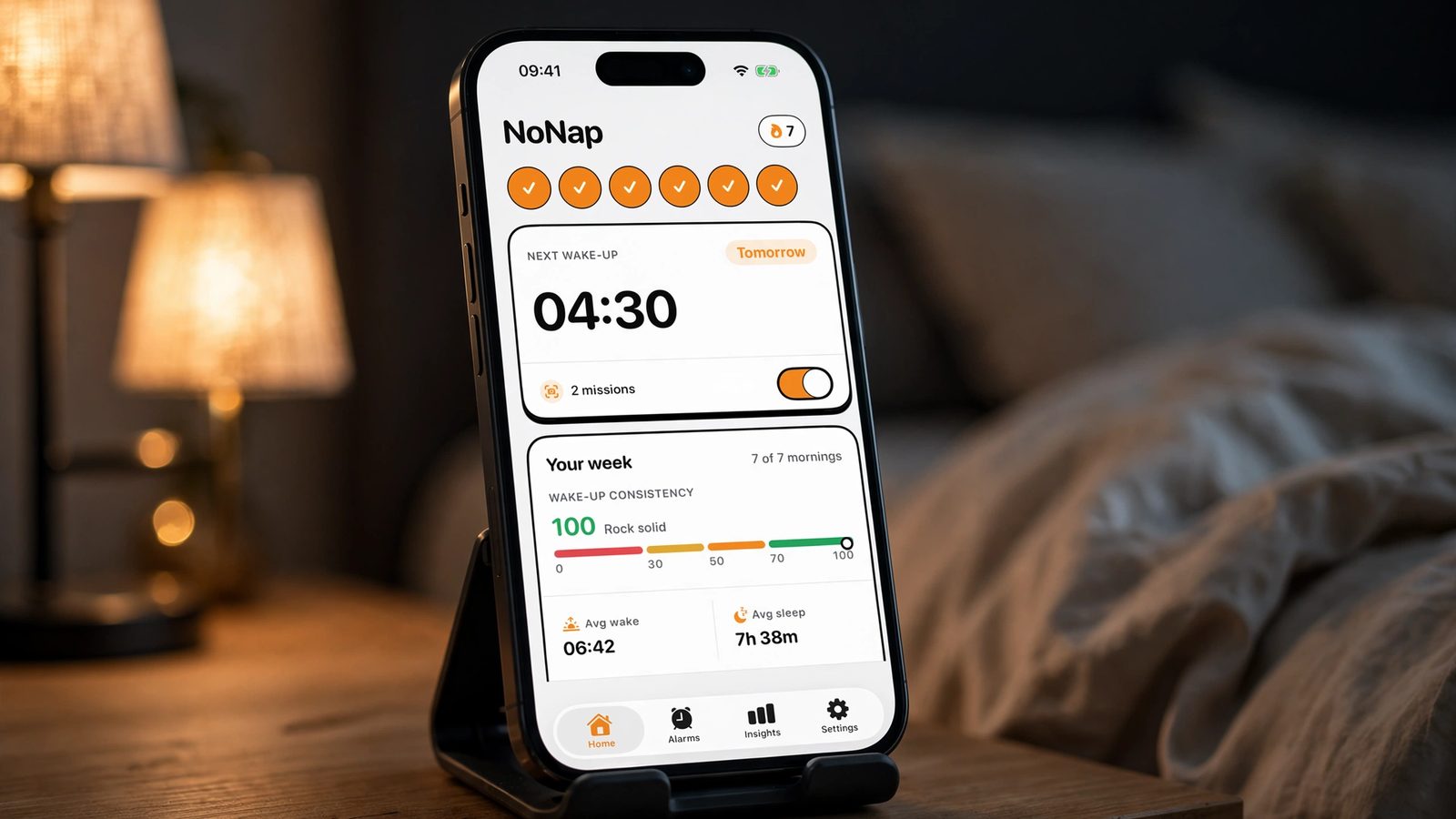
"Heavy sleeper" covers two different situations, and they call for different fixes. One is a genuinely high arousal threshold, the amount of stimulation it takes to pull someone out of sleep. The other is an ordinary sleeper who has been running a sleep debt for weeks, whose body has responded by sleeping harder than usual. An alarm that loses against either one feels the same at 6:45 in the morning: it rang, and nobody was there to hear it.
The deeper the sleep, the louder it has to be
Arousal threshold isn't fixed. It rises and falls with sleep stage, and slow-wave sleep, the deepest non-REM stage, has the highest threshold of all. A 1999 study by Bonnet and colleagues in Clinical Neurophysiology put a number on that. Ten men had two nights of their slow-wave sleep suppressed with bursts of sound, then a recovery night. When slow-wave sleep rebounded on the recovery night, the volume needed to wake each man up rose right along with it. The two moved together.
That matters for anyone who calls themselves a heavy sleeper, because it means the trait isn't constant. A short stretch of bad sleep primes the brain to spend more time in slow-wave sleep at the next opportunity, and that deeper sleep is exactly the kind an alarm has the hardest time reaching. The person who slept through their alarm on Thursday might simply have had three short nights first.
Most people are already running a deficit
That push toward heavier sleep is common, not rare. A National Health Interview Survey brief published by the CDC's National Center for Health Statistics in April 2026 found that 30.5 percent of US adults reported short sleep duration, under seven hours in a 24-hour period. Only 54.8 percent said they woke up feeling well-rested most days or every day. Put those two numbers together and a large share of people are waking from something closer to recovery sleep than an ordinary night, on a fairly regular basis. That is the exact condition that raises arousal thresholds.
What actually wakes people up
Given all that, does the sound itself matter, the tone or the tune? Less than people assume. A 2020 study in Injury Epidemiology by Smith, Kistamgari and Splaingard woke 150 sleeping adults with four different smoke-alarm signals, a female voice, a male voice, a low-frequency tone and a standard high-frequency tone, each played at 85 decibels measured at the pillow. Nearly everyone woke up: 149 of 150. Voice and low-frequency signals got a response about a second faster than the high-pitched tone, but the authors themselves called that gap small next to the fact that almost the whole group woke regardless of which signal played.
Volume did the heavy lifting there, not the melody. A separate 2020 review out of RMIT University, led by Stuart McFarlane and Adrian Dyer, found that a tuneful, mid-tempo tone left children less groggy on waking than a flat beep, and that lower frequencies around 500 Hz roused them more reliably than tones above 2,000 Hz. Worth knowing, but worth being honest about its limits too: that evidence comes mostly from studies of children, and the authors say plainly that whether it carries over to adults hasn't really been tested. If you sleep through your current alarm at a normal volume, swapping the ringtone for something gentler is unlikely to fix it. Swapping it for something louder and closer to your ear probably will.
Fixes that match the actual problem
Start with placement, since the smoke-alarm study got its result at 85 decibels right next to the pillow. If your phone is already there and it still doesn't wake you, the problem usually isn't the tone. It's the volume setting, silent mode left on by habit, or the sound getting muffled under a pillow or blanket overnight. Turn it up and clear the path to your ear before blaming the song.
Second, treat consistency as a fix in its own right. Since sleep debt is what deepens the sleep an alarm has to break through, a stable bedtime does more for waking up than any change to the alarm itself. It's a slower fix than a new ringtone, but it addresses the actual cause instead of working around it. A wake-up time you can actually hold to most nights matters more here than which sound plays. The sleep inertia that hits in the first few minutes after waking is a separate problem, but the same fix, one steady time, helps with both.
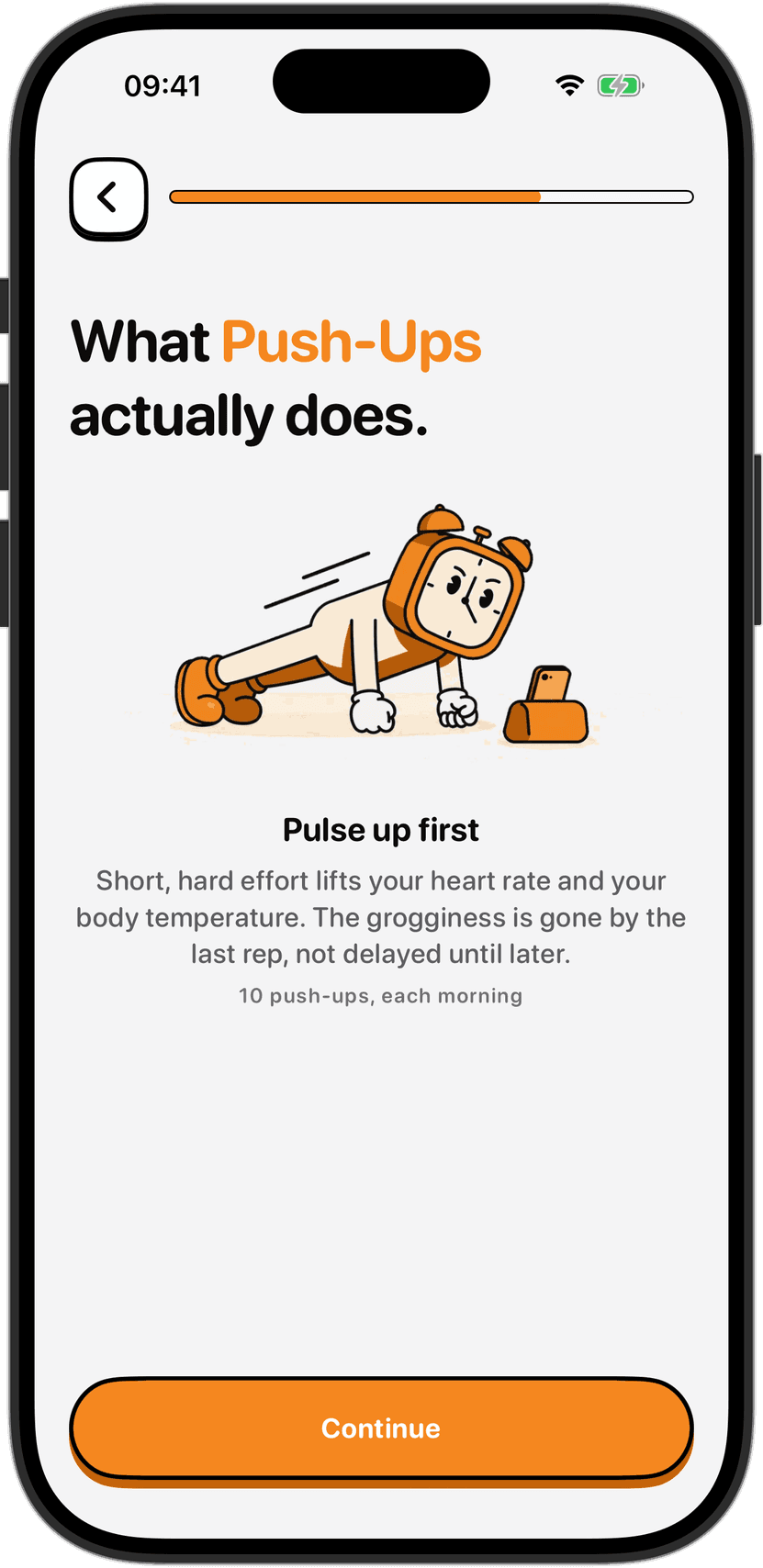
Third, make dismissing the alarm require being awake. A thumb finding a swipe target in the dark barely needs consciousness at all, which is exactly why it fails as proof that you're up. Getting out of bed to do something, a few reps of something physical, walking across the room, solving a short problem, forces the arousal to finish before the noise stops. If what you choose is physical, keep it realistic for a groggy body: clear the space around you first, and don't set a target you couldn't manage safely on a rough morning.
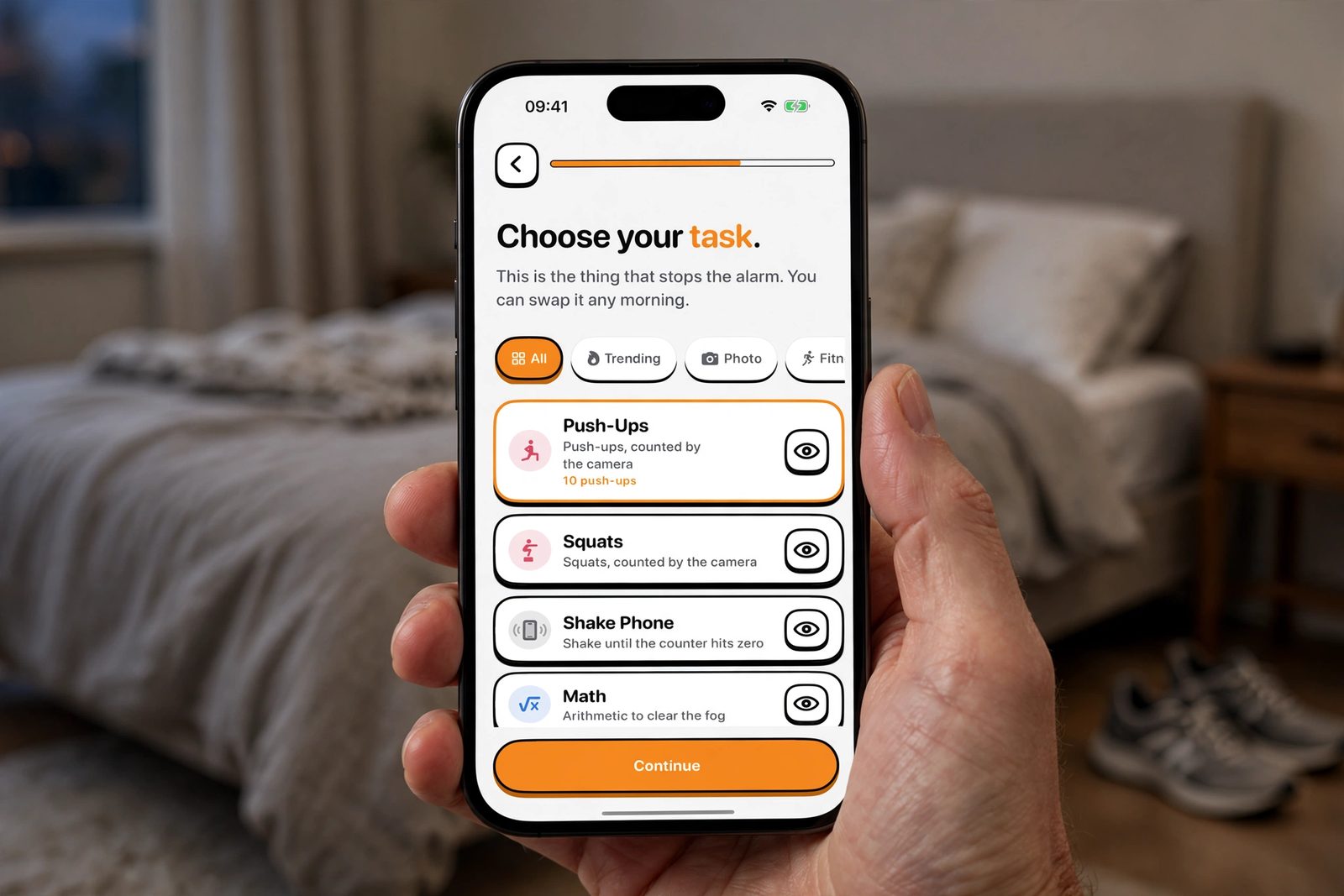
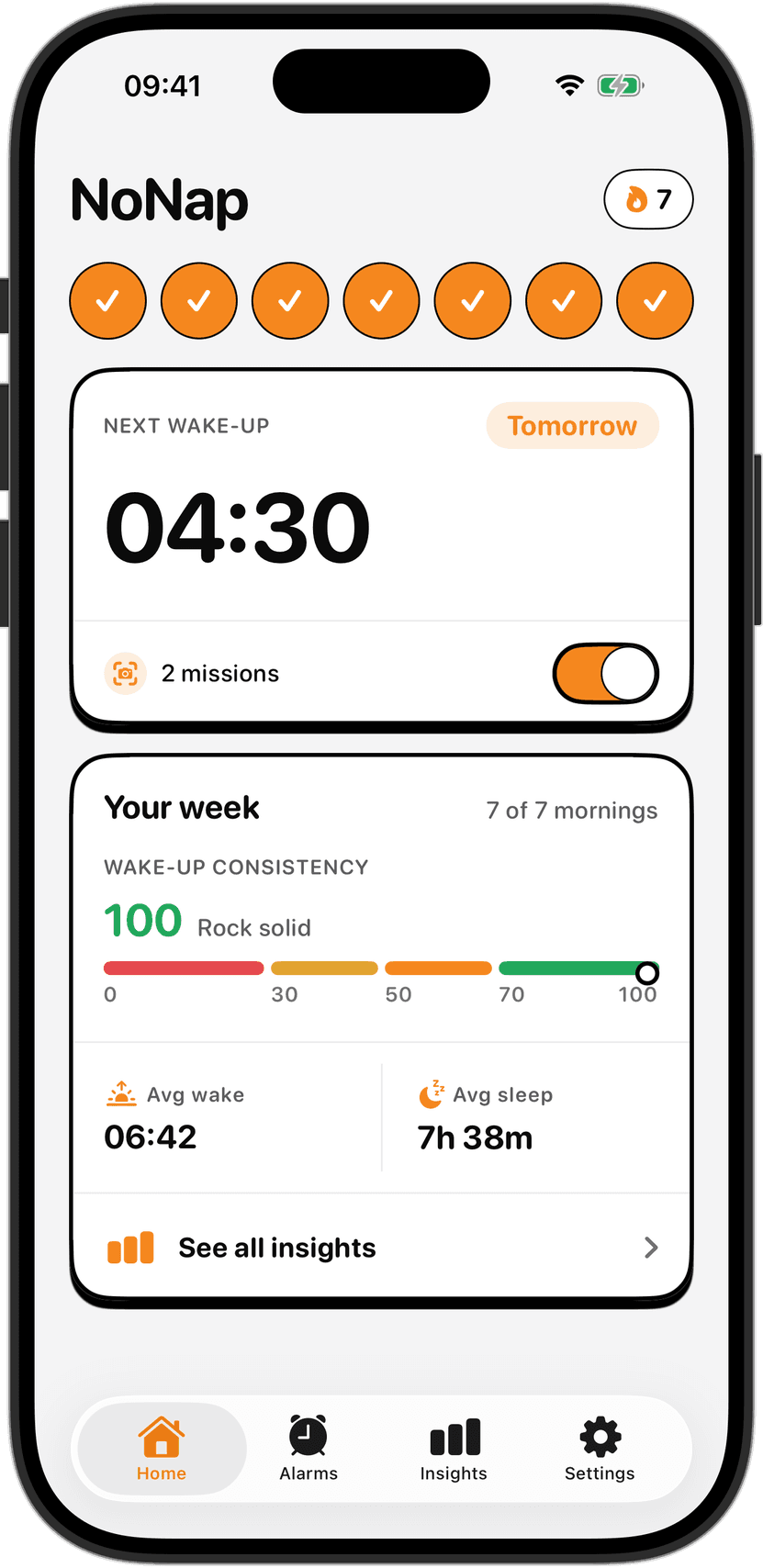
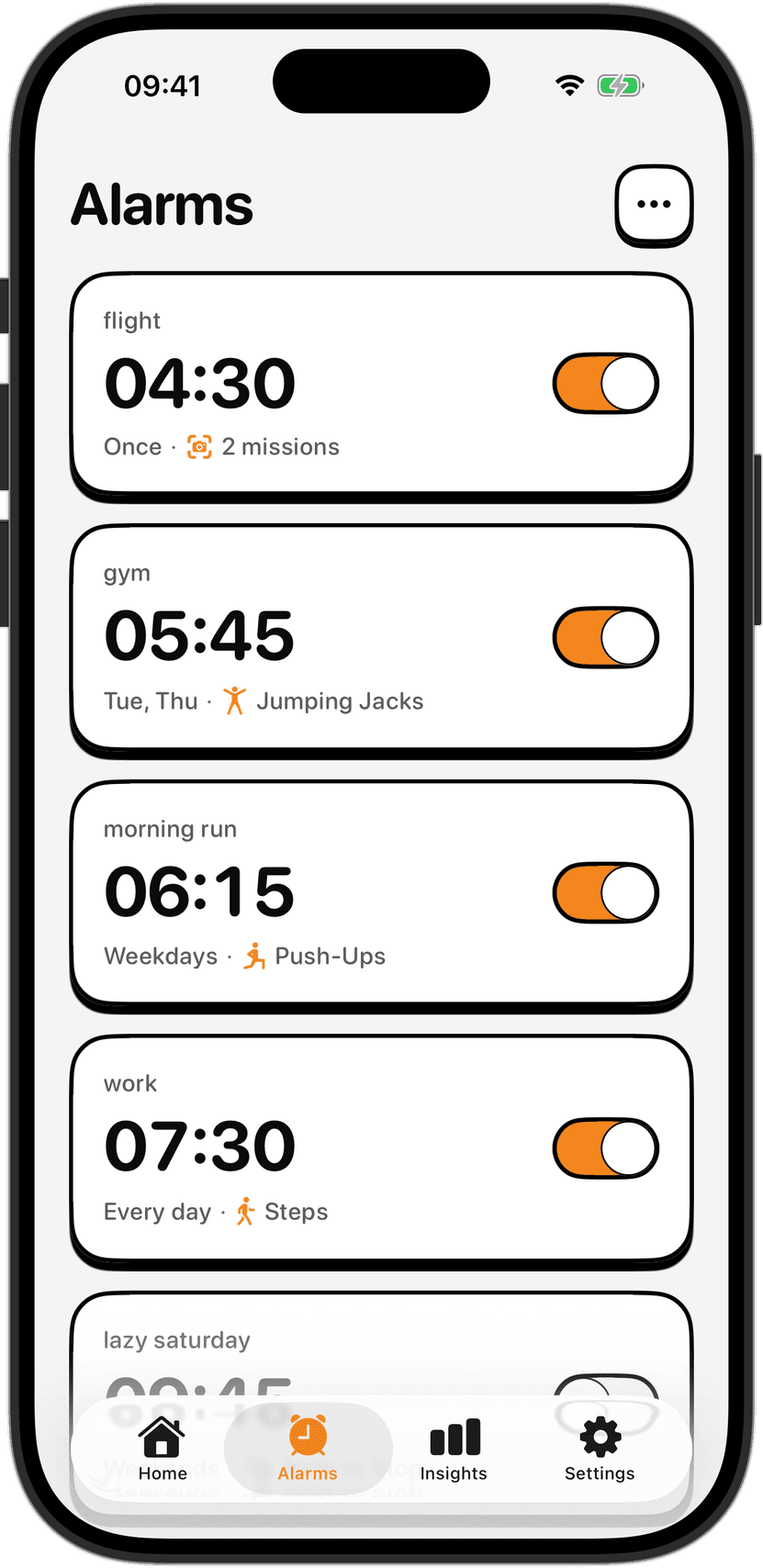
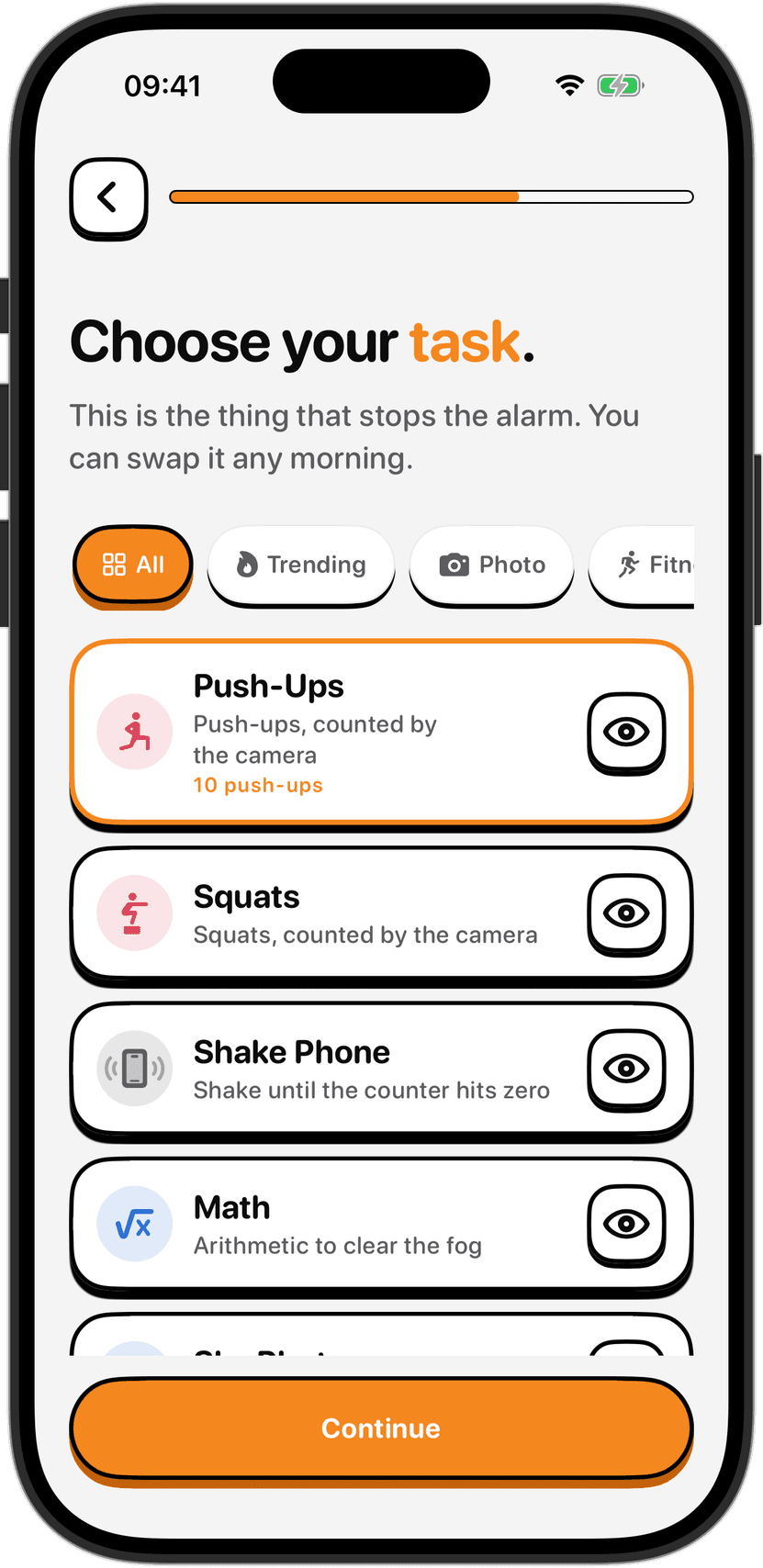
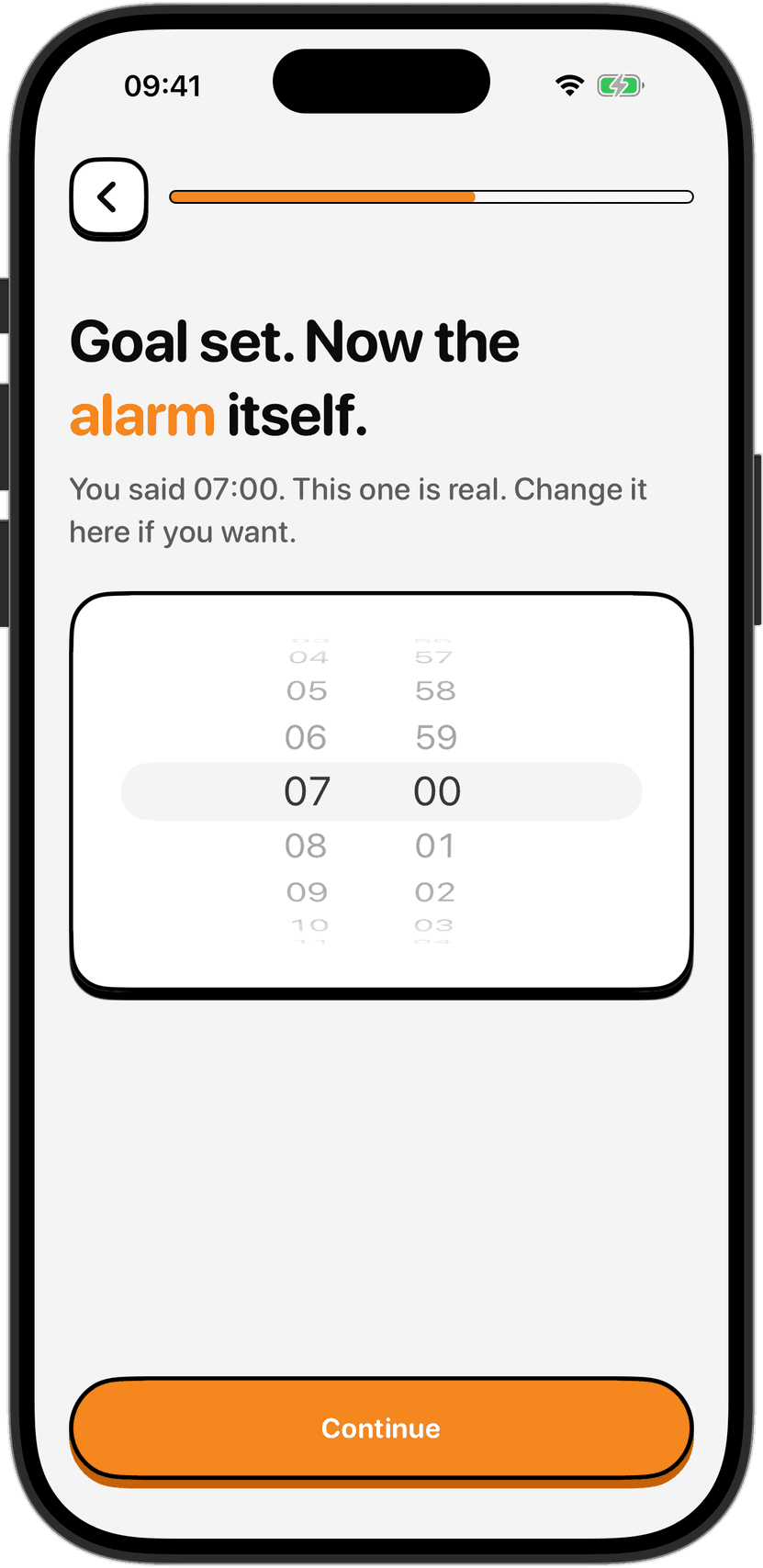
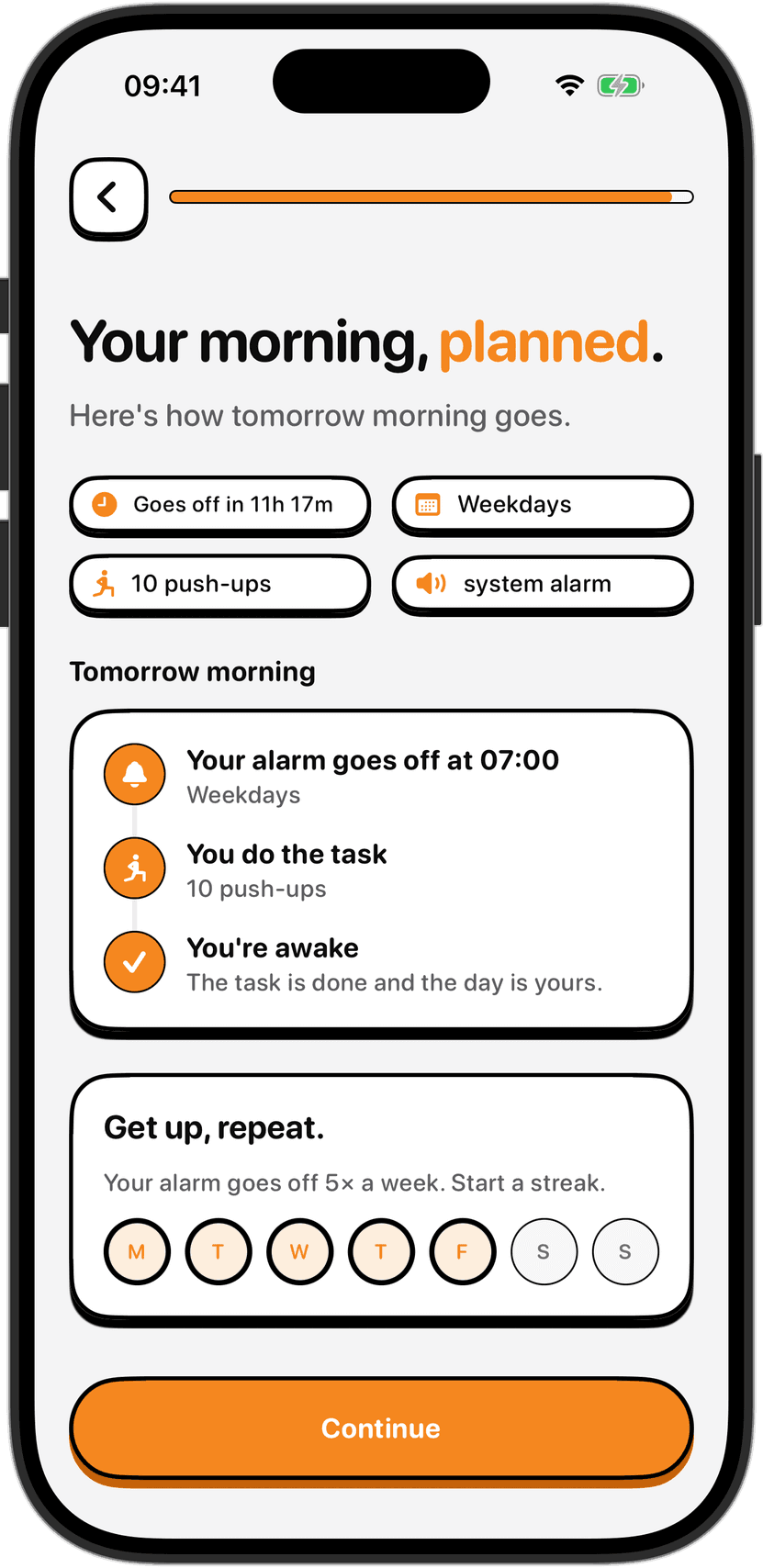
That's the mechanism NoNap is built around. Instead of a swipe, you finish a wake task, push-ups or squats counted by the camera, a math problem, a photo of something specific, before the alarm goes quiet, and because it uses the system alarm on iPhone, silent mode and Focus modes don't touch it either. None of that lowers anyone's arousal threshold. It just refuses to accept a half-asleep swipe as proof the job is done, which a plain alarm has no way to check.
Sources
Bonnet, M. H., and colleagues (1999). Auditory arousal thresholds after selective slow-wave sleep deprivation. Clinical Neurophysiology. https://www.sciencedirect.com/science/article/abs/pii/S1388245799001716
National Center for Health Statistics (2026). Short Sleep Duration and Sleep Difficulties Among Adults: United States, 2024. NCHS Data Brief No. 559, Centers for Disease Control and Prevention. https://www.cdc.gov/nchs/products/databriefs/db559.htm
Smith, G. A., Kistamgari, S., and Splaingard, M. (2020). Optimizing smoke alarm signals: testing the effectiveness of children's smoke alarms for sleeping adults. Injury Epidemiology, 7, 51. https://pmc.ncbi.nlm.nih.gov/articles/PMC7549244/
McFarlane, S., and Dyer, A. (2020). Findings from a systematic review of alarm tone pitch, melody and tempo, RMIT University, reported in "Is there such a thing as the perfect alarm tone?" The Conversation. https://theconversation.com/is-there-such-a-thing-as-the-perfect-alarm-tone-we-think-so-and-this-is-what-it-might-sound-like-178902