Getting up on dark winter mornings: why darkness makes it harder
Darkness suppresses alertness and keeps melatonin flowing. Here's what makes winter mornings feel impossible, and practical strategies to get out of bed.
Visana Studios
4 min read

The alarm goes off at 6:30 a.m. in January, and it still looks like midnight outside. Your brain is not trying to trick you into sleeping in. Darkness is a direct signal to your body to stay asleep, and in winter, that signal is relentless.
Light is the single strongest regulator of your circadian rhythm, the internal clock that decides when you feel alert and when you feel sleepy. Darkness does the opposite: it triggers melatonin production, the hormone that locks your body into sleep mode. When your wake-up time arrives in the dark, your brain is still being told it is the middle of the night.
Why your body refuses to wake in darkness
The moment sunrise comes in summer, your eyes detect the light and send a signal to the suprachiasmatic nucleus, the cluster of cells in your brain that runs your circadian rhythm. This signal says: it is morning, be alert. In winter, when you wake before dawn, that signal never comes. Instead, your body keeps releasing melatonin, the hormone that keeps you drowsy.
This is not a bug in your biology. It is a feature that evolved over thousands of years, when darkness reliably meant it was not time to be active. Your circadian rhythm runs on roughly a 24-hour cycle, but it is not a fixed clock. Light exposure advances or delays it, depending on timing. Without that light signal in the morning, your body's clock drifts. Your sleep pressure, the accumulated need for rest, stays high.
The result is sleep inertia on top of circadian mismatch. You are not just tired because you woke early. You are tired because your body is still in sleep mode, still producing the hormone that keeps you that way, and still waiting for the light that would normally signal it is time to wake.
Strategies that work
Brightness is the most reliable fix. Exposure to bright light in the morning, even for 15 or 30 minutes, can reset your circadian rhythm and suppress melatonin production. A sunrise lamp, a very bright overhead light, or stepping outside into morning twilight all work, though the science is clearest on bright light in the 2,500 to 10,000 lux range. A regular indoor lamp is unlikely to be bright enough. Aim for something designed as a light therapy lamp, or go outside as soon as there is any predawn light in the sky.
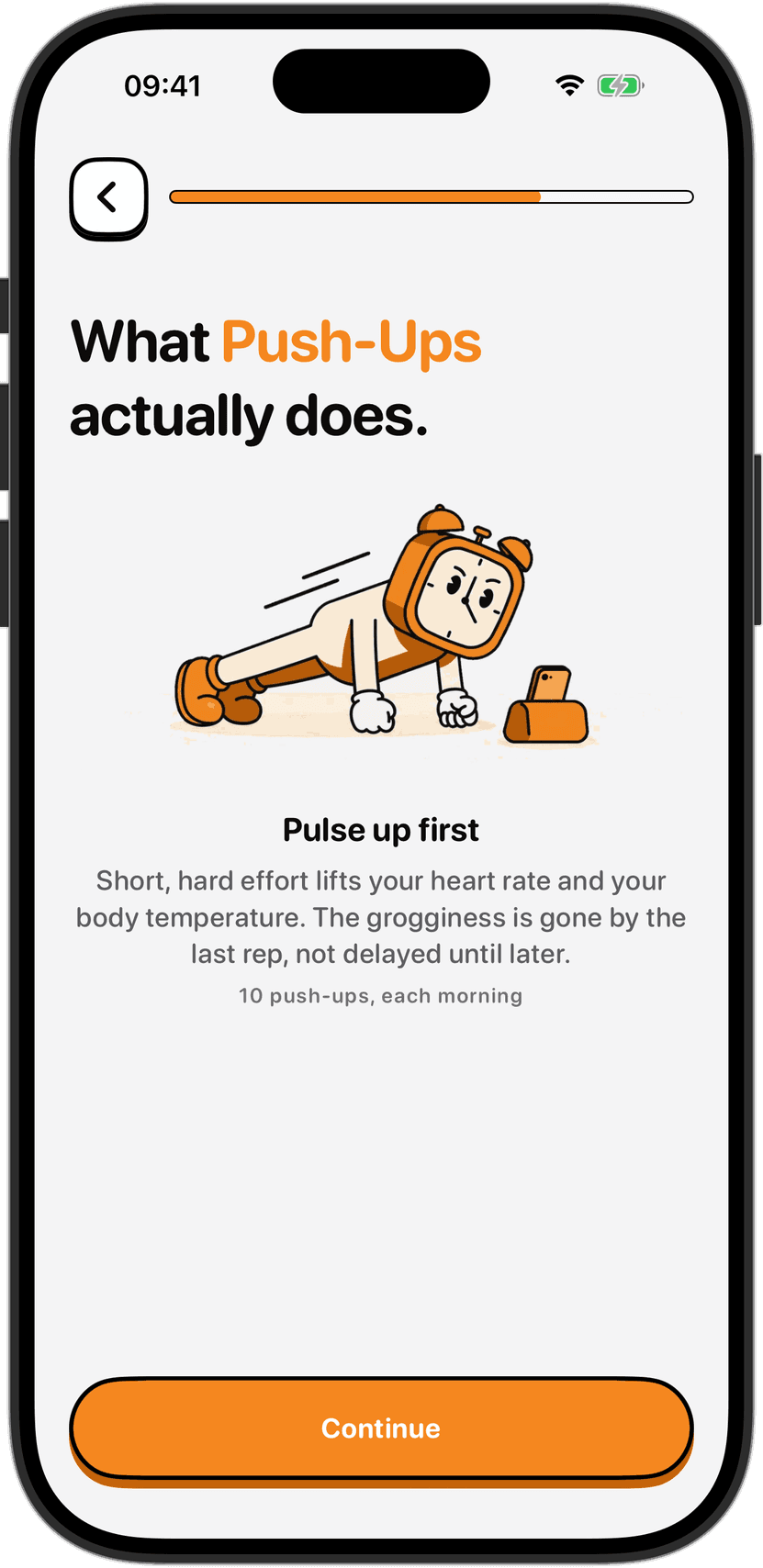
If a lamp is not practical, movement works. A few minutes of exercise, especially if it involves going outside, jumpstarts alertness through multiple routes: the movement itself raises your heart rate and body temperature, and any outdoor light, even on a grey morning, carries more lux than the inside of a bedroom. You do not need a full workout. A brisk 10-minute walk often shifts the entire morning.
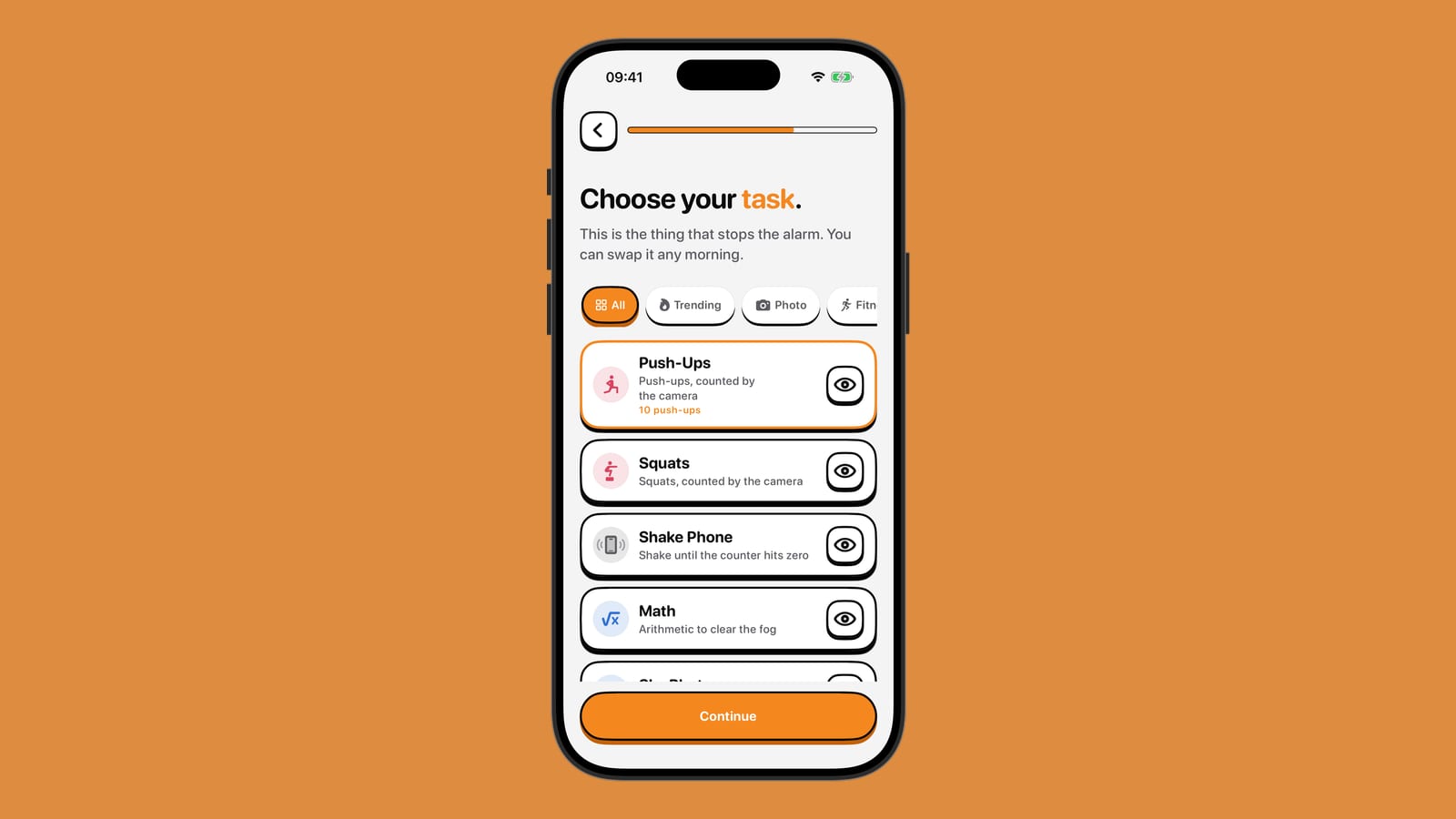
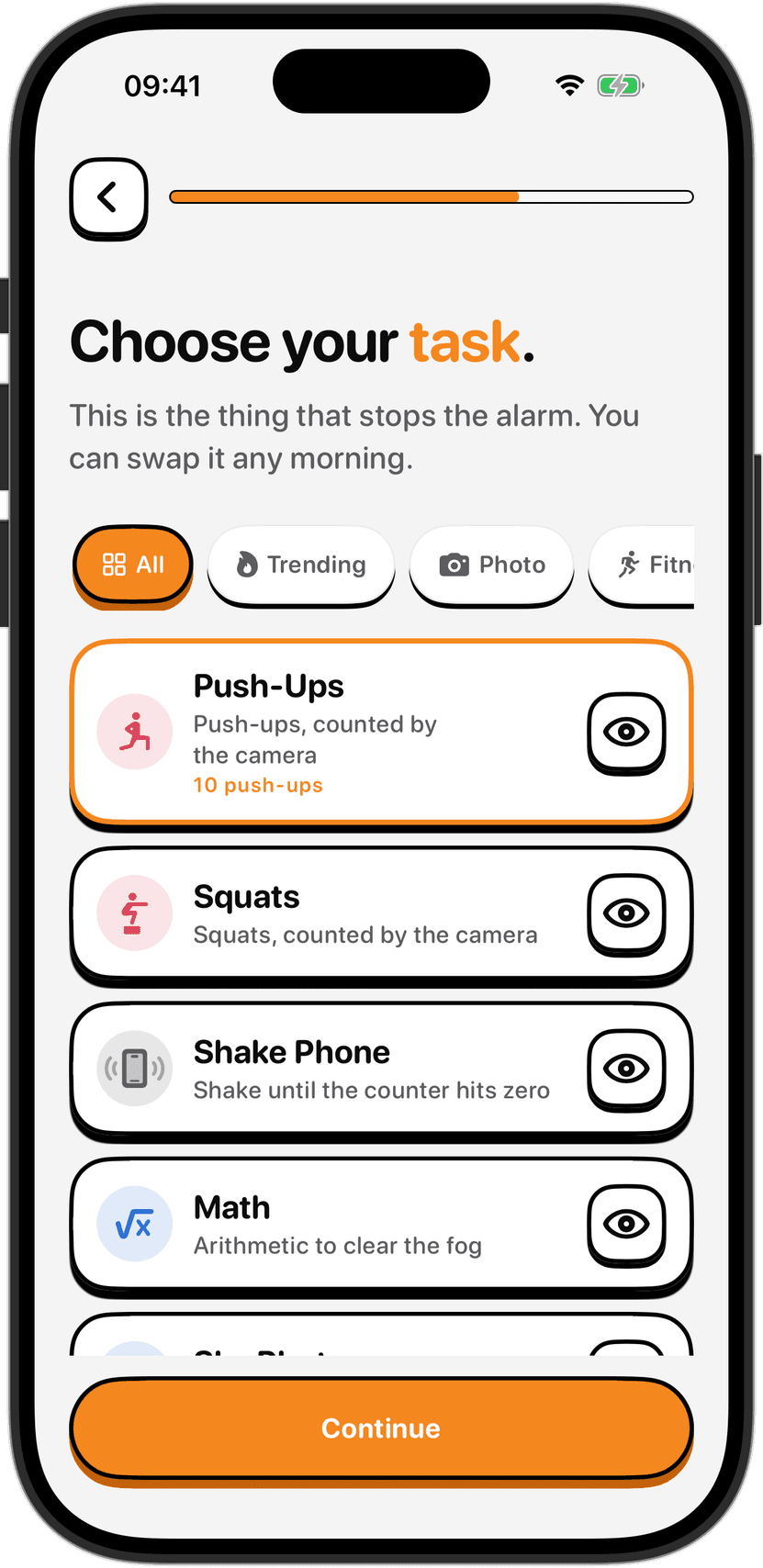
A task that demands real effort also helps, especially one your body has to do right away. When you have to complete something the moment the alarm goes off, your brain has less chance to debate whether sleep is more important than waking. This is where a physical or cognitive wake task creates an advantage: your alarm does not just ring, it demands something now. By the time you have finished 10 squats or solved a quick math problem, your body temperature has risen and your alertness has shifted.
Temperature also matters. A cool bedroom helps you sleep, but a warm shower or even warm water on your face as soon as you wake can increase alertness and suppress melatonin. The contrast between cold sleep and warmth after waking signals to your body that the environment has changed, that sleep time is over.
The weeks that matter most
The transition is usually worst in October and November in the Northern Hemisphere, when the days shorten fastest and your circadian rhythm is still adjusted to summer. Your body has not yet adapted to the new light schedule, so the mismatch between your wake time and the actual sunrise is most severe. By late January and February, many people have adapted somewhat, even though mornings are still dark.
If you know winter is coming, keeping a consistent wake time now, even on weekends, makes the transition easier. A fixed wake time is the anchor that holds your entire circadian rhythm in place. Sleeping in on weekends, or shifting your wake time by more than an hour, destabilizes this anchor and makes dark-morning waking harder. The consistency through autumn means your body is already adjusted when the shortest days arrive.
How NoNap fits in
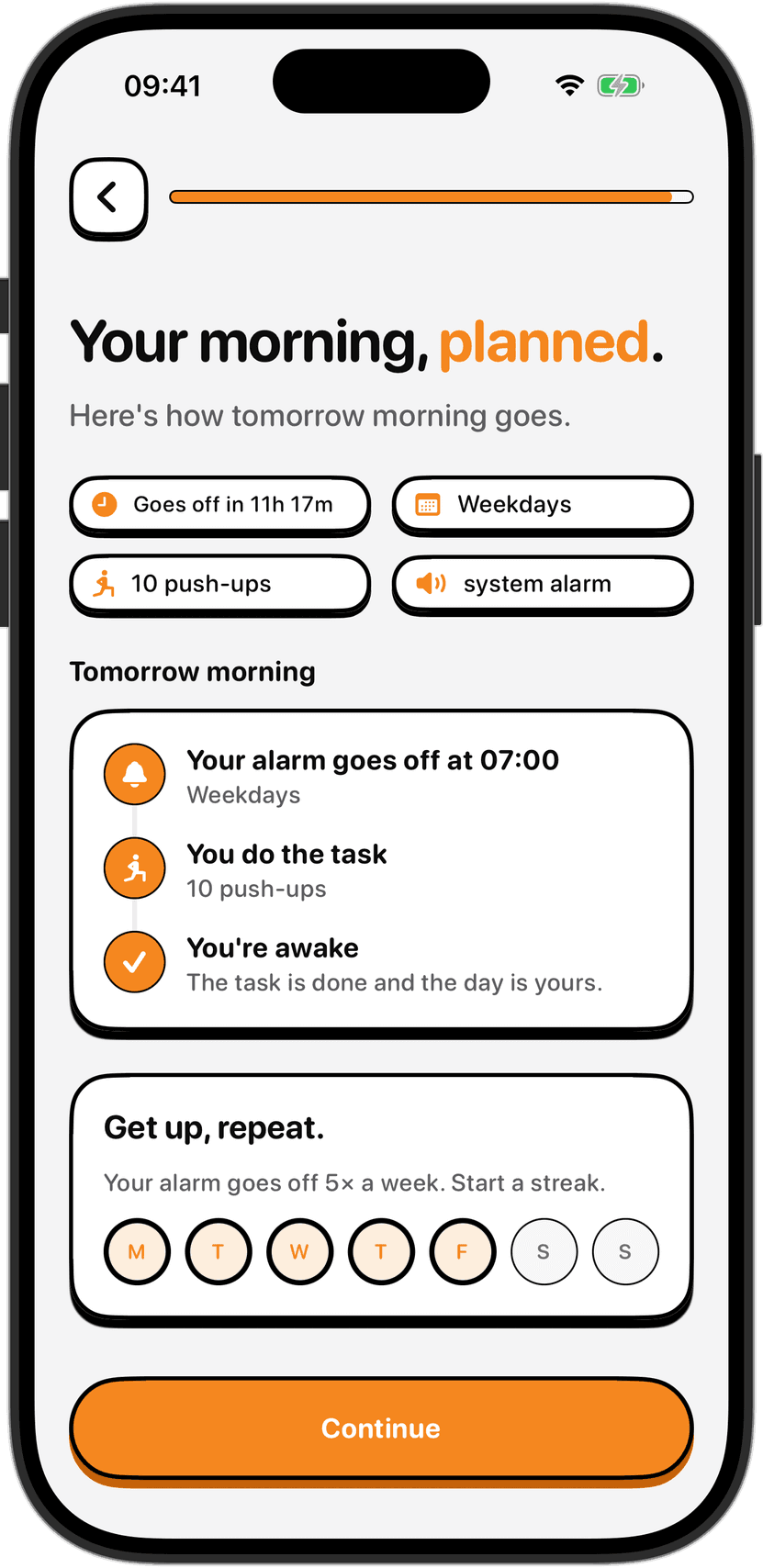
A loud alarm that you cannot snooze, paired with a task that demands real effort, takes away the option to negotiate with sleep inertia. In a dark winter morning, when your body is telling you that it is still nighttime and sleep is the priority, an alarm you can dismiss with a snooze button is almost certain to lose. NoNap's design removes that negotiation: no snooze, one alarm, one task. The squats or push-ups you chose get your body moving, raise your temperature, and clear the sleep inertia before your brain has time to argue.
Pair the alarm with a bright light as soon as you get up, or step outside for your task, and you have addressed the two biggest obstacles to waking in winter: the lack of the morning light signal your body expects, and the sleep inertia that darkness amplifies.
Sources
Sleep Foundation. "How Light and Darkness Affect Sleep." Retrieved from https://www.sleepfoundation.org/bedroom-environment/light-and-sleep, as of September 2026.
Circadian rhythm. Wikipedia. Retrieved from https://en.wikipedia.org/wiki/Circadian_rhythm, as of September 2026.