How to Fix Your Sleep Schedule in a Week
A seven-day plan to reset your sleep schedule using small wake-time shifts, morning light and an evening cutoff, based on NIH and AASM guidance.
Visana Studios
5 min read

A week is enough time to move your sleep schedule by about an hour, maybe a little more, if you do it in the right order. Jump straight to a new bedtime and you will lie there wide awake at 10 p.m. because your body still expects to be up. The fix is not willpower. It is sequencing: fix the wake time first, let light do the pulling, and protect the new time every evening so it actually holds.
Set the wake time, not the bedtime
Most attempts to fix a broken sleep schedule start at the wrong end. Pick a bedtime, get into bed, wait. But bedtime is the output of a schedule, not the input. The input is when you get up and when you first see light, because that is the signal your circadian clock responds to.
The National Institutes of Health's sleep research describes it plainly: light received through your eyes tells your brain it is daytime, and the timing of that light shapes when melatonin rises in the evening and clears in the morning. Move your first light exposure earlier, and over a few days your body starts releasing melatonin earlier too. That is what makes an earlier bedtime feel possible instead of forced.
So pick the wake time you actually want first. Work backward from there.
Move in 15-minute steps, not one jump
The American Academy of Sleep Medicine's guidance on resetting a sleep routine is specific: shift bedtime and wake time by 15 minutes each day, not the whole hour or two at once. A week gives you six or seven of those steps, enough for a shift of about an hour to ninety minutes if you hold it every day, weekends included.
That feels slow on day one. It is supposed to. Your circadian clock does not reset the way a phone does when you cross a time zone. Push it faster than 15 minutes a day and most "new schedule starting Monday" attempts fall apart by Wednesday, back to the old wake time out of sheer sleep pressure.
Let morning light do the pulling
Once you are up at the new, slightly earlier time, get outside or at least near a bright window within the first half hour. NIH guidance on circadian rhythm disorders recommends morning light specifically to shift sleep earlier, and afternoon or evening light to shift it later. You want earlier, so morning light is the tool here, not a nice extra.
The same NIH source is direct about the opposite mistake. Bright artificial light late in the evening, a TV, a phone, a harsh overhead lamp, delays the exact melatonin rise you are trying to move earlier. If the new bedtime is 10:30, the hour before it is not the moment to catch up on a bright screen. Ten minutes of scrolling can undo what the whole morning built.
Protect the shift every evening
Three habits undo a careful week faster than anything else: caffeine too late, naps that run long, and exercise too close to bedtime. NIH guidance recommends cutting caffeine at least eight hours before your target bedtime, since it lingers in your system well past the point where the jittery feeling wears off. Skip naps this week if you can, especially in the afternoon; they eat into the sleep pressure that is supposed to carry you to the new, earlier bedtime. Daytime exercise helps, but push it into the evening and you delay the shift instead of supporting it.
The AASM adds one more habit worth keeping: turn off screens 30 to 60 minutes before lights out. It is less about blue light theatrics than plain timing. A bright phone at 10 p.m. is competing directly with the light-timing signal you spent all day building.
What a week actually looks like
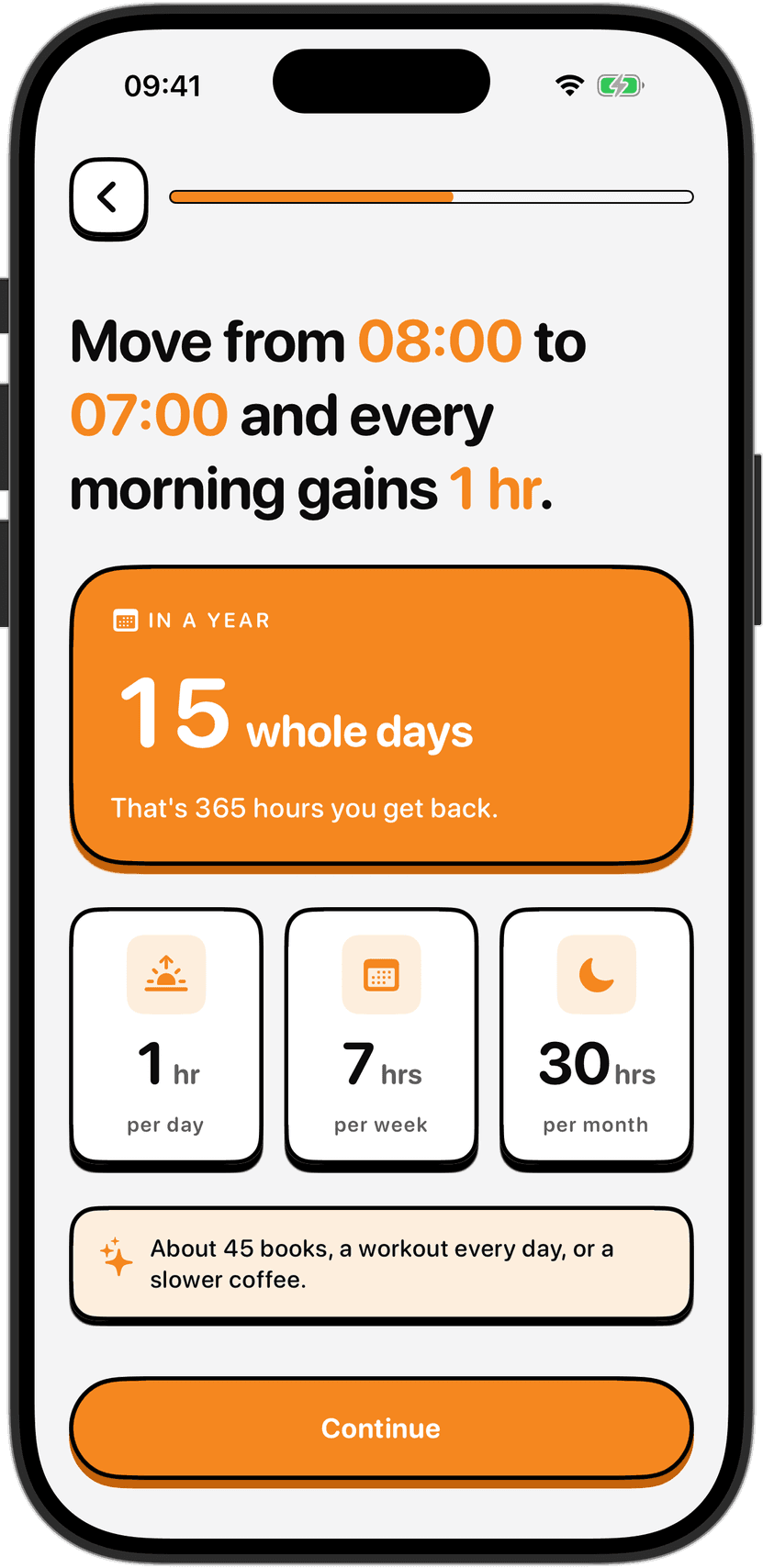
Say your alarm currently rings at 8:30 and you want 7:00. That is a 90-minute move, doable but tight in a week. Shift both bedtime and wake time 15 minutes earlier each day. 8:15, then 8:00, then 7:45, and so on, getting outside within half an hour of each new wake time and holding the caffeine cutoff from day one rather than day four. By day six you are close to 7:00, and mornings already feel less like a fight than they did on day one. If the gap is closer to three hours, plan on two weeks instead of forcing it into one. The 15-minute pace is a limit for a reason, not a suggestion to beat.
When a week is not enough
If you have kept the wake time steady every day, including weekends, managed light and caffeine, and you are still lying awake for an hour before falling asleep, or waking exhausted no matter how early you turned in, that is worth a conversation with a doctor rather than another week of self-directed shifting. A 2022 review of circadian rhythm sleep-wake disorder treatments, published in Current Neuropharmacology, notes that more aggressive schedule-shifting protocols exist for diagnosed conditions such as delayed sleep-wake phase disorder, but the evidence behind them is still thin. The supporting studies are small, and no randomized trial has properly tested them. That is a reason to get an actual diagnosis first, not a reason to try the extreme version on your own.
Holding it once you get there
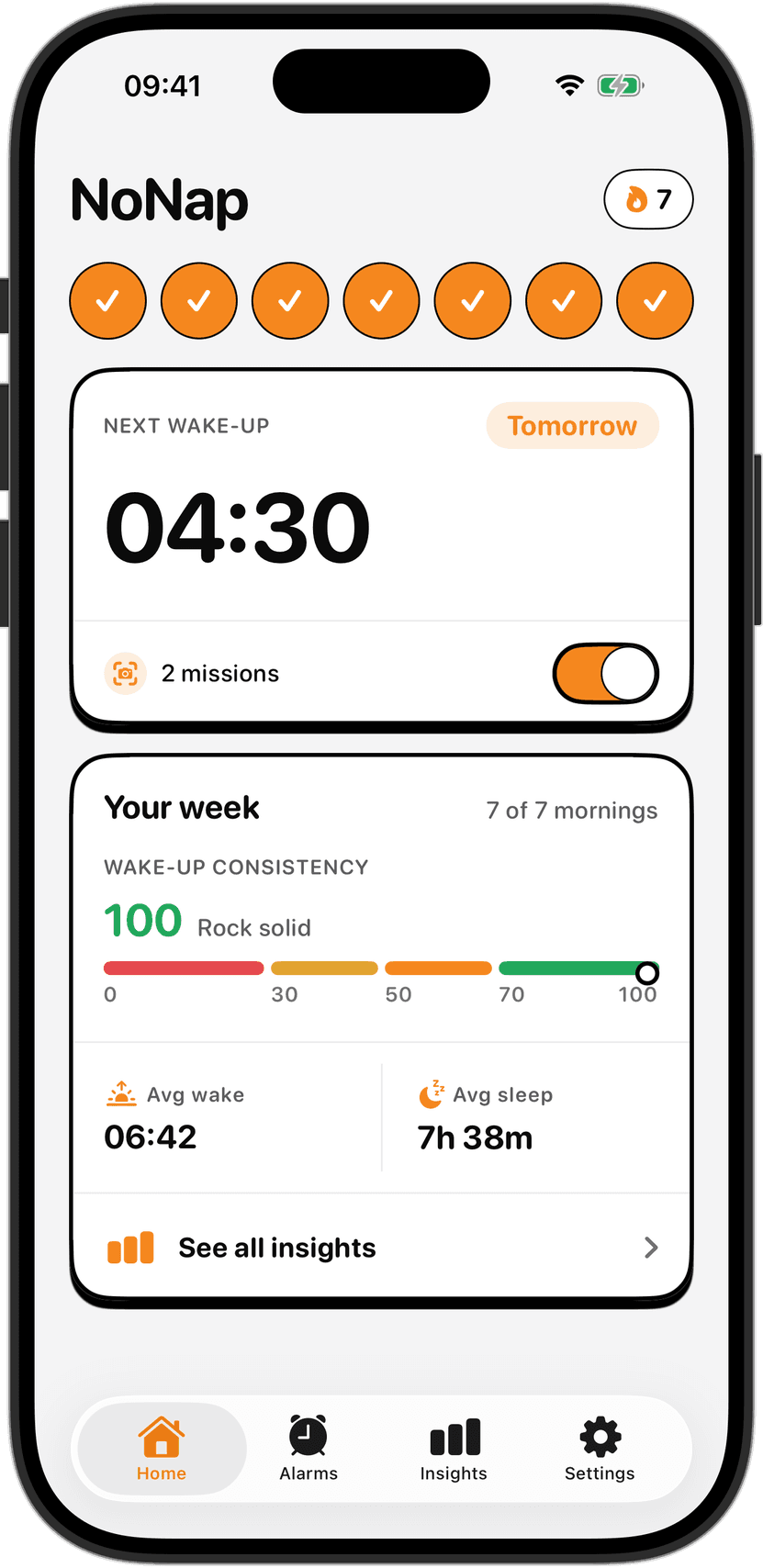
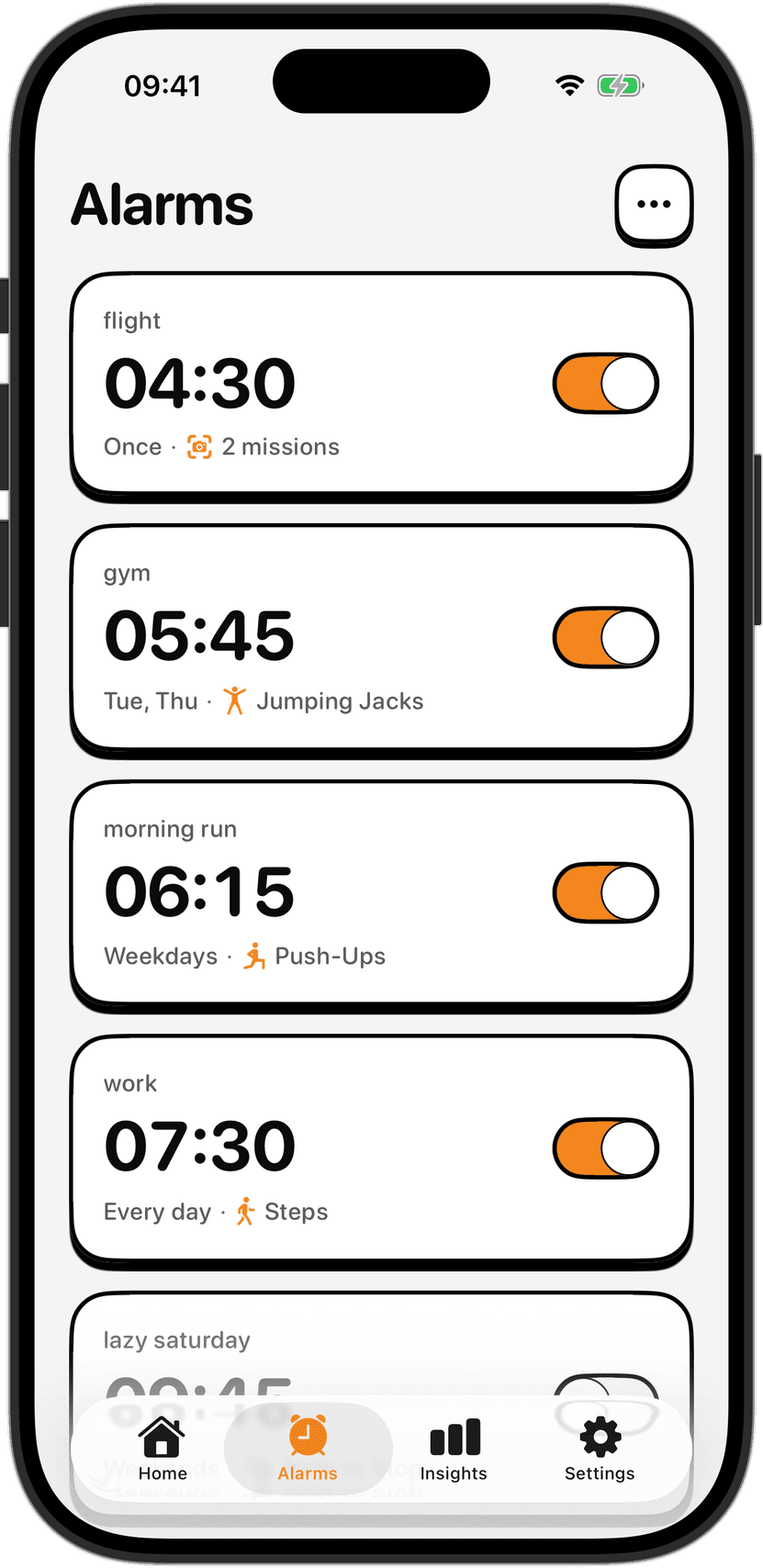
The hard part is rarely the first week. It is the second one, once the urgency fades and the old wake time starts pulling you back. A fixed wake time only works as an anchor if something actually gets you out of bed at it. That is the idea behind NoNap's wake tasks: an alarm that rings through silent mode and can't be dismissed from the lock screen, so the new wake time has to hold whether you feel like it that morning or not.
Give the new schedule two full weeks before deciding whether it worked. The first is habit. The second is where it stops feeling like an experiment and starts being your actual sleep schedule.
Sources
National Heart, Lung, and Blood Institute, NIH. Circadian Rhythm Disorders: Treatment. https://www.nhlbi.nih.gov/health/circadian-rhythm-disorders/treatment
National Heart, Lung, and Blood Institute, NIH. How Sleep Works: Your Sleep/Wake Cycle. https://www.nhlbi.nih.gov/health/sleep/sleep-wake-cycle
American Academy of Sleep Medicine. (2023). Help the student in your life hit reset on their bedtime routine this fall. https://aasm.org/help-the-student-in-your-life-hit-reset-on-their-bedtime-routine-this-fall/
Sun, S.-Y., & Chen, G.-H. (2022). Treatment of Circadian Rhythm Sleep-Wake Disorders. Current Neuropharmacology, 20(6), 1022–1034. https://doi.org/10.2174/1570159X19666210907122933
Image credits
Cover photo by Adrien Robert on Unsplash (unsplash.com/photos/FguerUFGEJI), showing a brass twin-bell alarm clock in morning light, used under the Unsplash License, which permits commercial use without payment.