Exercise timing and sleep: when you work out matters for tonight's rest
Morning vs evening workouts affect sleep differently. Learn how intensity, timing and hours before bed determine whether exercise helps or hurts your sleep.
Visana Studios
5 min read

The question of whether you should exercise in the morning or evening seems straightforward, but the research is more nuanced. If you exercise matters to your sleep, it is not the time of day that decides, but the intensity of the workout and how many hours remain until you try to sleep.
The straightforward part: vigorous exercise too close to bedtime disrupts sleep
Your body temperature needs to drop for sleep to happen. Exercise raises core temperature, and vigorous activity can keep it elevated for hours. When you work out too close to bedtime, your body is still trying to cool down when you are supposed to fall asleep.
Studies show the effect is measurable. Vigorous workouts ending within two hours of sleep onset delay falling asleep by around 36 minutes. When high-intensity exercise finishes even closer to sleep, the delay can exceed 80 minutes. Very intense activity within one hour of bed should be avoided. The guideline that emerges from the research is practical: finish vigorous exercise at least four hours before sleep, or do lighter-intensity work within that window.
Light activity performed two hours before sleep costs roughly 15 minutes of sleep onset, but very high-intensity workouts in the same window cost closer to 45 minutes. The intensity matters more than the clock.
Morning vs evening exercise: it is not clear-cut
The idea that one time of day is always better than another does not hold up. Morning exercise and evening exercise each carry different effects, and the choice depends on what your sleep needs and your schedule allow.
Morning workouts have measurable benefits for sleep quality and circadian alignment. Exercise in the late morning or early afternoon signals your body clock to advance slightly, shifting your rhythm earlier. This can help people who naturally sleep and wake later. Morning exercise also decreases cortisol levels after waking, reducing the tension that often accompanies the first hours of the day. Outdoor morning exercise adds the effect of light exposure, which strengthens the circadian signal and is harder to replicate indoors.
Evening exercise, even vigorous evening exercise, can improve sleep. Multiple studies find that exercising in the late afternoon or early evening before dinner helps people fall asleep faster, reduces nighttime awakenings, and increases time in deep sleep. The same body-temperature rise that is a problem right before bed becomes an advantage hours earlier, because your body temperature naturally drops over the following hours and reaches its lowest point around sleep time. That drop, combined with the body's fatigue from exercise, can deepen sleep.
The catch is intensity and timing. Studies find that evening exercise improves sleep only when the workout finishes at least 90 minutes before sleep, and ideally at least four hours. A light evening walk or an easy swim can work closer to bedtime. A hard gym session or a run should not.
Why it matters to your circadian rhythm
Your circadian rhythm governs not just sleep and waking but your appetite, body temperature, hormone release, and a hundred other functions. Exercise influences the rhythm, but how depends on when you do it.
Resistance training performed in late morning (between 10 a.m. and 1 p.m.) slightly advances the circadian timing of body temperature, shifting your rhythm earlier. Morning workouts strengthen the signal from sunlight, anchoring your rhythm to the day's light-dark cycle. Evening workouts do not shift the rhythm in the same way, and for people with circadian rhythm disorders, evening exercise can actually delay sleep onset further. But for people without sleep disorders, the research shows evening exercise is beneficial without negative timing effects, suggesting the individual's sleep architecture matters more than the time of day alone.
A practical framework
The evidence supports flexible timing, prioritizing adherence over the perfect time of day. Here is what the research points to:
You can exercise in the morning or evening and improve your sleep, provided you finish vigorous activity at least four hours before bed. If your schedule allows exercise only within three hours of sleep, make it light or moderate intensity, or choose lighter tasks: a gentle walk, stretching, restorative yoga or an easy swim. A hard run or weightlifting session less than three hours before bed costs sleep.
If you are naturally a night owl struggling to sleep at a reasonable hour, morning exercise (especially outdoors) can help shift your rhythm earlier. If you wake too early and cannot return to sleep, evening workouts are fine so long as they finish well before bed. Consistency matters more than timing; 150 minutes of weekly exercise across five days improves sleep across the board, regardless of when you do it.
Pay attention to your own response. Some people tolerate evening exercise better than others, and chronotype (whether you are a morning person or an evening person by nature) influences how much late-day exercise affects you. If evening workouts leave you wired, move them earlier or dial down the intensity. If you struggle to wake in the morning, a vigorous workout in the late morning or early afternoon may sharpen your alertness for the rest of the day and anchor your sleep schedule earlier at night.
Waking up on your own terms
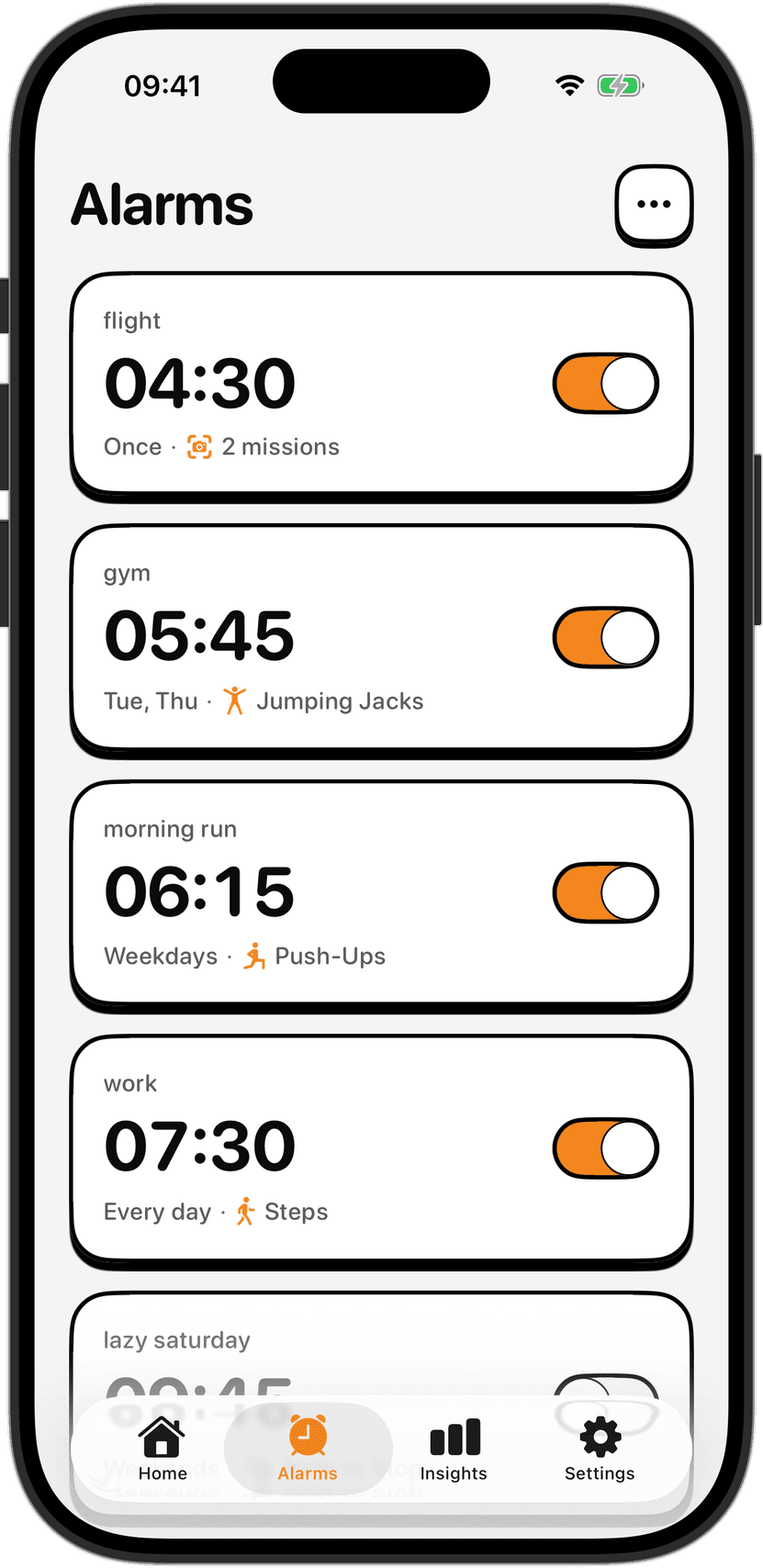
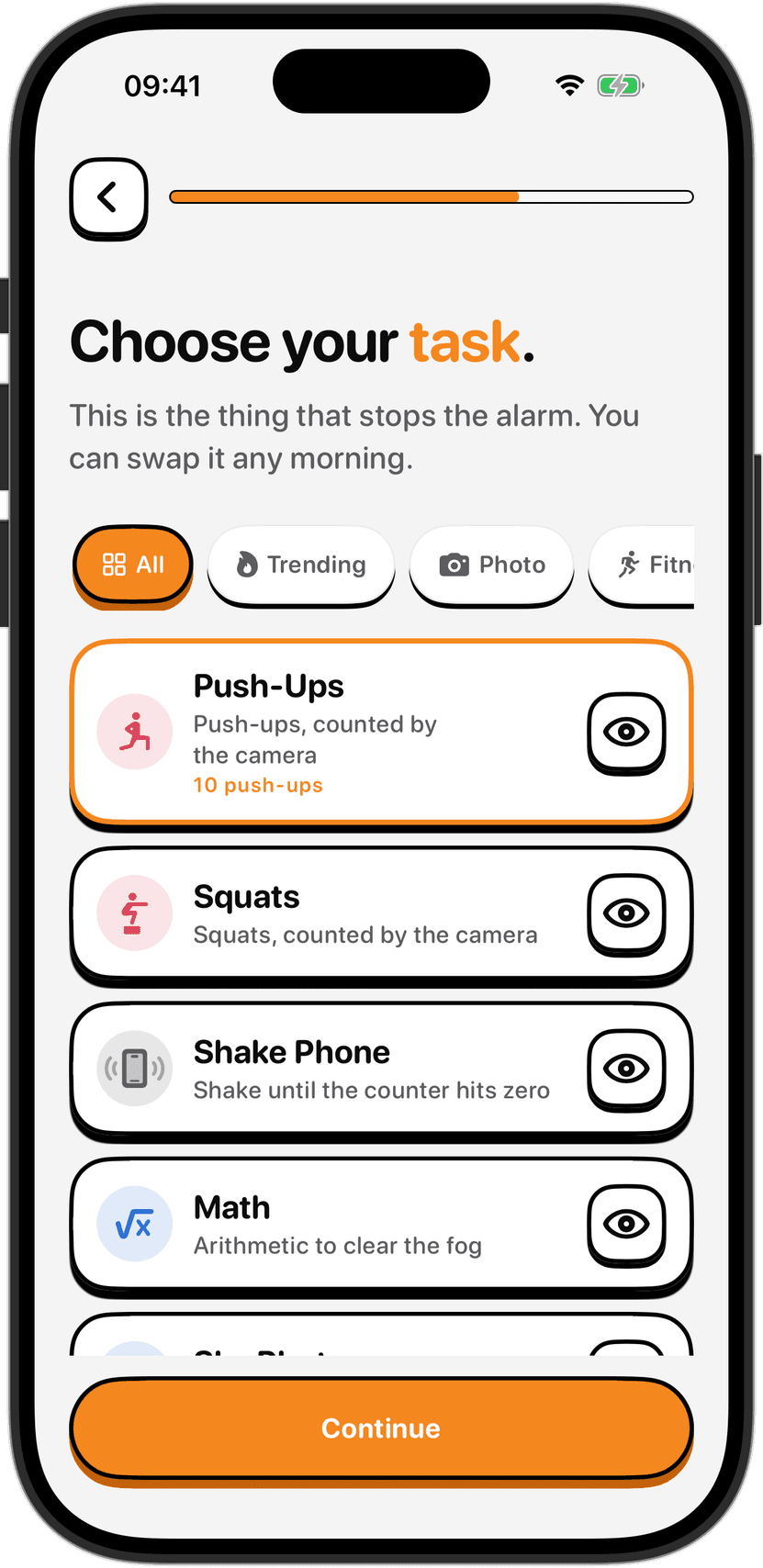
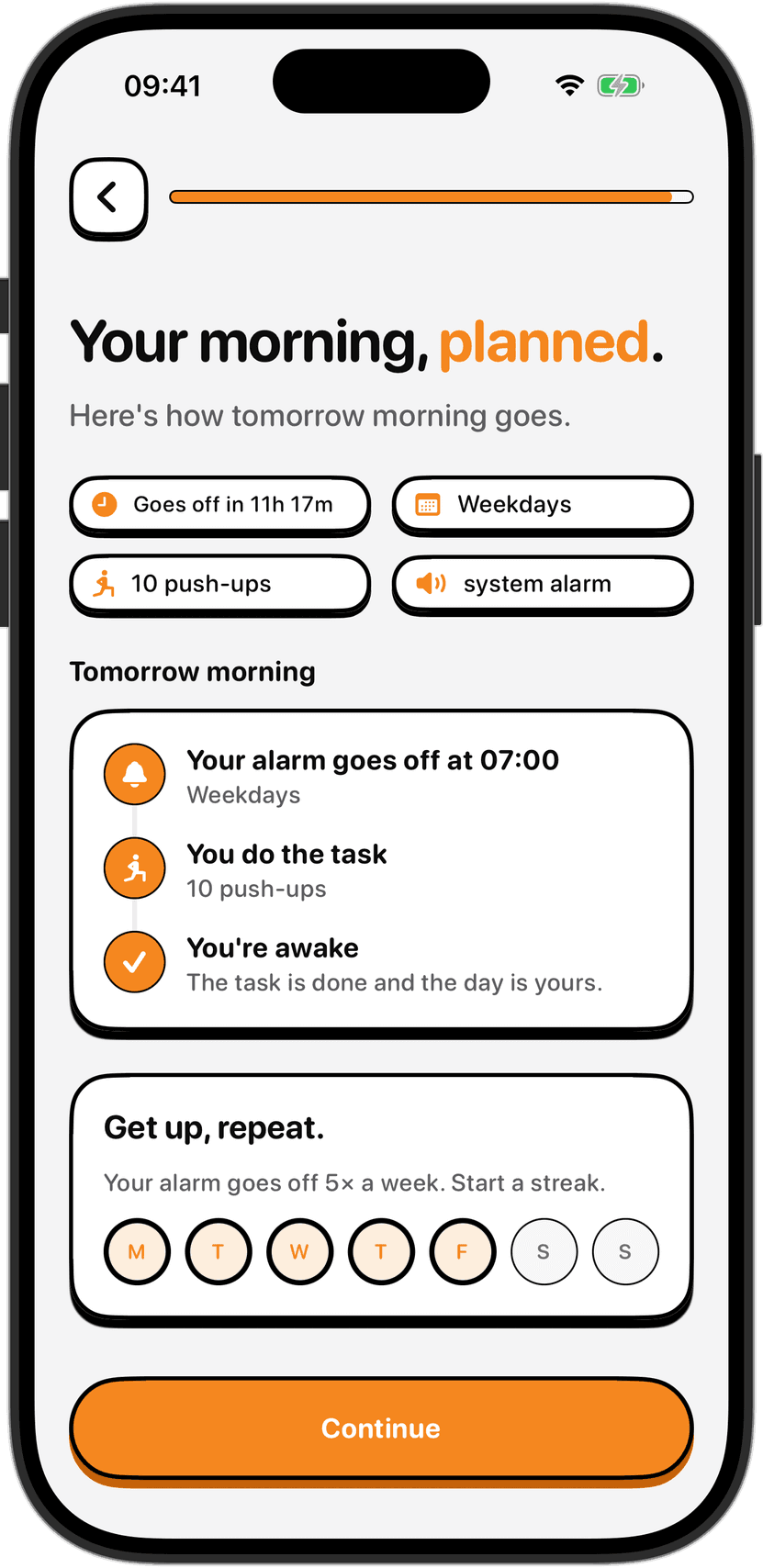
The goal of better sleep is clearer mornings. Consistent sleep and exercise work together: a fixed wake time anchors your circadian rhythm better than any flexibility, and consistent exercise strengthens sleep architecture so you wake more refreshed. NoNap's single alarm and fixed wake time create the stability your body clock needs. A morning workout amplifies that effect; an evening workout is fine if you finish it in time.
The simplest rule: exercise whenever you can sustain it, finish vigorous activity at least four hours before bed, and let your sleep catch up.
Sources
Sleep Foundation, "Best Time of Day to Exercise for Sleep," https://www.sleepfoundation.org/physical-activity/best-time-of-day-to-exercise-for-sleep
Kredlow, M. A., Capozzoli, M. C., Hearon, B. A., Calkins, A. W., & Otto, M. W. (2015). The effects of physical activity on sleep among adults with serious mental illness. Journal of Clinical Psychiatry, 76(10), e1330–e1341.
Stutz, J., Eiholzer, R., & Spengler, C. M. (2019). Effects of evening exercise on sleep in healthy adults: a systematic review and meta-analysis. Sleep Medicine Reviews, 47, 49–60.
Miller, K. H., Houk, R. B., Harty, B., Patterson, F., & Raiff, B. R. (2020). The effect of a single bout of unsupervised moderate intensity exercise on sleep in healthy adults. Sleep Science, 13(2), 101–107.
Nature Communications. "Dose-response relationship between evening exercise and sleep" (2025). https://www.nature.com/articles/s41467-025-58271-x
PubMed. "Effect of morning versus evening exercise training on sleep, physical activity, fitness, fatigue and quality of life in overweight and obese adults." https://pubmed.ncbi.nlm.nih.gov/34128447/