How not to miss a 6 a.m. flight
TSA and airline arrival times, sleep timing, backup alarms, and drowsy driving risk on the way to a 6 a.m. flight.
Visana Studios
7 min read
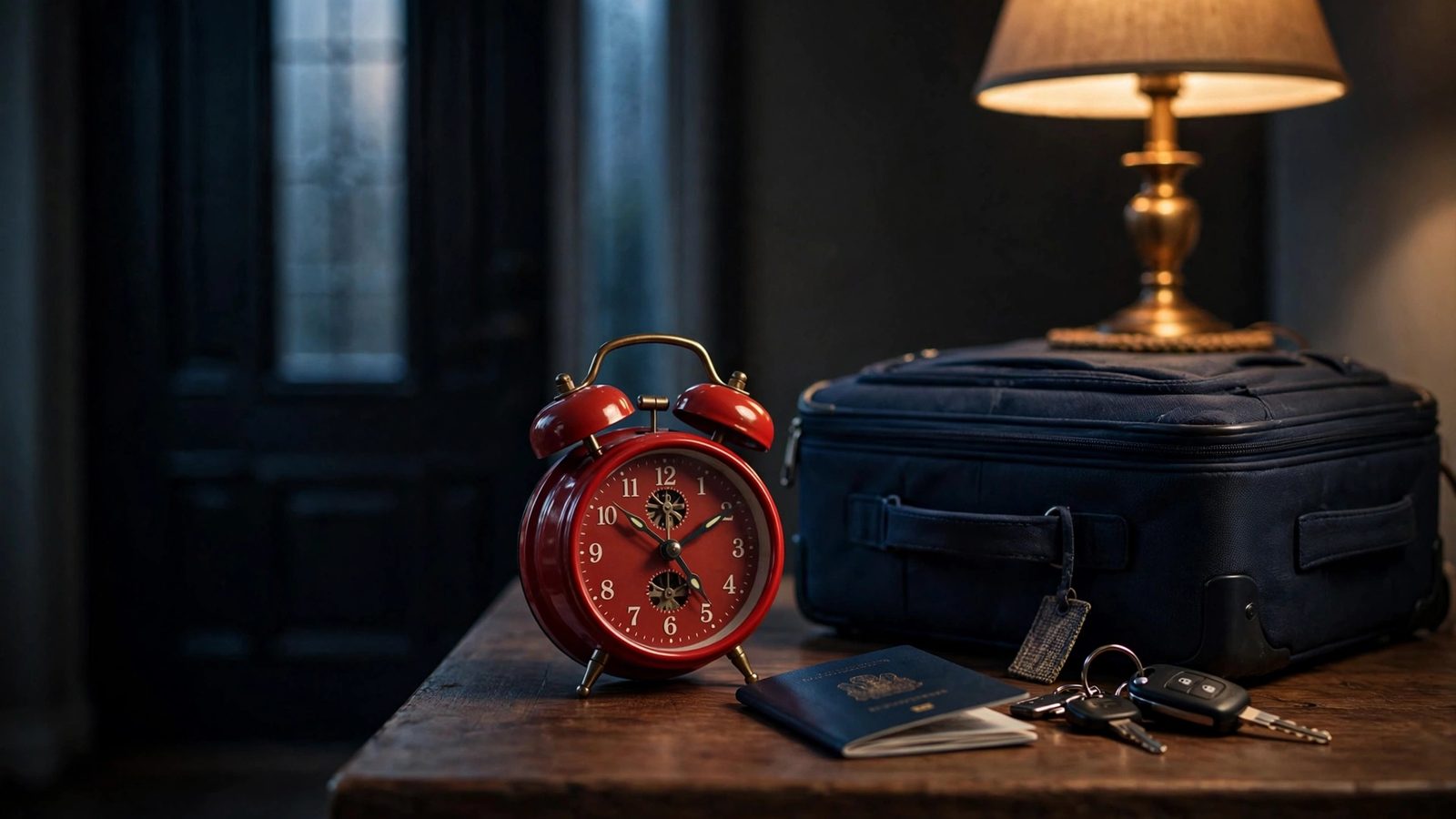
The alarm goes off at 04:30. Your flight leaves at 06:00. The math looks tight and forgiving both at once: there are ninety minutes between you and the runway. There also are not, not if you are supposed to have checked luggage through security, bought coffee, and walked to a gate that got reassigned twice while you were asleep. Every minute between the wake-up call and the boarding door closing is already spoken for.
Missing that flight costs hundreds of dollars and cascading rescheduling. More quietly, it can cost sleep the night before. Working backward from a 6 a.m. departure to set a realistic wake time, then to a realistic bedtime, reveals why early morning flights hit different from everyday mornings. They do not just ask for an alarm. They ask for one that works and for sleep that actually happened.
The timeline: working backward from takeoff
The Transportation Security Administration recommends arriving at a domestic airport two hours before a flight departs. For a 6 a.m. departure, that is 4 a.m. Call it 3:45 to actually be through the checkpoint, because someone will be slow with the TSA line.
From 3:45 when you are inside security, subtract fifteen minutes to park and walk in from the lot. That puts you at the airport entrance around 3:30. Add another fifteen minutes for moving through the airport lobby and getting to the security line itself. You need to be pulling into the lot by 3:15 at the latest, and ten minutes earlier is not a luxury.
From 3:05 a.m. when you leave the house, subtract a reasonable morning. A shower and getting dressed takes ten to fifteen minutes. Breakfast is ten minutes if you skip anything that requires thought. Grabbing your wallet, phone, and keys takes another five. That is thirty to forty minutes of awake time if nothing goes wrong. Add ten for the inevitable thing that does. That puts you at needing to be out of bed by 2:15 a.m.
Except almost nobody sets an alarm for 2:15 a.m. It feels like the middle of the night because it is. The reality is that a 6 a.m. flight demands a 3 a.m. or 3:15 a.m. wake-up, not 2:15. People often build buffer room into the timeline by waking earlier than the math requires, because the math assumes efficiency and no delays. Build in the buffer room instead by setting the alarm for 3 a.m., getting the shower and coffee in a slower twenty minutes each, and leaving the house by 3:50. The flight makes it that way. The math does not change.
Sleep the night before costs decisions made the evening before
A 3 a.m. alarm means sleep has to finish early. To get six hours of sleep, bedtime is 9 p.m. To get seven hours, it is 8 p.m. Those are not times when flight-day anxiety typically fades. Packing usually happens at night, last-minute confirmations of flight times and car services keep you online, and the knowledge that the alarm is coming makes the brain hypervigilant. Getting to bed by 8 or 9 p.m. requires a decision made the afternoon before. Pack a carry-on that night, not the next morning. Confirm the flight time the morning of, not at 9 p.m. Move the serious winding down to the evening before, so the evening before the flight is just wind down, a simple dinner, and bed.
One night of short sleep is survivable. One night of waking up at 3 a.m. out of deep slow-wave sleep, which is likeliest if you slept for only five or six hours, compounds the problem. Slow-wave sleep is what protects you from sleep inertia, the low alertness and impaired reaction time that follows waking. Cutting the night short cuts into it. A 3 a.m. alarm out of six hours is markedly worse than out of seven or eight.
Set the alarm. Set it twice.
For a time-sensitive morning, especially one that involves driving, setting a single alarm is a bet against sleep inertia and against the chance that one alarm will fail to wake you. People sometimes sleep through alarms, particularly in deep sleep or if they reset them without fully waking.
A backup alarm is not overkill for a flight. Set the main alarm for your actual wake time. Set a second alarm on a different device for ten to fifteen minutes later. It does not have to wake you. It just has to wake you if the first alarm fails or if you reset it without realizing and fell back asleep. A second phone, a partner's phone, an old tablet: anything with audio.
If you are traveling across time zones, build the time zone change into the alarm before the night before. A red-eye that arrives in California at 8 p.m. local time started at 11 p.m. Eastern, which is 8 p.m. Pacific time zones ago. Your body clock did not reset yet. The alarm feels early because it is early by the clock you slept on. Set the alarm on the destination time zone the moment you book, or write down what it is, so that you are not doing arithmetic in the dark at midnight.
Packing the night before is almost always non-negotiable
The more packed you need to move at 3 a.m., the more you will skip, and the more chance that you forget something important. A carry-on should be packed the evening before, by 8 p.m., when your prefrontal cortex is still awake and can weigh what matters. Luggage at 3 a.m. means grabbing what looks important and leaving things that turned out to be essential. Most carry-ons do not need to be checked, which saves a few minutes, but only if they were packed when you could think.
The hidden cost: driving to the airport half asleep
Early flights create a particular risk on the drive to the airport. You are waking at 3 a.m. out of deep sleep, moving quickly through the rush, and driving in the dark when your circadian rhythm still expects you to be asleep. That combination raises crash risk sharply.
The National Highway Traffic Safety Administration estimates that drowsy driving causes thousands of fatal crashes annually in the United States. Crashes in the very early morning hours tend to have higher rates of drowsiness-related factors compared to other times of day.
Driving to a 6 a.m. flight means driving at 3 a.m., when the circadian rhythm trough sits lowest, when your body temperature is coldest, and when your brain wants sleep most of all. Thirty minutes of driving home from the airport in the afternoon feels routine. Thirty minutes to the airport in the dark, awake less than an hour, is a different kind of drive. Consider whether rideshare or a shuttle makes sense, not just for the sleep itself but for the hours after you land, when you are running on a fraction of your normal sleep and the people around you are depending on your awareness.
Getting up on purpose, without negotiation
The stakes of oversleeping are concrete enough that setting the alarm correctly matters more than usual. One alarm is a suggestion. Two alarms are a plan. A task that you cannot dismiss or reset without actually finishing it is the difference between hearing the alarm and acting on it.
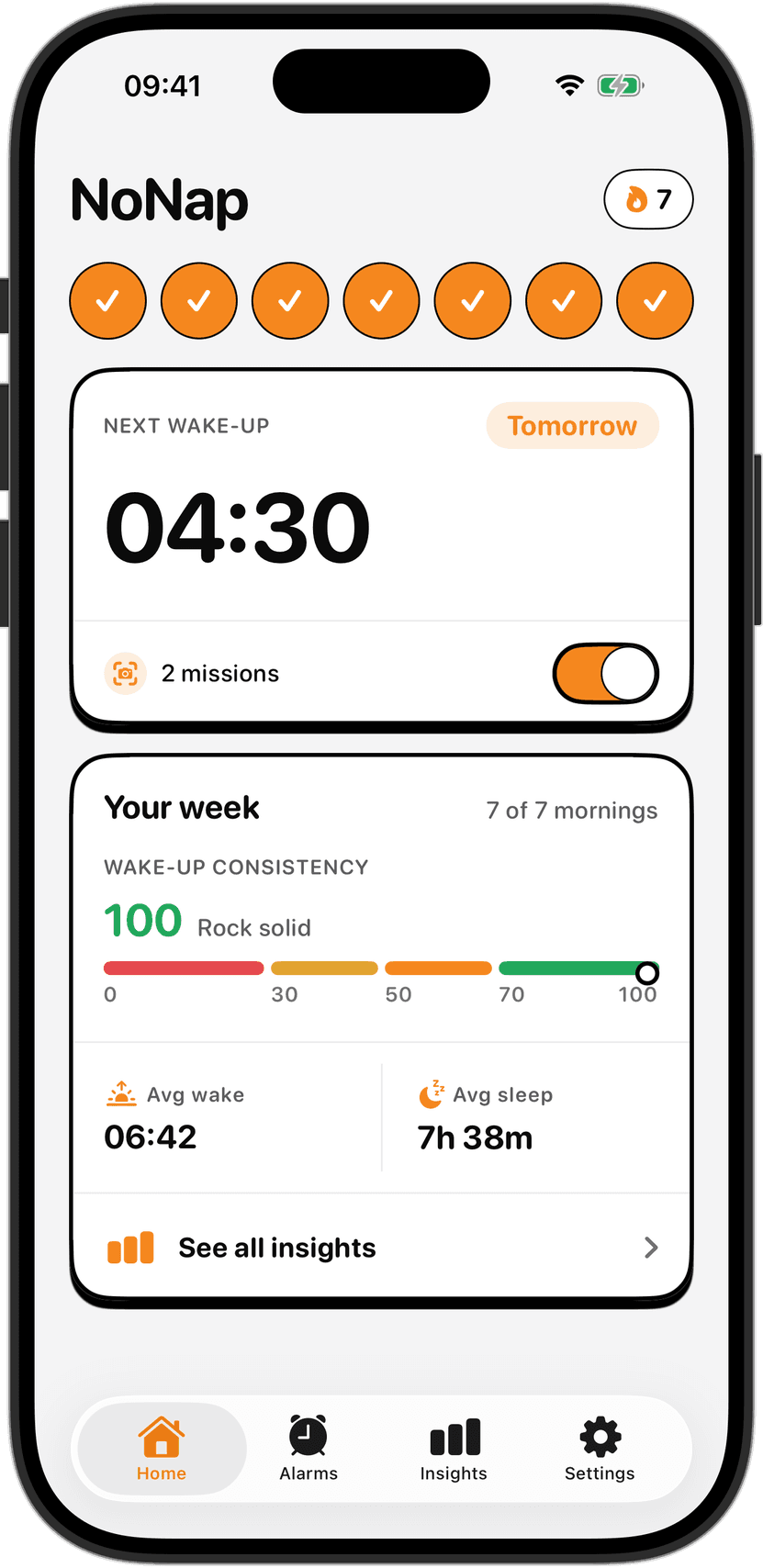
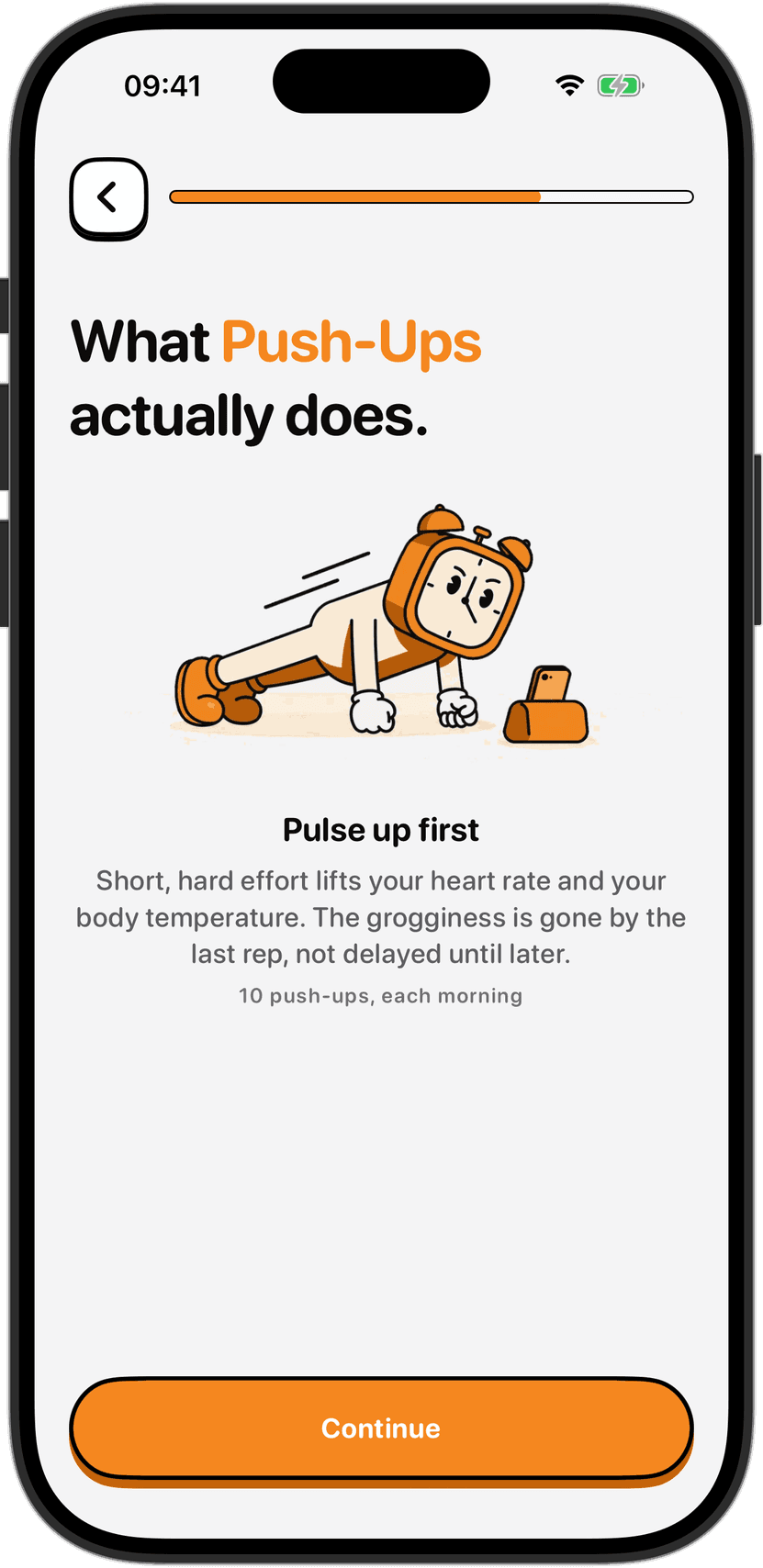
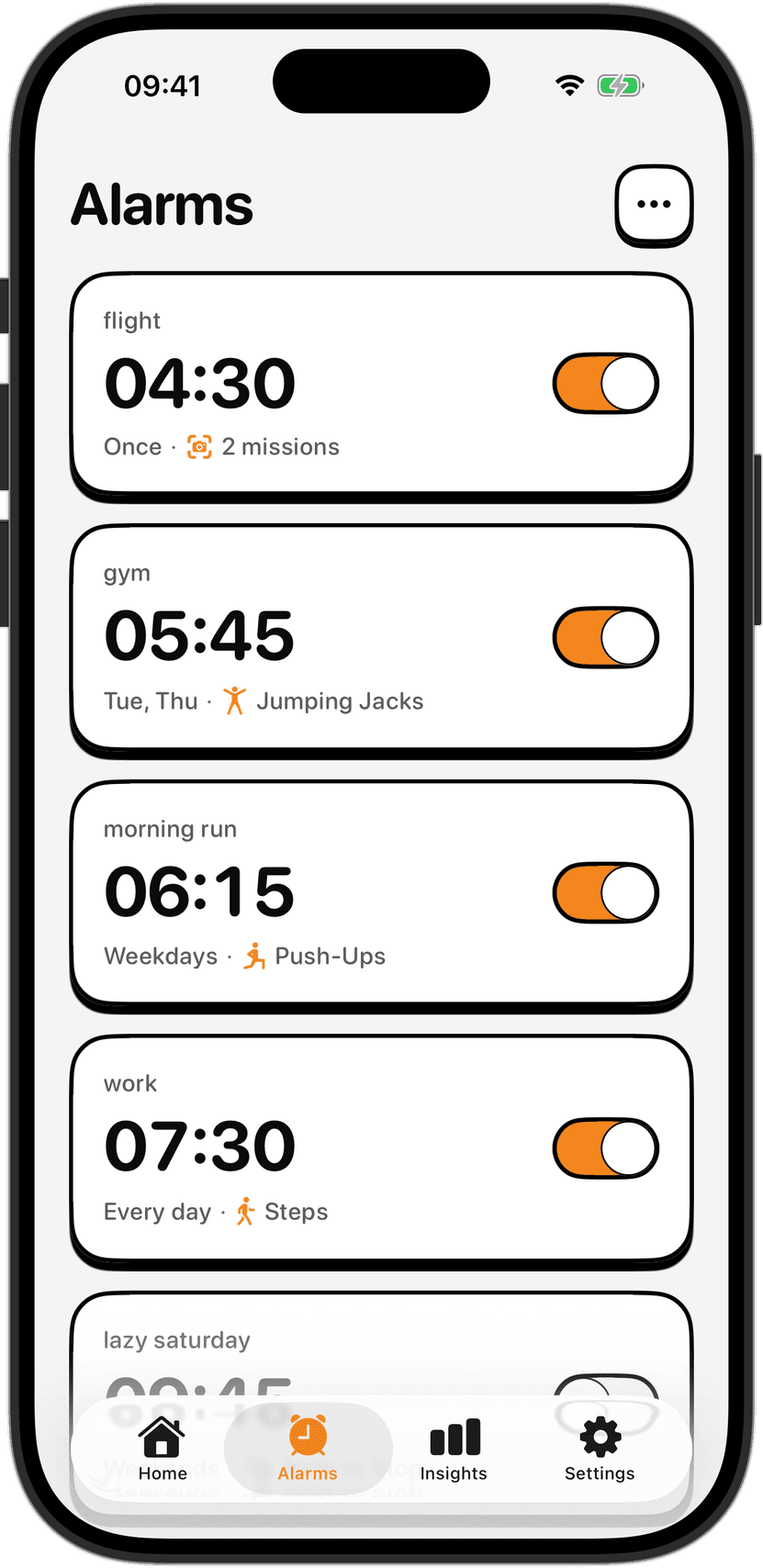
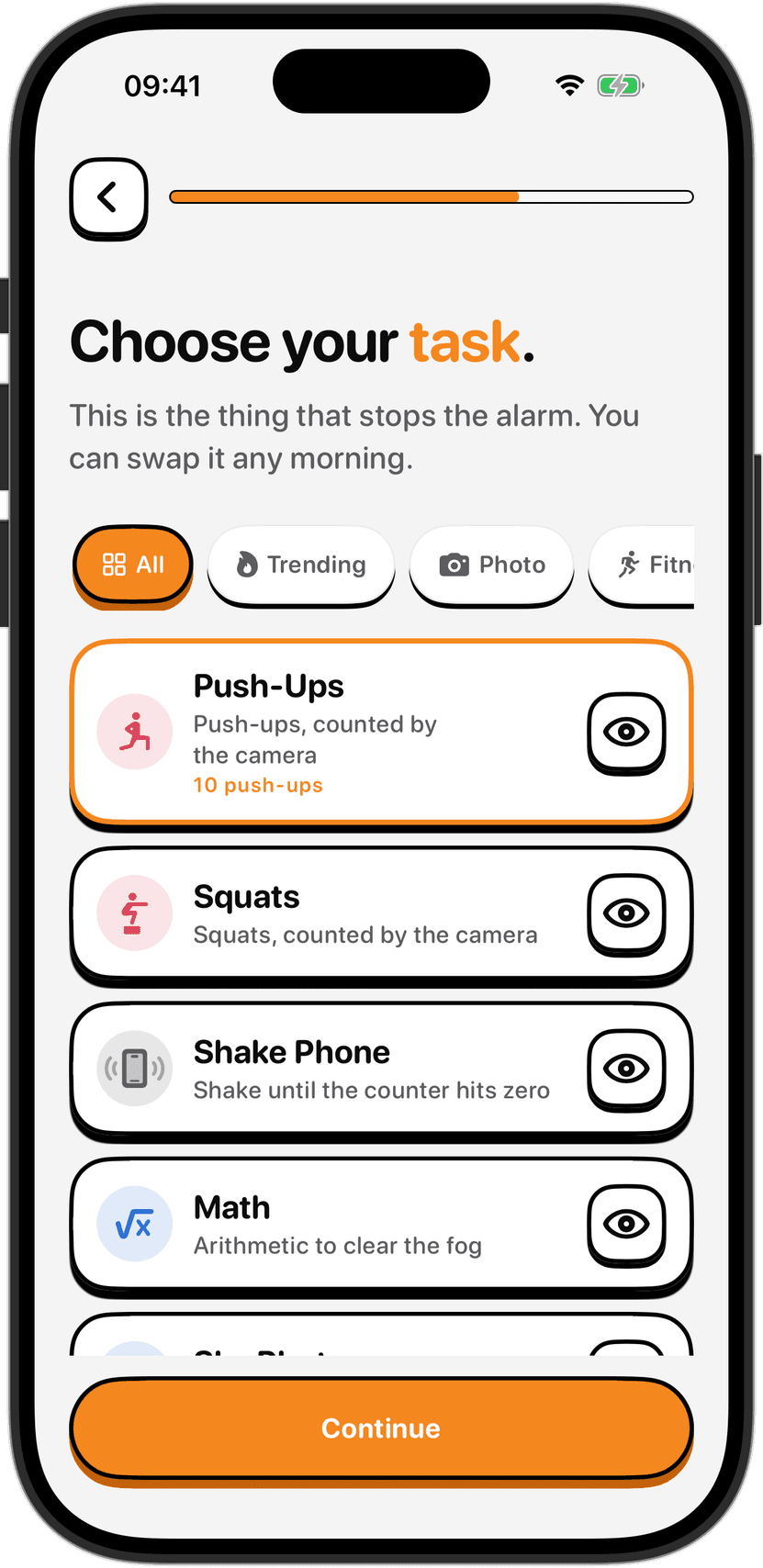
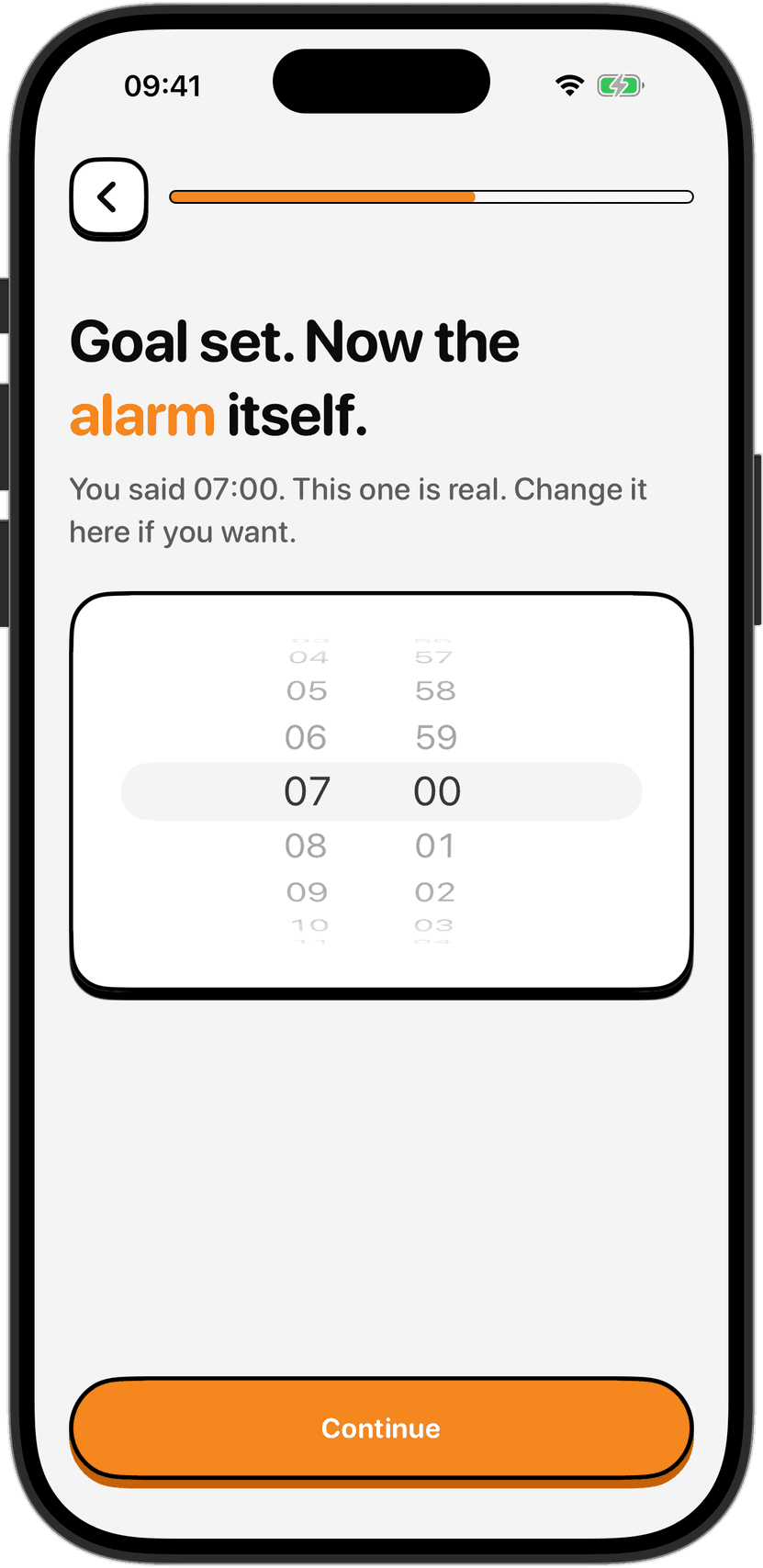
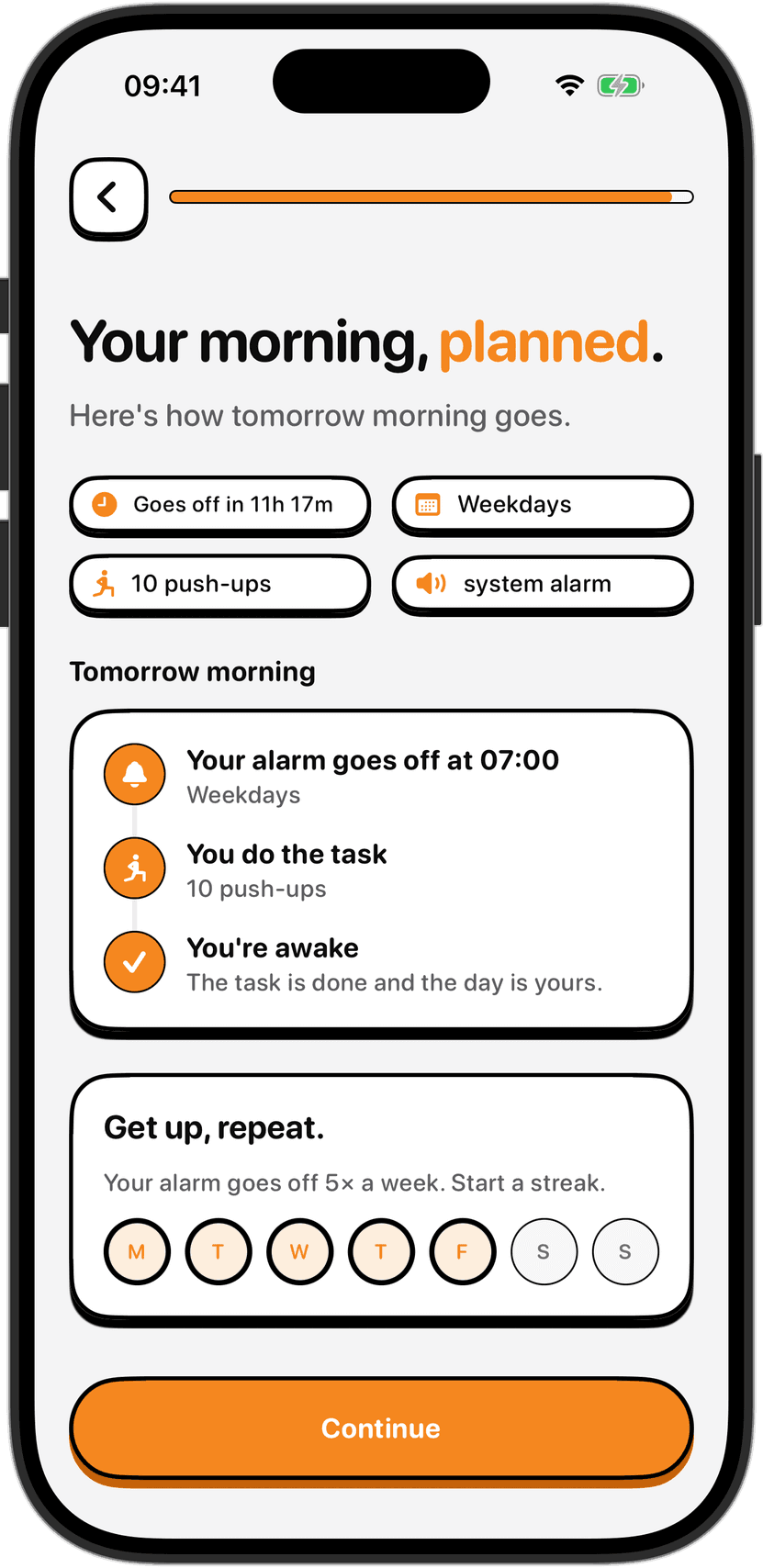
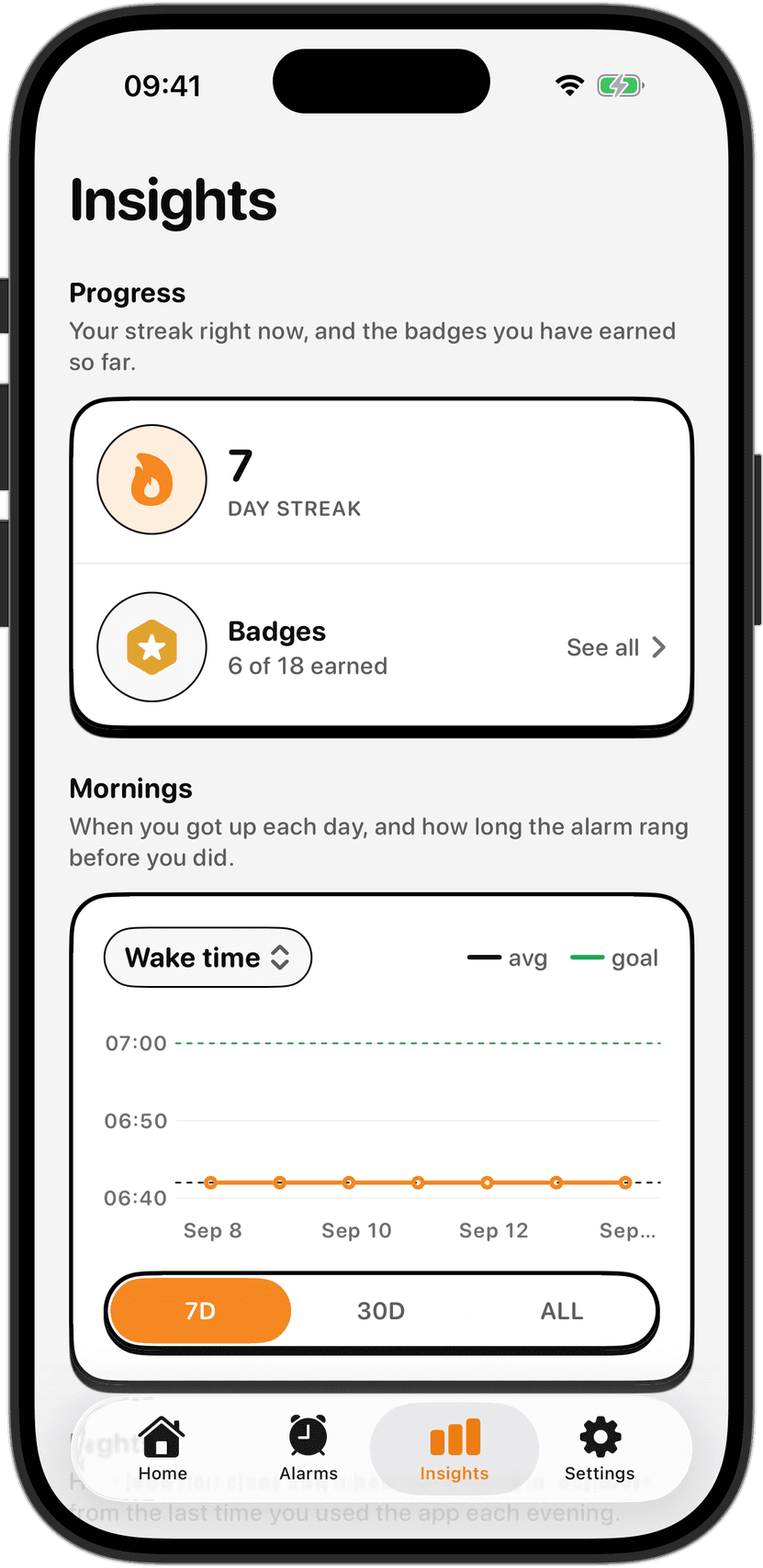
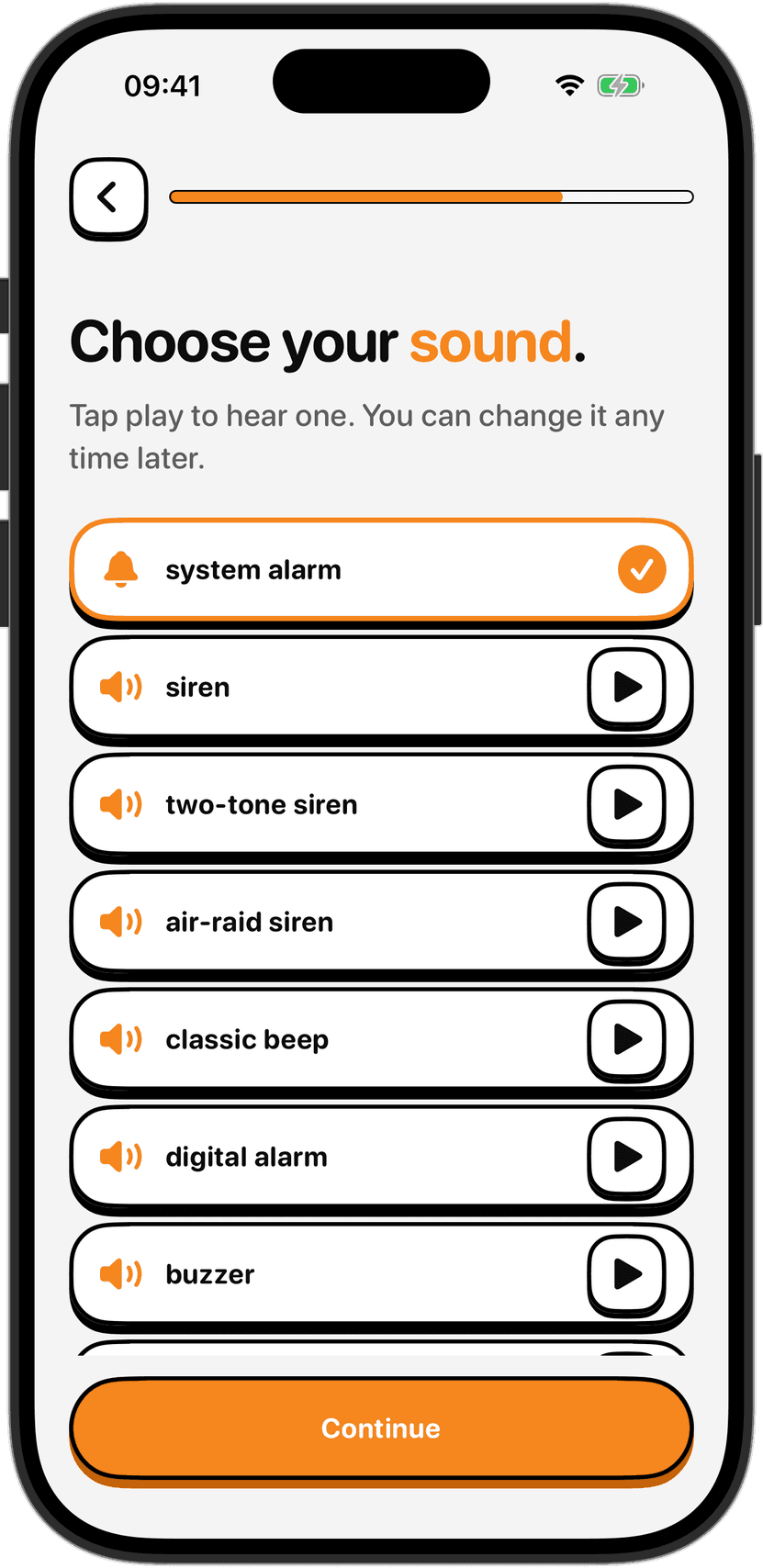
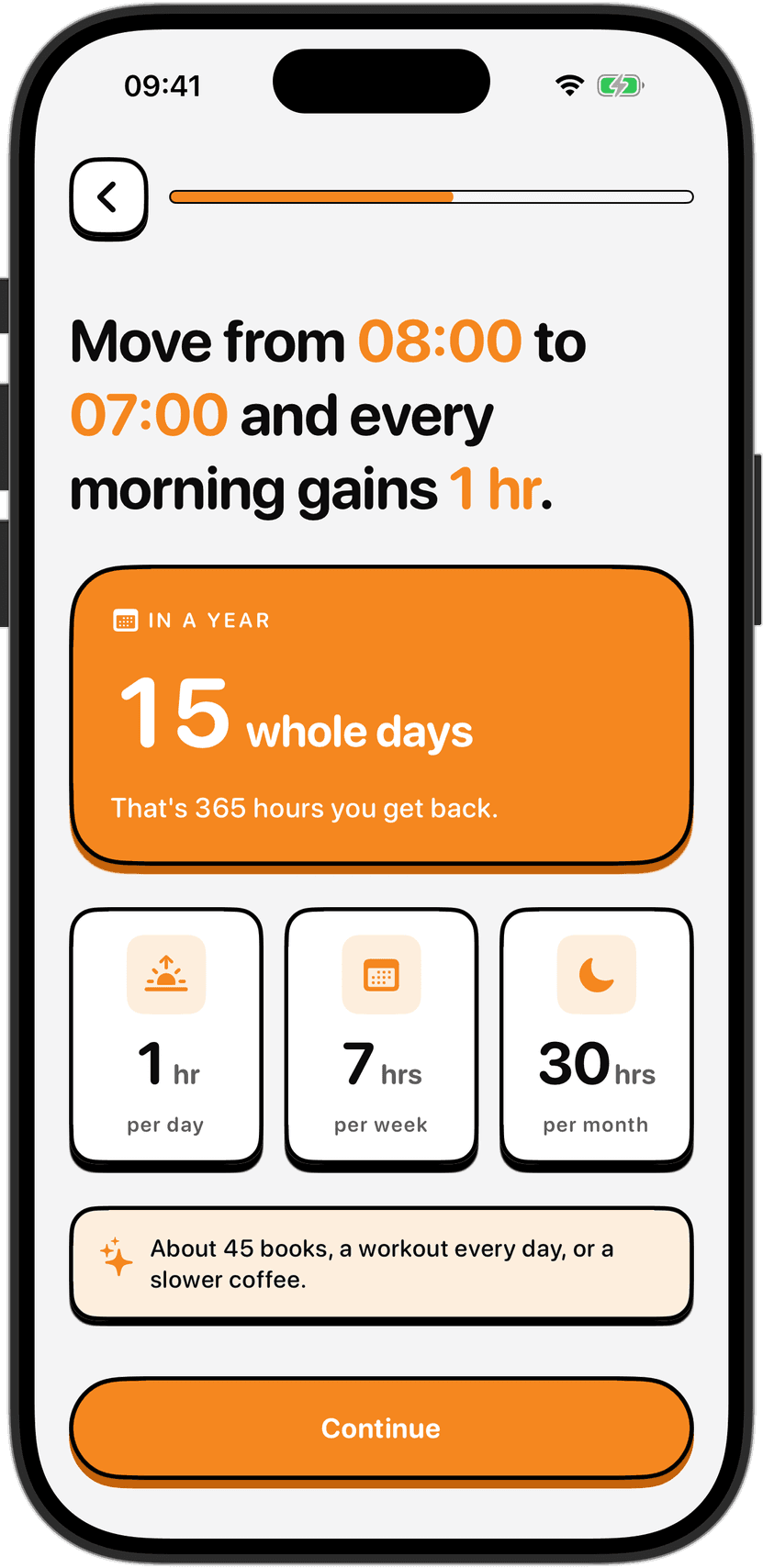
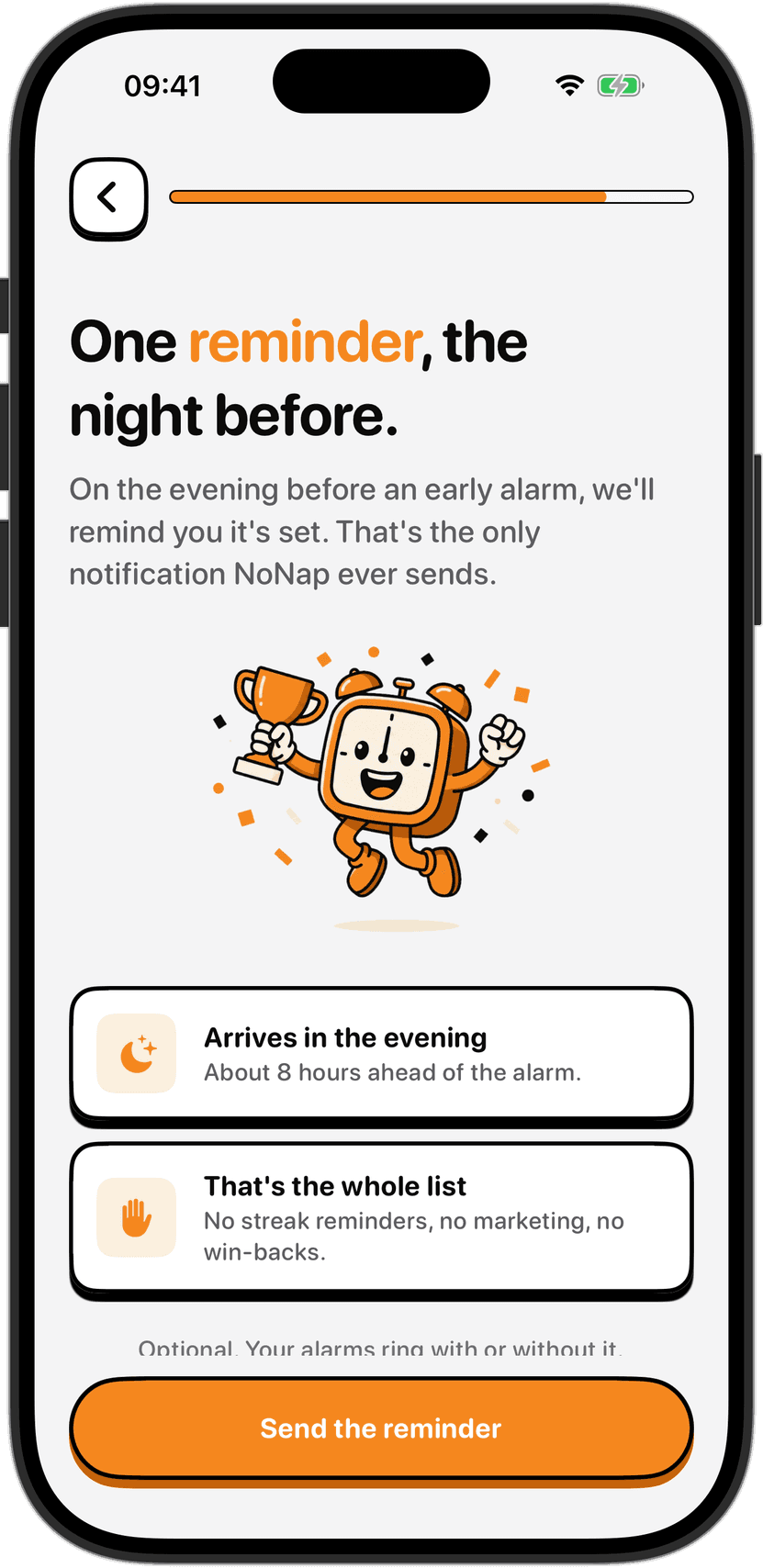
NoNap is built around that last idea. It is an iPhone alarm app with one alarm and no snooze button. The alarm uses Apple's system alarm, so the ring and silent switch do not mute it and Sleep Focus or Do Not Disturb do not silence it either. The only way to stop it is to finish the wake task you set the night before: push-ups or squats counted by the camera, a math problem, a photo, shaking the phone, or getting out of bed. You can change the task any morning, so if exercise is not safe for you first thing in the morning, pick math or shake phone instead. A night-before reminder nudges you to wind down, which is a good moment to confirm that the carry-on is packed and the airport alarm is set.
For a 6 a.m. flight, set your alarm for 3 a.m. Set a backup. The night before the night before, go to bed early enough to get six hours, minimum. Pack before 8 p.m. and then leave it alone. Drive rested or find another way. One flight on time is not worth one crash in the dark.
Sources
National Highway Traffic Safety Administration. (2025). Drowsy Driving: Asleep at the Wheel. NHTSA Technical Report. nhtsa.gov/risky-driving/drowsy-driving
Transportation Security Administration. (2024). What to Expect. TSA Airport Security Screening Guidance, accessed September 2026. tsa.gov/travel/security-screening/whattoexpect
Hilditch, C. J., and McHill, A. W. (2019). Sleep inertia: current insights. Nature and Science of Sleep, 11, 155-165.