The clocks go back soon: handling the fall time change
When daylight saving time ends on October 25 in the EU and November 1 in the US, what research shows about sleep disruption and how to adjust gradually.
Visana Studios
6 min read

In just over three weeks, the clocks will shift backward across two continents. On Sunday, October 25, the European Union and United Kingdom will fall back an hour. Nine days later, on Sunday, November 1, most of the United States follows. Twice a year, a billion people reset their clocks to match an arbitrary time. What most of them notice first is that the morning light comes later, and the evening light comes earlier. What their bodies notice is more complicated.
The sleep researcher and chronobiologist Till Roenneberg has called daylight saving time "one of the few examples where a large part of the human population experiences the same shift in circadian time on the same day." Research on the consequences of that shift is consistent: it disrupts sleep, and the disruption costs.
What the research on sleep and time changes shows
Research published in Sleep Medicine Reviews has examined decades of studies on how people sleep around daylight saving transitions. The evidence points to measurable changes in sleep duration and quality for both the spring forward and fall back transitions. When clocks shift, sleep often becomes harder to come by for several days, particularly in the week after the change.
The disruption ripples beyond drowsiness. Research has documented measurable increases in hospital admissions for heart attacks in the days following the spring time change, with impacts on traffic safety as well. The physiological stress from time shifts carries real costs. The fall transition, where you gain an hour, tends to be gentler on the cardiovascular system, but the sleep disruption remains.
Why does shifting time backward cause trouble if you are gaining an hour? The issue is not the math of the clock but the alignment of the body's internal rhythms. Your circadian clock does not read a wristwatch. It responds to light, temperature, social cues, and meal timing, all of which stay on the old schedule at first. The mismatch between clock time and the body's sense of when the day should begin creates a temporary desynchrony. It feels like jet lag. The kind you get traveling east, except the whole population shifts together instead of just you. If you have dealt with jet lag before, you know the disruption can linger for days even after crossing just a few time zones. A clock change creates the same mechanism on a smaller scale.
The American Academy of Sleep Medicine's position on permanent standard time
For decades, the debate over daylight saving time remained a minor policy quibble. In recent years, medical organizations have taken clearer stances. The American Academy of Sleep Medicine, which brings together sleep researchers and clinicians, has endorsed the elimination of daylight saving time twice-yearly transitions and advocated for permanent standard time year-round. The reasoning is straightforward: permanent standard time aligns more closely with the body's natural circadian preferences than permanent daylight saving time would.
That distinction matters. Some advocates argue for making daylight saving time permanent to keep evening light later into the fall and winter. The AASM position, supported by sleep research on circadian biology, suggests that would trade morning alertness and safety for evening convenience. The body clock prefers the sun to rise earlier in the day, even in winter. When the sun comes up earlier, so does the cortisol rise that primes the brain for waking, and morning light resets the circadian clock for the entire day that follows.
Shifting your sleep gradually, not on clock change day
The most useful strategy for managing the October or November transition is to avoid adjusting all at once. A few days before the clocks shift backward, you can move your sleep earlier by 15 or 20 minutes per night. Shift your bedtime, your wind-down routine, and your morning wake time if you can. Doing this in stages over four or five days smooths the transition. Your body will drift gradually rather than lurch.
The direction matters. When clocks fall back (a one-hour delay), shifting sleep earlier in advance means your body clock is already partly prepared for the new time when the clocks officially change. If you usually sleep 11 p.m. to 7 a.m., start going to bed at 10:45 p.m. a few days before the shift, then 10:30 p.m., then 10:15 p.m. By the time the clocks actually change, you will already be halfway through the adjustment.
Light is the most powerful tool for resetting the circadian rhythm. Get morning light on your face in those first few days after the clock change, even if it means opening the curtains earlier than the sun rises or using a lamp with good color temperature. Morning light signals to the body clock that this is when the day begins. A short walk or time on a bright porch is more effective than any other single intervention.
Meals and exercise also shift the clock. Moving your exercise time earlier in the day after the transition will reinforce the new rhythm. A meal within an hour of waking will anchor feeding time to the new clock time. These habits stack. Alone they may not eliminate the disruption, but together they narrow it and shorten it.
Phones update; not everything else does
One useful detail: your iPhone, iPad, and most modern Android devices will handle the time change automatically if you have enabled automatic time zone updates in settings. On Apple devices, go to Settings, then General, then Date & Time, and toggle on "Set Automatically." Android devices offer similar settings under Date & Time. Once that is enabled, your phone will update at the correct moment without you doing anything.
Standalone clocks, car clocks that do not sync to the phone, and many smart home devices do not update themselves. You will need to set them manually, usually the night before or the morning after the change. A wall clock in the kitchen or a bedside alarm clock without network access will stay on the old time until you adjust it. Check a few days before the transition so you have a list of what needs updating.
A fixed wake time matters most after a clock change
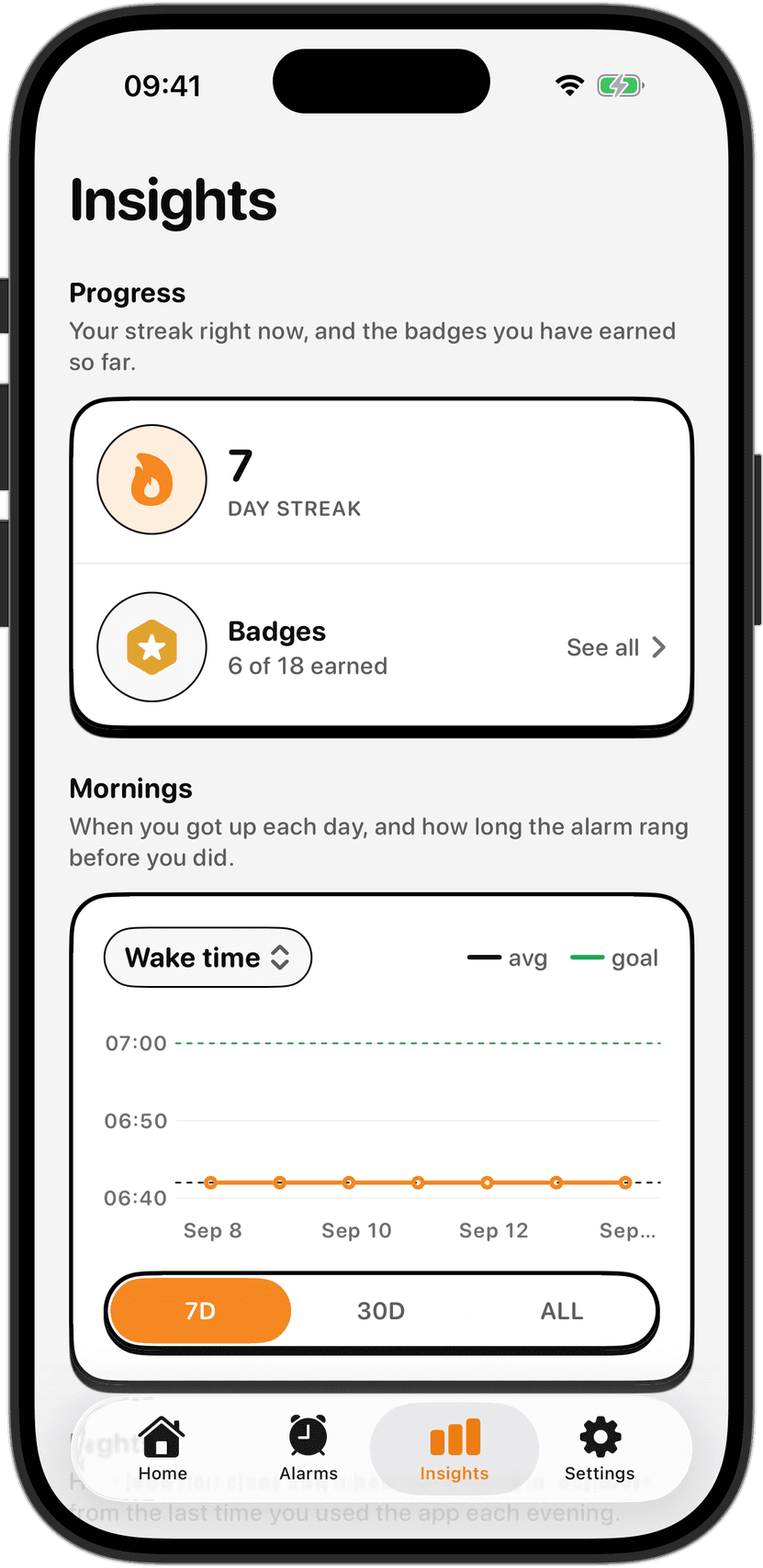
The sleep disruption from daylight saving time fades within a week for most people. Faster if morning light exposure is consistent. A fixed wake time is your anchor through that week. Waking at the same time every morning, even when the transition day itself feels disorienting, helps your circadian rhythm lock onto the new schedule faster than drifting or allowing extra sleep would.
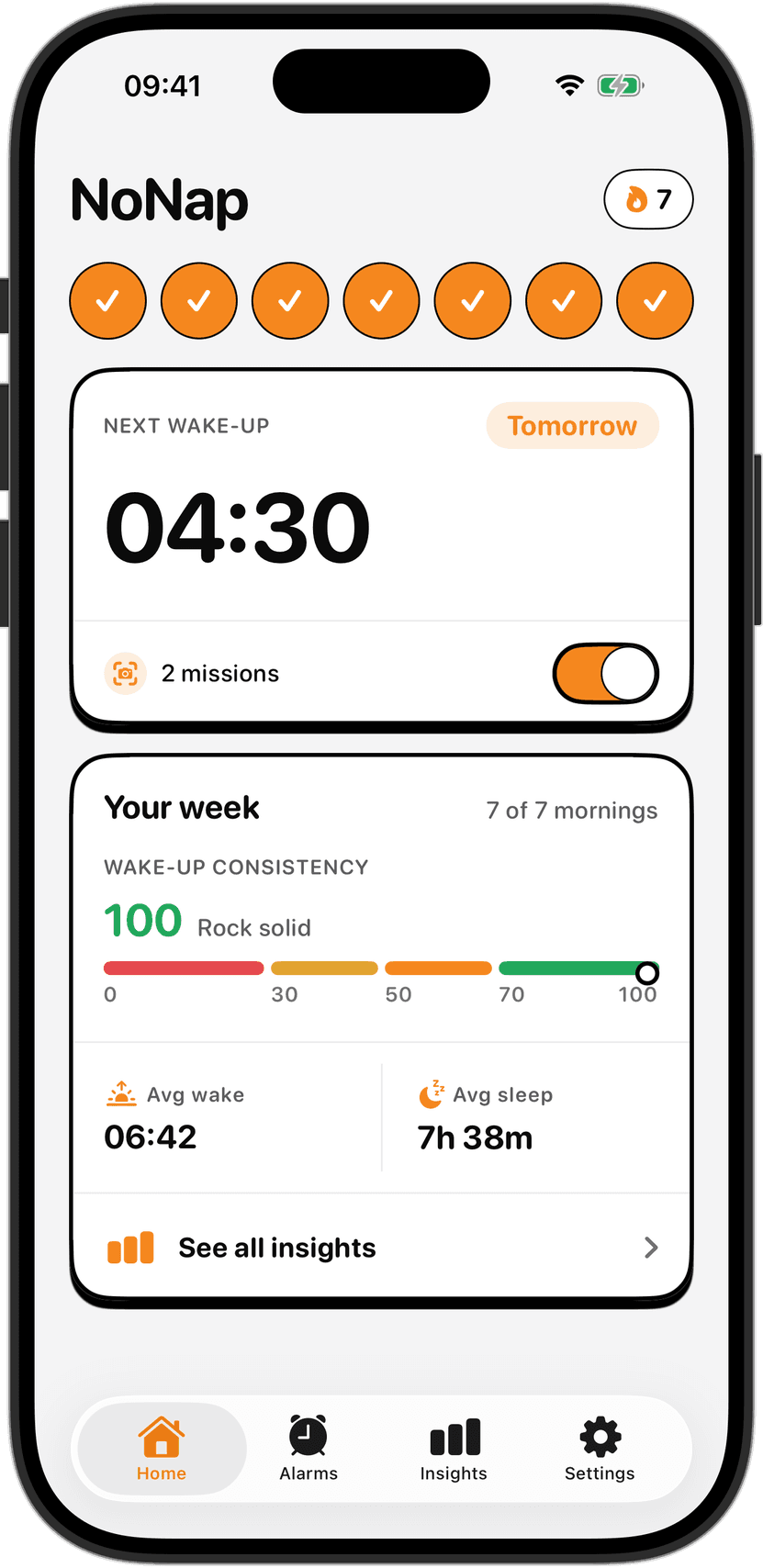
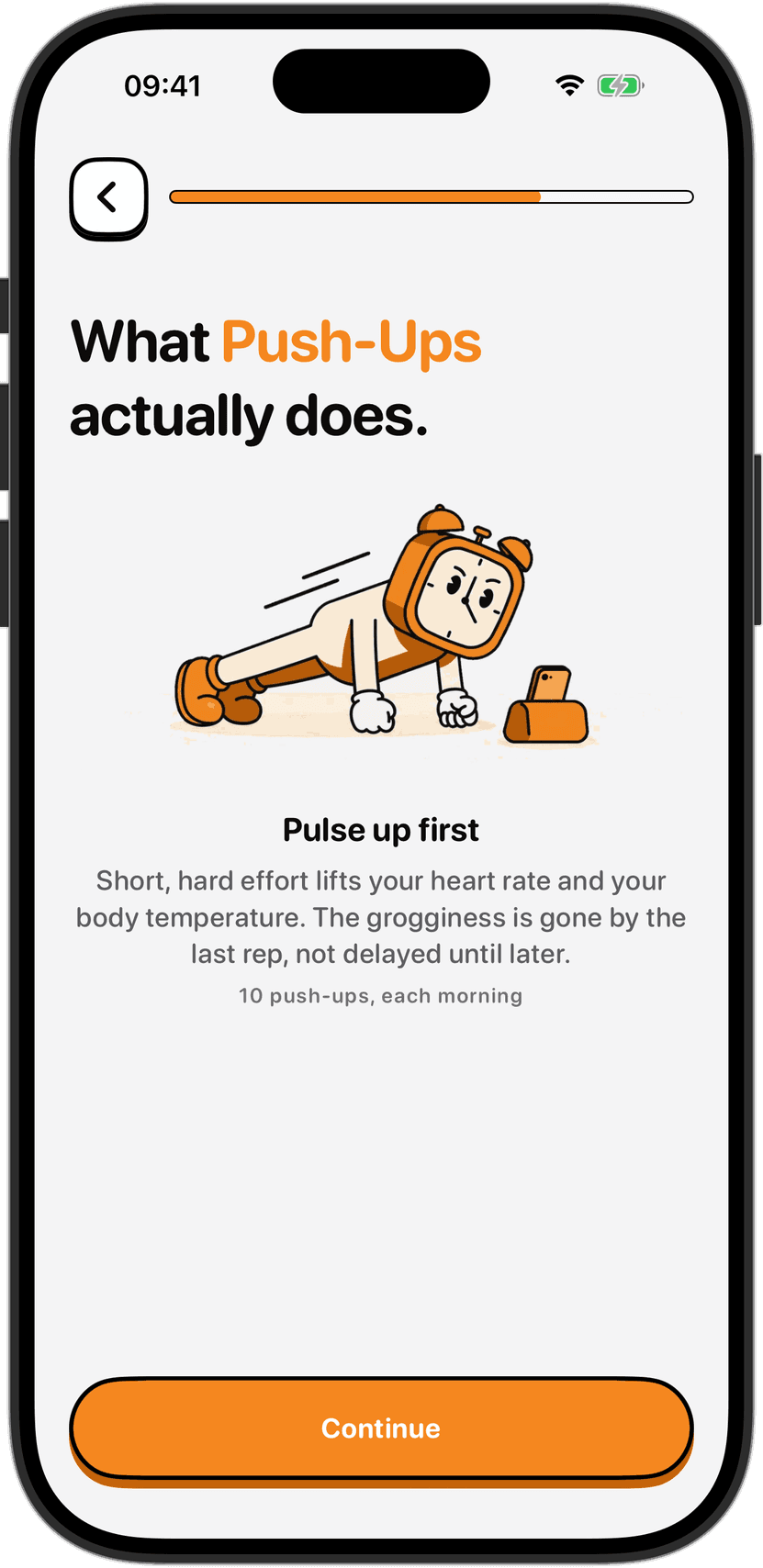
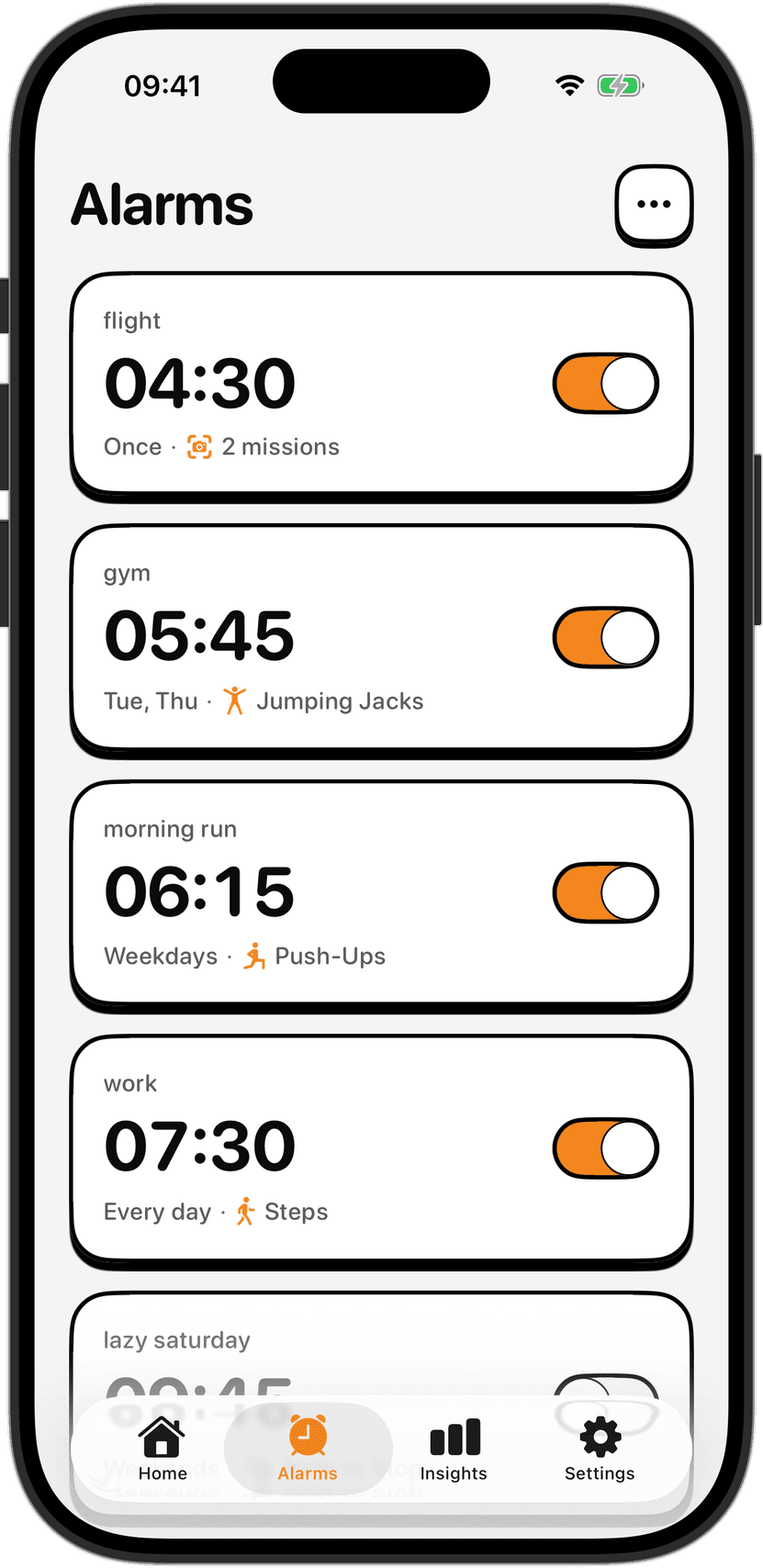
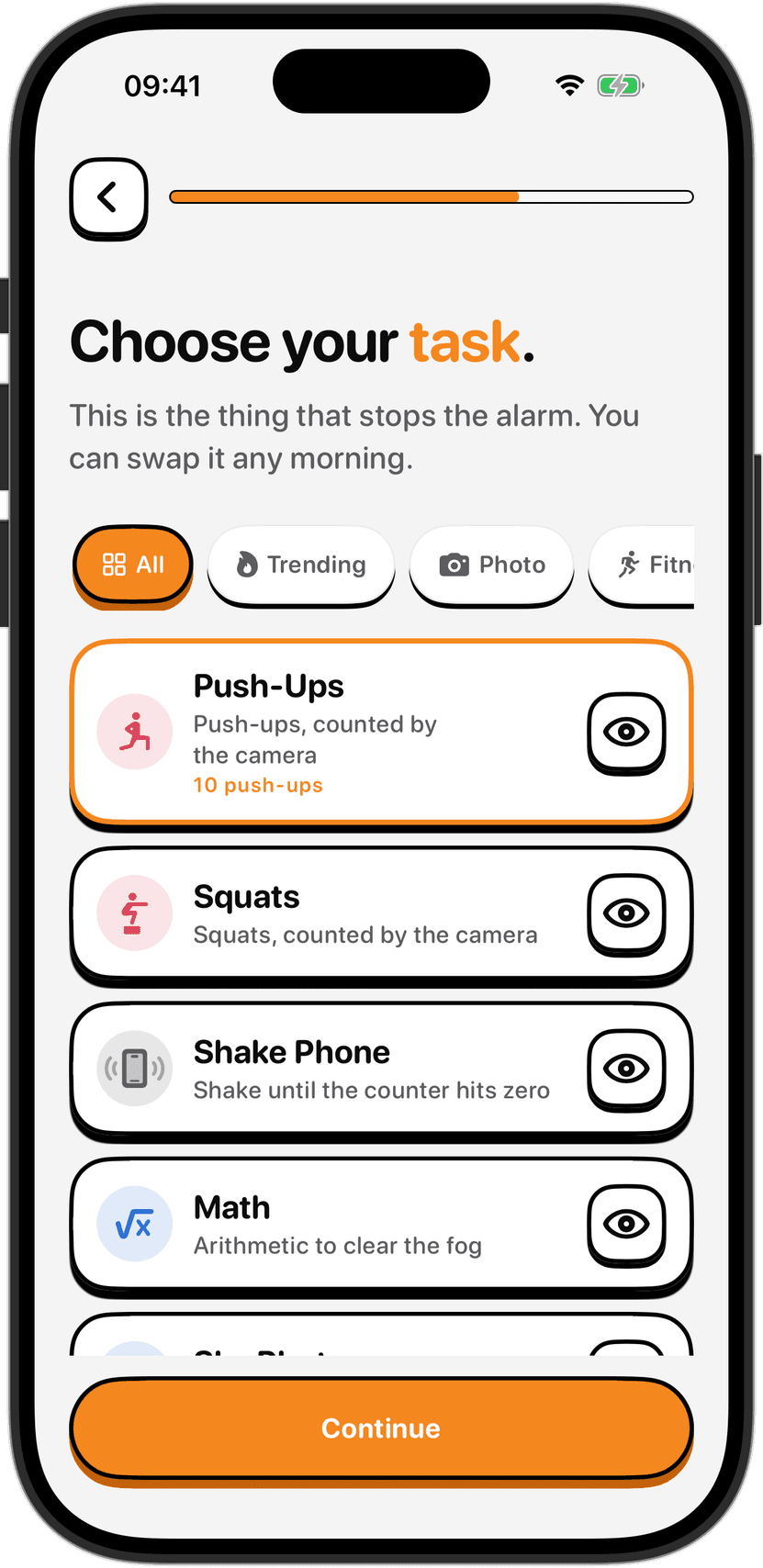
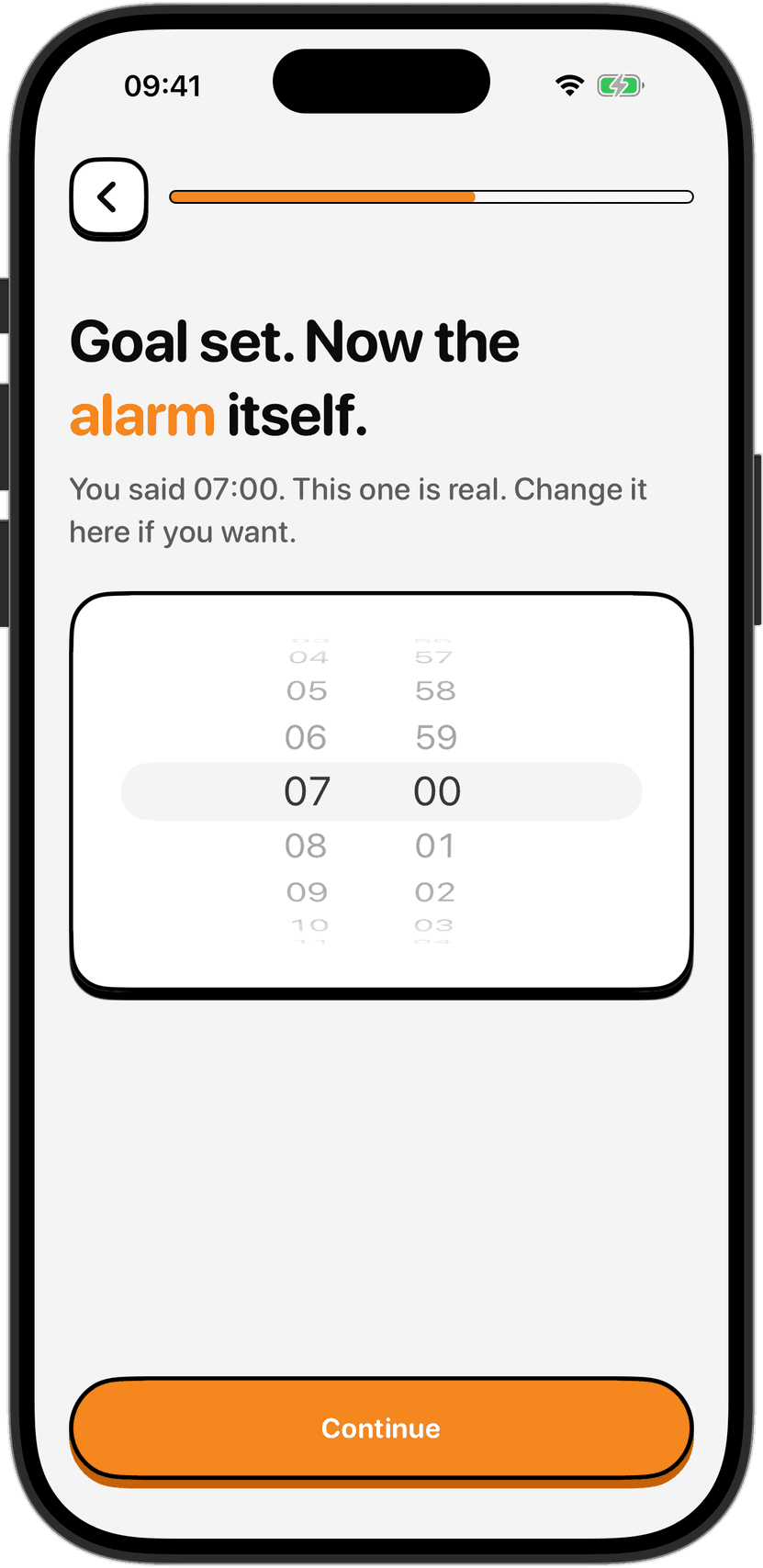
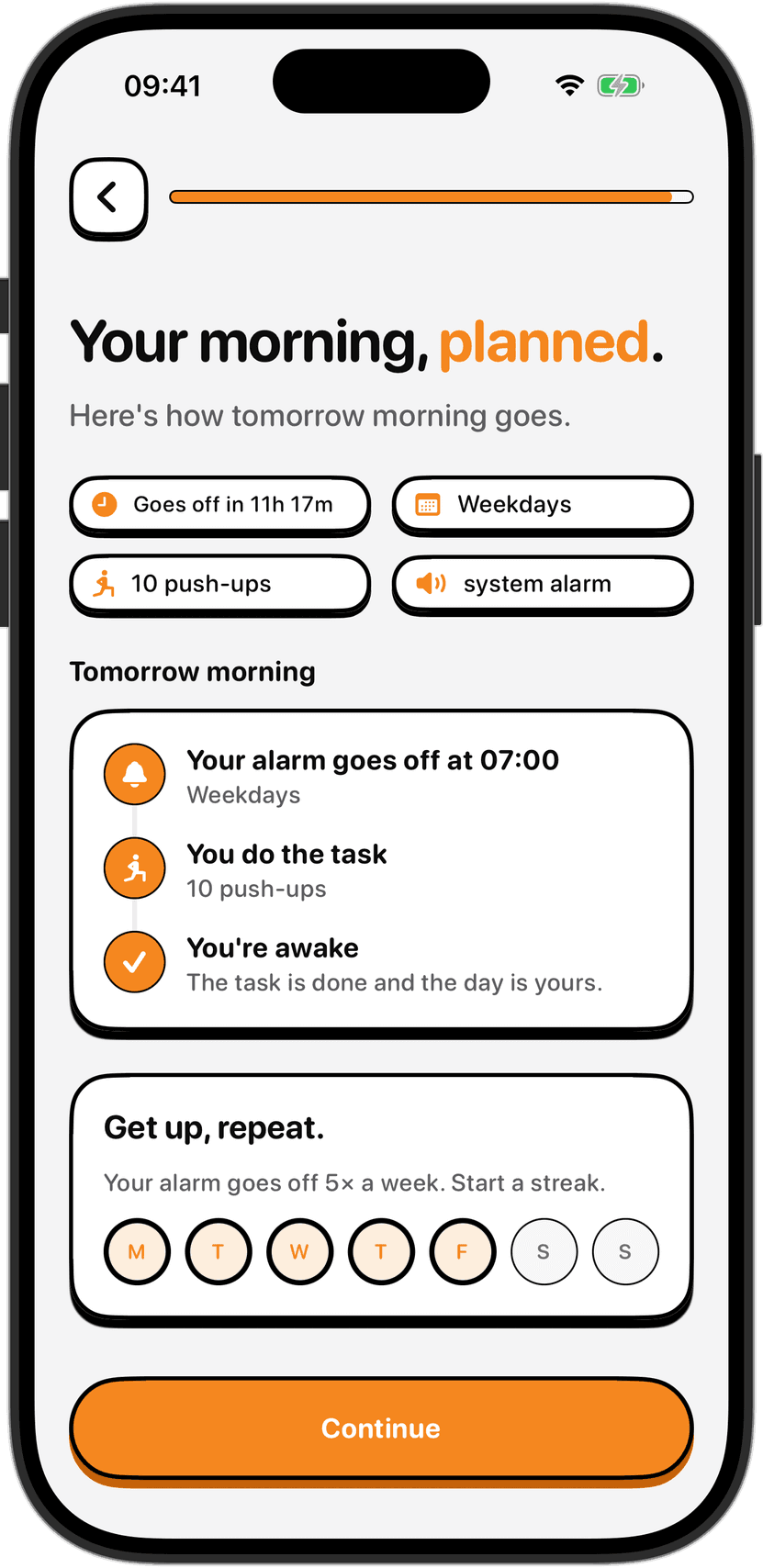
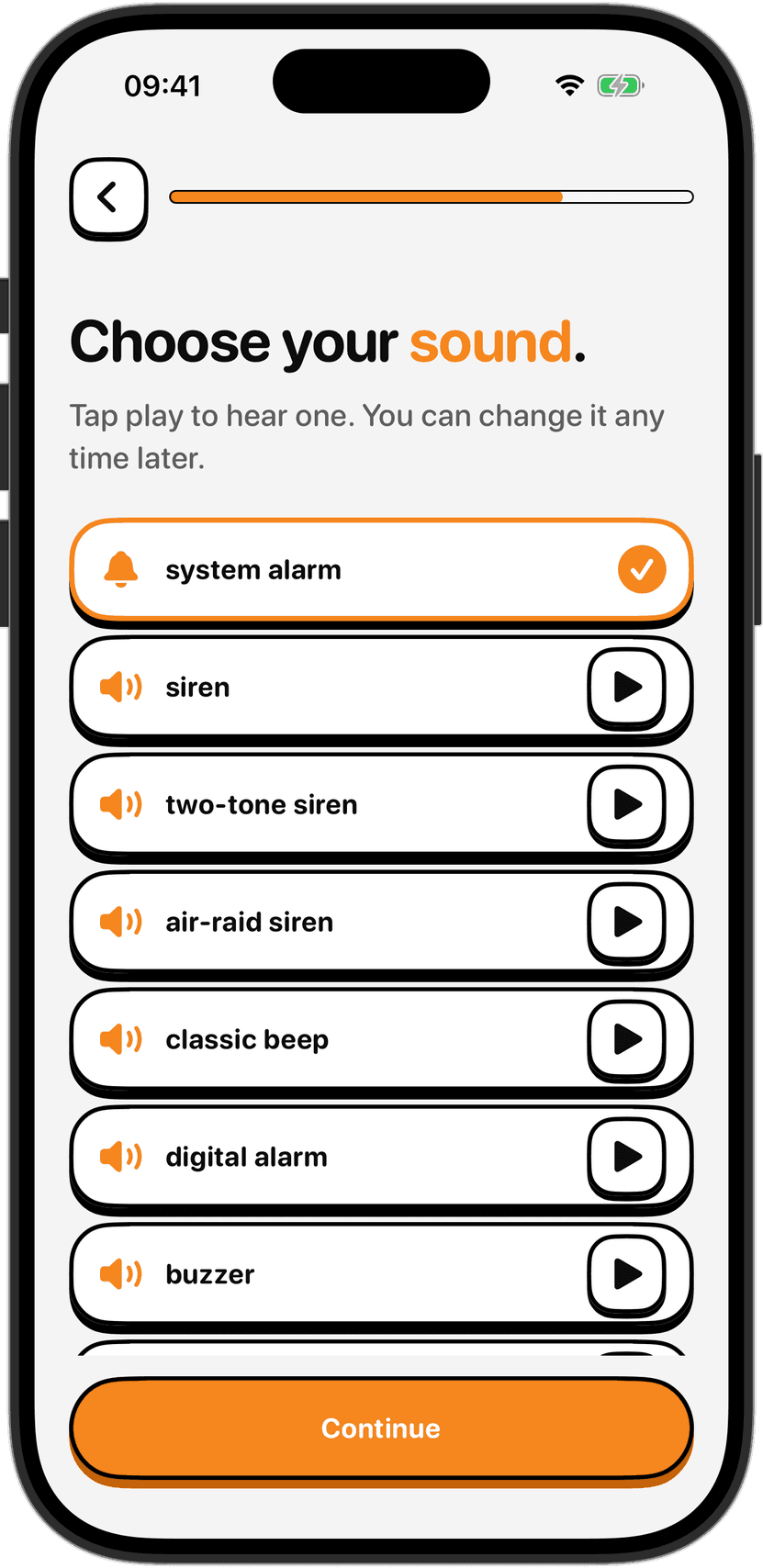
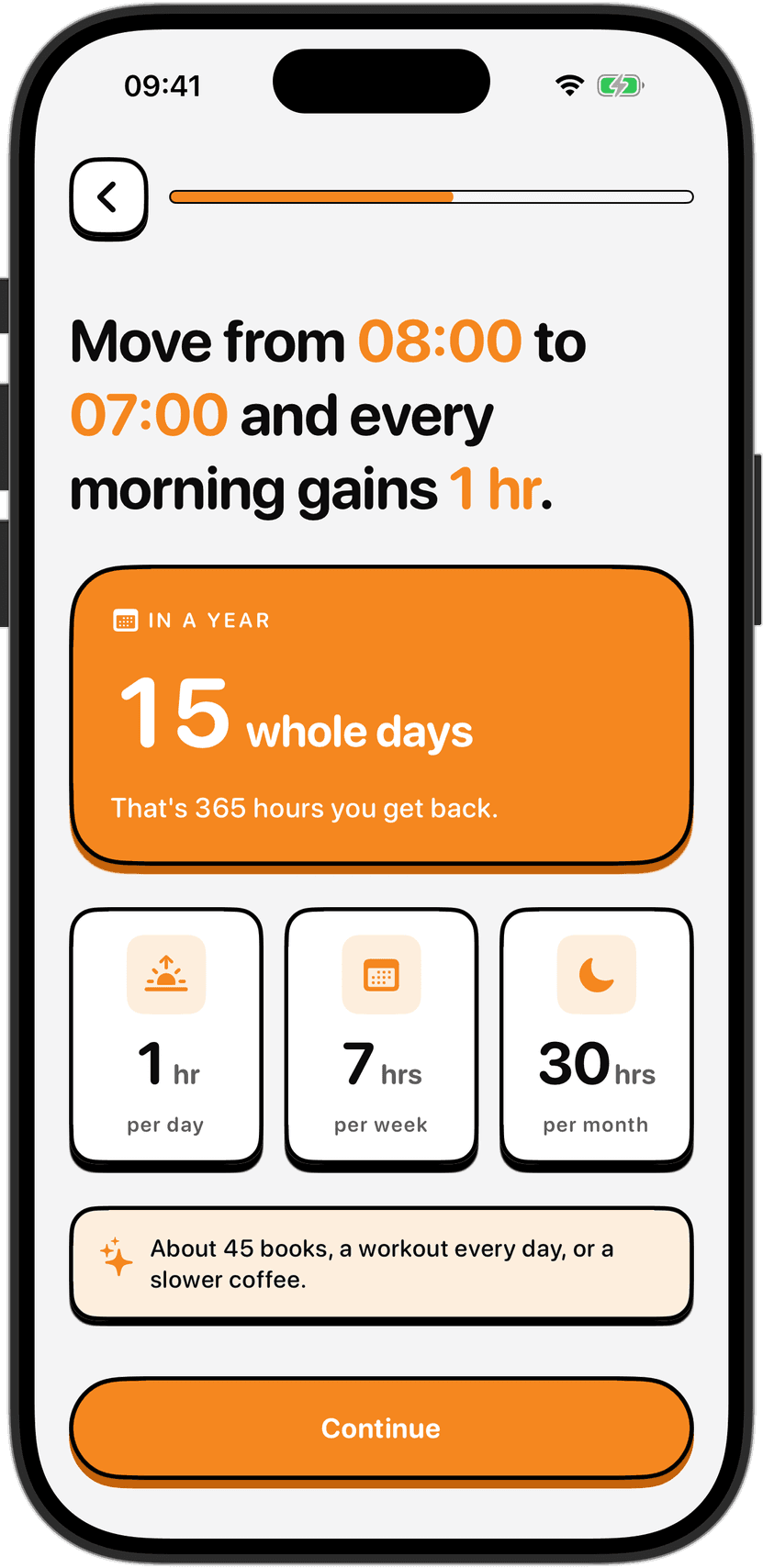
Sleep inertia is why that fixed wake time matters so much. It is the grogginess and impaired thinking that comes with waking, and it's strongest in the first minutes after the alarm. A wake task you pick ensures you are upright and thinking within that critical window. NoNap is built around one alarm at a single, consistent wake time. No snoozing. No stack of backup alarms that muddy the signal to your body clock. The wake task you pick, whether push-ups or math, forces engagement. If exercise first thing isn't safe for you because of an injury or condition, pick shake phone or math instead. Consistency matters more than the type of task.
Most people regain their normal sleep within a week. Staying steady through that week, rather than swinging between extra sleep and restricted sleep, teaches the body clock to adapt faster. The transition is temporary, even if the morning darkness persists until the spring change arrives.
Sources
Roenneberg, T., and Merrow, M. (2016). The Circadian Academy: Celebrating the Times of Our Lives. Frontiers in Neurology.
American Academy of Sleep Medicine. "Daylight Saving Time." Position statement on circadian biology and public health. www.aasm.org
Kantermann, T., Juda, M., Merrow, M., and Roenneberg, T. (2007). The Human Circadian Clock's Seasonal Adjustment Is Disrupted by Daylight Saving Time. Current Biology, 17(22), 1996-2000. doi:10.1016/j.cub.2007.10.025
Janszky, I., and Ljung, R. (2008). Shifts to and from Daylight Saving Time and Incidence of Myocardial Infarction. New England Journal of Medicine, 359(18), 1966-1968. doi:10.1056/NEJMc0807104
Image credits
Cover photo by Chris F on Pexels (pexels.com/photo/landscape-of-a-misty-field-at-sunset-9138499), showing a misty field at dawn with trees silhouetted against a colorful sky, used under the Pexels License, which permits free commercial use without attribution required.