After the equinox: waking up before the sun
The September 2026 equinox date, why sunrise gets later through autumn, what dark mornings do to alertness, and how light helps.
Visana Studios
5 min read

On September 23, 2026 at 00:05 UTC, day and night reach equilibrium. The autumnal equinox arrives, and if you live north of the equator, the sun is already rising later each day. By late November, sunrise will have shifted significantly later than it is on equinox day. The sun traces a lower arc as the season deepens, taking longer to clear the horizon.
Clock time does not change until late October or early November. Until then, what shifts is the sun's path in the sky. Your alarm stays the same. The sunrise does not.
Light wakes up the brain
A dark bedroom at wake-up time sends a specific signal to the brain. When light enters the eyes, it travels along a direct pathway called the retinohypothalamic tract to the suprachiasmatic nucleus, a cluster of neurons in the hypothalamus that controls circadian rhythm. That signal does two things: suppresses melatonin, the hormone that promotes sleep, and nudges the body clock forward. Morning light is the strongest signal your body clock gets, and it also raises core body temperature and alertness in the minutes after waking.
A dark room at 6 a.m. never sends that signal. Melatonin stays elevated longer. Alertness lags. The urge to stay in bed feels stronger. This is why mornings get harder after the equinox and why waking before sunrise feels like swimming upstream.
Why morning light matters more than later light
Sleep researchers have found that light timing is critical. Exposure in the early morning, within the first two to three hours of waking, has the strongest effect on the circadian clock. Light that arrives later in the day has a weaker effect. This means an unlit bedroom at 6 a.m. costs more in alertness than the same darkness at 8 a.m. Light has to come early to reshape the morning.
Dawn simulation, a gradually brightening light that mimics a sunrise you are not seeing, has been studied in people with seasonal affective disorder. Research shows that gradual light exposure starting 30 to 60 minutes before wake-up time can improve mood and reduce the urge to oversleep. The same approach shifts the circadian clock earlier by roughly 30 to 45 minutes in healthy sleepers. The effect is real, but it requires consistency. Sporadic use in November does not undo the effects of an unlit bedroom for months.
Light boxes at 10,000 lux, the standard clinical tool for seasonal mood disorders, are more effective than dawn simulation at producing rapid mood changes. Used for 20 to 30 minutes in the early morning, they reduce depression scores in people with seasonal affective disorder by a large margin. Light therapy is not a supplement. It is a medical intervention with measurable results. If mood drops noticeably as days shorten, that is worth discussing with your doctor rather than assuming it will pass.
Opening curtains does not compare to active light exposure. Window glass blocks most ultraviolet light, and room-level light indoors typically reaches 300 to 500 lux, too weak to shift circadian timing. You need either outdoor light or a bright artificial source positioned to shine into your eyes. An ordinary desk lamp will not do it.
Seasonal affective disorder is not just the winter blues
Seasonal affective disorder, or SAD, is a mood disorder tied to shortening daylight. It typically begins in autumn, intensifies in winter, and lifts in spring. Prevalence varies by latitude, from roughly 1 to 3 percent in southern regions to 10 percent or more in northern latitudes where winter darkness is prolonged. Symptoms include persistent low mood, withdrawal from activities, increased appetite, sleeping longer than needed, and fatigue that makes daily life difficult.
The distinction matters. Many people feel less energy as days shorten. That is a normal seasonal shift. SAD is diagnosed when mood changes are severe enough to interfere with work or relationships, come predictably each year around the same time, and resolve when daylight returns. If your October and November look like that year after year, and if you find yourself asleep 12 hours a night unable to function in the afternoon, that is a sign to seek help rather than persevere alone.
Treatment for SAD includes light therapy, morning bright light exposure, and sometimes antidepressants or cognitive behavioral therapy. Light therapy alone is effective for approximately half to three quarters of people who fit the diagnosis, according to mental health organizations. It works through the same mechanism as morning light exposure: resetting the circadian clock and suppressing melatonin production during waking hours.
Waking before sunrise requires a plan
For much of the world, the next three months will mean alarms ringing in the dark. Getting light into your eyes early is one of the few tools proven to improve how the dark morning feels. That can mean stepping outside immediately after waking, using a bright lamp or dawn simulator, or both.
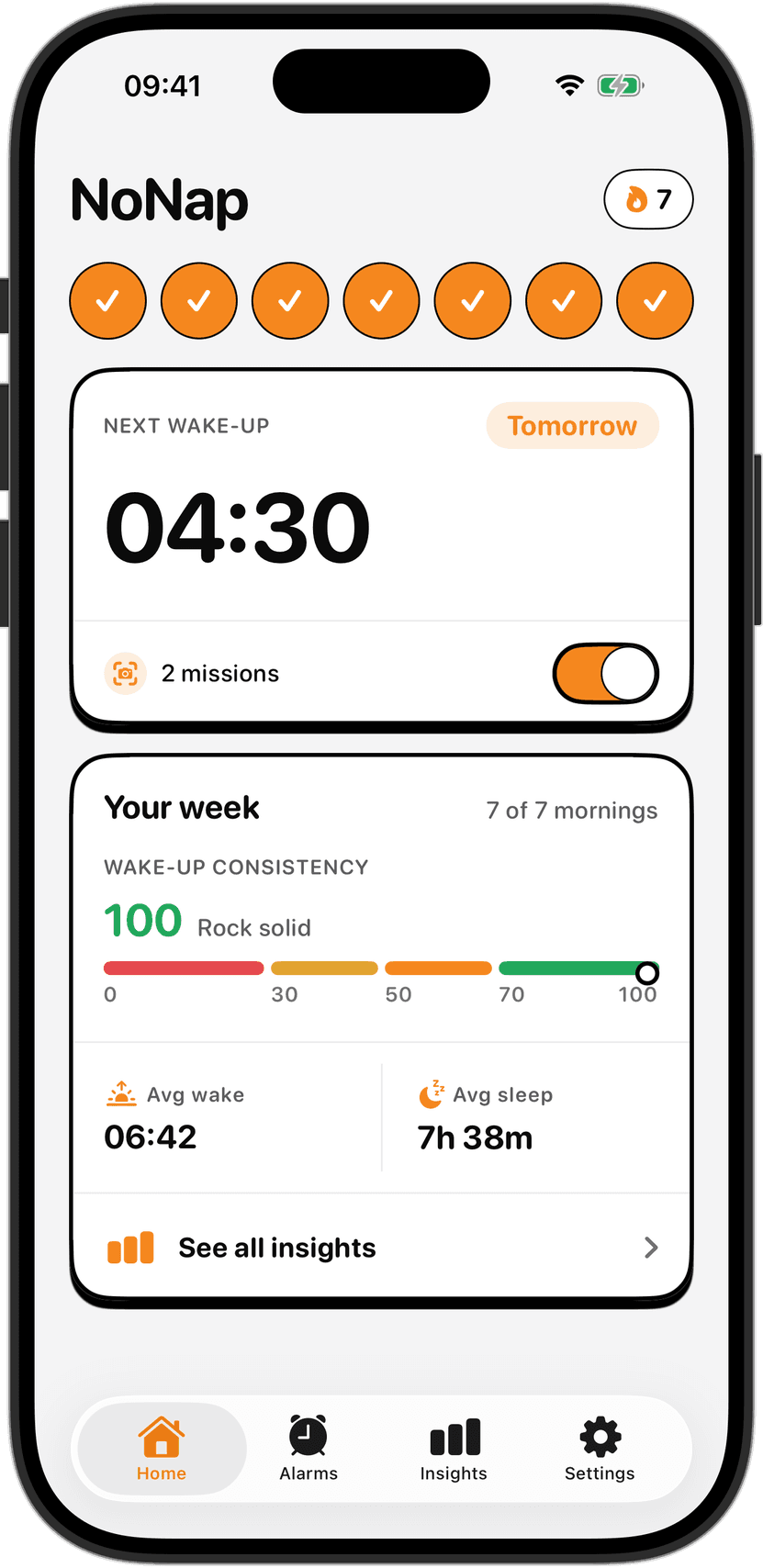
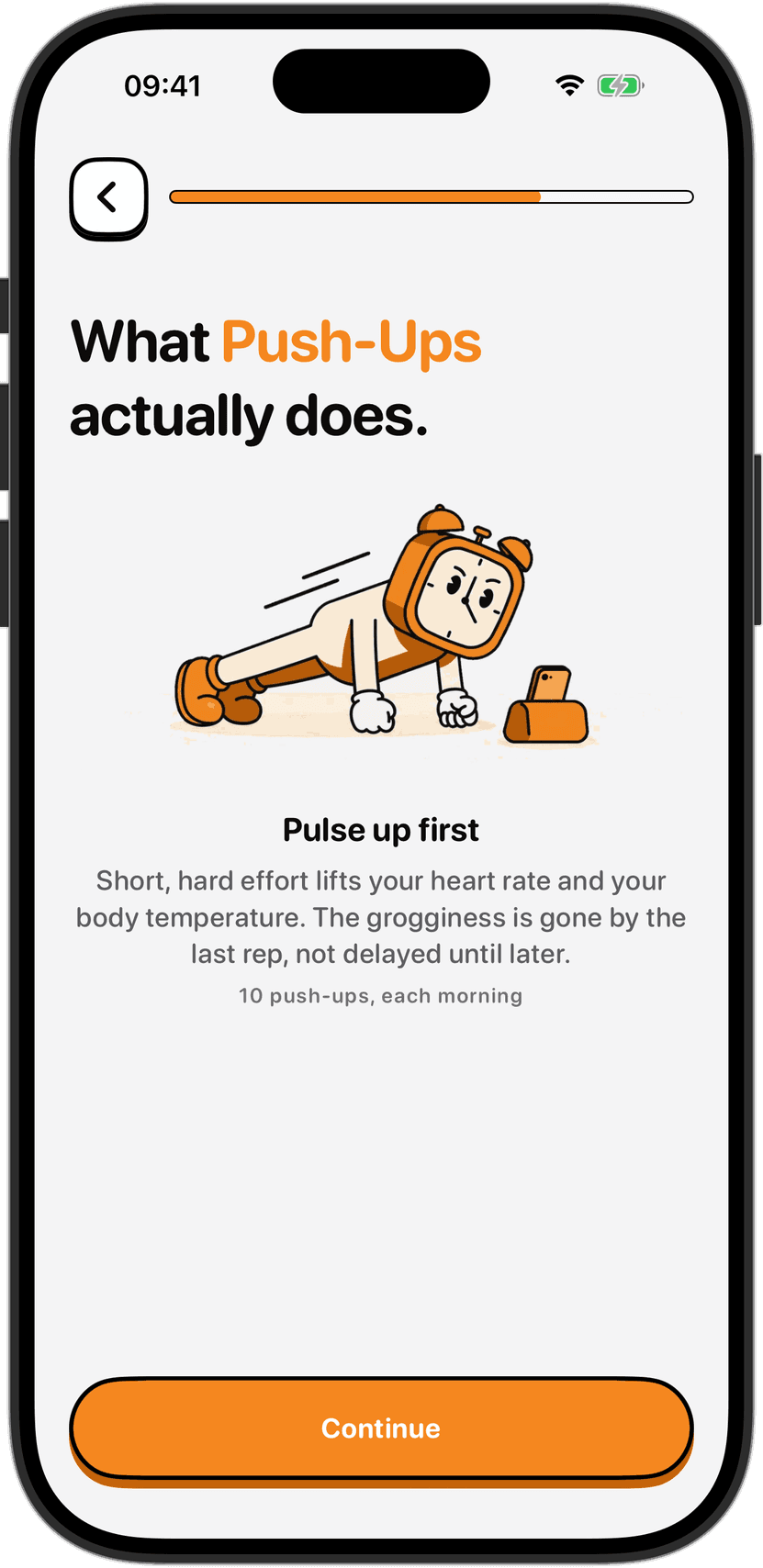
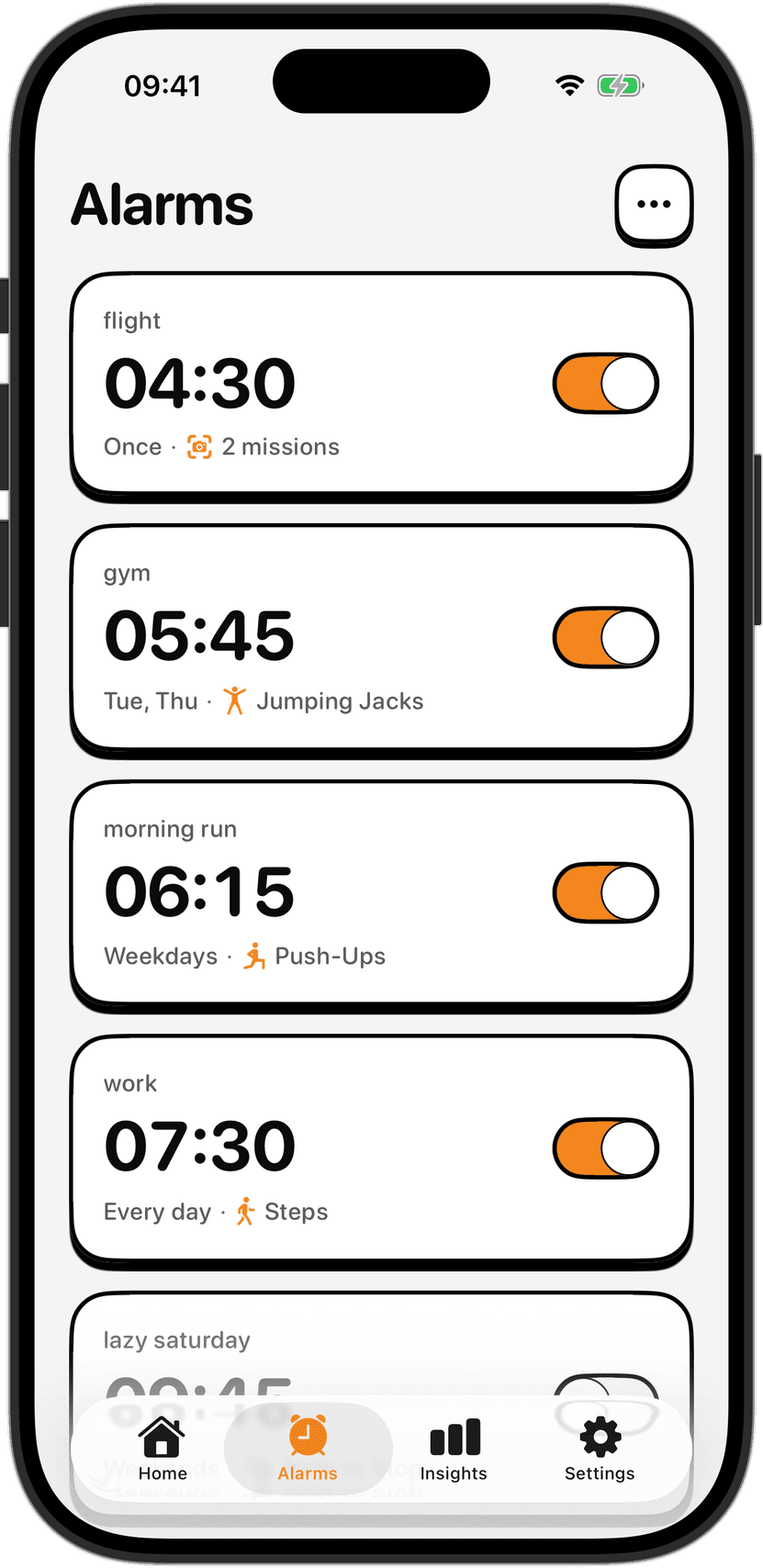
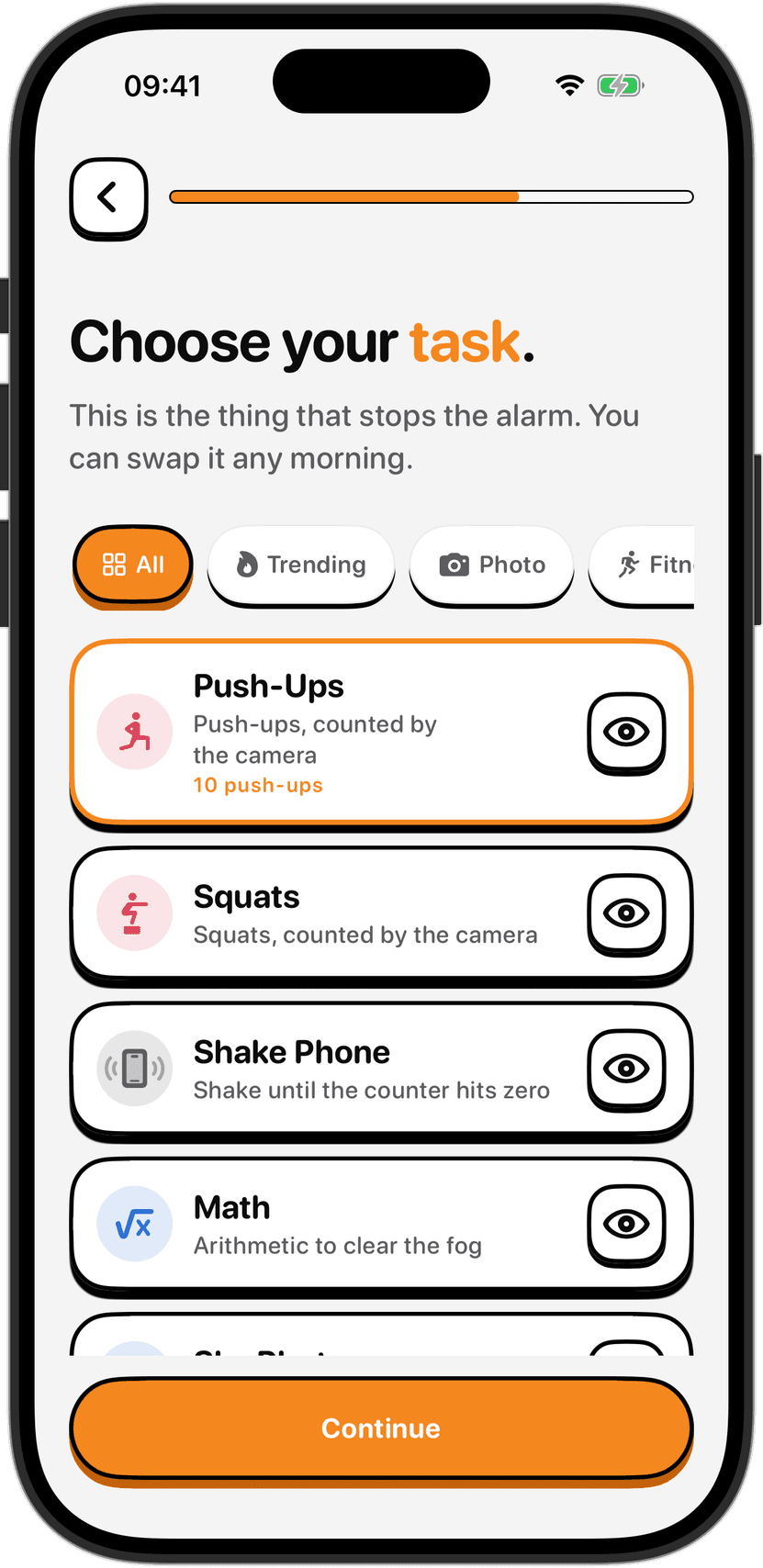
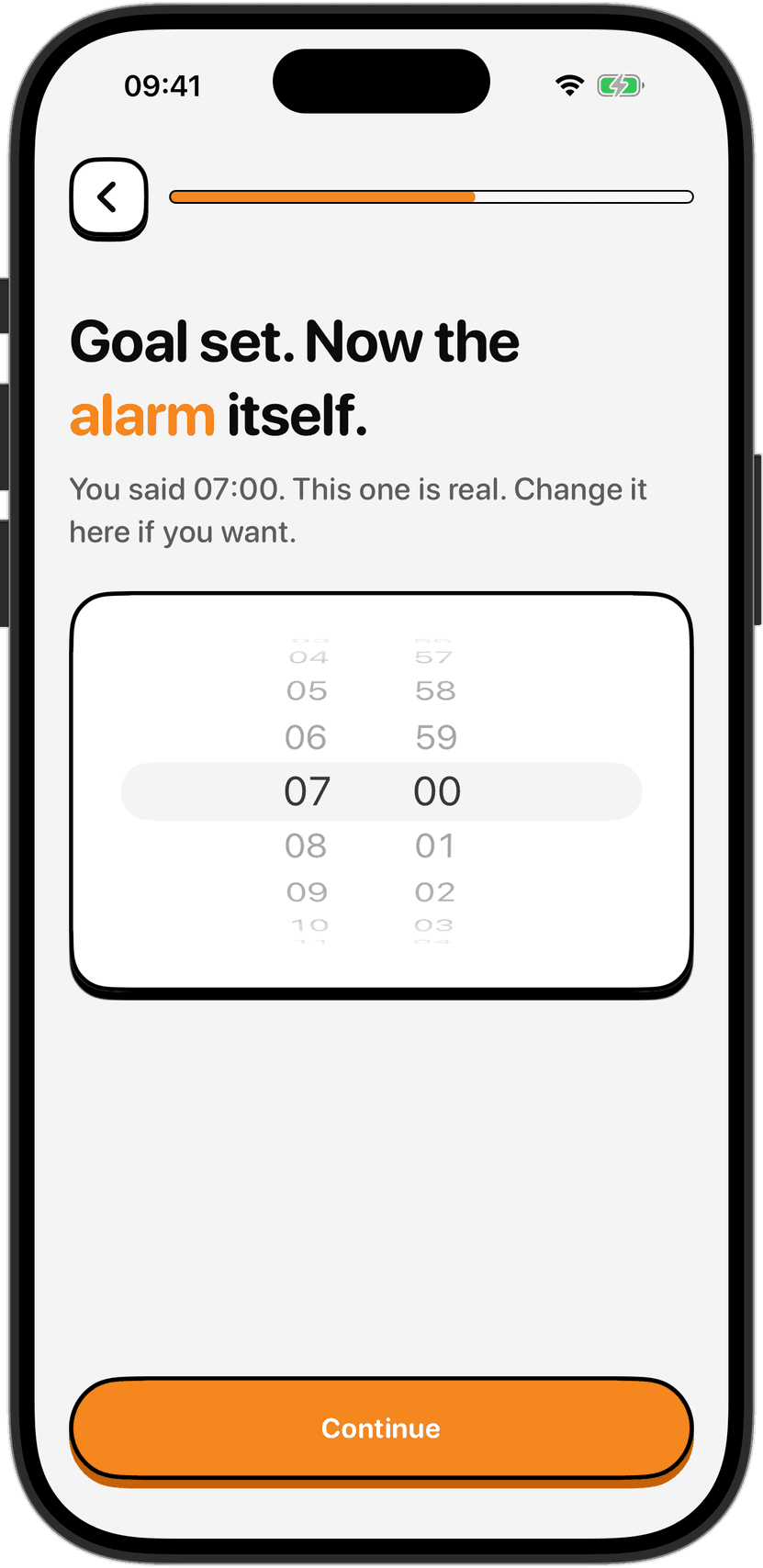
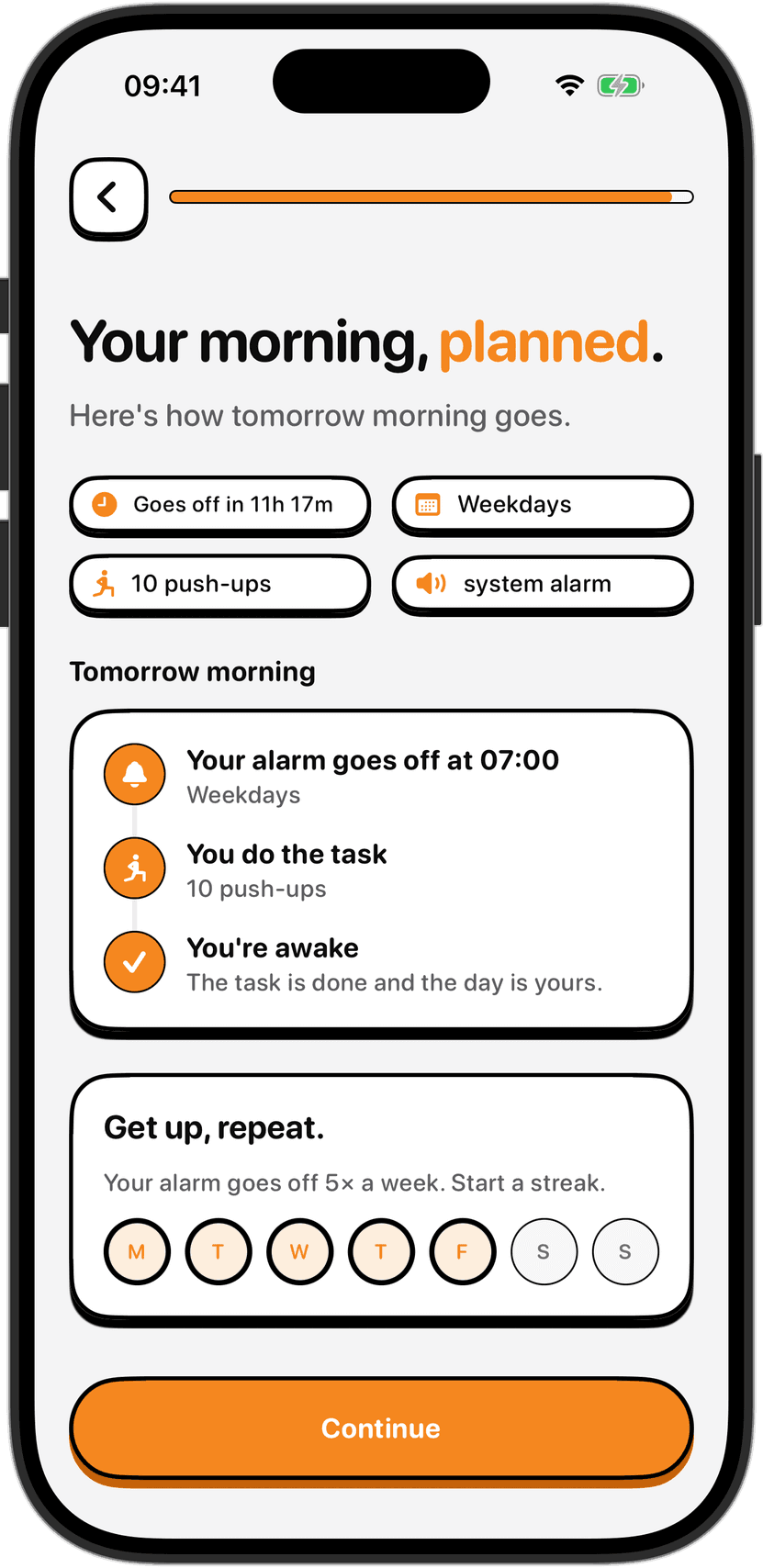
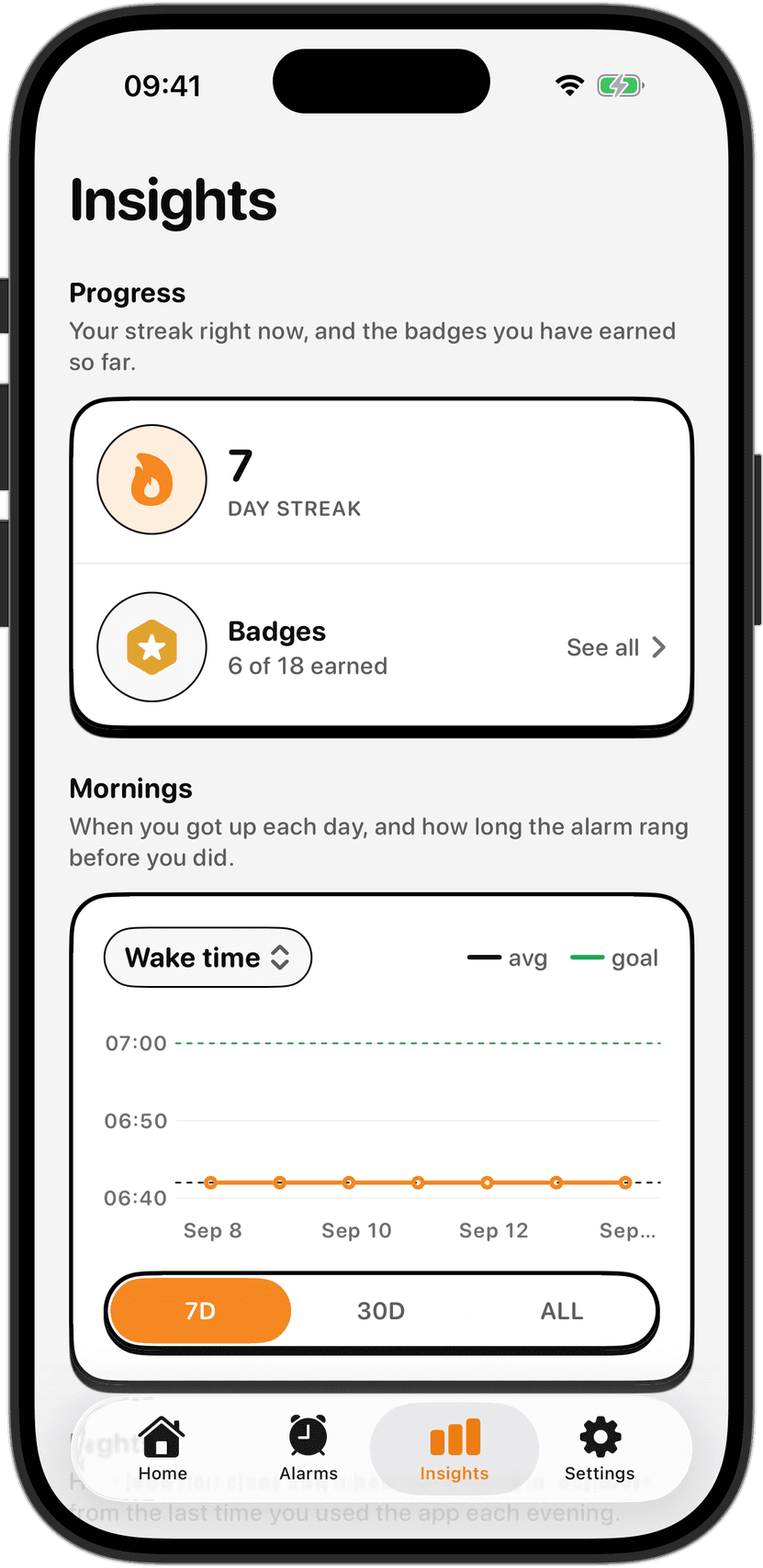
NoNap is an iPhone alarm app built around one alarm with no snooze button. It uses the system alarm, the same one the Clock app uses, so the ringer switch and Focus modes do not silence it, and it cannot be dismissed from the lock screen. The only way to stop it is to finish the task you set the night before: push-ups or squats counted by the camera, shaking the phone, a math problem, a photo, or simply getting out of bed. Choose a gentler task if you have an injury or condition that makes first-thing exercise risky. Pick your task, set a wake time you can sustain, and pair it with light. Open the curtains the moment your alarm stops. The light that reaches your eyes in that first minute of waking will do more for your mood and alertness than any habit that follows.
Sources
National Institute of Mental Health. Seasonal Affective Disorder (SAD). https://www.nimh.nih.gov/health/topics/seasonal-affective-disorder
Sleep Foundation. Seasonal Affective Disorder: Symptoms, Causes, and Treatments. https://www.sleepfoundation.org/mental-health/seasonal-affective-disorder
American Academy of Sleep Medicine. International Classification of Sleep Disorders, Third Edition (ICSD-3). American Academy of Sleep Medicine, 2014.